
Interpreting information Worksheets for Ages 5-7
3 filtered results
Difficulty Level
Grade
Age
-
From - To
Subject
Activity
Standards
Unlock your child's potential with our "Interpreting Information Worksheets for Ages 5-7"! Designed to cultivate critical thinking and comprehension skills, these engaging worksheets challenge young learners to analyze and interpret various types of information. From simple graphs to pictorial representations, each activity encourages observation and reasoning, laying the foundation for future learning. Parents and teachers can utilize these resources to enhance lessons, promote active engagement, and foster a love for learning. Perfect for at-home or classroom use, these worksheets cater to diverse learning styles and ensure that every child develops essential skills while having fun. Start your child’s educational journey today!
Favorites
With answer key
Interactive
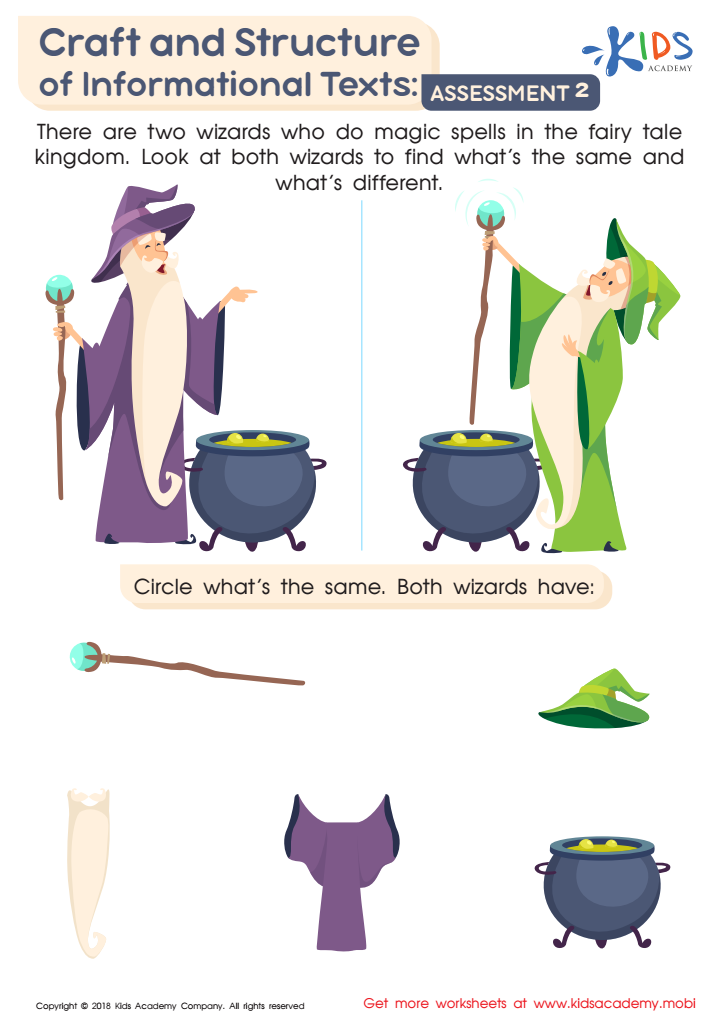
Craft and Structure of Informational Texts: Assessment 2 Worksheet
This assessment has kids looking at two similar fairy tale wizards, focusing on their visuals to find the similarities and differences. Then, they'll circle the things they both have. It's a great way to help children hone their detail-oriented comprehension skills, which is essential when using informational texts.
 Assign to My Students
Craft and Structure of Informational Texts: Assessment 2 Worksheet
Worksheet
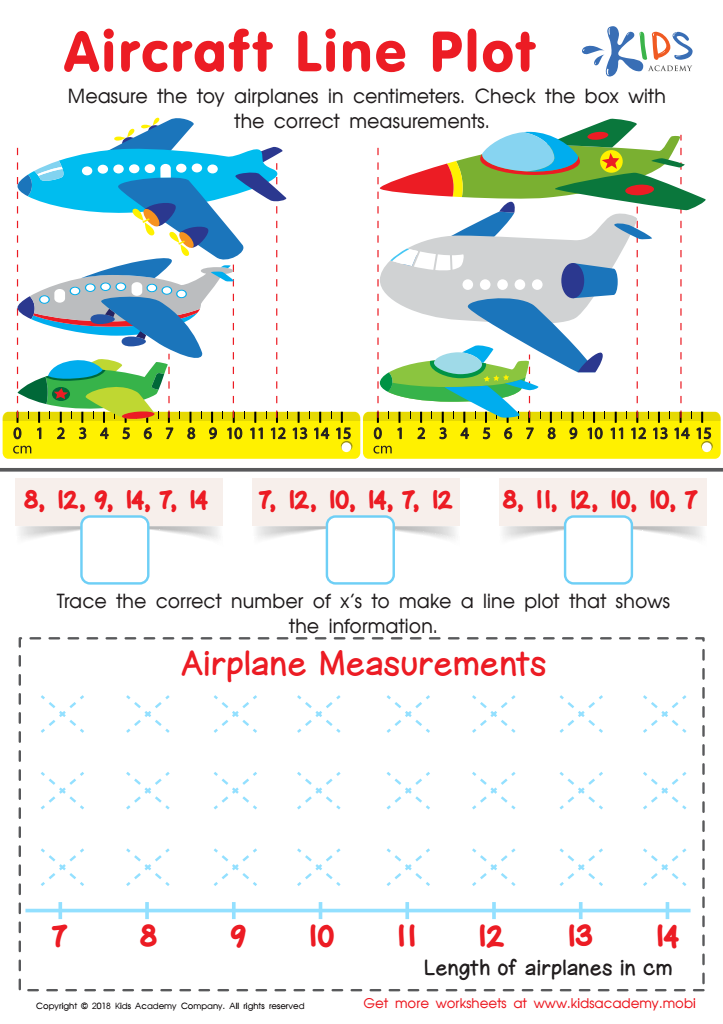
Aircraft Line Plot Worksheet
If your kids are aviation enthusiasts, they'll love this worksheet! Look at the picture with them, then ask them to measure the toy planes in cm. Check the box with the right measurements and then trace the x's to make a line plot with the data.
Aircraft Line Plot Worksheet
Worksheet
Join Kids Academy for Free
Who is primarily going to use this learning content?







Interpreting information is a crucial skill for children ages 5-7, as it forms the foundation for their critical thinking, comprehension, and decision-making abilities. At this developmental stage, children are naturally curious and eager to understand the world around them. By helping them interpret information accurately, parents and teachers can nurture their cognitive growth and enhance their learning experiences.
Engaging young children in discussions about stories, pictures, and various forms of media encourages them to ask questions and make connections, fostering a deeper understanding of subjects. This skill also supports literacy development, as children learn to decode information and recognize context, aiding in both reading and writing. Moreover, the ability to interpret information shapes their ability to analyze situations and understand how to navigate social interactions, setting a foundation for effective communication.
Parents and teachers can model these skills by asking open-ended questions, encouraging children to express their thoughts, and providing opportunities for exploration and problem-solving. By prioritizing interpretation skills, adults can empower children, ultimately promoting a lifelong love for learning and an ability to engage thoughtfully with the complexities of life. This investment into a child's early education shapes confident, informed individuals ready to face the world.








