
Understanding suffixes Worksheets for Ages 5-7
8 filtered results
Difficulty Level
Grade
Age
-
From - To
Subject
Activity
Standards
Discover engaging and educational Understanding Suffixes Worksheets designed specifically for children ages 5-7 at Kids Academy. These printable worksheets help young learners grasp the concept of suffixes, enhancing their vocabulary and reading comprehension skills. Through fun and interactive activities, children will explore how adding different word endings can change meanings and parts of speech. Our expertly crafted resources align with early education standards, making learning seamless and enjoyable. Perfect for home or classroom use, these worksheets provide a solid foundation in language arts, setting the stage for confident and successful reading and writing experiences.
Favorites
With answer key
Interactive
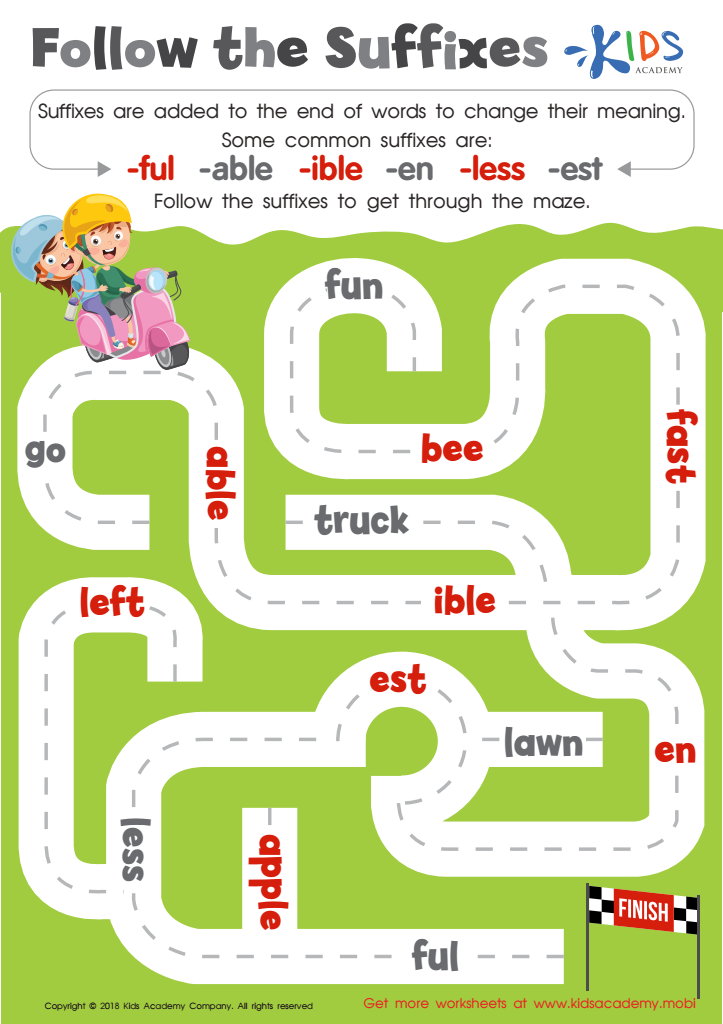
Reading: Follow the Suffixes Worksheet
Students use suffixes to find the right way through a maze in this enjoyable activity! Understanding suffixes helps kids decode and comprehend more words, leading to better reading fluency. A great addition to your reading classes, keep this printable close!
 Assign to My Students
Reading: Follow the Suffixes Worksheet
Worksheet
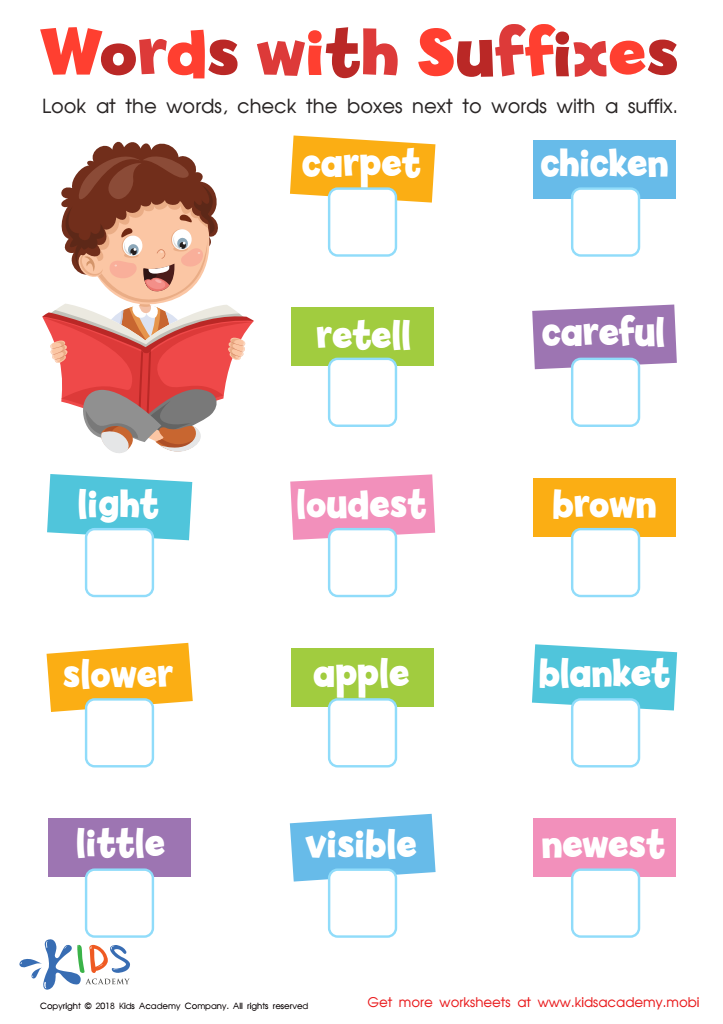
Reading: Words With Suffixes Worksheet
Help your students understand suffixes and build reading fluency with this worksheet. Have them read each word, then choose the ones with a suffix. Practicing this will lead to better comprehension and more confident reading. Save it for future use in language and reading classes.
Reading: Words With Suffixes Worksheet
Worksheet
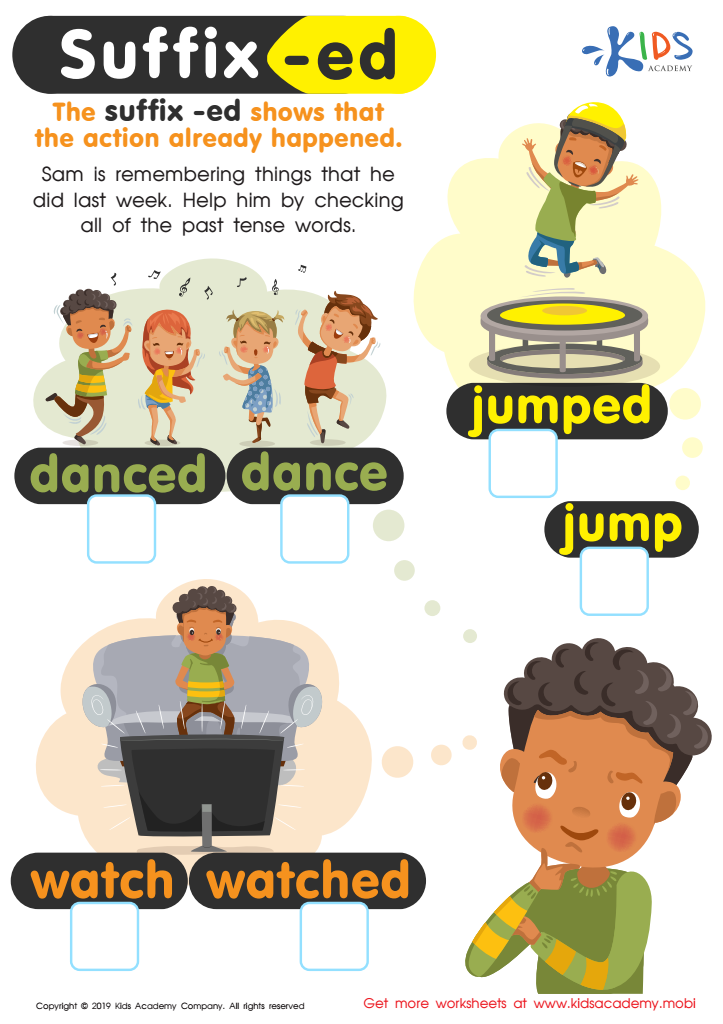
Suffix-ed Worksheet
Ask your kids if they know what suffixes are, and explain they are words added to the end of another word which changes the meaning. This worksheet focuses on the suffix -ed which shows something already happened. Help the kid in the picture find the past tense words.
Suffix-ed Worksheet
Worksheet
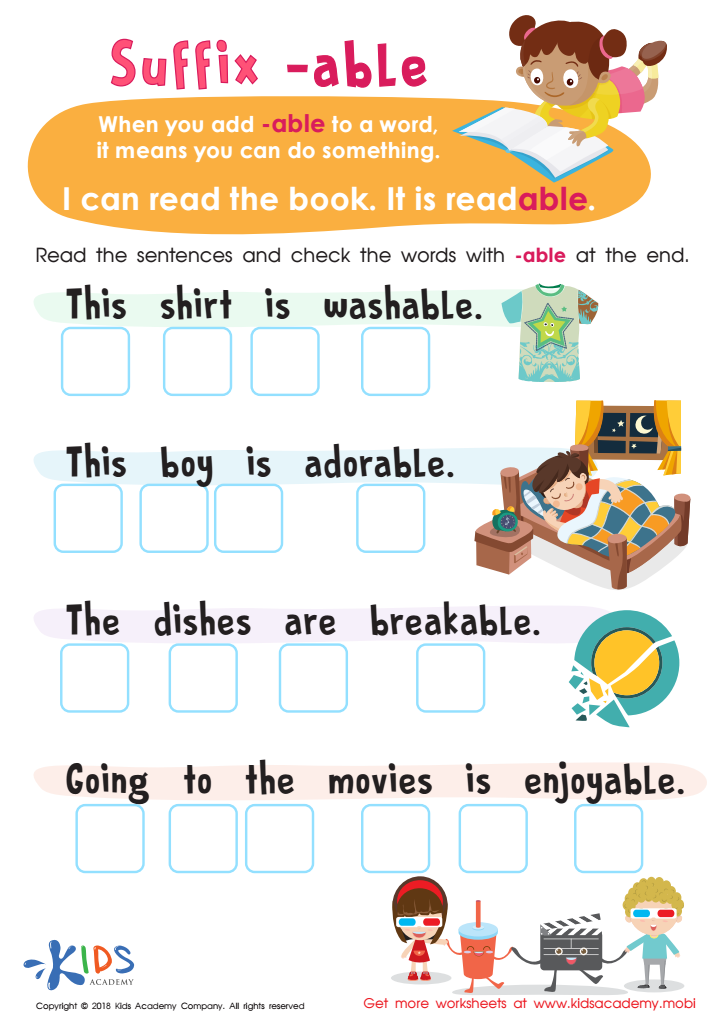
Suffix -Able Worksheet
Suffix -able means you can do something. Example: readable - means you can read it. Give kids examples then check this worksheet. Read sentences with kids, looking for words with -able at the end.
Suffix -Able Worksheet
Worksheet
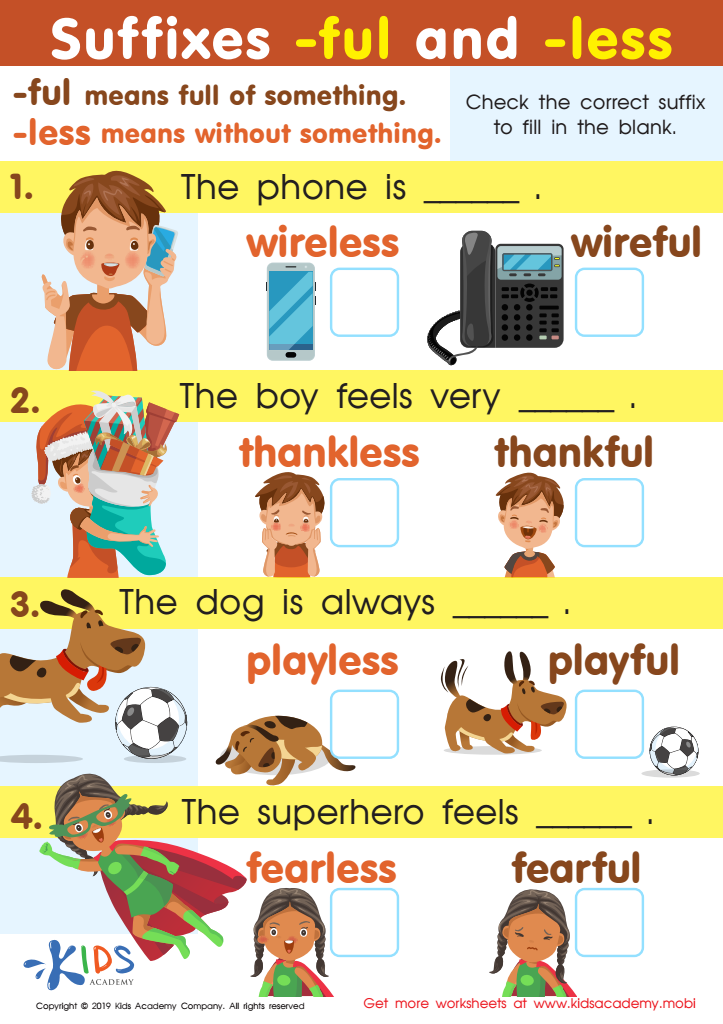
Suffixes –ful and –less Worksheet
Before you start this worksheet, make sure your kids know about suffixes. Explain that they're added to the end of words to change their meaning. In the worksheet, kids will learn about the suffixes –ful and –less. Look at the sentences in the picture with them, and help them to choose the right one for each blank.
Suffixes –ful and –less Worksheet
Worksheet
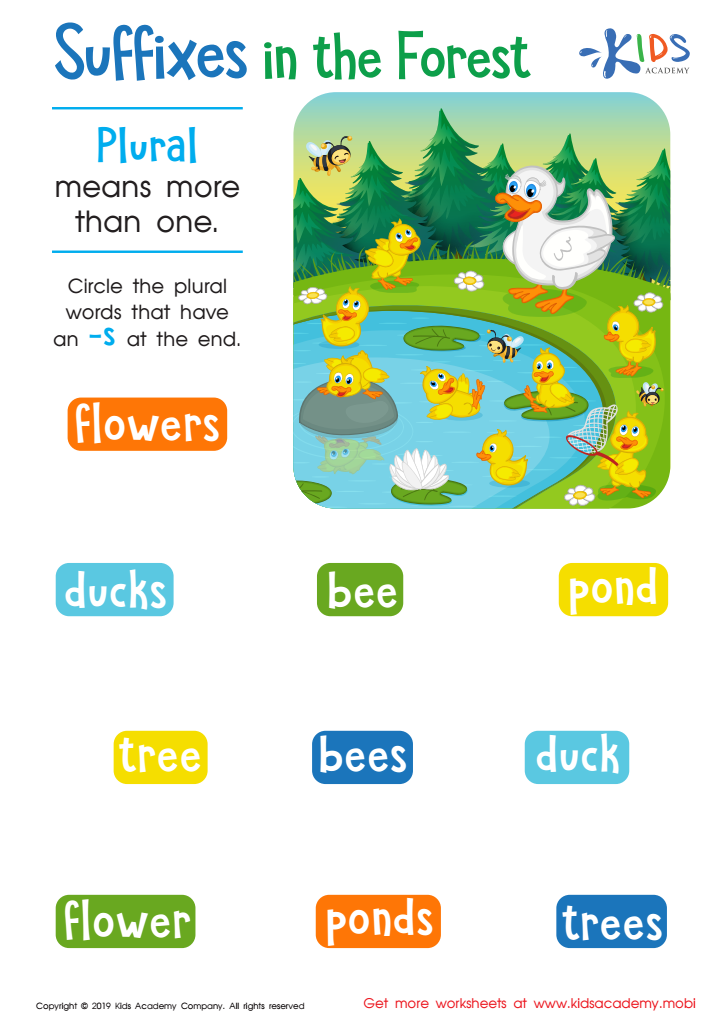
Suffixes in the Forest Worksheet
Suffixes are letters added to the end of words to form new words. These can be used to denote one who does something (e.g. reader) or more than one (e.g. adding -s). This worksheet helps kids practice pluralizing words they know by circling the plural words ending with -s.
Suffixes in the Forest Worksheet
Worksheet
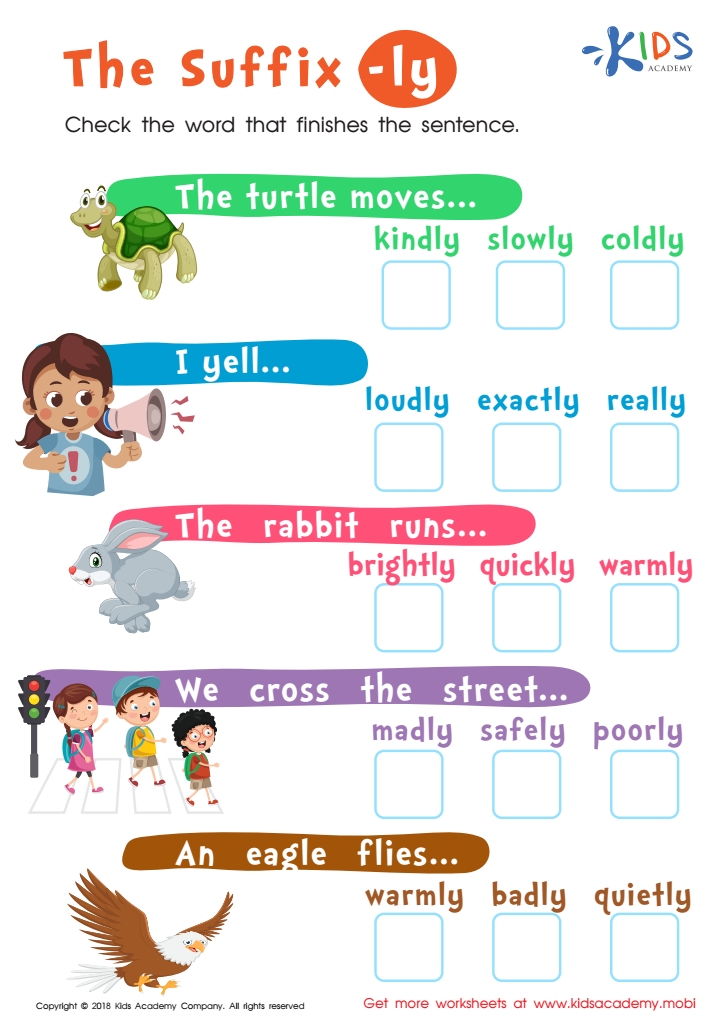
The Suffix -Ly Worksheet
Suffixes change the meaning of words: the -ly suffix usually describes how an action is done (e.g. slowly, quickly, loudly). Help your child understand this and then check out the fun worksheet. Ask them to identify the animals and people in the pictures, then read the sentences out loud and have them check the ones that finish the sentence.
The Suffix -Ly Worksheet
Worksheet
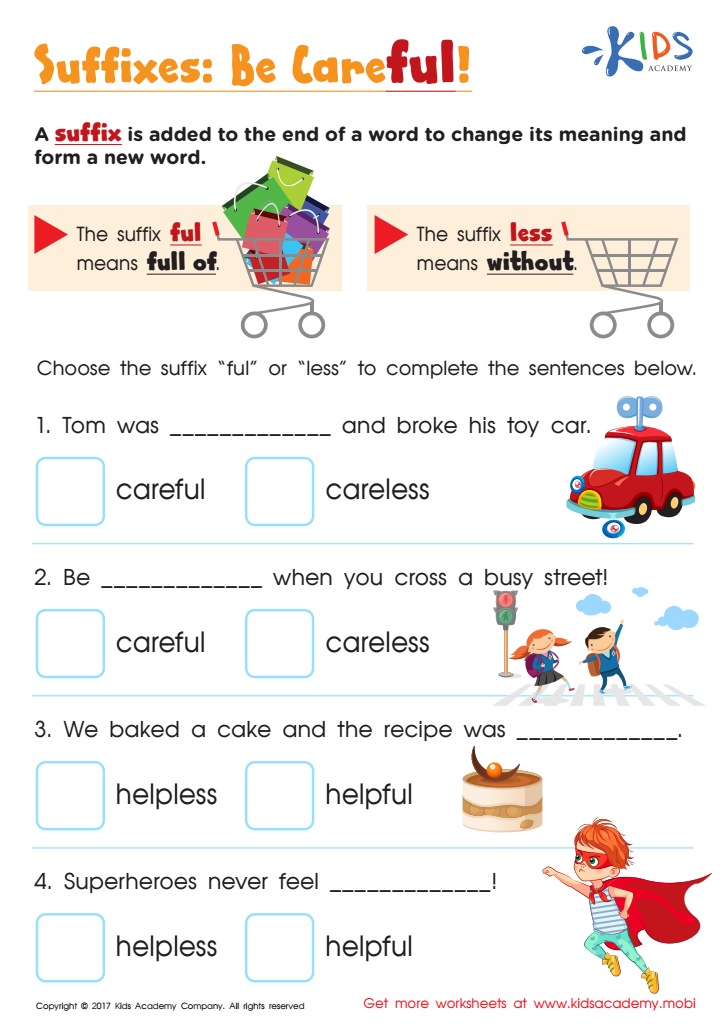
Suffixes Ful and Less Worksheet
Uh oh! Careful and careless might look similar, but have very different meanings. To avoid mix-ups, learn to spot and use the right suffixes. Use this suffixes ful and less worksheet to help your child master common suffixes!
Suffixes Ful and Less Worksheet
Worksheet
Join Kids Academy for Free
Who is primarily going to use this learning content?








Understanding suffixes is vital for young learners, typically aged 5-7, as it significantly aids in their literacy development and language comprehension. Suffixes, which are word endings added to root words, can alter the meaning or grammatical function of words. For instance, adding "-ed" can change "jump" to "jumped," indicating past tense. By learning suffixes, children can decode and understand new words they encounter, enhancing their reading skills.
Moreover, understanding suffixes helps with spelling and vocabulary extension. When kids grasp that adding "-s" can change "cat" to "cats," they learn plural forms without needing to memorize each instance individually. This builds their confidence: knowing that rules can systematically change words rather than each being an isolated challenge.
Additionally, early exposure to suffixes contributes to better writing skills. Children can write more complex sentences by easily using variations of words to match tense, number, or comparative forms. Teachers and parents play a crucial role in reinforcing these concepts through reading and writing activities tailored to children's developmental levels.
Overall, understanding suffixes lays a foundation for more advanced language arts, making it critical for young learners and a key focus for parents and teachers alike.








