Uppercase identification Worksheets for Ages 5-7
5 filtered results
-
From - To
Welcome to our Uppercase Identification Worksheets, designed specifically for children ages 5-7! These engaging and interactive worksheets are perfect for helping young learners recognize and identify uppercase letters confidently. Each worksheet features fun activities, including tracing, matching, and coloring exercises that stimulate cognitive development while making learning enjoyable. Ideal for both classroom and home use, our resources support early literacy skills aligned with educational standards. Encourage your child’s reading and writing journey with a variety of imaginative, themed worksheets that capture their interest. Start nurturing their love for letters today and watch their skills flourish with our engaging materials!
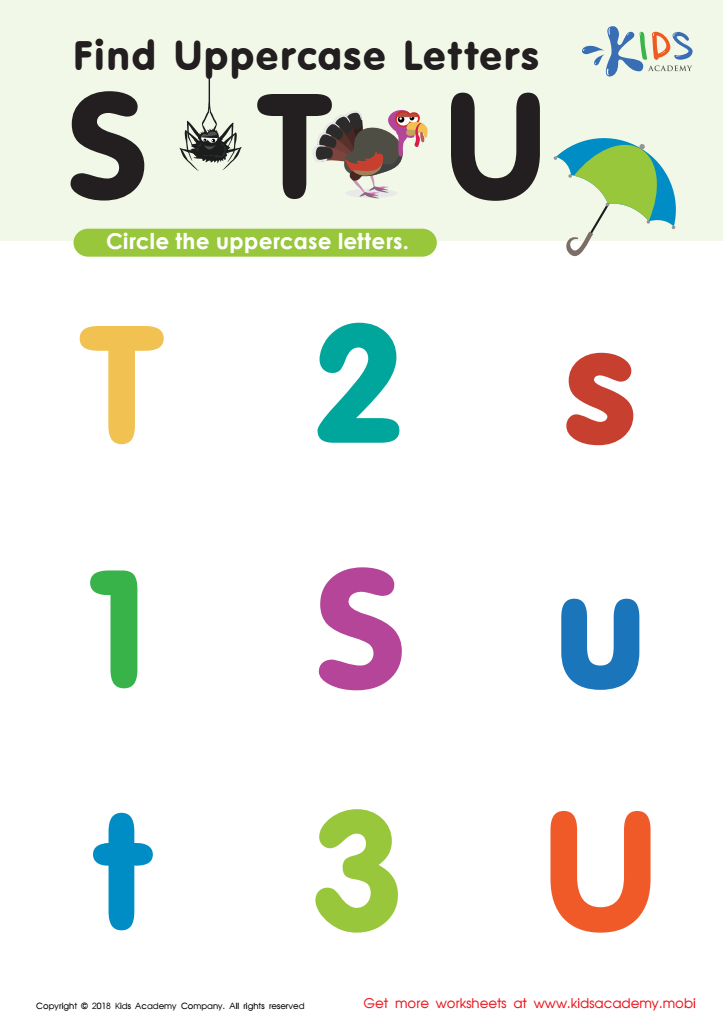
Find Uppercase Letters Worksheet
 Assign to My Students
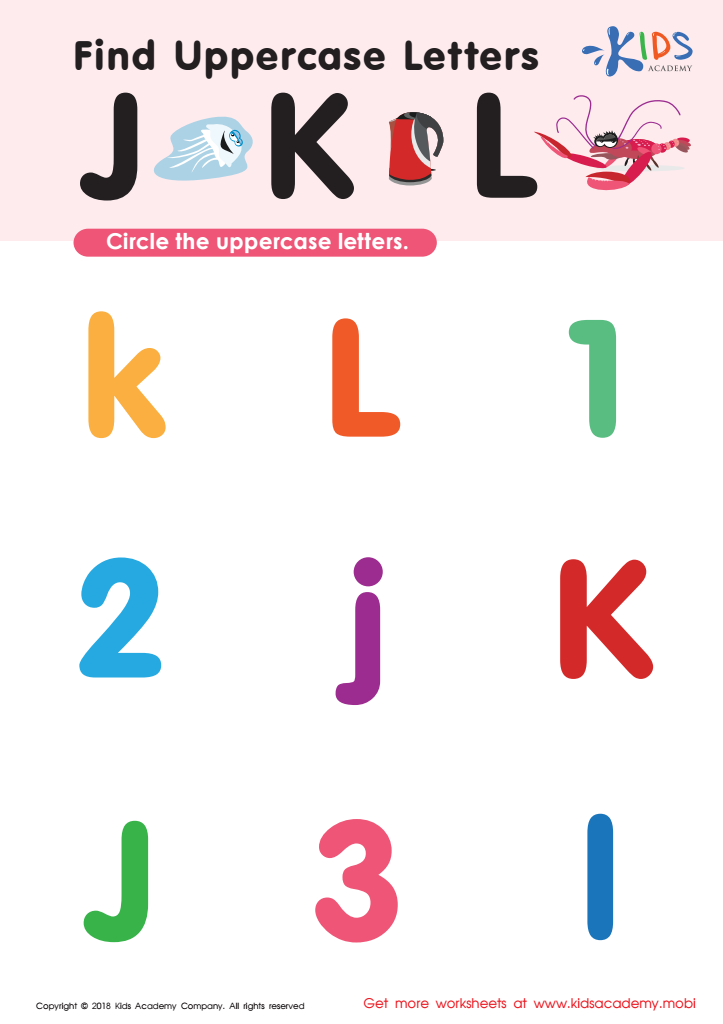
Find Uppercase Letters J, K, and L Worksheet

Find Uppercase Letters A, B, and C Worksheet
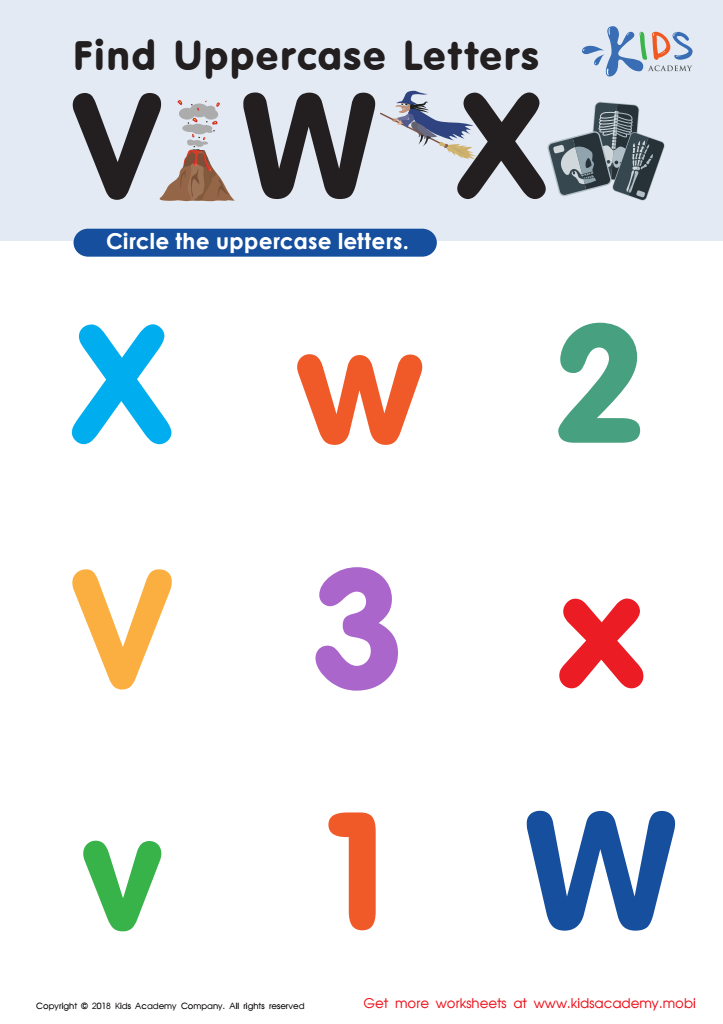
Find Uppercase Letters V, W, X Worksheet
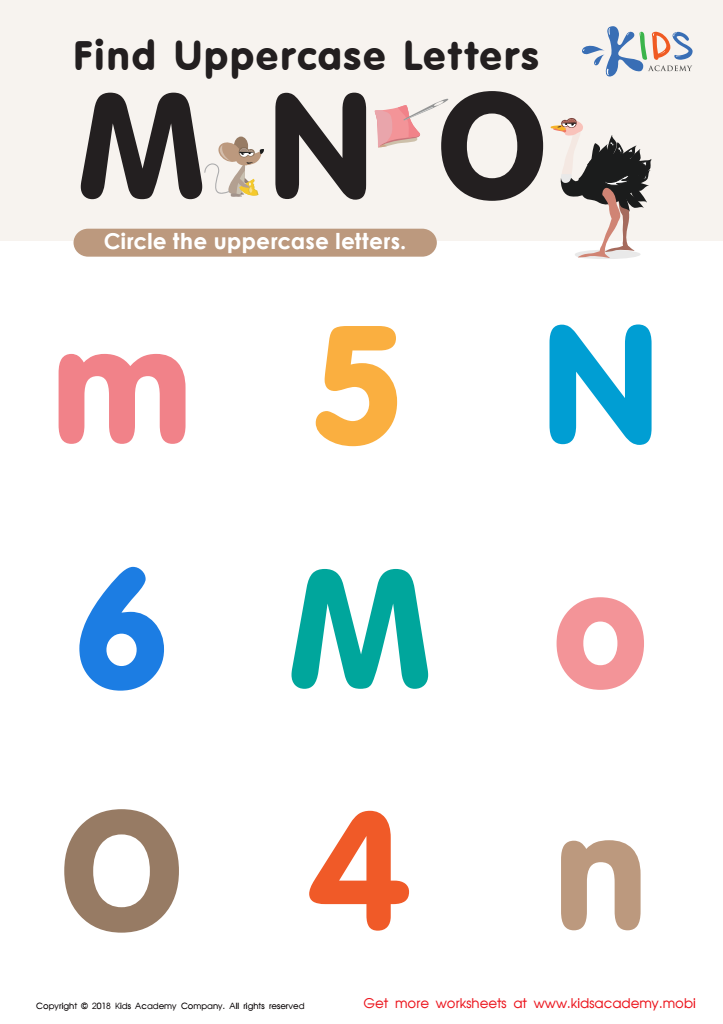
Find Uppercase Letters M, N, and O Worksheet





.jpg)


Uppercase letter identification is a fundamental skill for children ages 5-7, which forms the cornerstone of early literacy. Teachers and parents should care about this for several reasons. First, recognizing uppercase letters is crucial for reading development; these letters are often used at the beginning of sentences and for proper nouns, essential components of writing and reading comprehension. As children enter school, they will encounter texts filled with uppercase letters. Knowing them helps children identify words effectively.
Additionally, uppercase familiarity enhances children's phonemic awareness, allowing them to understand the relationship between letters and sounds. This knowledge builds confidence in their reading abilities, creating a positive feedback loop that encourages further exploration of literacy. Moreover, mastering uppercase letters can lead to improved fine motor skills, as writing these letters involves specific hand movements.
Promoting recognition of uppercase letters also aids in social skills; children often see their names in print, surrounded by uppercase initials. Engaging with this material at home or in the classroom fosters a supportive learning environment. Therefore, emphasizing uppercase letter identification positively influences cognitive development, literacy skills, and self-esteem, making it a priority for teachers and parents engaging with children in this age group.








