Visual recognition skills Worksheets for Ages 5-7
4 filtered results
-
From - To
Enhance your child's development with our engaging Visual Recognition Skills Worksheets, designed specifically for ages 5-7. These worksheets focus on boosting critical abilities such as shape, color, and pattern recognition. Perfect for early learners, our colorful, fun activities make learning exciting and interactive. Each worksheet is curated by education experts to ensure age-appropriate challenges that promote visual discrimination, attention to detail, and cognitive skills. Unlock your child's potential and make foundational learning a delightful adventure with our well-crafted worksheets. Ideal for both classroom and home use. Explore now and watch young minds flourish!
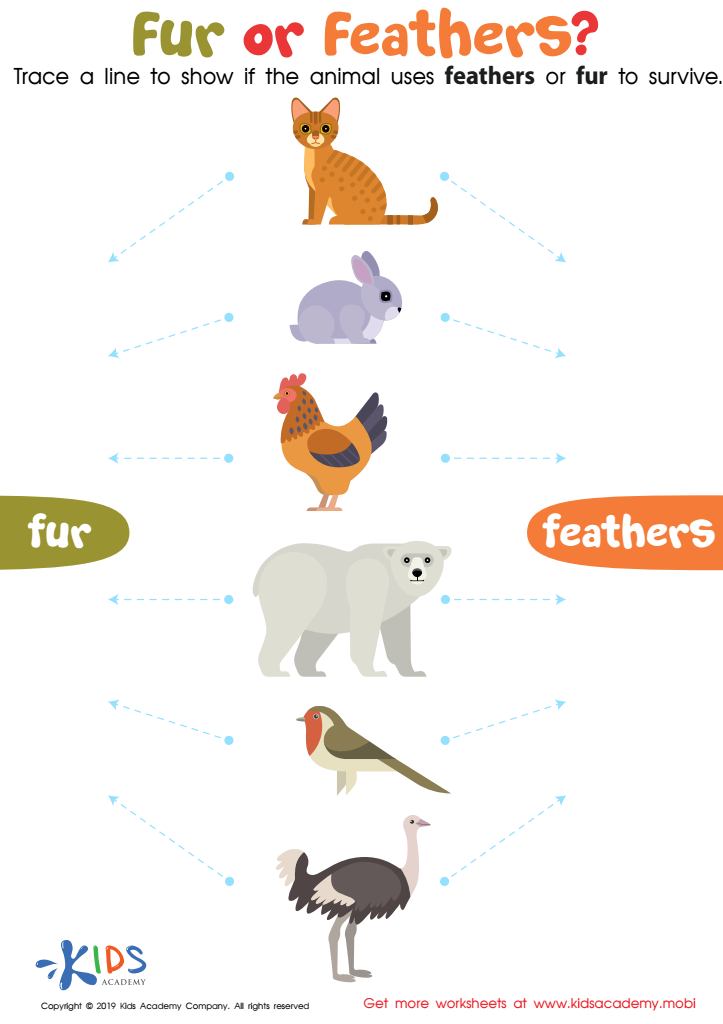
Fur or Feathers? Worksheet
 Assign to My Students
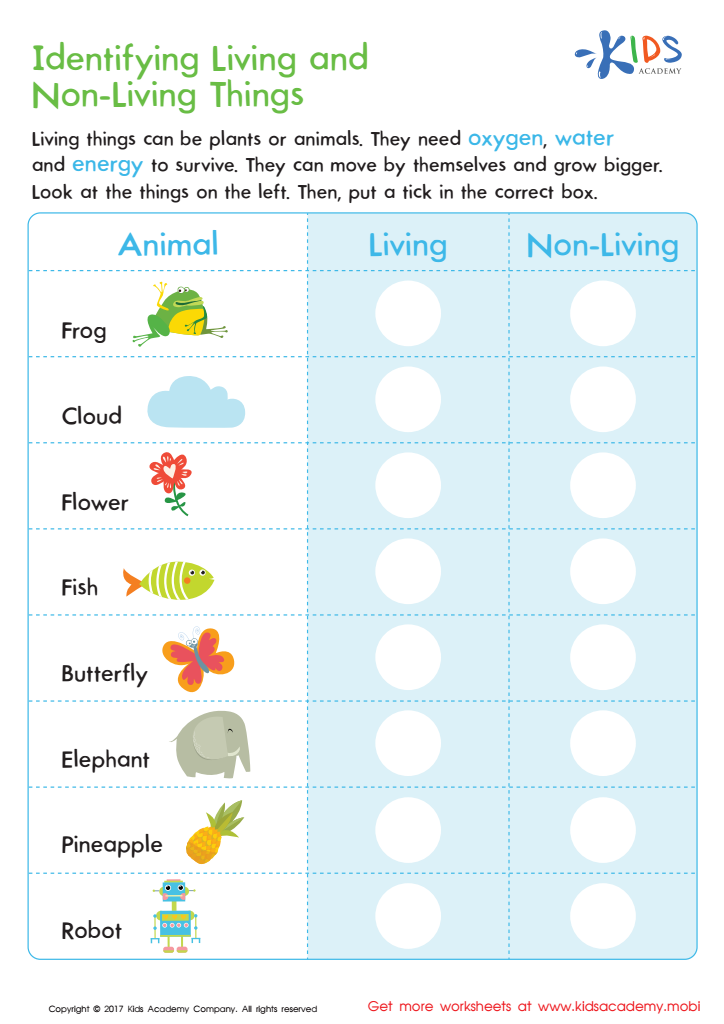
Identifying Living or Non–living Worksheet







Visual recognition skills are crucial for children ages 5-7 as they lay the foundation for academic success and cognitive development. At this age, children are in a critical period of brain development where they are rapidly learning to process and interpret the world around them. Strong visual recognition skills help in identifying letters, numbers, shapes, and colors, which are essential for early reading, writing, and math.
Additionally, these skills enable children to quickly and accurately recognize patterns, fostering their problem-solving abilities and logical thinking. As children begin formal education, visual recognition aids in following instructions, completing tasks, and understanding visual information presented in textbooks and classroom materials. It also enhances their ability to pay attention and concentrate, as they can easily identify and differentiate between visual inputs.
Moreover, visual recognition skills are closely tied to social development. Being able to recognize facial expressions and visual cues aids in developing empathy and effective communication with peers and adults.
Overall, nurturing visual recognition skills in young children supports their academic growth, cognitive abilities, and social interactions. Teachers and parents who emphasize these skills contribute to well-rounded developmental progress, facilitating a smoother transition into more advanced learning stages.








