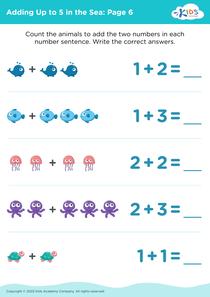
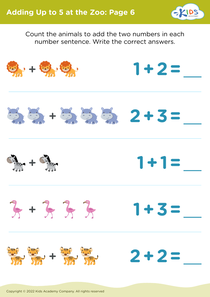
Animal recognition Adding in the Forest Worksheets for Ages 5-7
15 filtered results
-
From - To
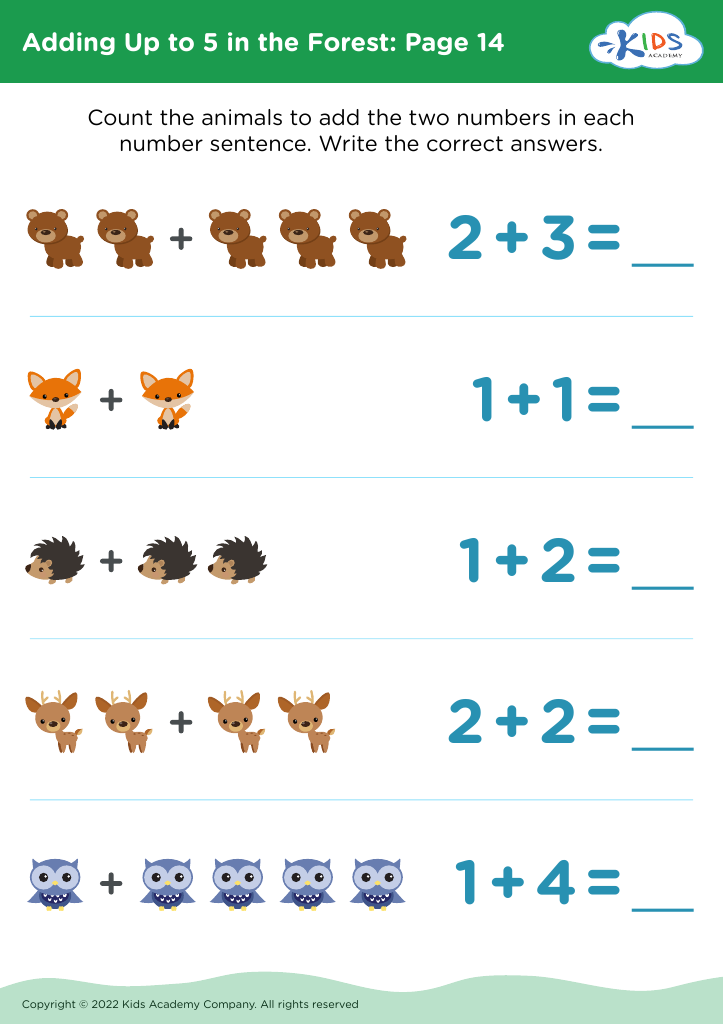
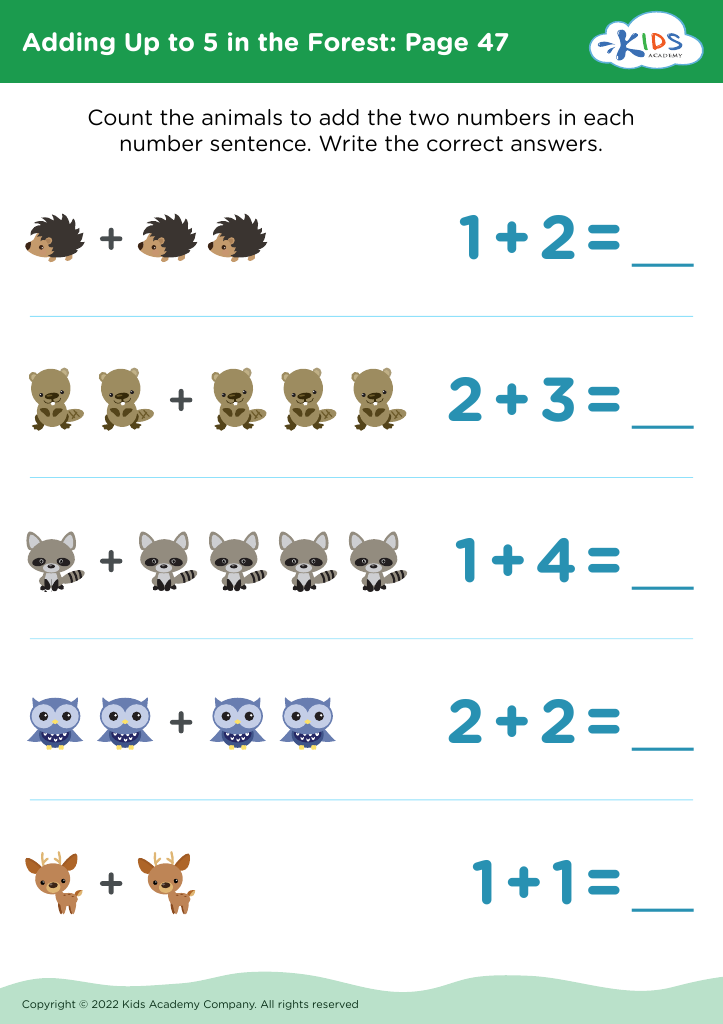
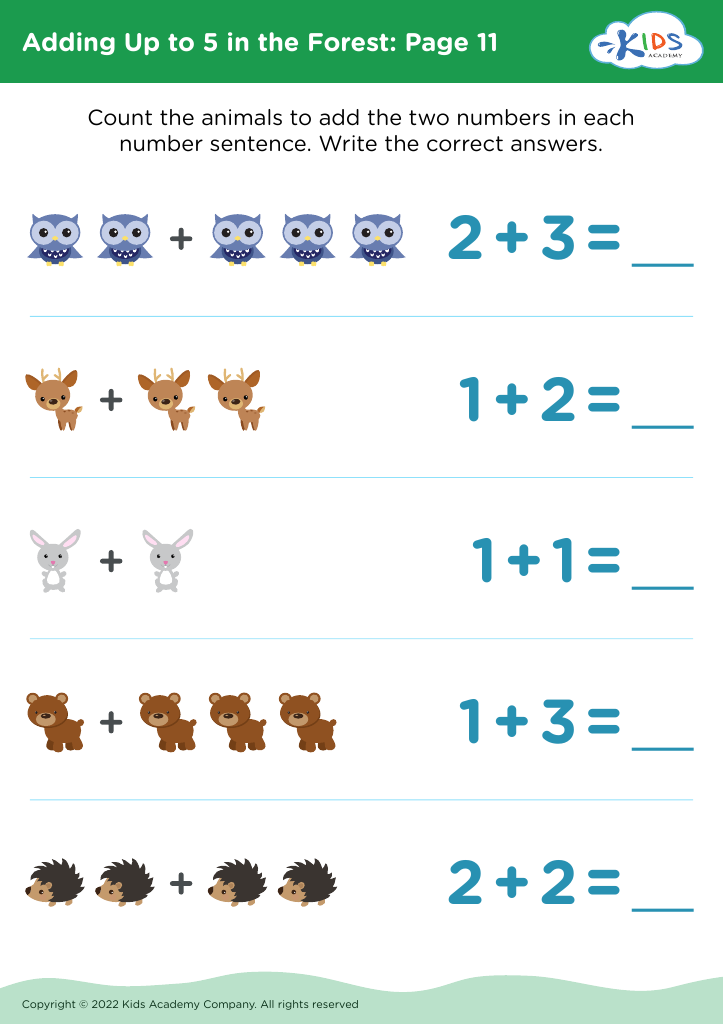
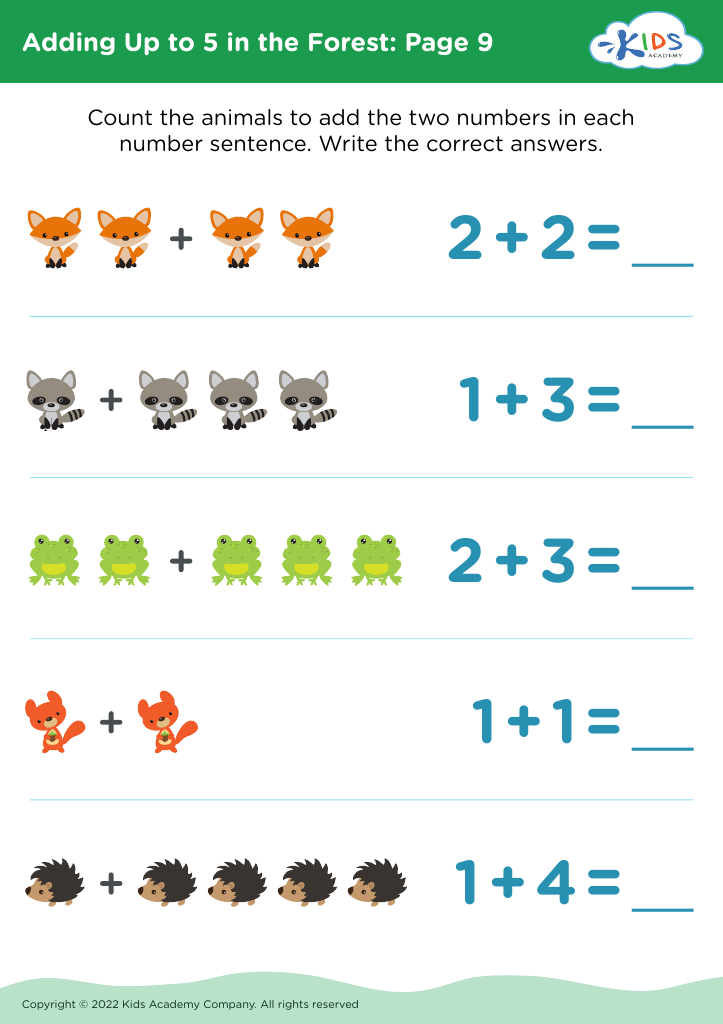
Discover fun and engaging "Animal Recognition Adding in the Forest Worksheets," specially designed for children ages 5-7! These interactive worksheets combine essential math skills with the wonders of nature, as young learners identify animals while practicing addition. Each worksheet features colorful illustrations and captivating forest themes, ensuring kids stay motivated and interested. Our activities enhance not only mathematical understanding but also boost observation and recognition skills in a playful setting. Perfect for homeschoolers or classroom use, these worksheets provide an effective way to nurture learning through play. Help your child embark on a delightful educational adventure while mastering early math concepts!
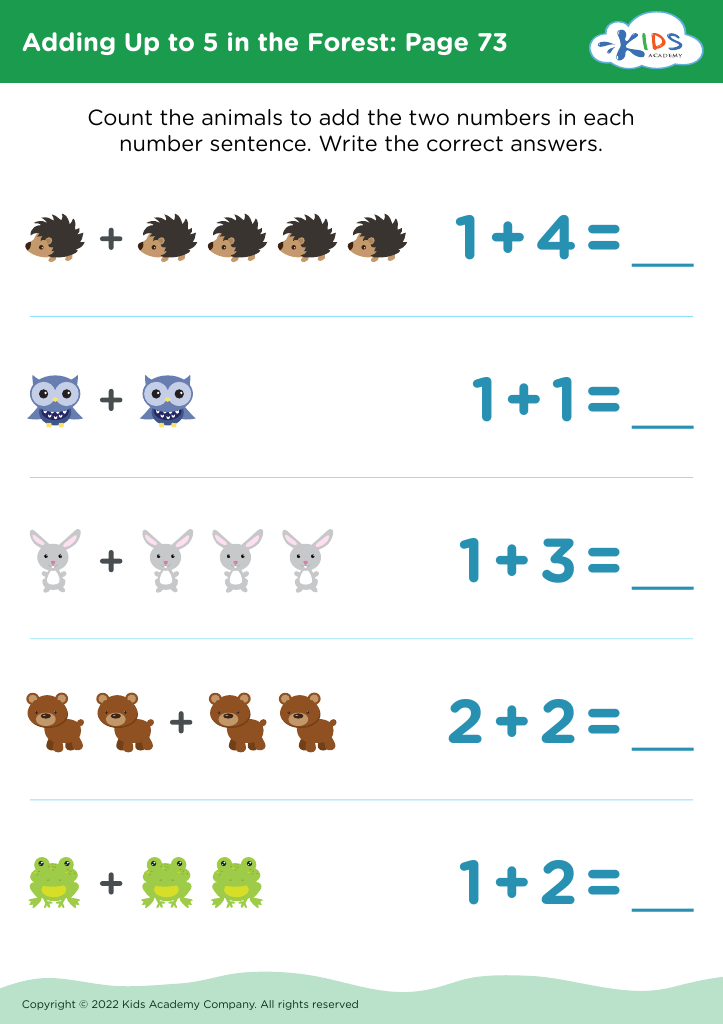
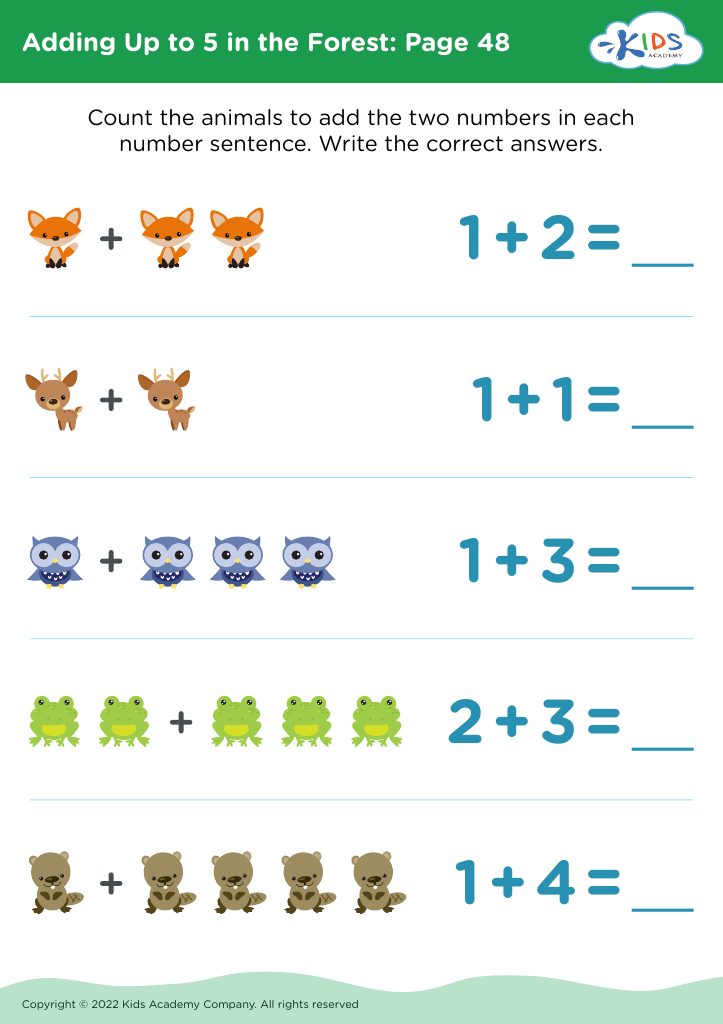
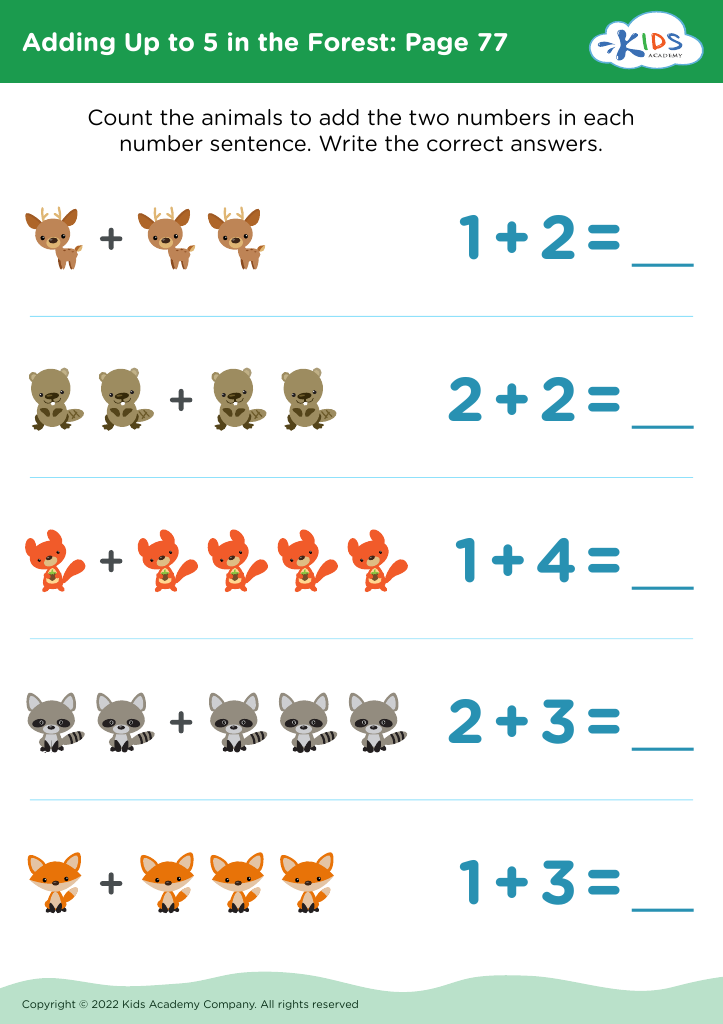
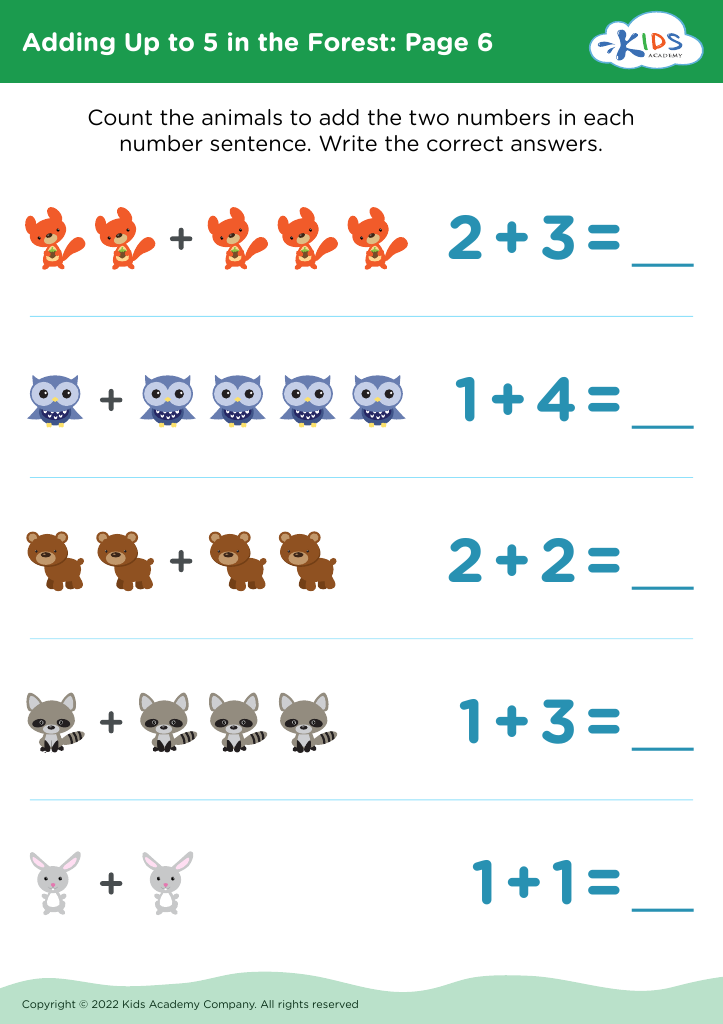
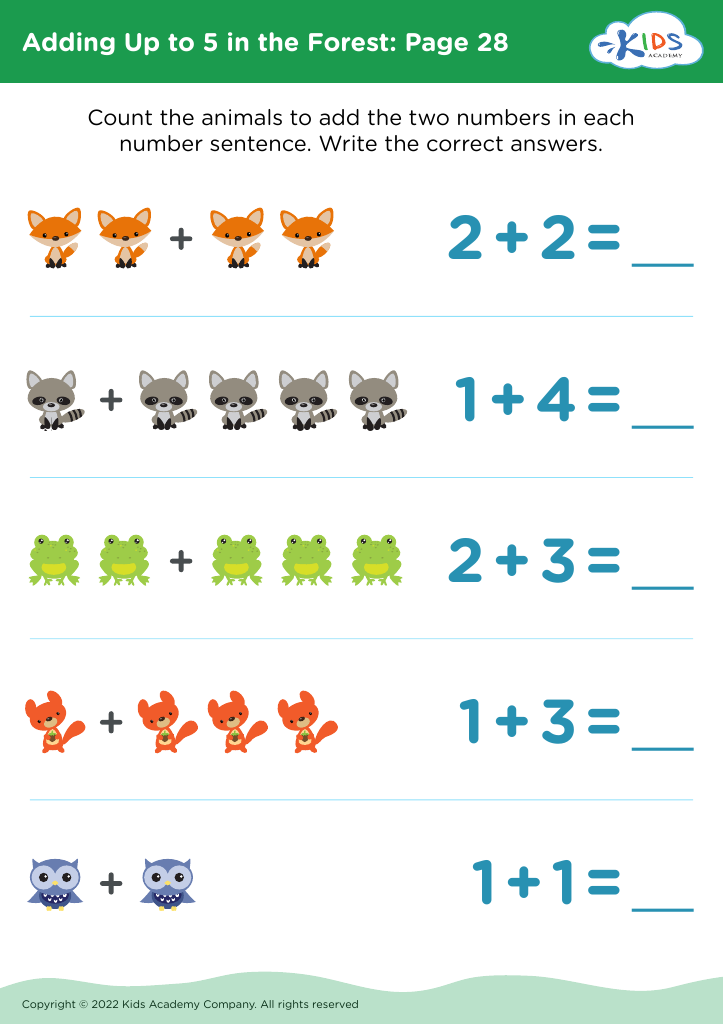
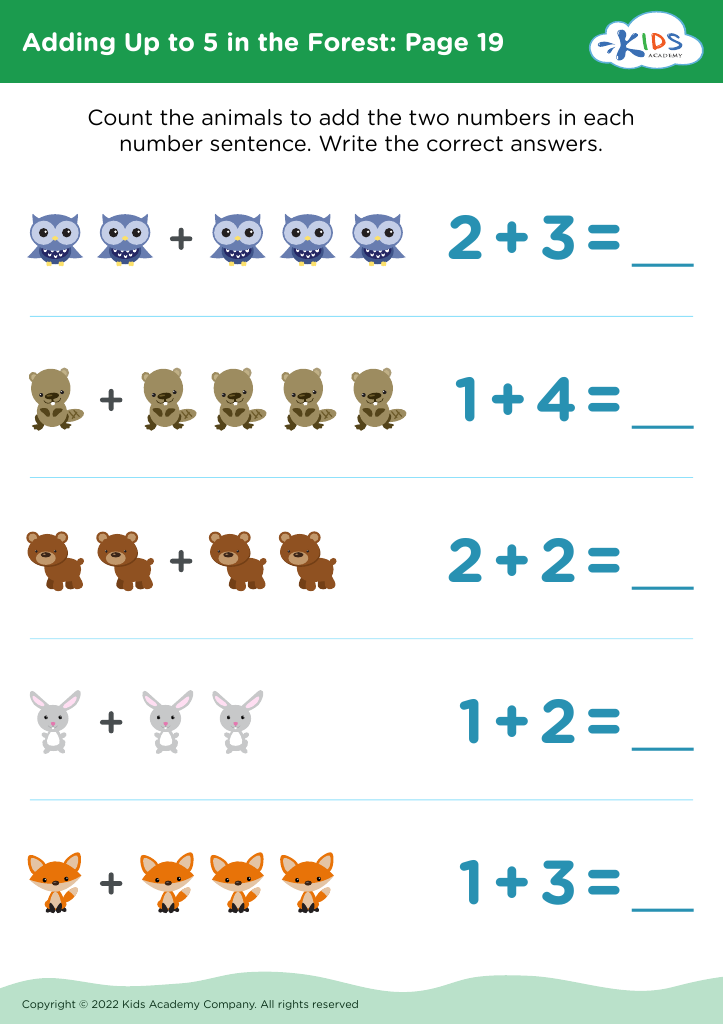
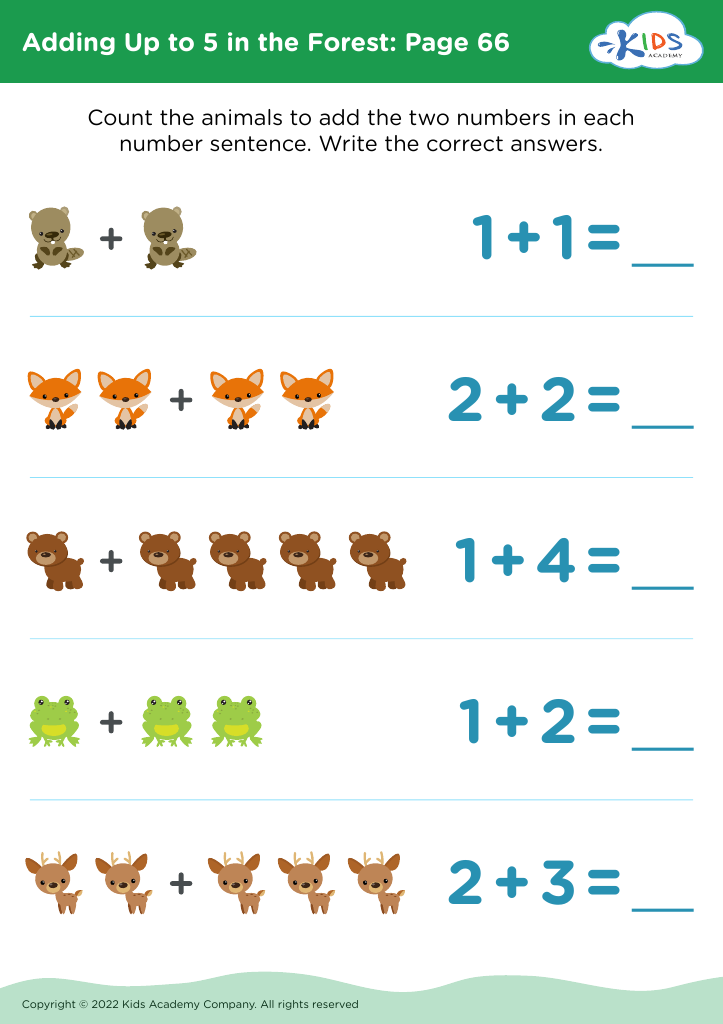
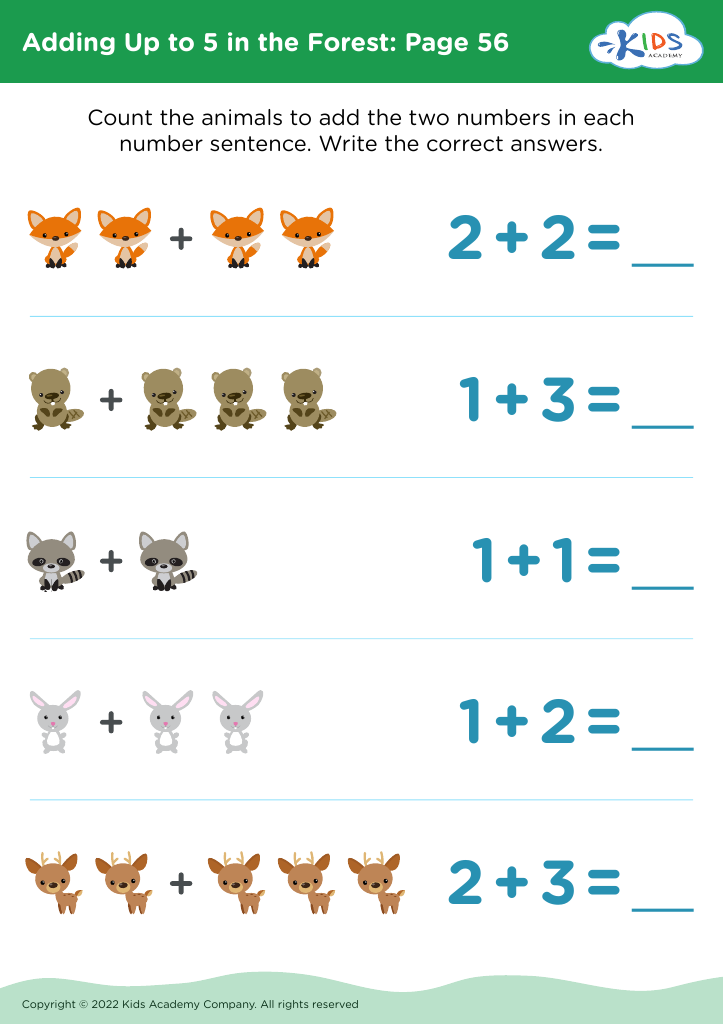
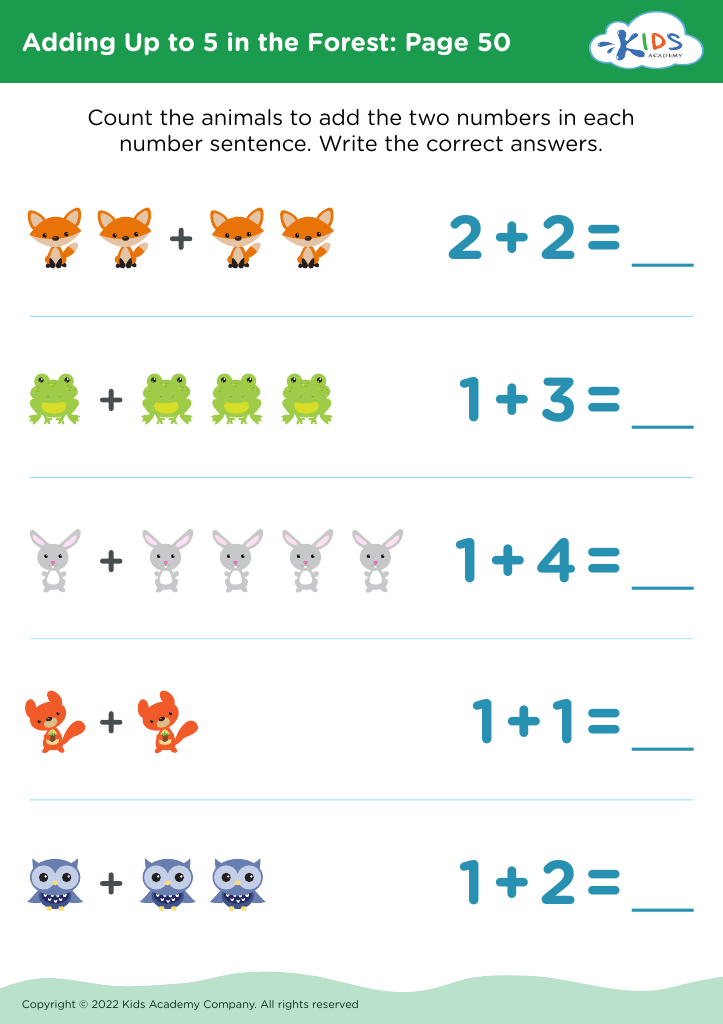
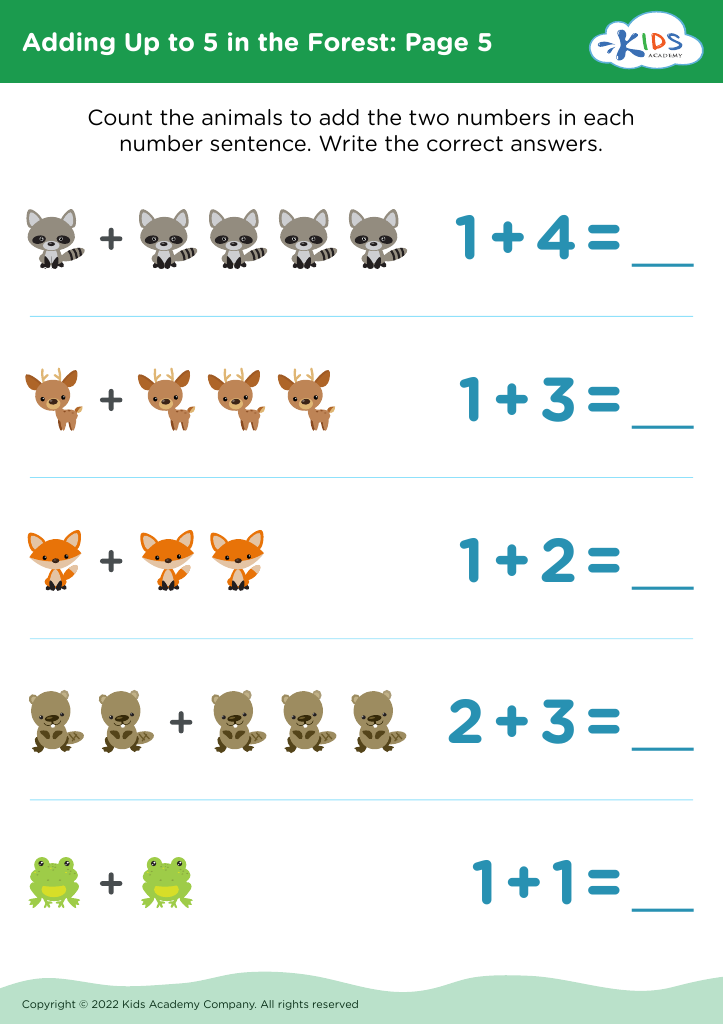
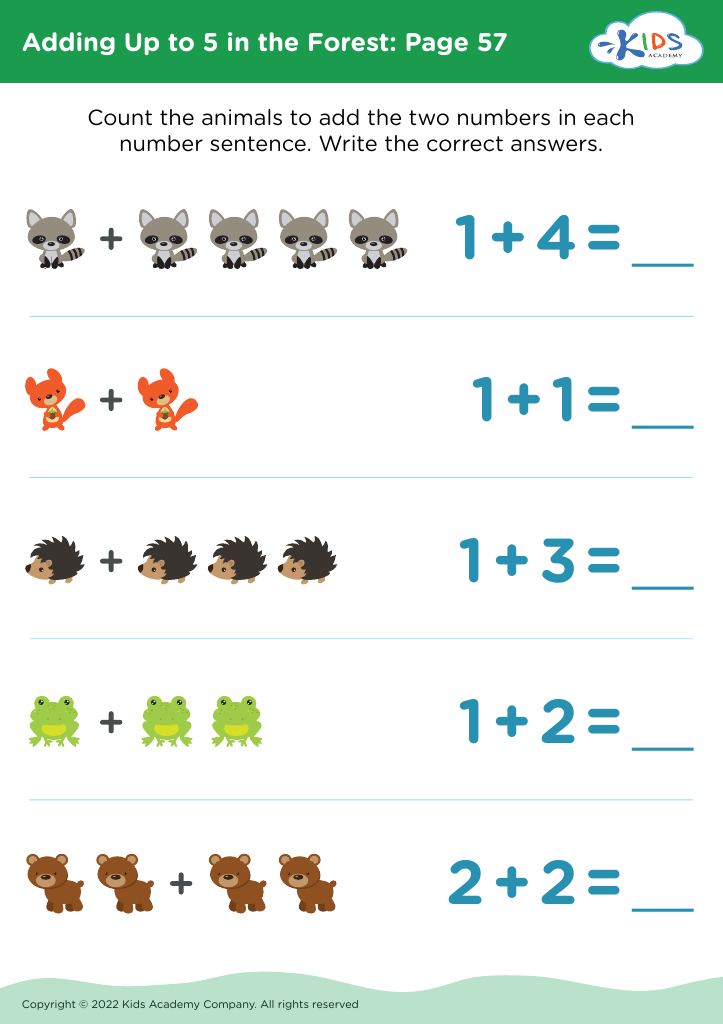



Animal recognition is an essential skill for young children, especially when exploring a rich environment like a forest. For ages 5-7, understanding and identifying different animals can greatly enhance their learning experience and foster a connection to nature.
Firstly, recognizing animals promotes curiosity and awareness about the natural world, boosting children’s observational skills. This awareness can help foster empathy towards living creatures, teaching them the value of respecting wildlife and their habitats. Moreover, identifying animals can be tied into lessons about ecosystems, food chains, and the roles different species play, enriching science education.
Engaging children in animal recognition activities can also support their social and emotional development. Collaborative activities in a classroom or during outdoor explorations encourage teamwork and communication. When children share knowledge about animal behaviors or habitats, they engage in meaningful conversations and collaborative problem-solving.
Lastly, spending time outdoors learning about animals promotes physical well-being and can combat sedentary lifestyles. These experiences can inspire a lifelong appreciation for nature, encouraging healthy habits and environmental stewardship. Thus, parents and teachers should prioritize animal recognition in forest settings, as it cultivates essential life skills, enriches education, and fosters a love for the natural environment.