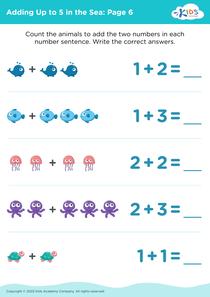
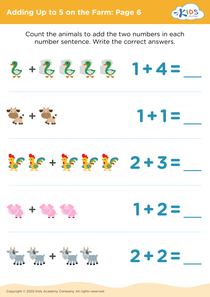
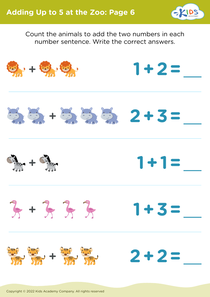
Nature appreciation Adding in the Forest Worksheets for Ages 5-7
5 filtered results
-
From - To
Introduce young learners to the beauty of nature and foundational math skills with these engaging "Adding in the Forest" worksheets, crafted for ages 5-7. These educational printables seamlessly blend nature appreciation with basic arithmetic, making learning an adventure. Featuring charming forest scenes, children are encouraged to explore addition while fostering a love for the natural world. Each worksheet is designed to captivate young minds, combining vibrant images of plants and animals with fun math problems. Cultivate a sense of wonder and appreciation for nature while promoting essential skills in mathematics, turning every learning session into an exciting journey through the forest.
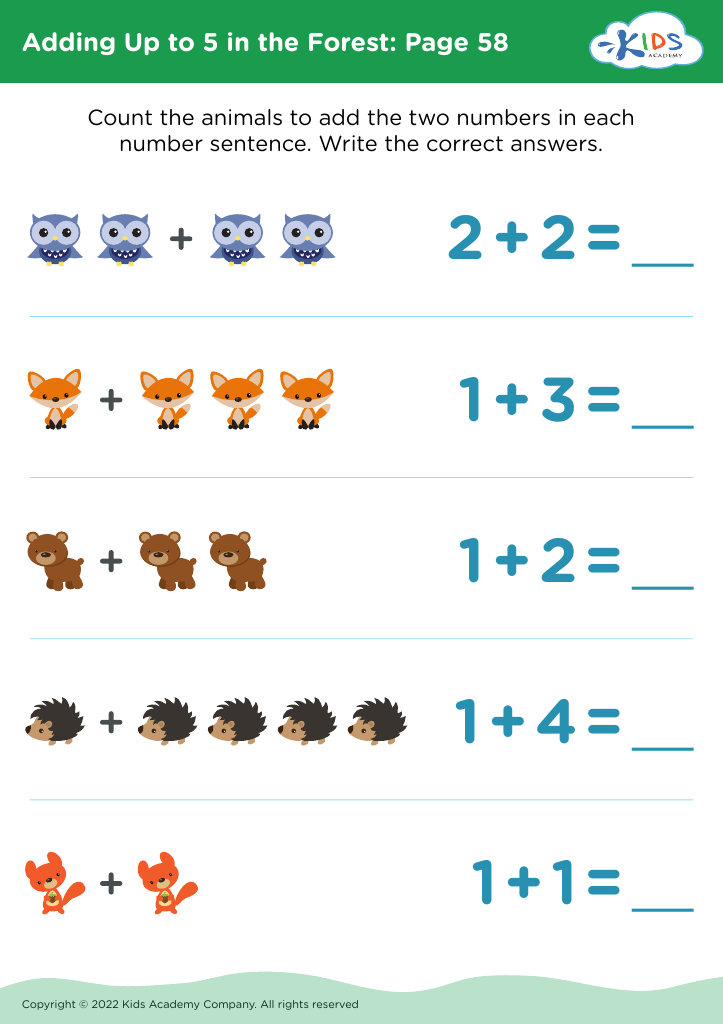
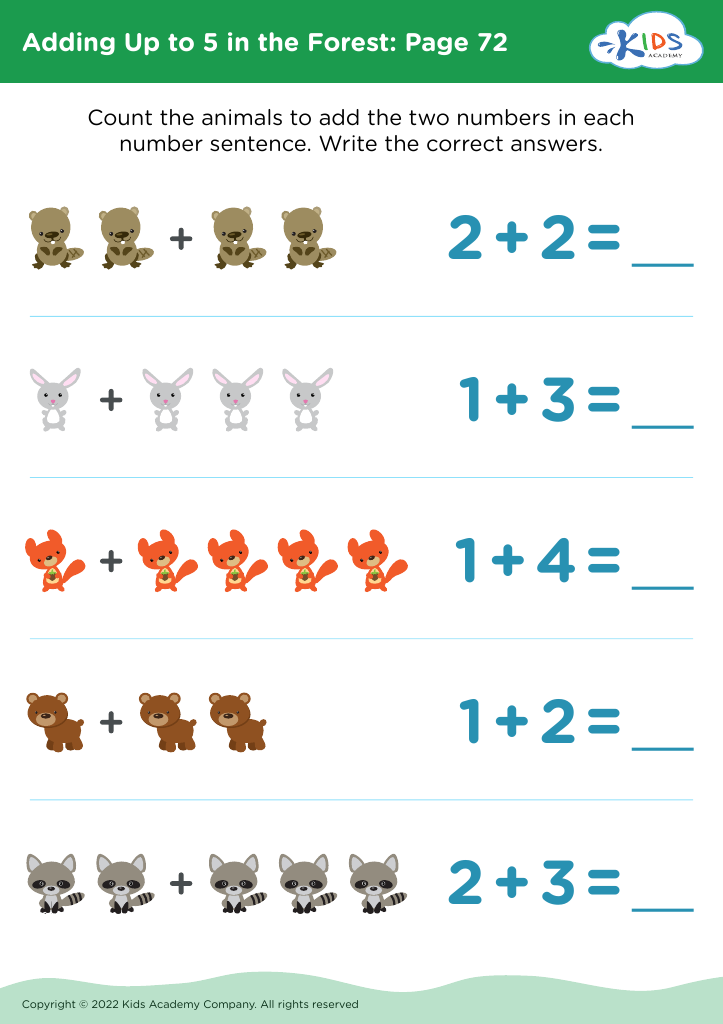
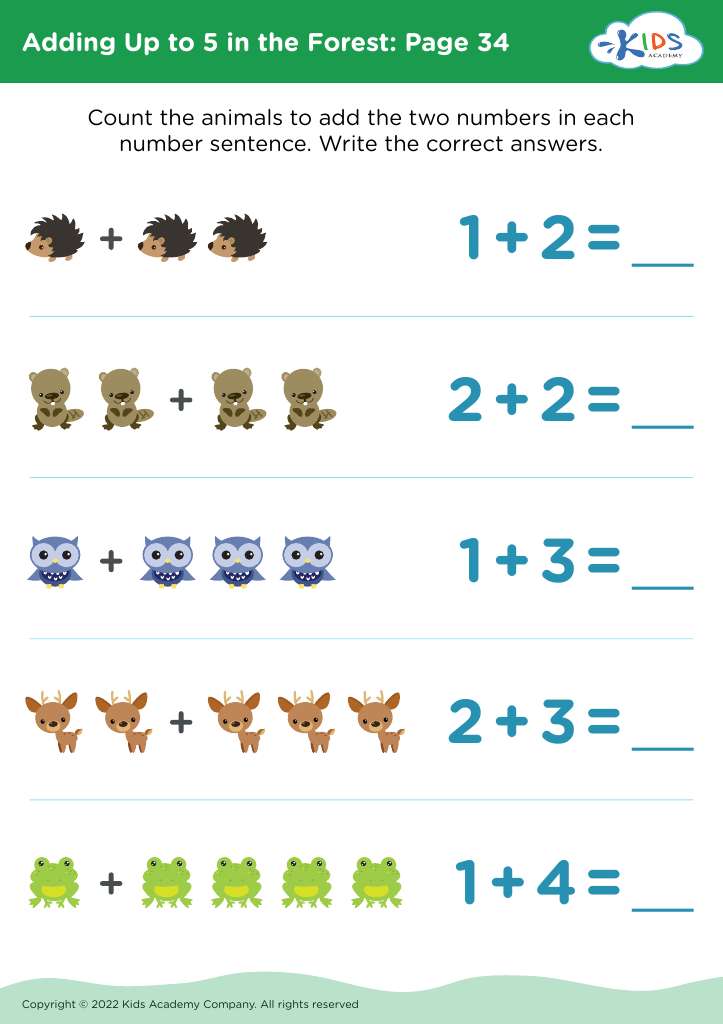
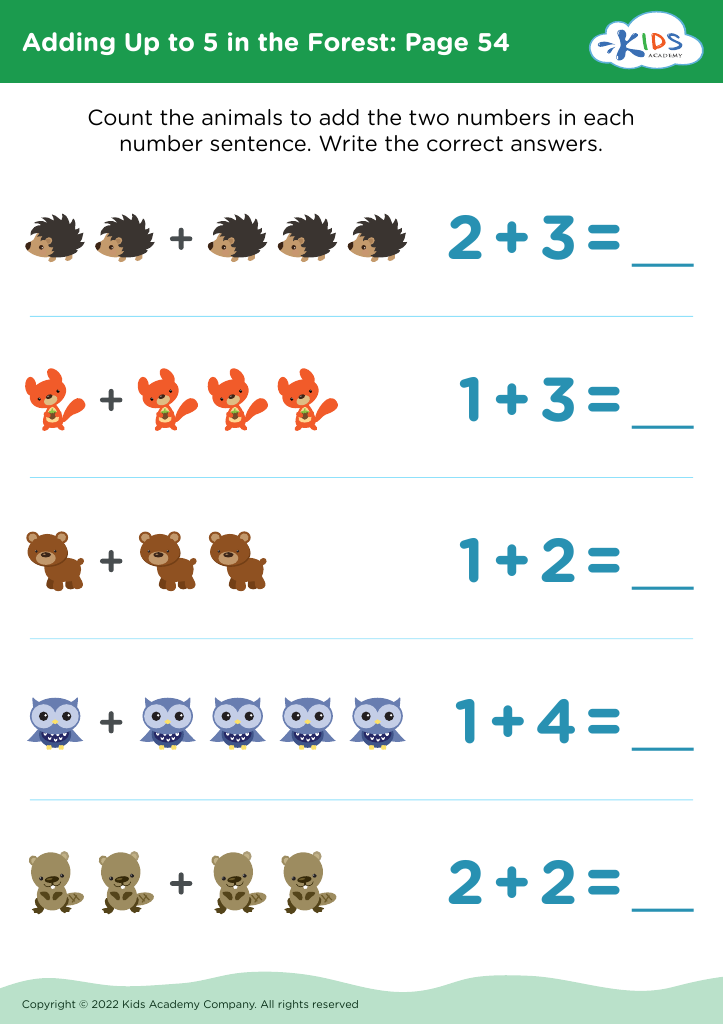
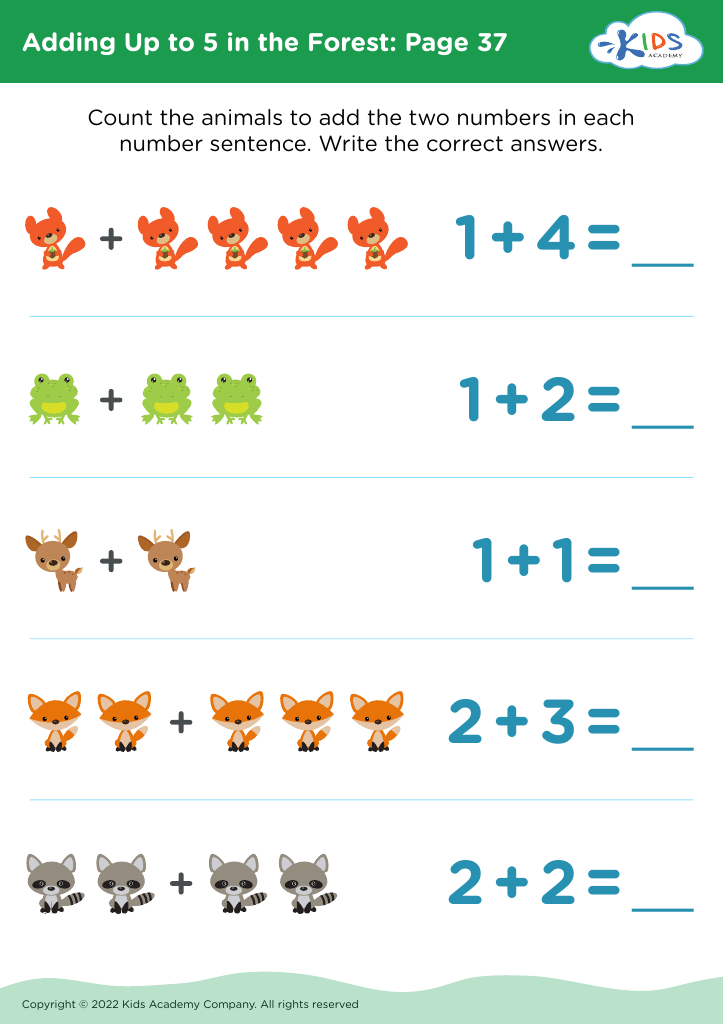



Nature appreciation, particularly through activities like exploring the forest, holds immense benefits for young children between the ages of 5 and 7. At this developmental stage, children’s senses and cognitive abilities are flourishing, and nature offers a rich, textured environment for exploration and learning. Immersing children in forest activities stimulates their curiosity and nurtures their innate sense of wonder about the world.
Firstly, time in nature has been shown to enhance mental well-being. The calming influence of trees, fresh air, and the presence of natural elements help reduce stress and anxiety. For young learners, this sets a positive tone that’s conducive to effective learning and emotional resilience. Exposure to the unstructured, dynamic environment of a forest helps develop critical thinking, problem-solving skills, and physical coordination as they navigate various terrains and natural obstacles.
Research also highlights that children with regular nature exposure tend to develop a deeper appreciation for the environment, fostering conservation-minded attitudes that can last a lifetime. These experiences cultivate respect for all living things and instill an understanding of interconnectedness in ecosystems.
Moreover, time in a forest nurtures social skills and cooperation, as children often engage in group play and discovery, supporting the development of communication and teamwork. For both parents and teachers, facilitating nature appreciation in a forest setting offers a holistic approach to a child’s physical, emotional, and intellectual growth.