Addition Practice Adding up to 100 Misc Worksheets for Ages 5-7
3 filtered results
-
From - To
Enhance your child’s math skills with our "Addition Practice: Adding up to 100" worksheets, designed specifically for ages 5-7. This collection of engaging and interactive worksheets helps young learners develop their addition abilities through a variety of fun exercises. Each worksheet offers a unique approach to practicing addition, enabling children to build confidence and strong foundational skills. From simple sums to mixed challenges, these resources cater to different learning styles and ensure fun-filled learning sessions. Perfect for both classroom and home use, these worksheets are an essential tool in introducing your child to the world of math. Start counting with joy!
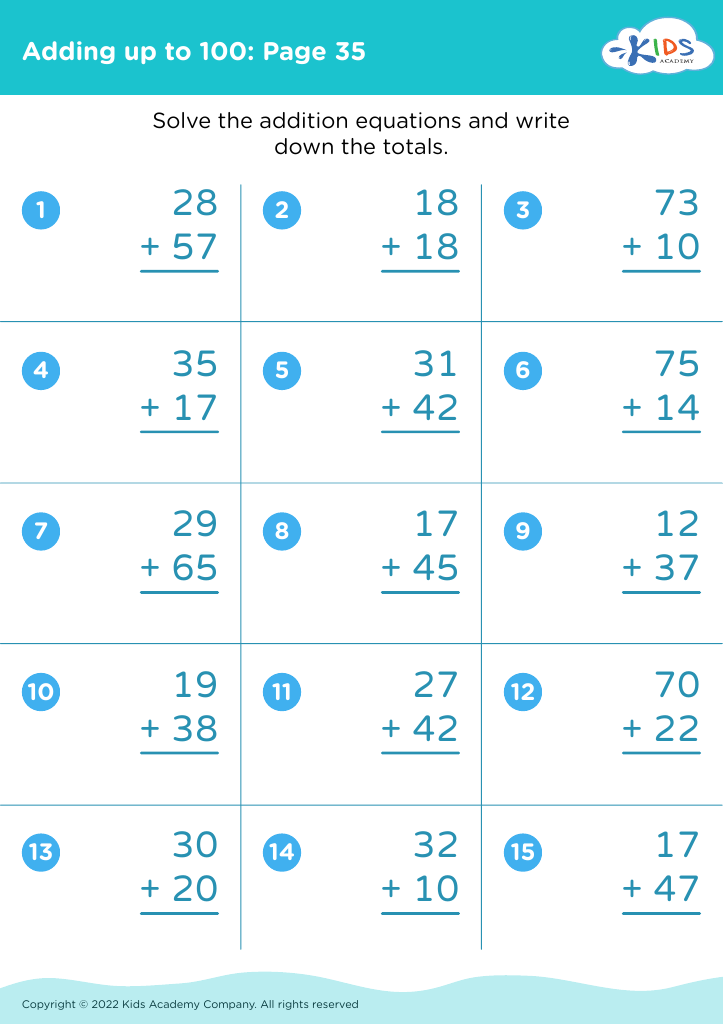
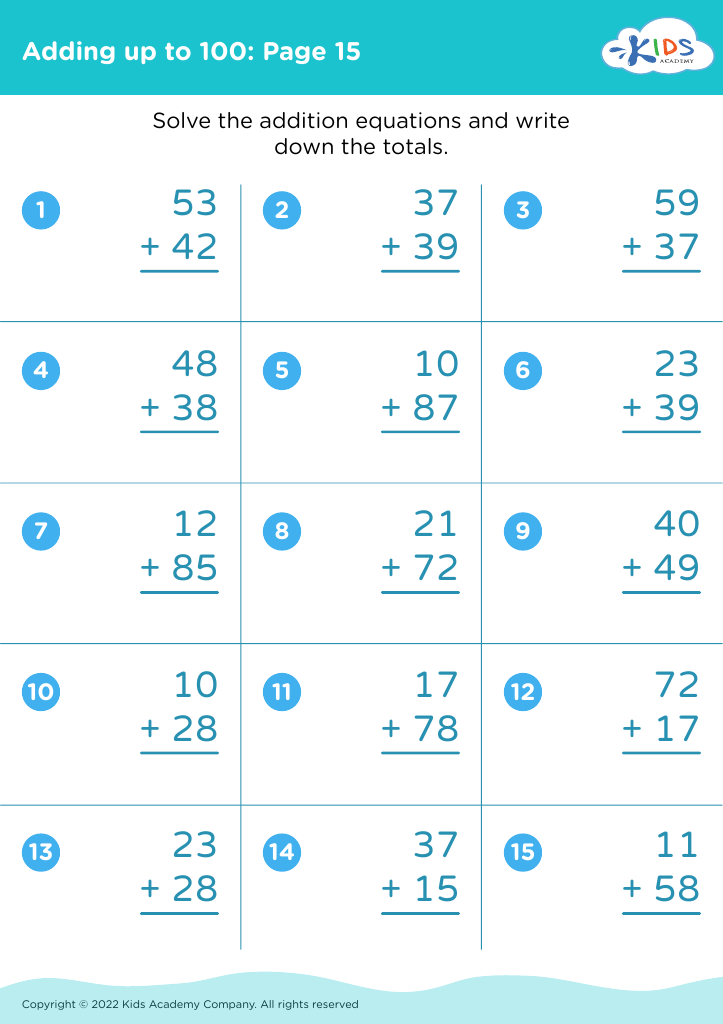
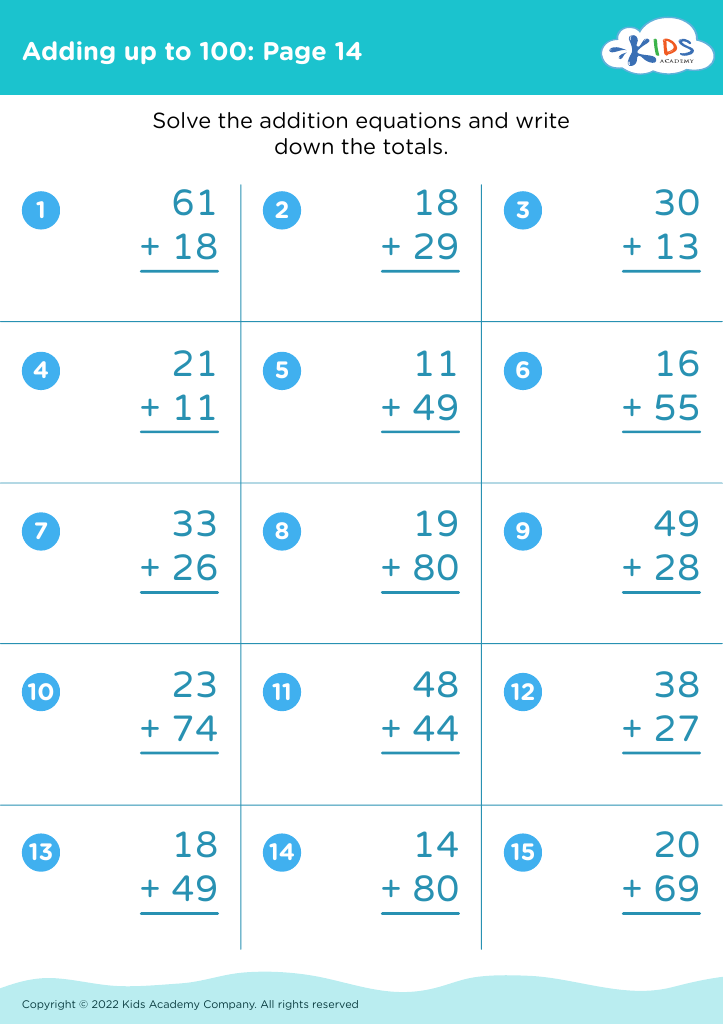


Addition practice for children aged 5-7 is crucial for several reasons, particularly when the exercises involve adding up to 100. Firstly, this age group is at a formative stage in their mathematical development; mastering basic addition skills serves as a foundational building block for more complex math later on. Understanding how to quickly and accurately solve addition problems fosters confidence in children, making them more eager to tackle new learning challenges.
Moreover, the ability to add up to 100 helps kids develop estimation skills and understand number relationships. It promotes mental math abilities—skills that are increasingly advantageous in our fast-paced, technology-driven world. Additionally, practicing addition in a fun and engaging way can enhance cognitive development and critical thinking.
For teachers and parents, supporting addition practice is a way to invest in their children’s educational journey. It creates opportunities for meaningful interaction, reinforcing key concepts and allowing caregivers to gauge a child's understanding and progress. By fostering a solid grasp of addition, parents and teachers equip children with the skills they need for academic success and lifelong learning. Ultimately, proficiency in addition impacts self-esteem and the enjoyment of math, which can transcend beyond the classroom.