Counting practice Adding up to 100 Misc Worksheets for Ages 5-7
4 filtered results
-
From - To
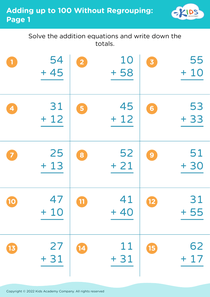
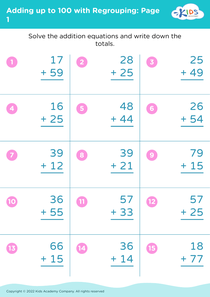
Welcome to our "Counting Practice: Adding Up to 100 Misc Worksheets" page, designed specifically for children aged 5-7! These engaging worksheets help young learners master basic addition skills while counting up to 100 in a fun and interactive way. Our varied activities enhance number recognition, promote mental math, and build a strong mathematical foundation. With colorful illustrations and clear instructions, kids will enjoy practicing their addition skills through games, puzzles, and exercises that encourage critical thinking. Perfect for home, classroom, or supplementary learning, our worksheets nurture your child’s math confidence and inspire a lifelong love of numbers!
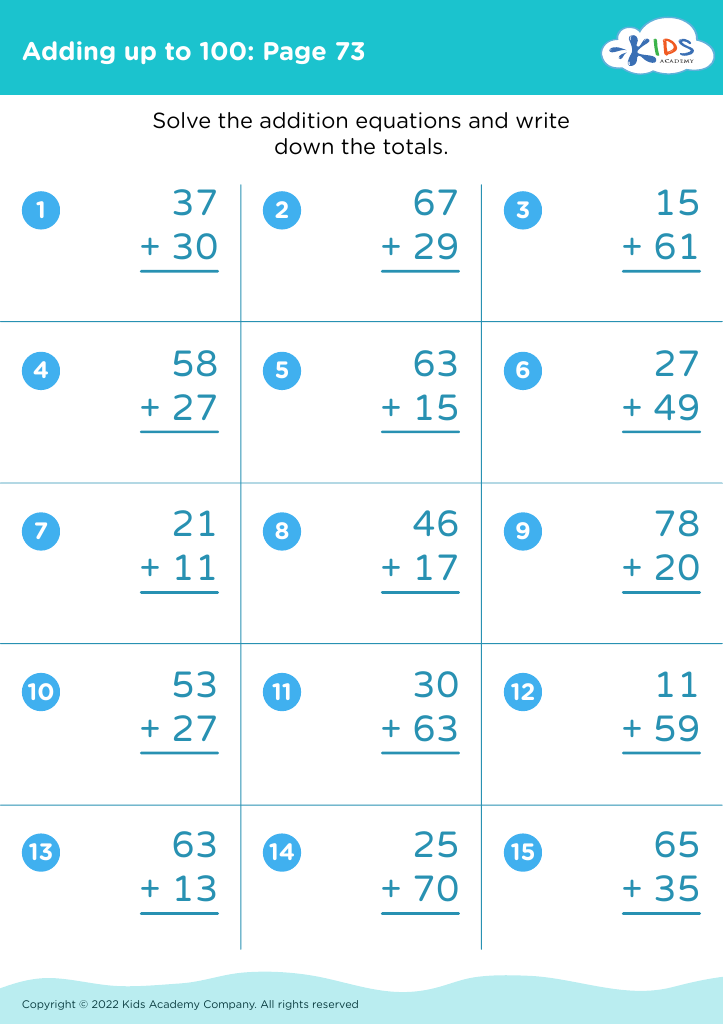
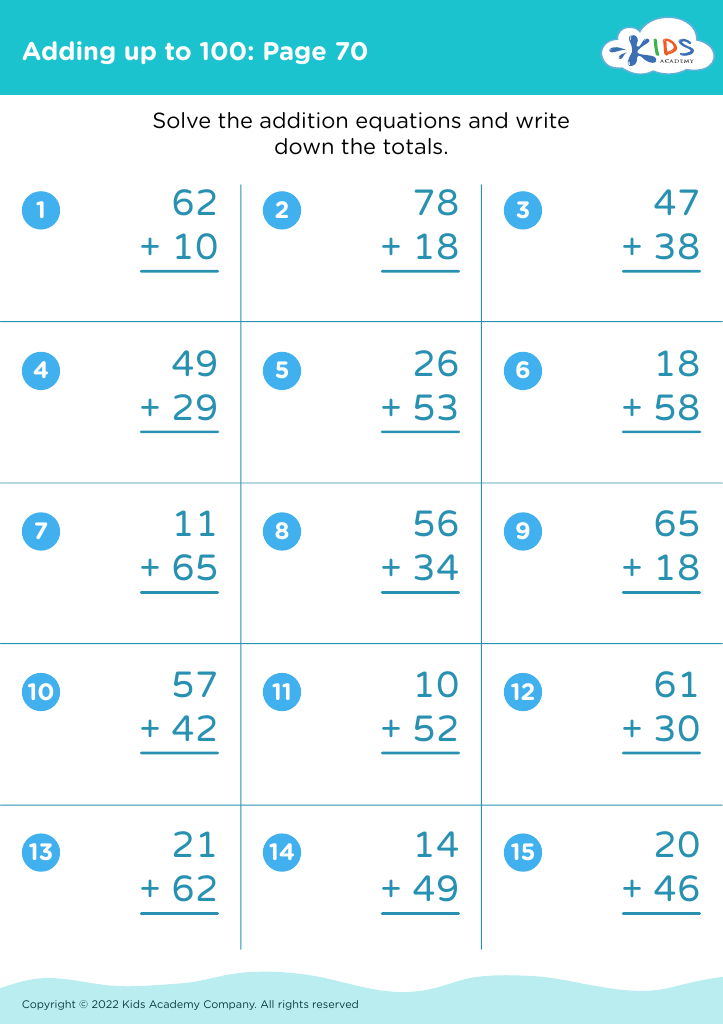
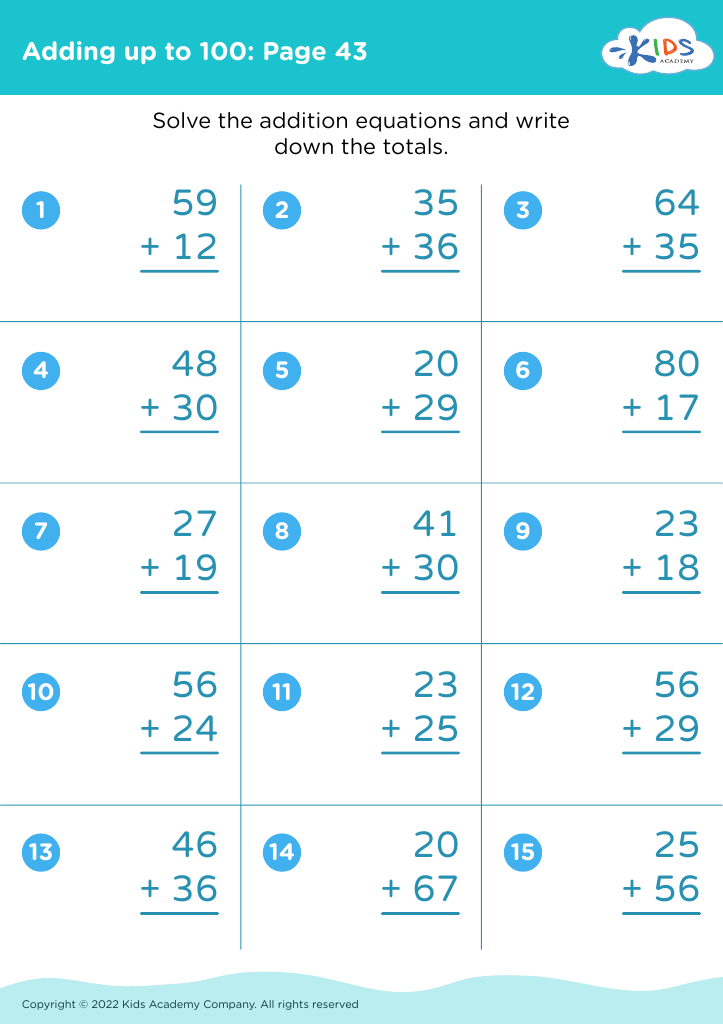
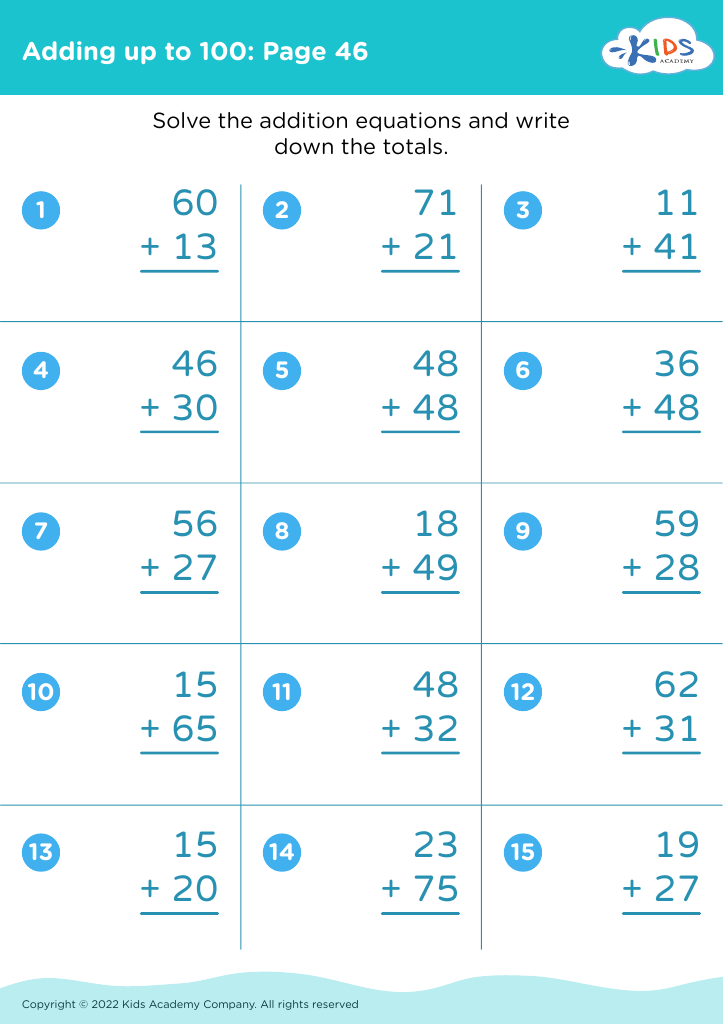


Counting practice, particularly exercises like adding up to 100, is crucial for children aged 5-7 as it lays the foundation for their mathematical development. First, this age group is highly impressionable and receptive to learning, making it an ideal time for introducing fundamental concepts. Mastering counting and basic addition enhances numerical fluency, allowing children to quickly grasp more complex mathematical ideas later on.
Moreover, engaging in counting activities helps develop important cognitive skills. It encourages problem-solving, critical thinking, and sequencing—the building blocks for advanced arithmetic and other math-related subjects. Additionally, by integrating fun counting games and practical activities, teachers and parents can arouse a child’s curiosity and love for learning, making math less intimidating.
Furthermore, strong counting skills correlate to success in various everyday situations, providing children with the tools they need to navigate the world around them. When caregivers prioritize counting practice, they foster a positive attitude towards mathematics and help children gain confidence in their abilities. Ultimately, these skills not only benefit academic performance but also encourage a lifelong appreciation for math, contributing to their overall development as well-rounded individuals.