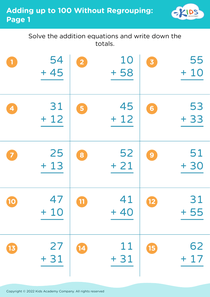
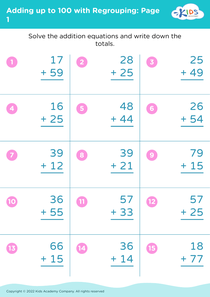
Understanding fractions Adding up to 100 Misc Worksheets for Ages 5-7
16 filtered results
-
From - To
Welcome to our "Understanding Fractions: Adding Up to 100 Misc Worksheets" designed specifically for young learners aged 5-7! These engaging worksheets provide a fun way for children to grasp the concept of fractions while exploring numbers that add up to 100. Through colorful visuals and interactive exercises, students will learn essential skills in recognizing, comparing, and adding fractions. Each worksheet aligns with early math standards, promoting a deeper understanding of fractions in a supportive learning environment. Perfect for home practice or classroom activities, these resources will inspire curiosity and confidence in budding mathematicians. Get ready to explore the world of fractions!
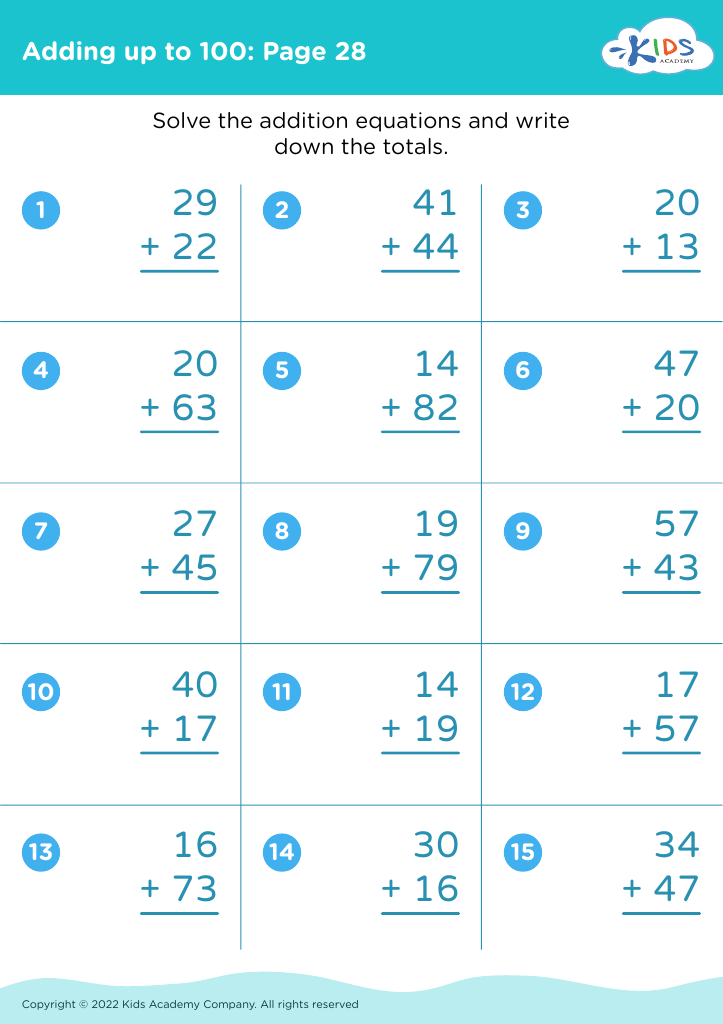
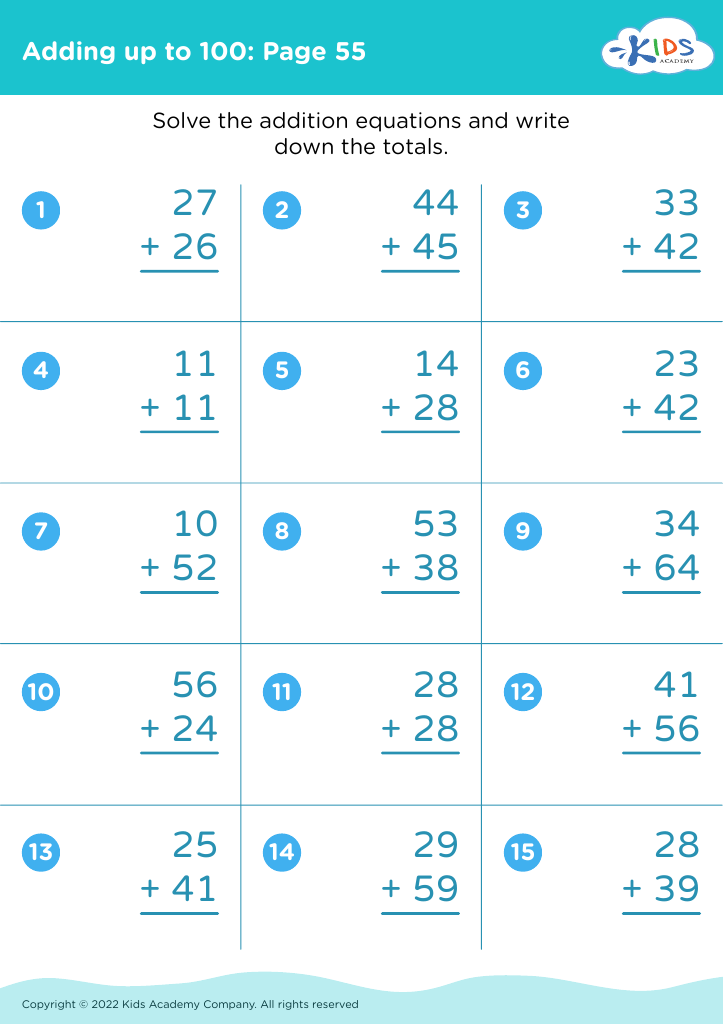
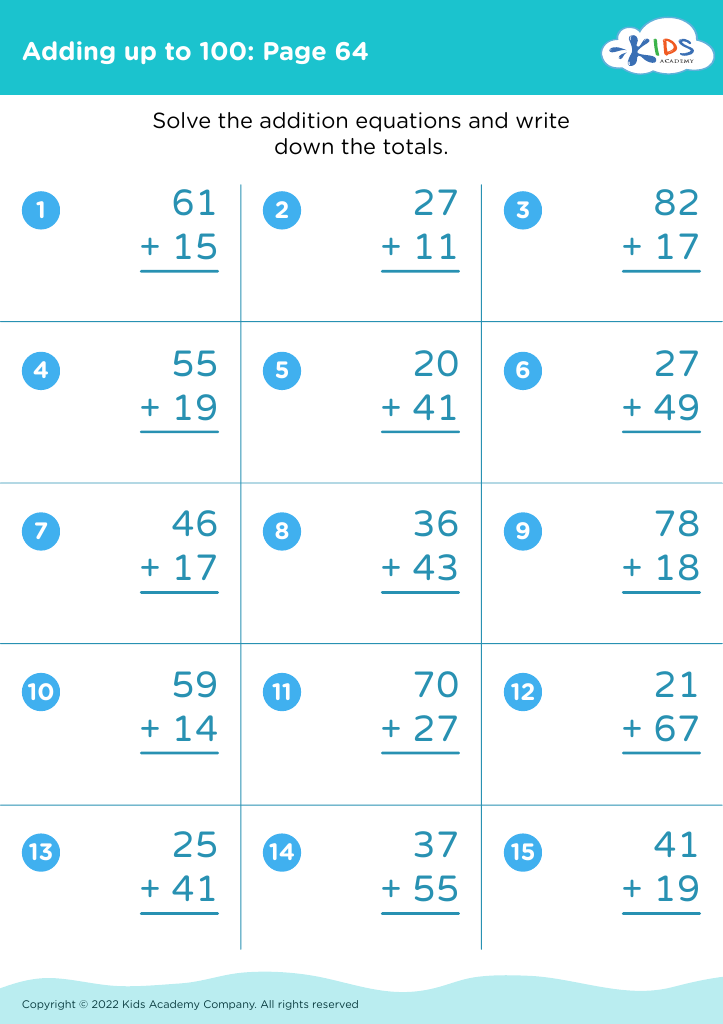
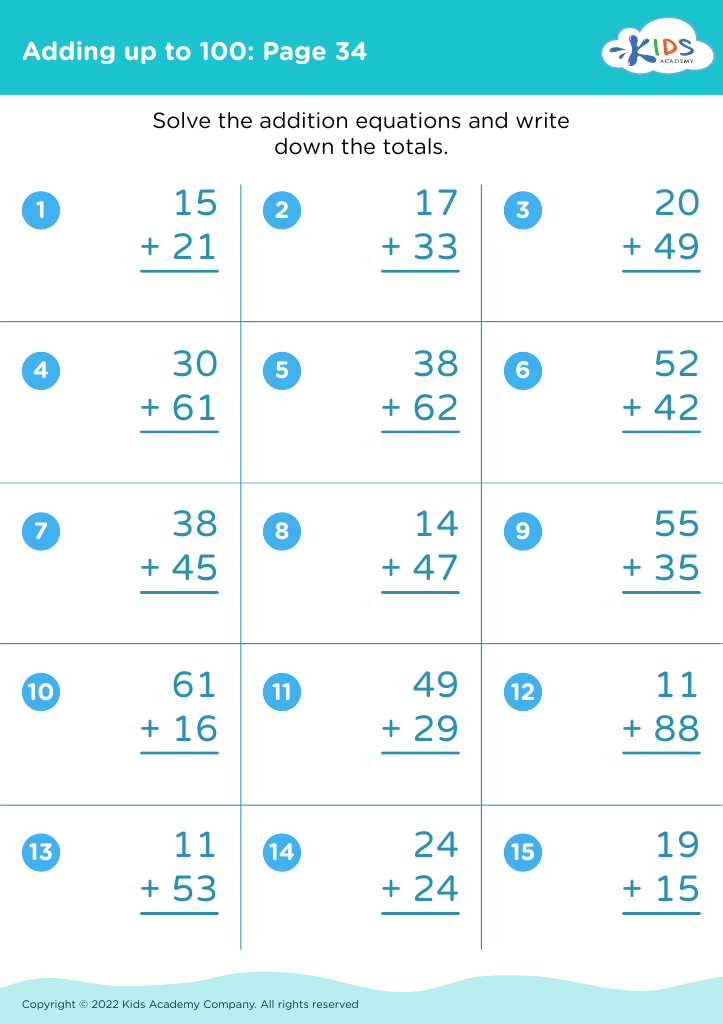
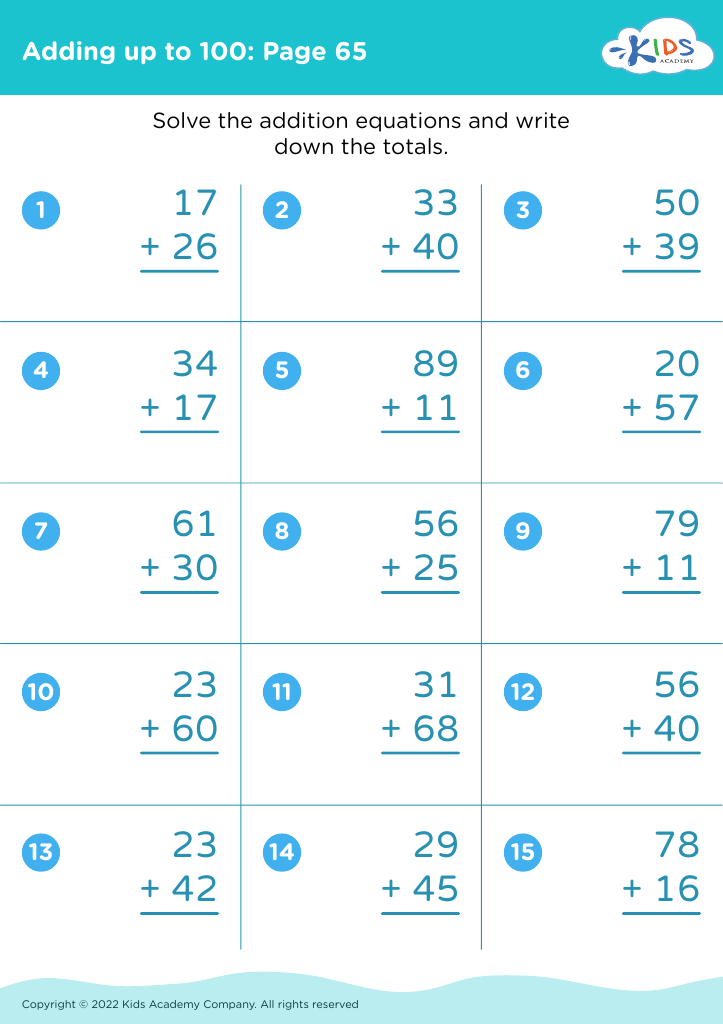
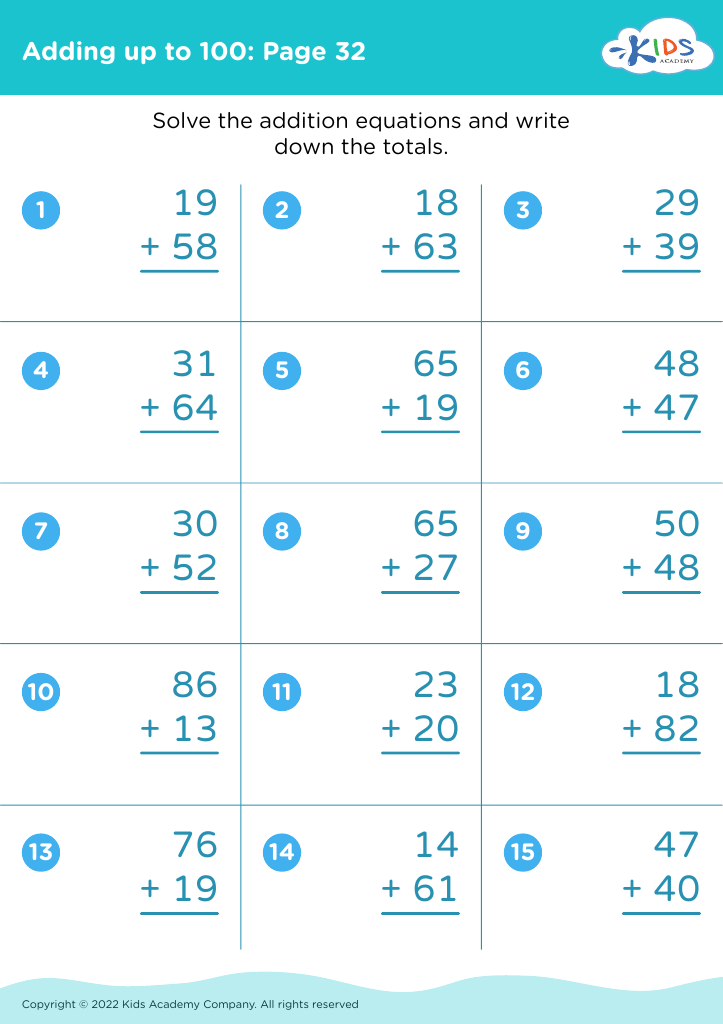
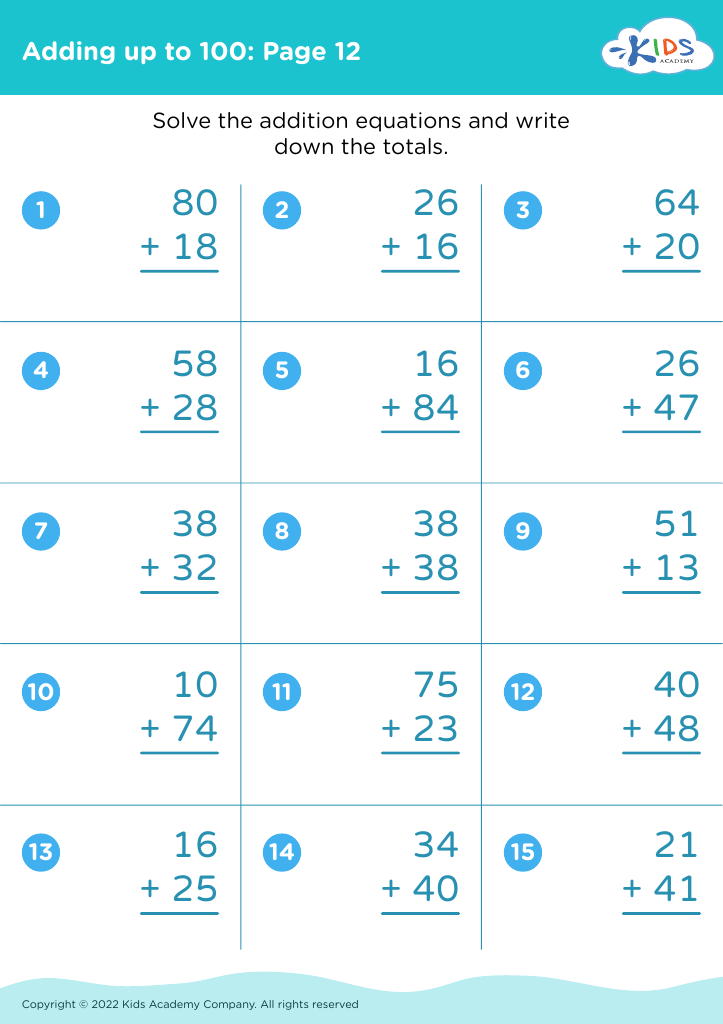
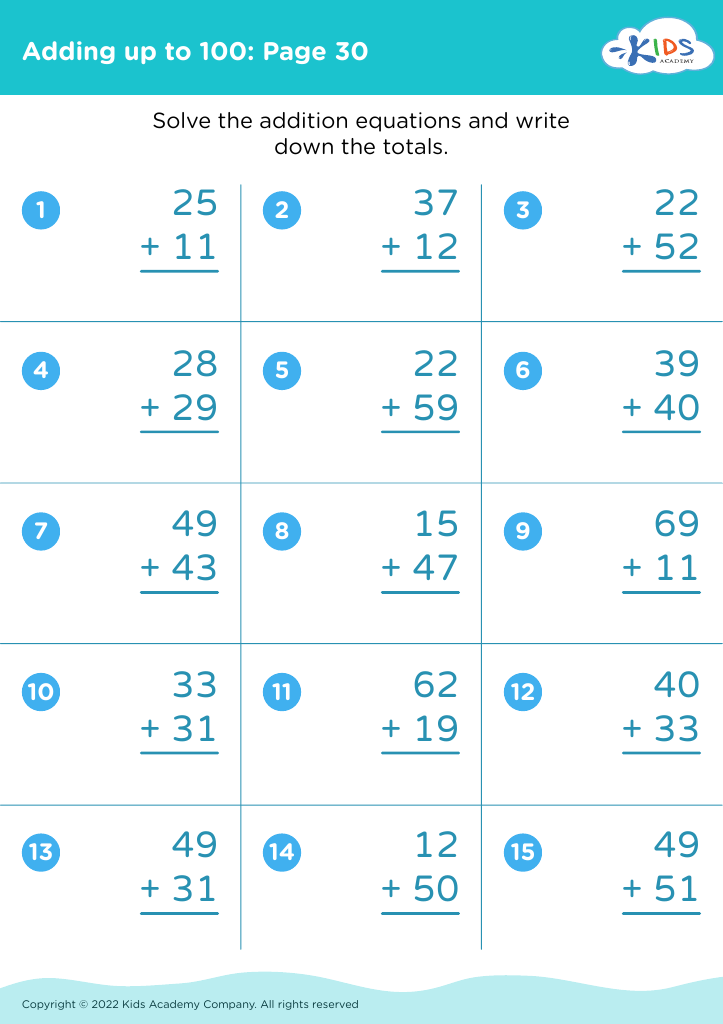
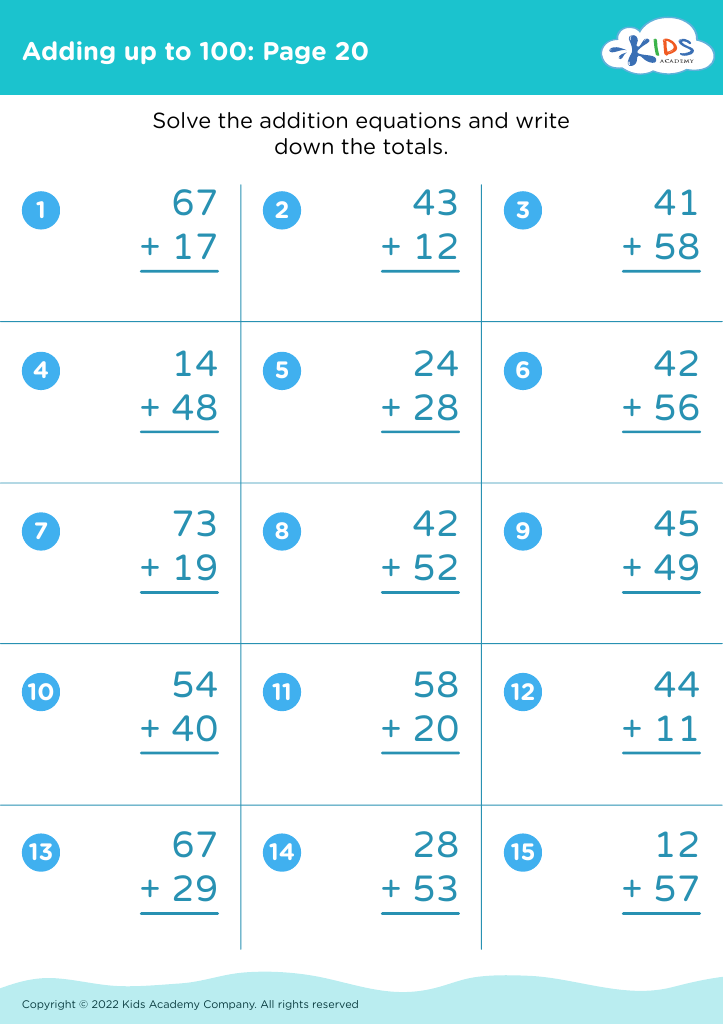
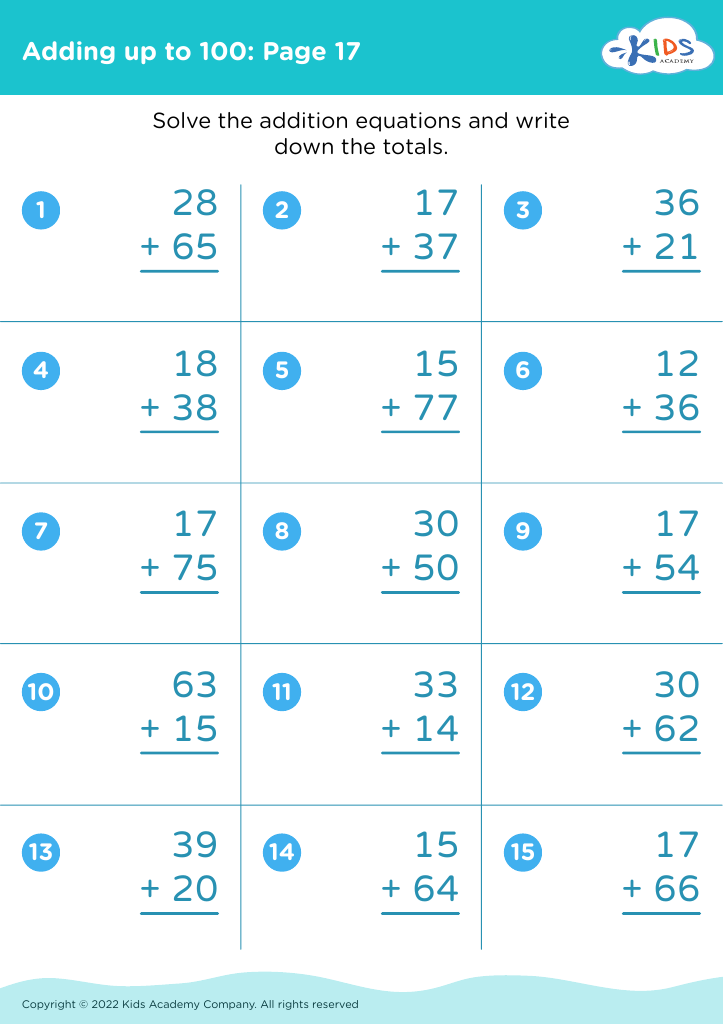
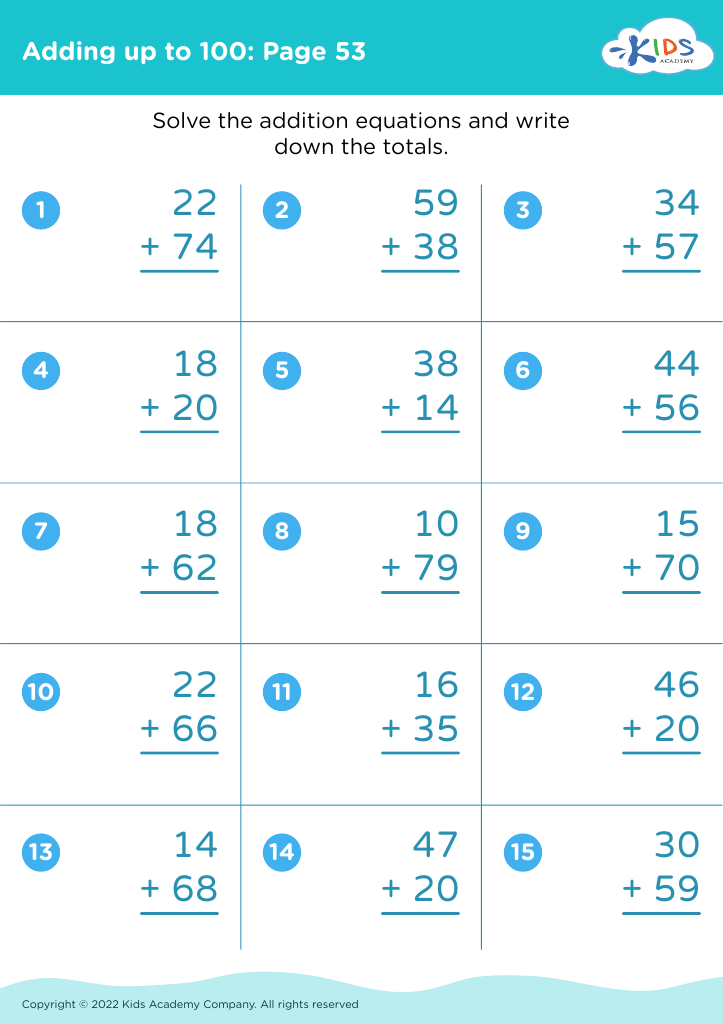
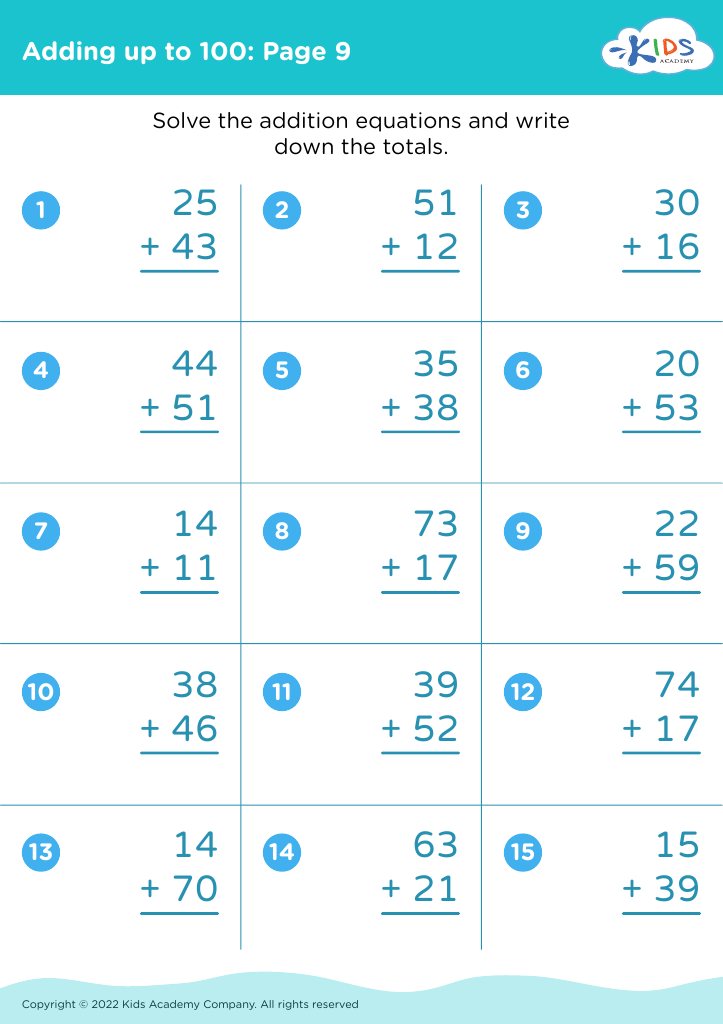
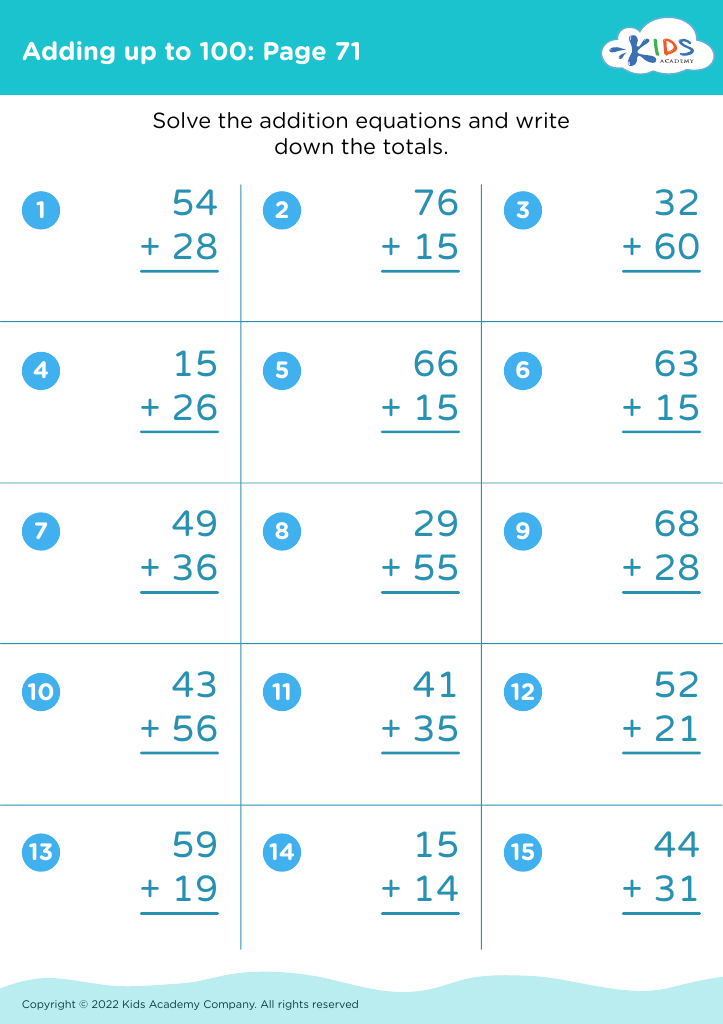
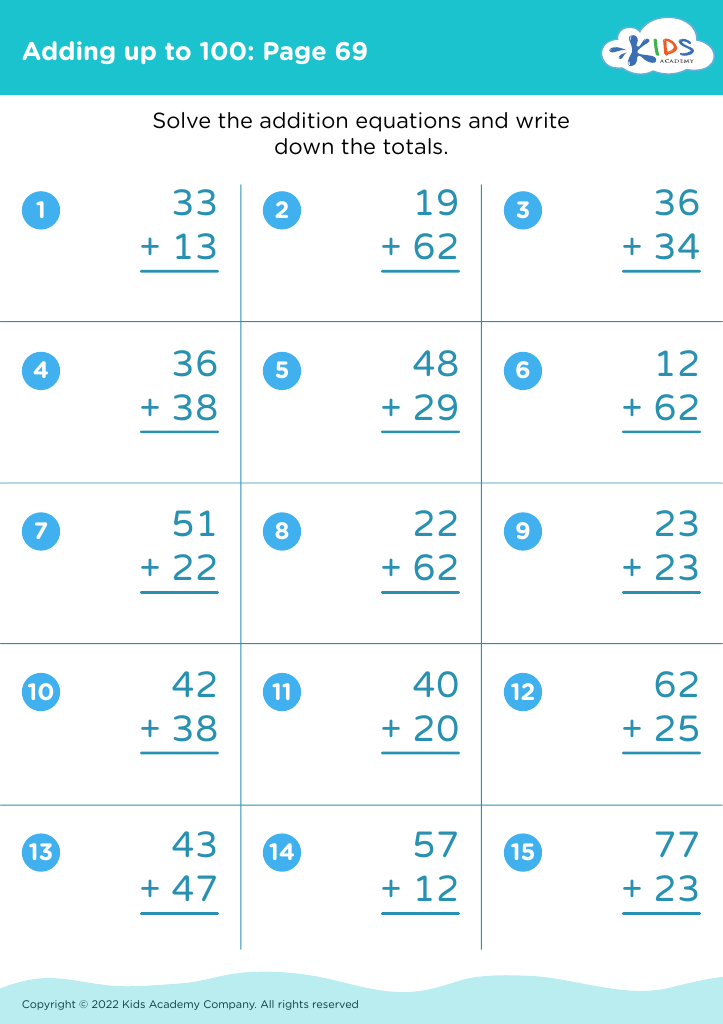
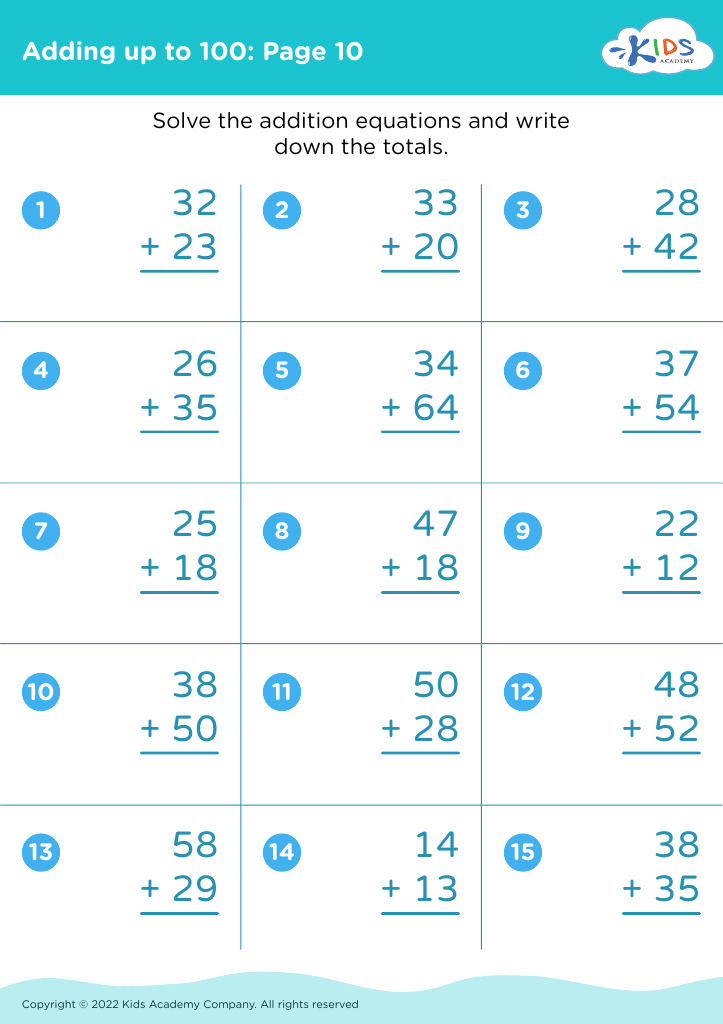
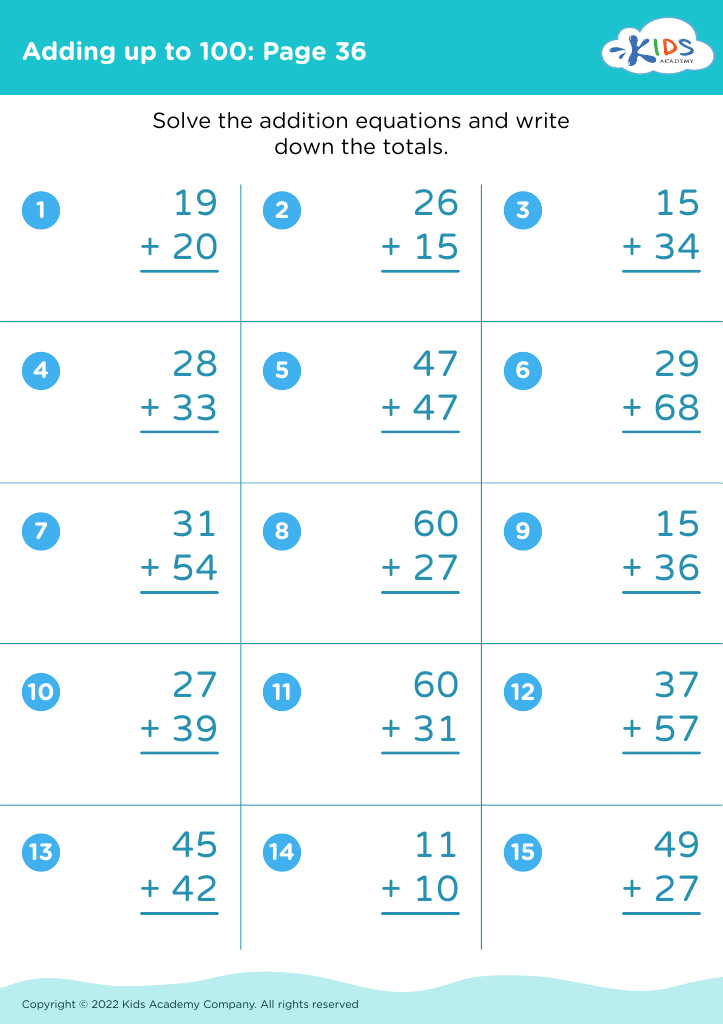


Understanding fractions and concepts like "Adding up to 100" are crucial for children aged 5-7, as they lay the foundational skills for mathematics and problem-solving. At this age, children are naturally curious and eager to learn. Introducing them to fractions helps develop their ability to recognize parts of a whole, fostering a deeper comprehension of numbers and relationships. This understanding is essential not just in math, but in real-life scenarios, such as cooking, sharing, and dividing resources, which can enhance their critical thinking and reasoning skills.
"Adding up to 100" introduces young learners to place value, addition, and the concept of tens and units, foundational for future arithmetic learning. Understanding how numbers fit into a larger context prepares them for more complex math in later grades.
Moreover, these concepts encourage teamwork and collaborative learning when children work in groups to solve problems. Parents and teachers should care about these topics as they empower children to build confidence in their mathematical abilities. Early math skills have been linked to future academic success. By investing time in these essential areas, caregivers can foster a love for learning, setting a positive trajectory for children's lifelong educational journey.