Understanding patterns Adding up to 100 Misc Worksheets for Ages 5-7
6 filtered results
-
From - To
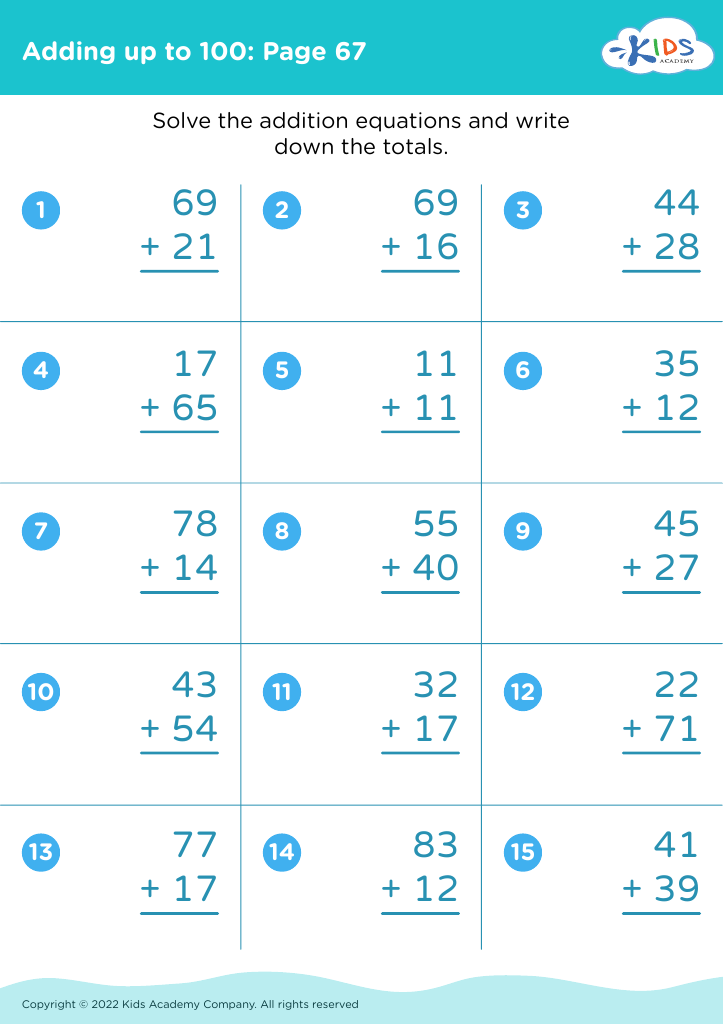
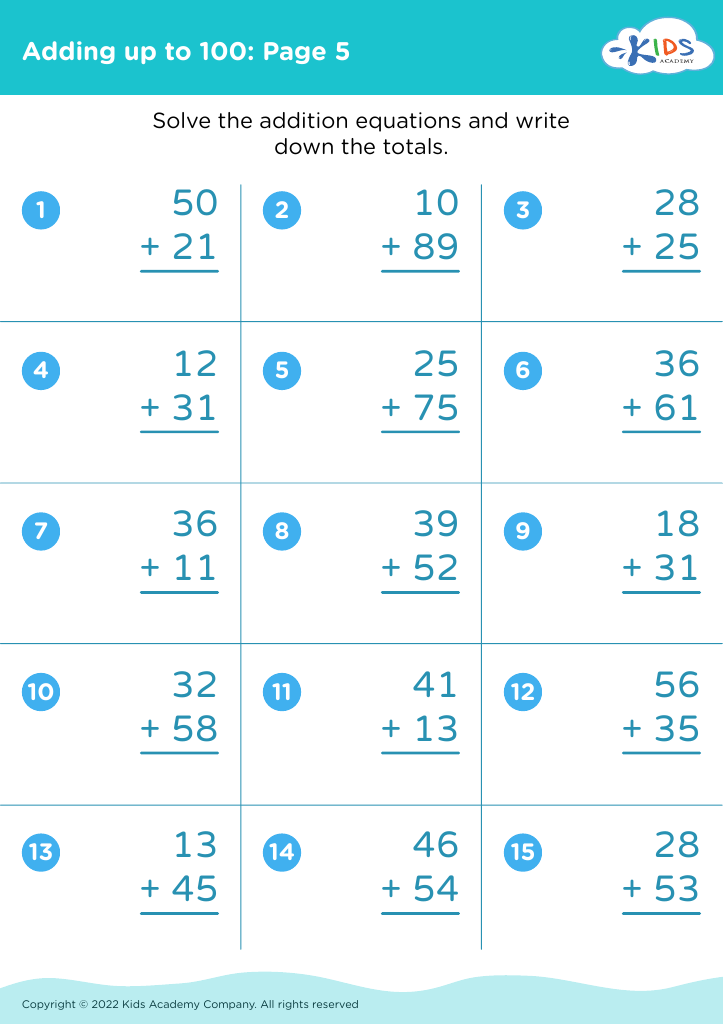
Explore our engaging and educational worksheets specifically designed for ages 5-7, aimed at developing their understanding of patterns and adding up to 100. These worksheets are packed with fun activities that enhance young learners' math skills through pattern recognition and simple arithmetic exercises. Perfect for both classroom and at-home learning, each worksheet challenges children with vibrant designs and age-appropriate tasks. They help budding mathematicians build a solid foundation in fundamental math concepts while keeping learning enjoyable. Visit Kids Academy to download and print these valuable resources, promoting interactive and effective learning for your little ones.
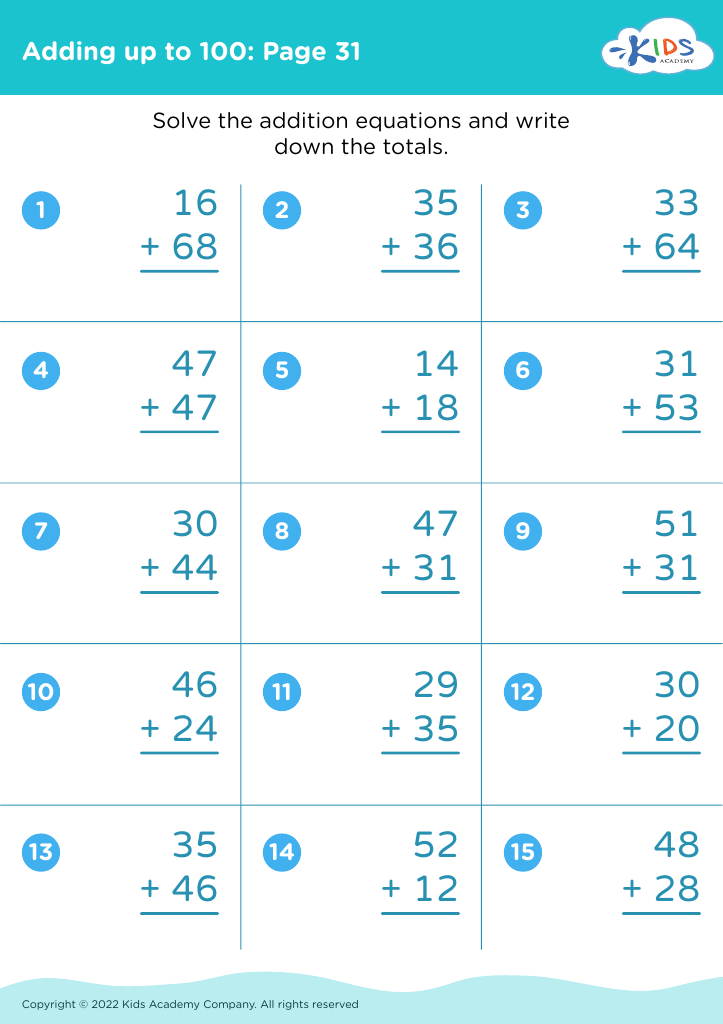
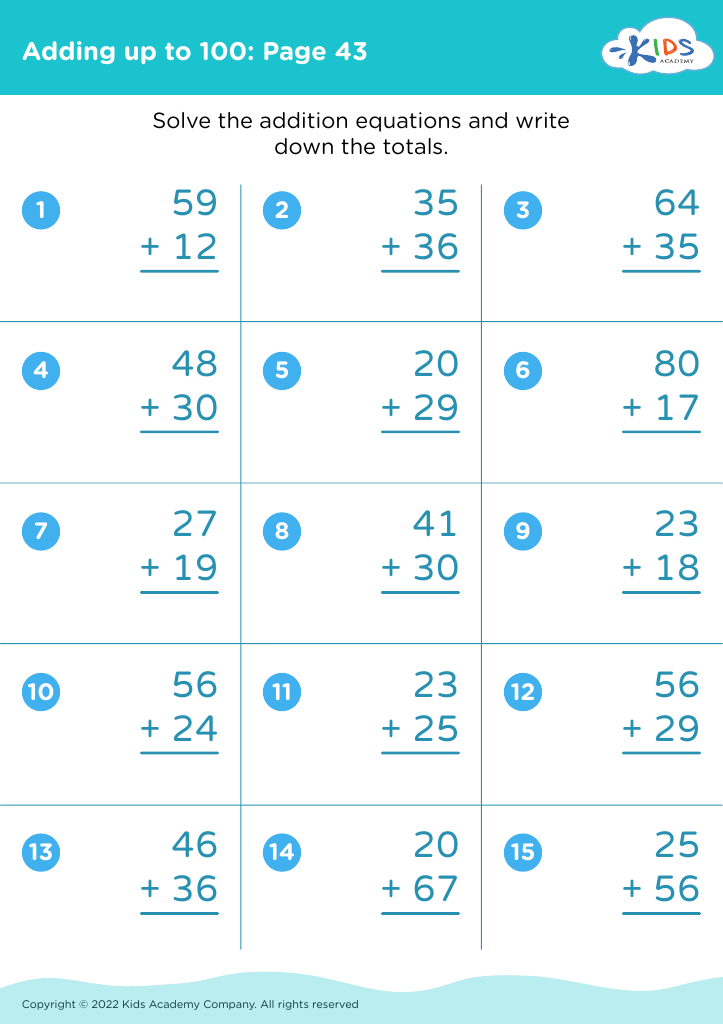
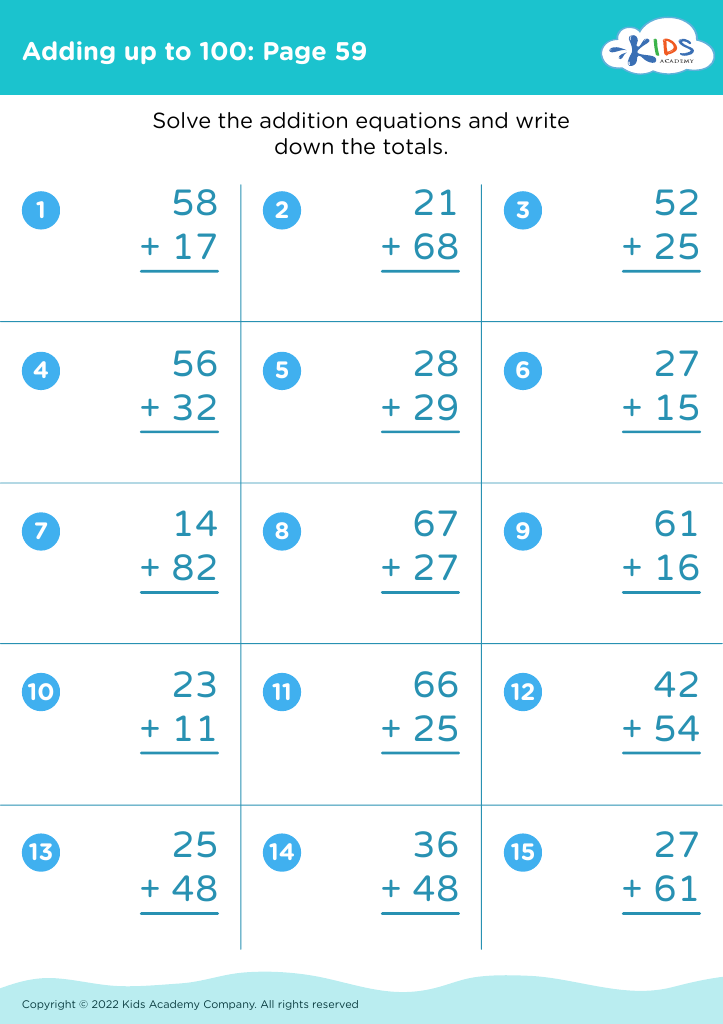
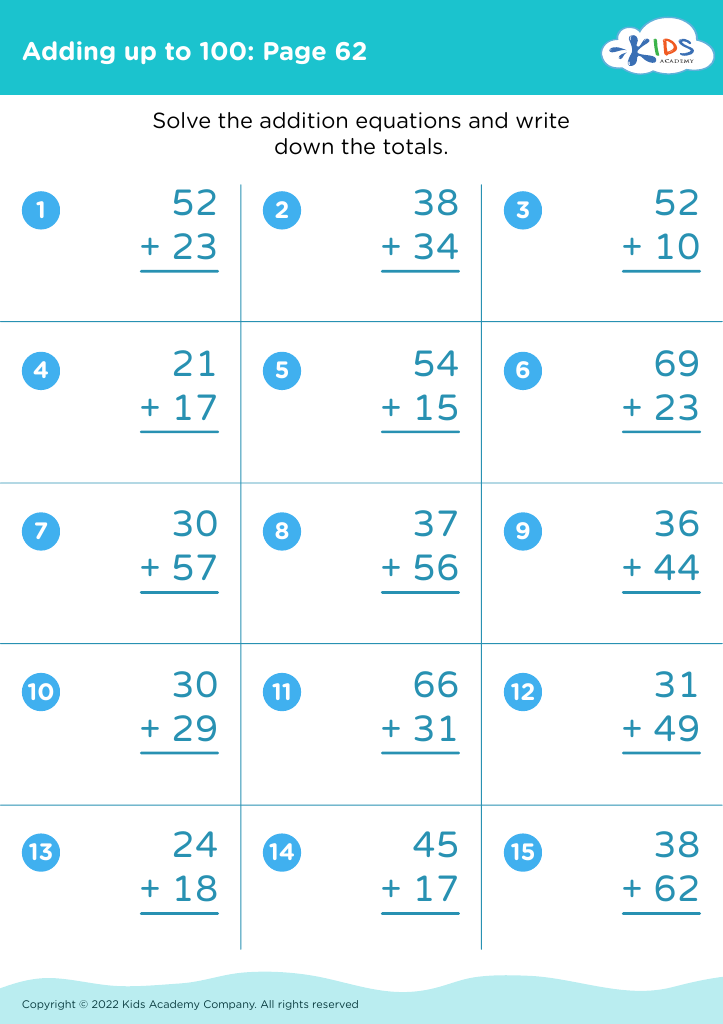


Understanding patterns, adding up to 100, and other miscellaneous core math concepts are foundational for young children ages 5-7 and critically support their cognitive development and problem-solving skills. Grasping patterns helps children recognize relationships and predict sequential events, which can enhance logical thinking and reasoning abilities. For instance, understanding a simple alternating color pattern can translate to identifying more complex mathematical and life patterns later on.
These skills are not confined to mathematics alone; they assist in enhancing reading abilities, where recognizing letter patterns and phonetic sounds is key. Meanwhile, learning to add up to 100 fortifies foundational arithmetic proficiency. This foundational skill is essential as it builds the basis for more complex mathematical operations like multiplication and division they will encounter in the coming years.
Moreover, building confidence in these essential skills at a young age can significantly increase a child's academic self-esteem and persistence. When children know that they can make sense of numbers and patterns, they feel more competent and are likely to take on new challenges with enthusiasm.
Therefore, parents and teachers should prioritize these skills in early education to encourage well-rounded cognitive growth, instilling a love for learning and setting up children for long-term academic success.