Critical Thinking Adding up to 1000 Misc Worksheets for Ages 5-7
3 filtered results
-
From - To
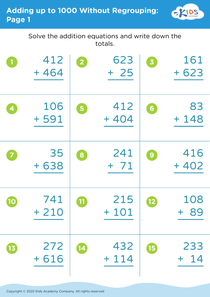
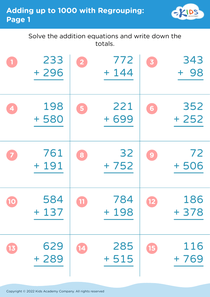
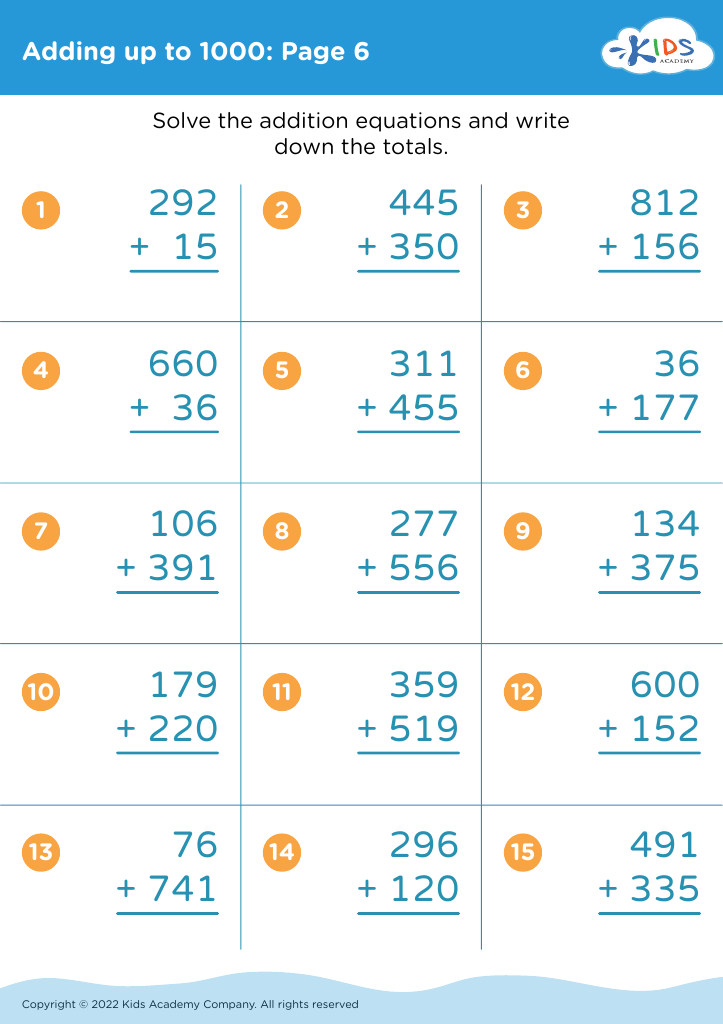
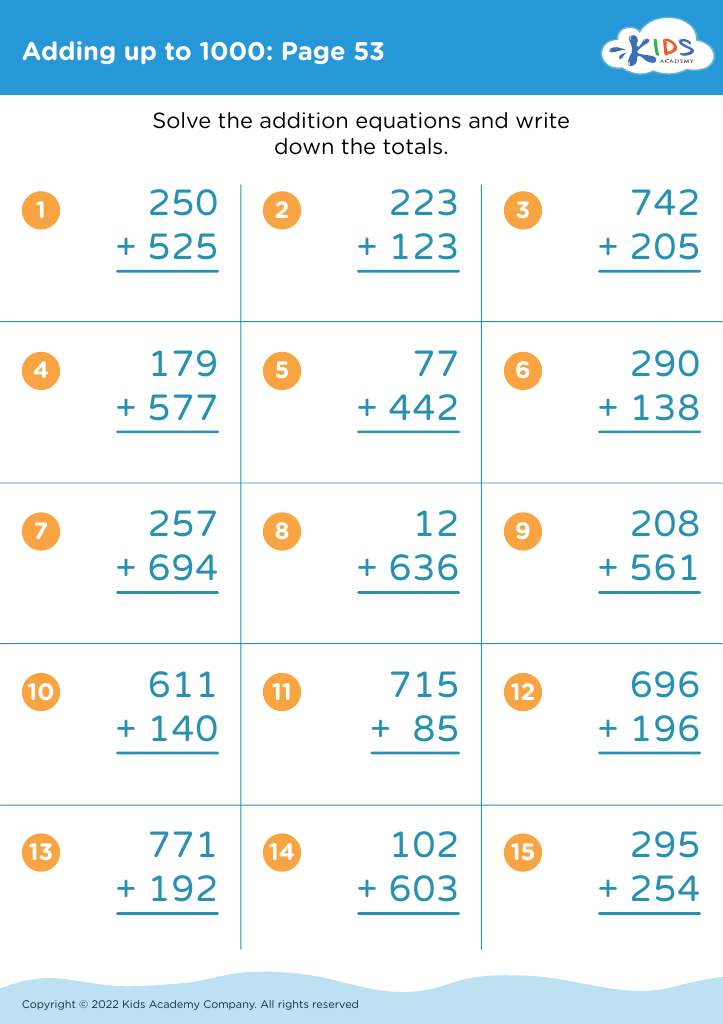
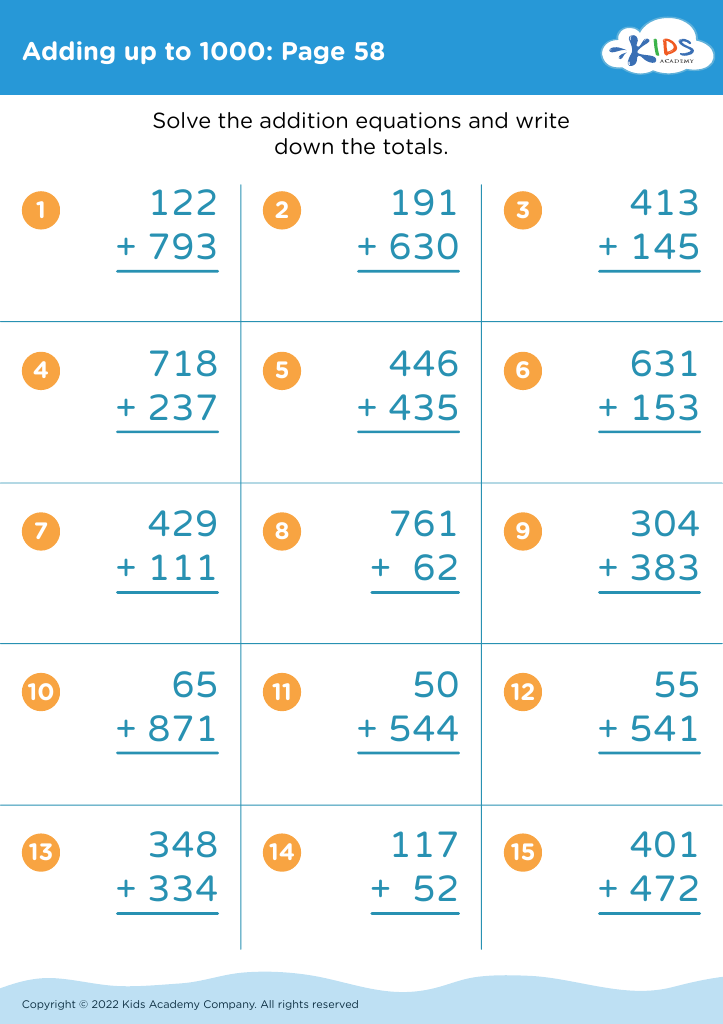
Explore our engaging collection of "Critical Thinking Adding up to 1000 Misc Worksheets" designed for ages 5-7! These interactive resources promote essential skills such as problem-solving and analytical thinking while making math fun. Each worksheet presents a variety of challenges that encourage young learners to think critically about numbers as they practice addition up to 1000. Tailored for early education, these worksheets align with developmental milestones, fostering confidence and creativity in young mathematicians. Perfect for home or classroom use, our critical thinking worksheets offer a dynamic approach to mastering addition, ensuring children gain foundational skills needed for their academic journey!


Critical thinking is crucial for children ages 5-7 as it lays the foundation for their future learning and decision-making skills. During this formative stage, children are naturally curious and eager to explore their surroundings. By fostering critical thinking skills, parents and teachers can help them ask questions, evaluate information, and solve problems effectively.
Encouraging critical thinking enhances a child's ability to analyze situations, make informed choices, and develop creativity. This age group is characterized by imaginative thinking, and supporting their critical analysis allows them to channel this creativity into productive solutions and innovative ideas.
Moreover, critical thinking helps children to navigate social situations by teaching them empathy and perspective-taking, skills crucial for teamwork and interpersonal relationships. It builds confidence as they learn to express their thoughts and constructive disagreements with others respectfully.
Incorporating critical thinking into daily lessons, games, and conversations can keep children engaged and motivated. This proactive approach prepares them not only for academic success but also for real-world challenges. Ultimately, instilling critical thinking skills early on equips children with the necessary tools to become thoughtful, responsible, and resourceful individuals. Thus, both parents and teachers play a vital role in nurturing these essential attributes during a child's early years.