Mathematical reasoning Adding up to 1000 Misc Worksheets for Ages 5-7
5 filtered results
-
From - To
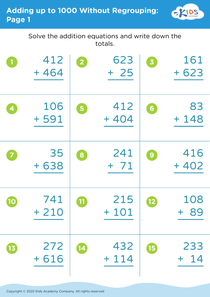
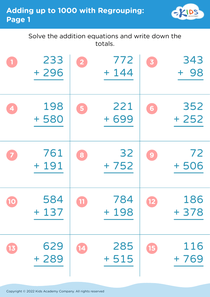
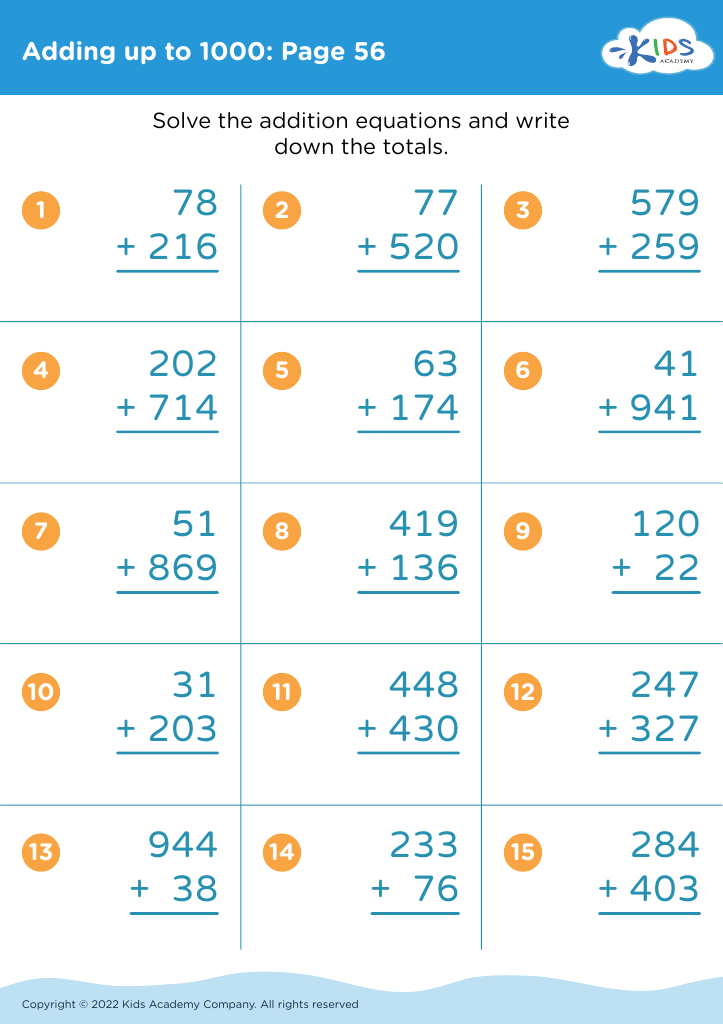
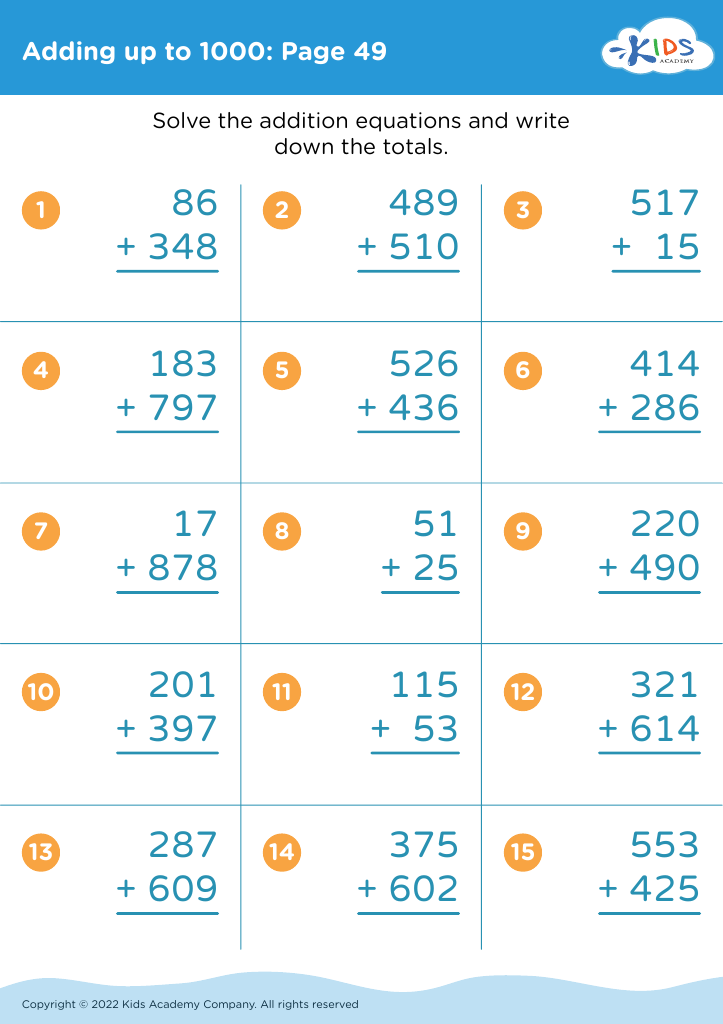
Boost your child's math skills with our Mathematical Reasoning Adding up to 1000 Misc Worksheets designed for ages 5-7! These fun and engaging worksheets help young learners develop their mathematical reasoning abilities by working with larger numbers up to 1000. Perfect for both classroom and at-home use, our worksheets provide diverse activities that reinforce addition concepts. Each worksheet is carefully crafted to enhance problem-solving skills, critical thinking, and numerical fluency. Make math practice exciting and effective with colorful exercises that keep your child motivated. Transform learning into an exciting adventure with our comprehensive collection!
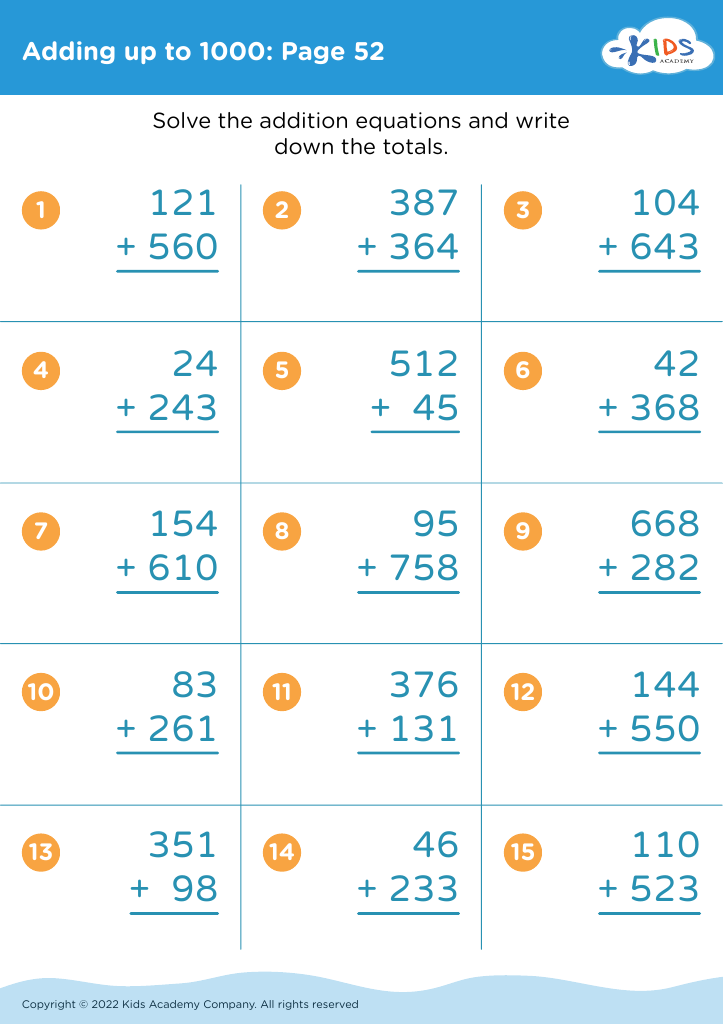
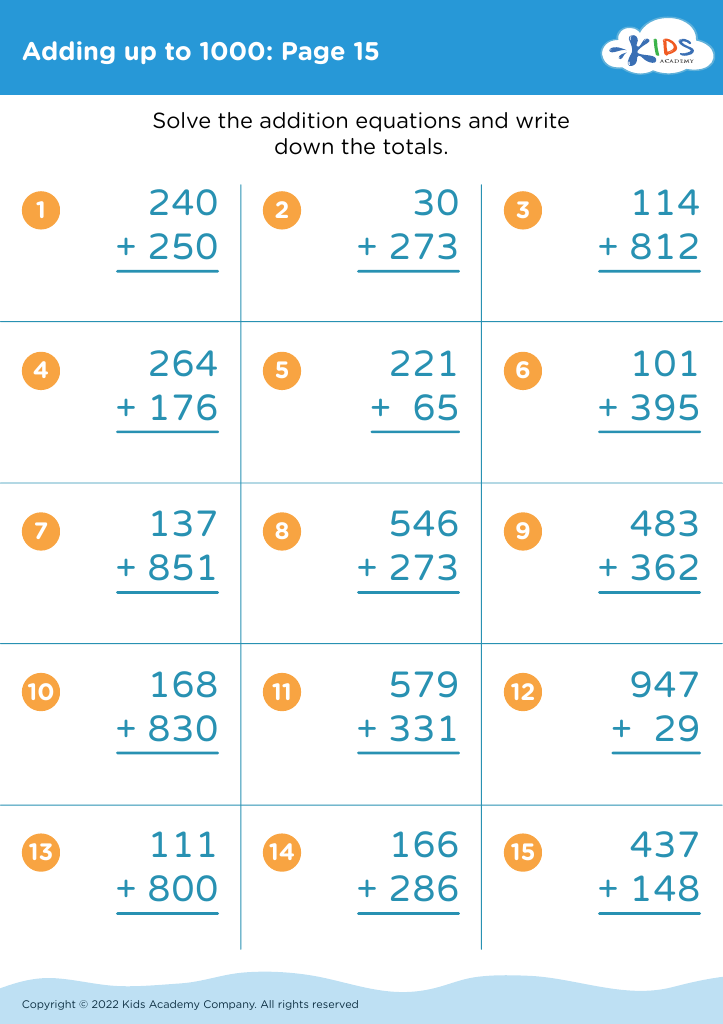
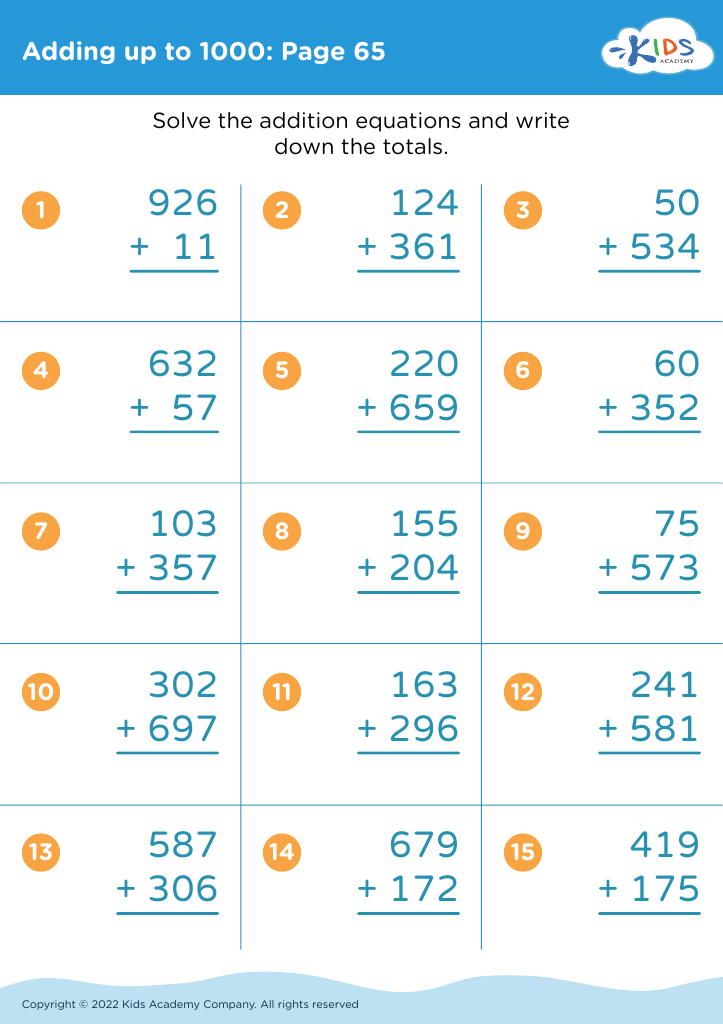


Mathematical reasoning is essential for young children's cognitive development, and introducing exercises like adding up to 1000 misc (miscellaneous operations or variations) for ages 5-7 sets a crucial foundation. This age range is a formative period where children's brains are particularly adaptable to learning new concepts. By engaging in these kinds of mathematical activities, children enhance their problem-solving skills and logical thinking abilities.
Developing proficiency in adding up to 1000 helps solidify understanding of fundamental number concepts such as place value and the ability to manipulate large numbers. Moreover, early exposure to these concepts builds confidence in dealing with more complex mathematical problems later in their educational journey. When children can comfortably manage these operations, it translates into better performance in various aspects of academics, as numeracy skills are linked with overall intellectual development.
Teachers and parents should take an active role because guided practice helps sustain interest, offers immediate feedback, and fosters a positive attitude towards learning. Encouraging mathematical reasoning at a young age promotes perseverance, critical thinking, and analytical skills essential for lifelong learning. Thus, making such mathematical reasoning exercises engaging and appropriate for young children is invaluable for their academic and personal growth.