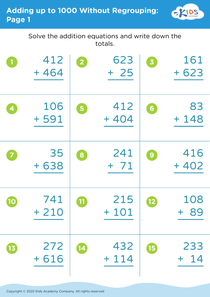
Basic Math Skills Adding up to 1000 with Regrouping Worksheets for Ages 5-7
7 filtered results
-
From - To
Introduce young learners to the world of numbers with our "Basic Math Skills: Adding up to 1000 with Regrouping Worksheets for Ages 5-7." These engaging worksheets are designed to build foundational arithmetic skills, making math enjoyable and accessible for your child. Through colorful and child-friendly exercises, kids practice addition with regrouping, developing problem-solving abilities along the way. Tailored for children aged 5 to 7, our worksheets align with educational standards to bolster confidence and mastery in math. Perfect for classroom use or at-home learning, these activities turn math practice into an exciting adventure!"
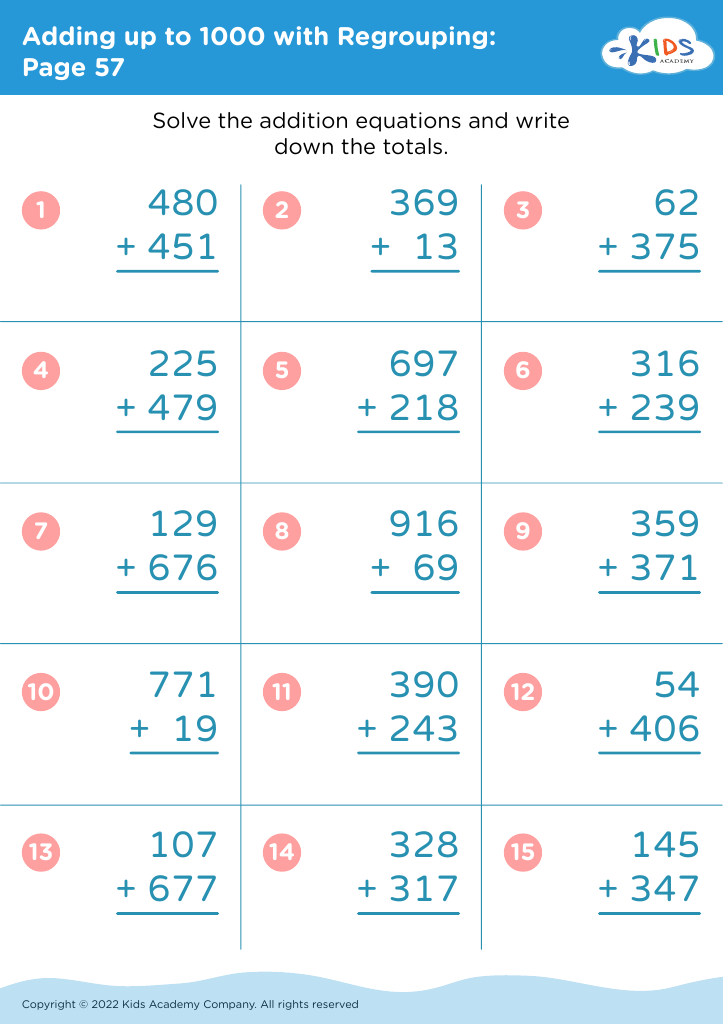
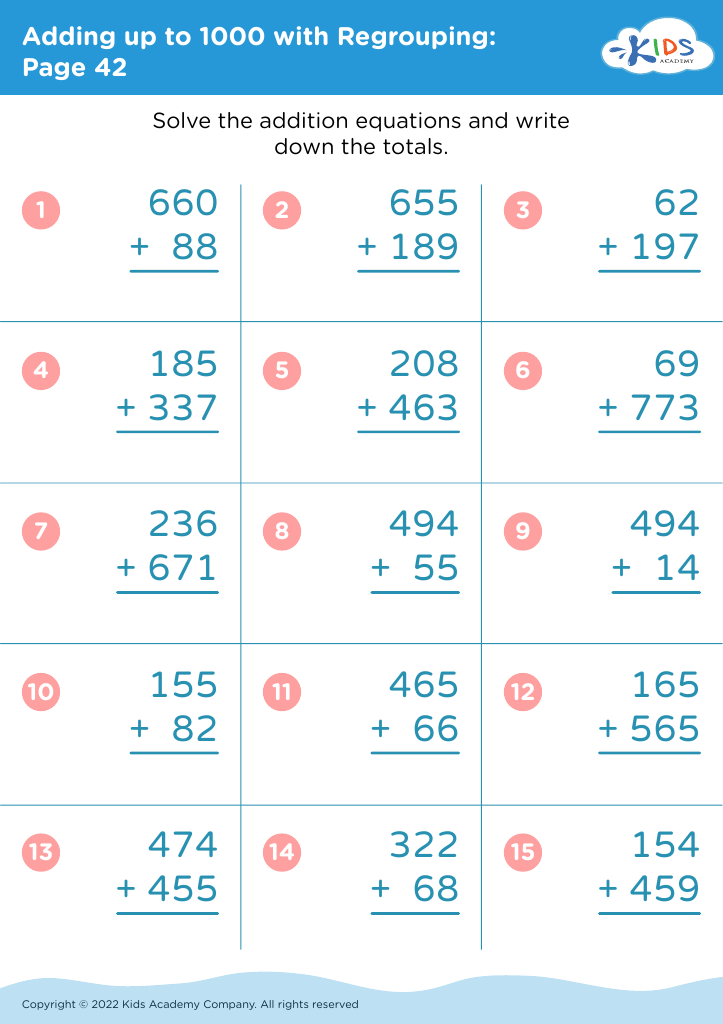
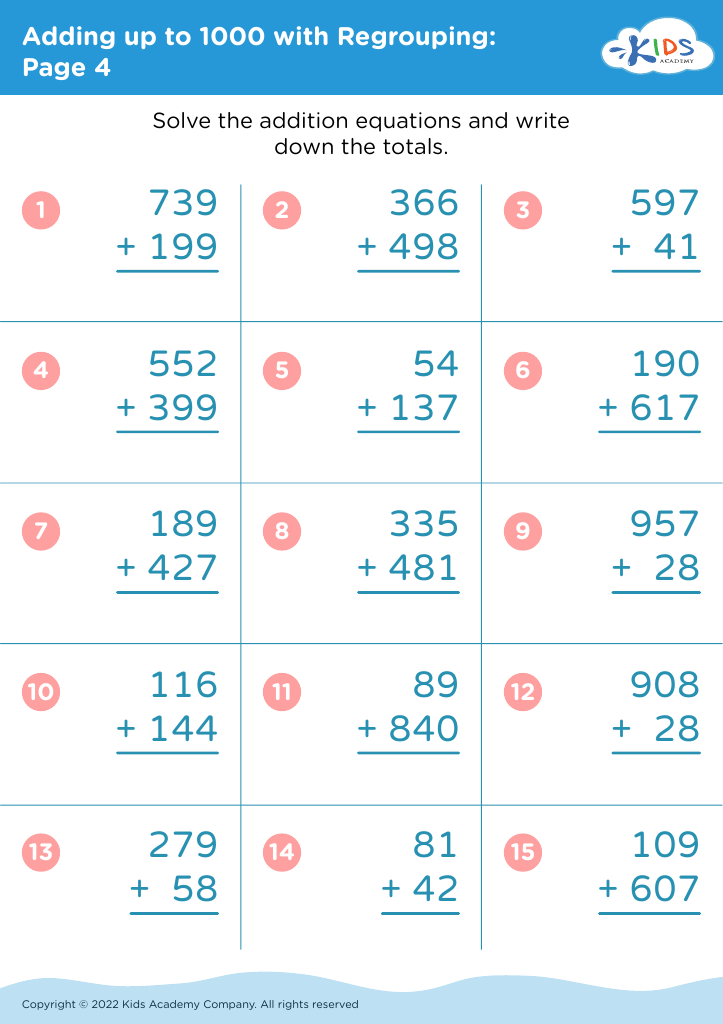
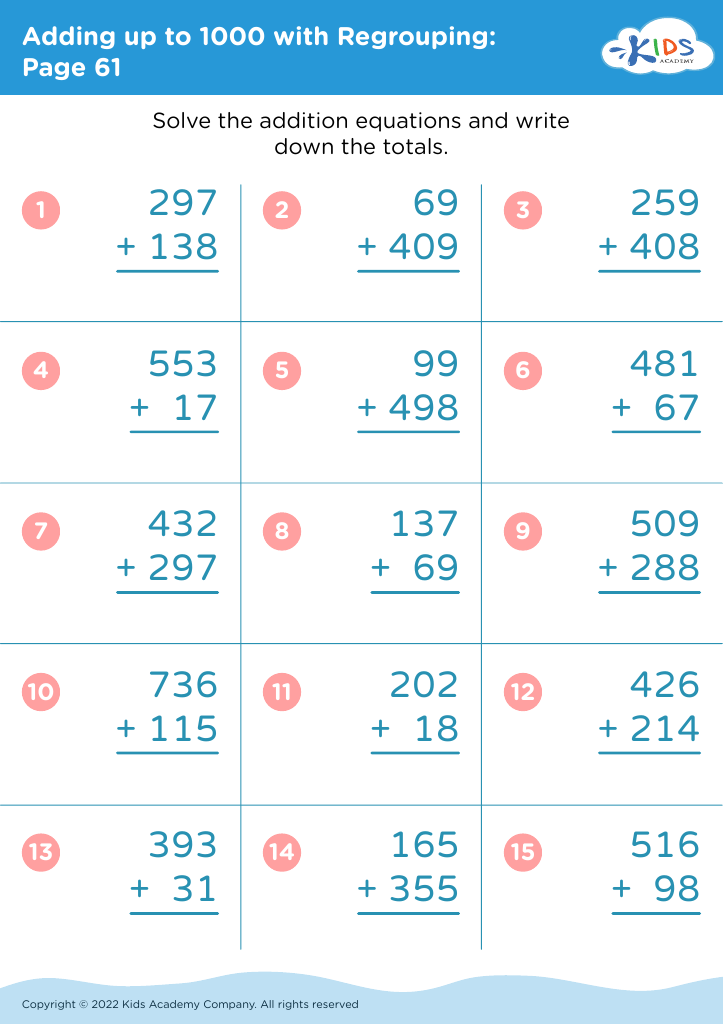
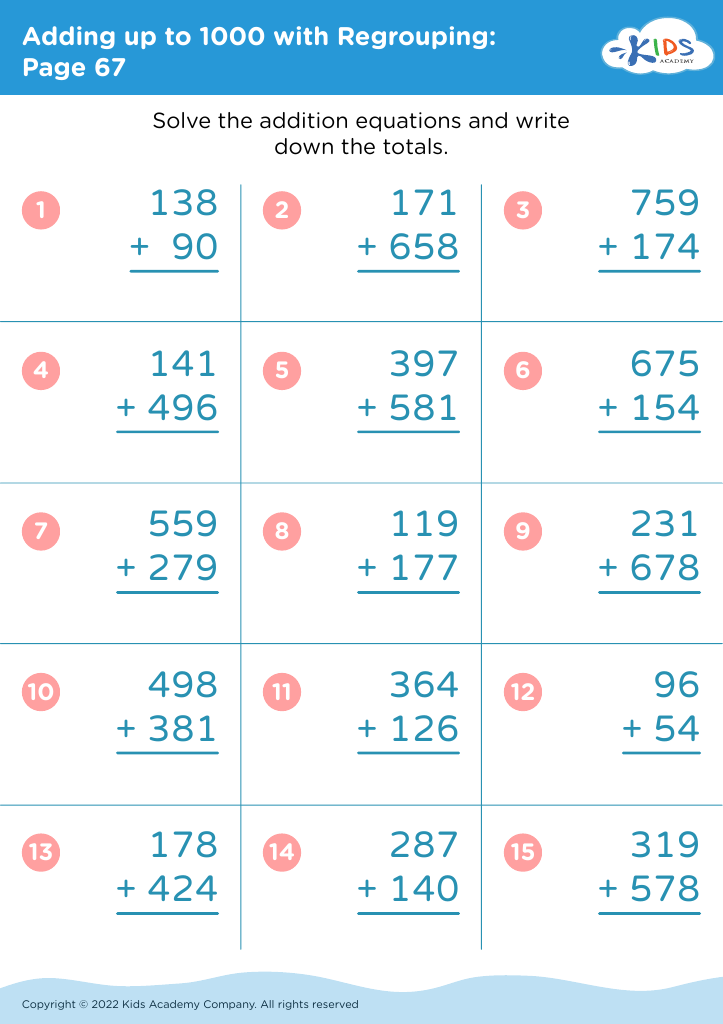
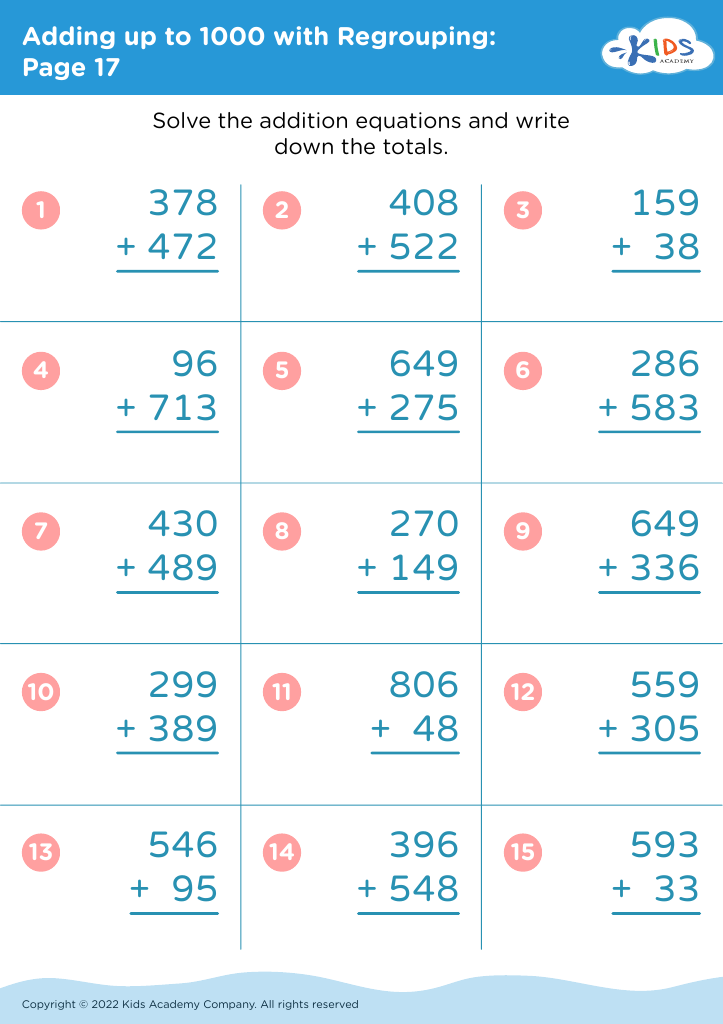
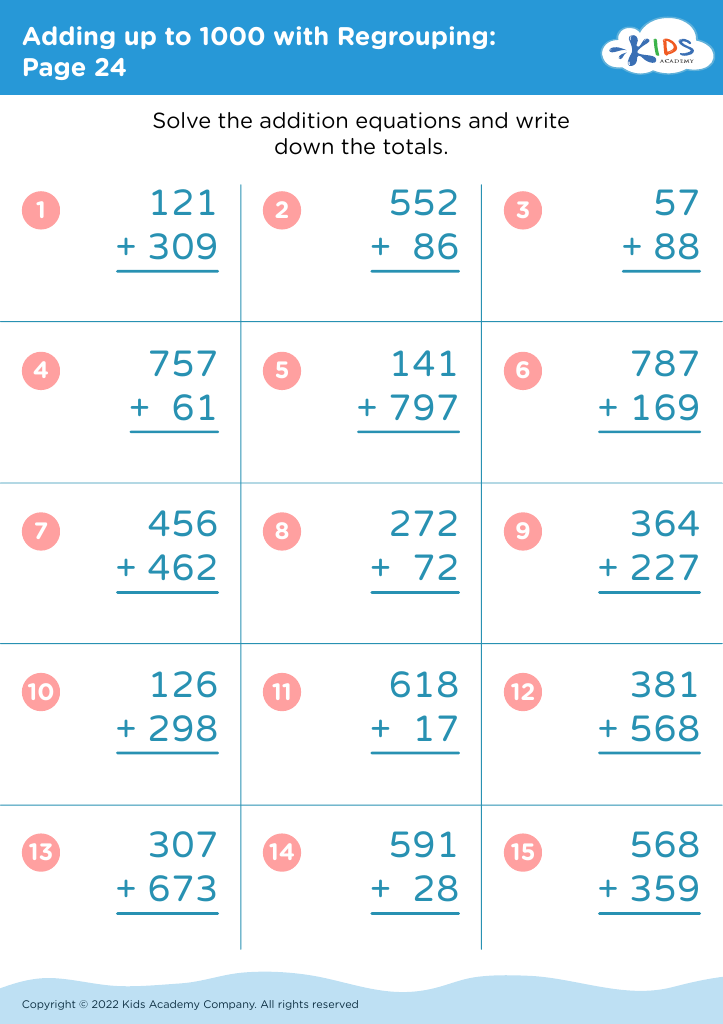


Basic math skills, particularly adding up to 1000 with regrouping, are crucial for young learners aged 5-7 as they form a foundation for future mathematical understanding and overall cognitive development. At this early stage, children are naturally curious and developing rapidly, making it an ideal period to introduce fundamental mathematical concepts. Here are the key reasons why parents and teachers should prioritize these skills:
-
Foundational Building Block: Mastering basic addition, especially with regrouping, lays the groundwork for more advanced mathematical concepts. It’s critical for success in subjects involving math, such as science and engineering.
-
Cognitive Development: Engaging in tasks that require regrouping helps children enhance their problem-solving skills, logical reasoning, and memory. This can also contribute to better performance in other academic areas.
-
Real-life Application: Understanding addition up to 1000 is practical for everyday activities like handling money, measuring ingredients for a recipe, or planning a trip, making it a valuable life skill.
-
Confidence and Motivation: Successfully learning to add with regrouping can boost a child’s confidence and promote a positive attitude towards mathematics, which is essential for sustained interest and effort in the subject.
-
Early Intervention: Identifying and addressing difficulties in basic math skills at an early age can prevent future learning gaps, ensuring a smoother educational journey.
For these reasons, it’s essential to incorporate engaging and supportive methods to teach these foundational math skills to young learners effectively.