Alphabet Recognition Adding up to 1000 Without Regrouping Worksheets for Ages 5-7
3 filtered results
-
From - To
Unlock your child's potential with our "Alphabet Recognition Adding up to 1000 Without Regrouping Worksheets" designed specifically for ages 5-7! These engaging worksheets integrate foundational math skills, promoting both addition proficiency and alphabet recognition. Kids will practice adding numbers up to 1000 without regrouping, all while enhancing their letter familiarity. The colorful, interactive design keeps young learners motivated and focused. Perfect for homeschool use or supplementing classroom learning, these worksheets support cognitive development, making math both fun and educational. Help your child build confidence and a strong academic foundation today with our expertly crafted resources—start their learning journey now!
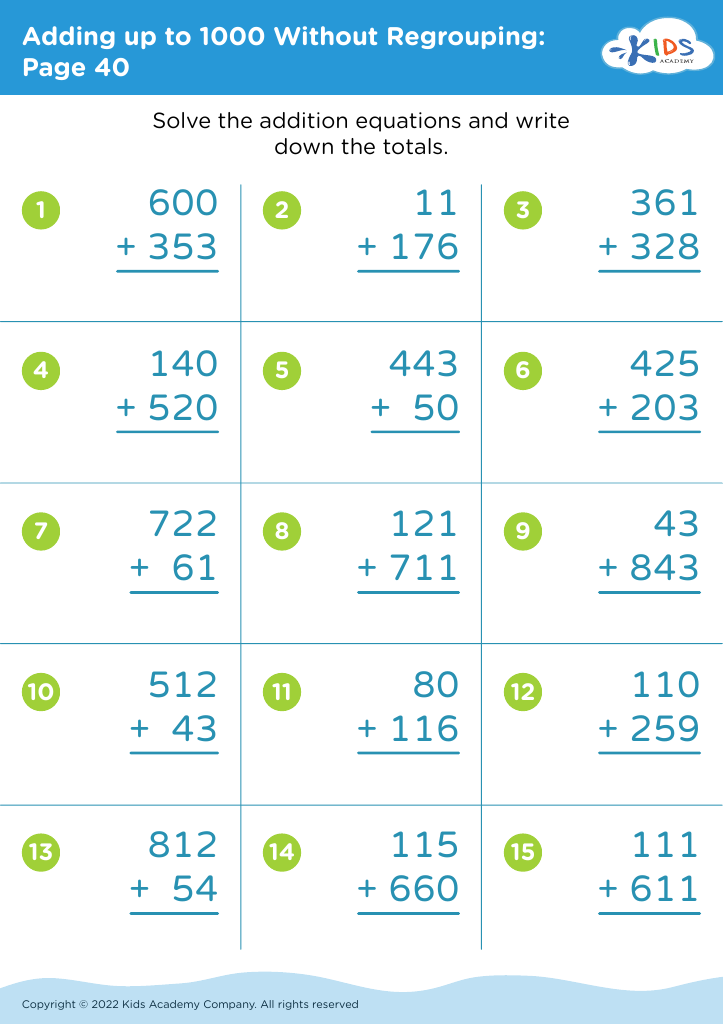
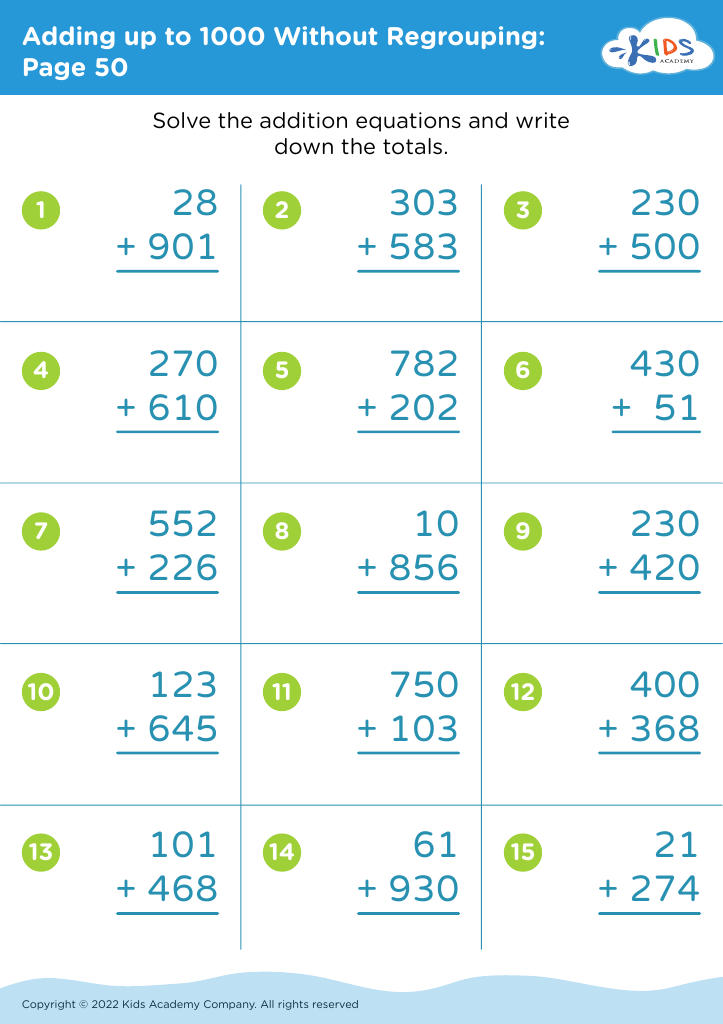
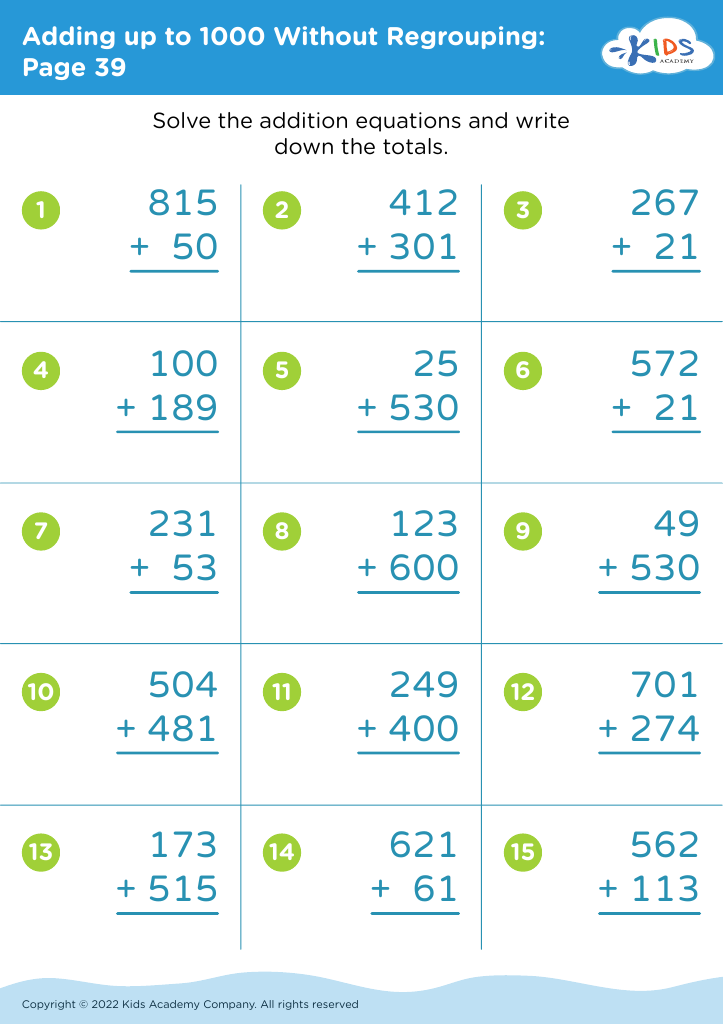


Alphabet recognition and addition without regrouping are foundational skills for children aged 5-7, and both are critical to their academic success and overall cognitive development.
First, alphabet recognition is fundamental for literacy. Mastery of the alphabet enables children to decode words, read fluently, and comprehend text. These skills are essential for effective communication and for accessing information in every subject of the curriculum. Parents and teachers who prioritize alphabet recognition can provide children with the tools to participate fully in their educational journey.
Similarly, the ability to add numbers without regrouping is crucial in early mathematics. It builds a strong number sense, lays the groundwork for more complex arithmetic, and fosters problem-solving abilities. By practicing addition up to 1000 without regrouping, children become comfortable with numerical relationships and mathematical reasoning, which will serve them in higher-grade mathematics.
Both skills also promote confidence in young learners. When children feel competent in reading and math, they are more likely to engage actively in their education. Overall, parents and educators should care about these skills as they are key to fostering lifelong learning, academic achievement, and increased self-esteem in children. Emphasizing these areas ensures a well-rounded foundation for future success.