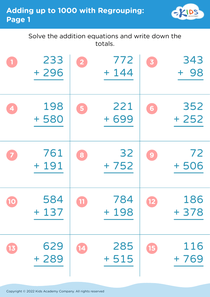
Basic Math Skills Adding up to 1000 Without Regrouping Worksheets for Ages 5-7
3 filtered results
-
From - To
Enhance your child's math journey with our engaging "Basic Math Skills Adding up to 1000 Without Regrouping Worksheets" designed for ages 5-7. These printable worksheets from Kids Academy provide a solid foundation in addition by making complex numbers approachable and fun. Tailored for young learners, our resources focus on strengthening arithmetic skills, boosting confidence, and preparing kids for advanced math topics. With vibrant graphics and diverse exercises, children can practice and master adding numbers up to 1000 without the confusion of regrouping. Give your child the tools they need to excel in mathematics with these expertly crafted learning aids.
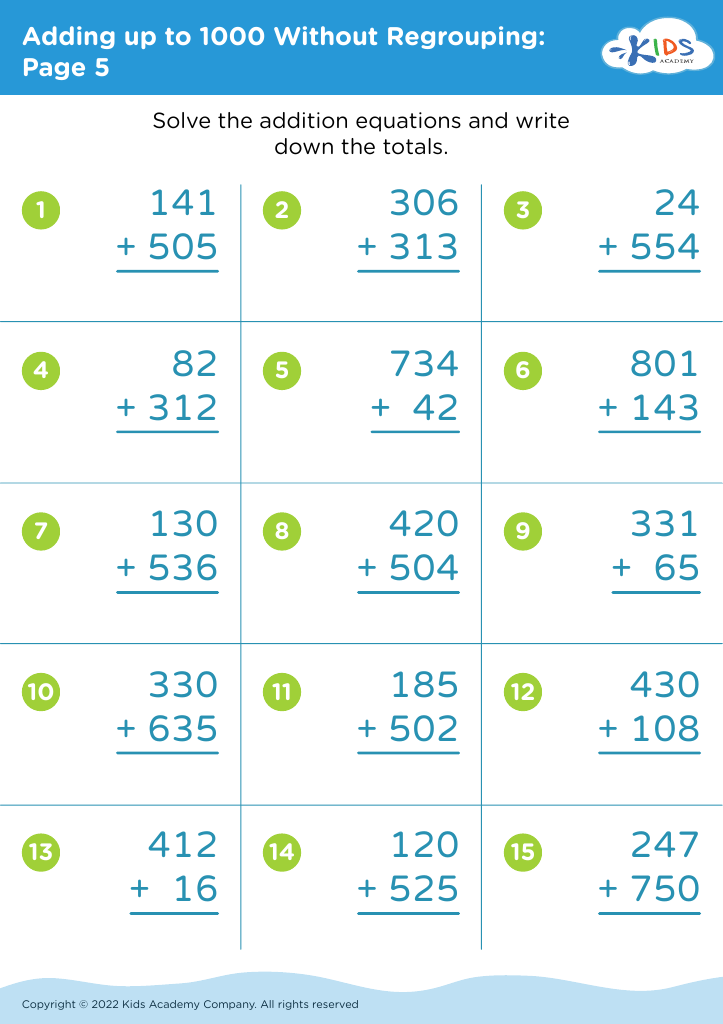
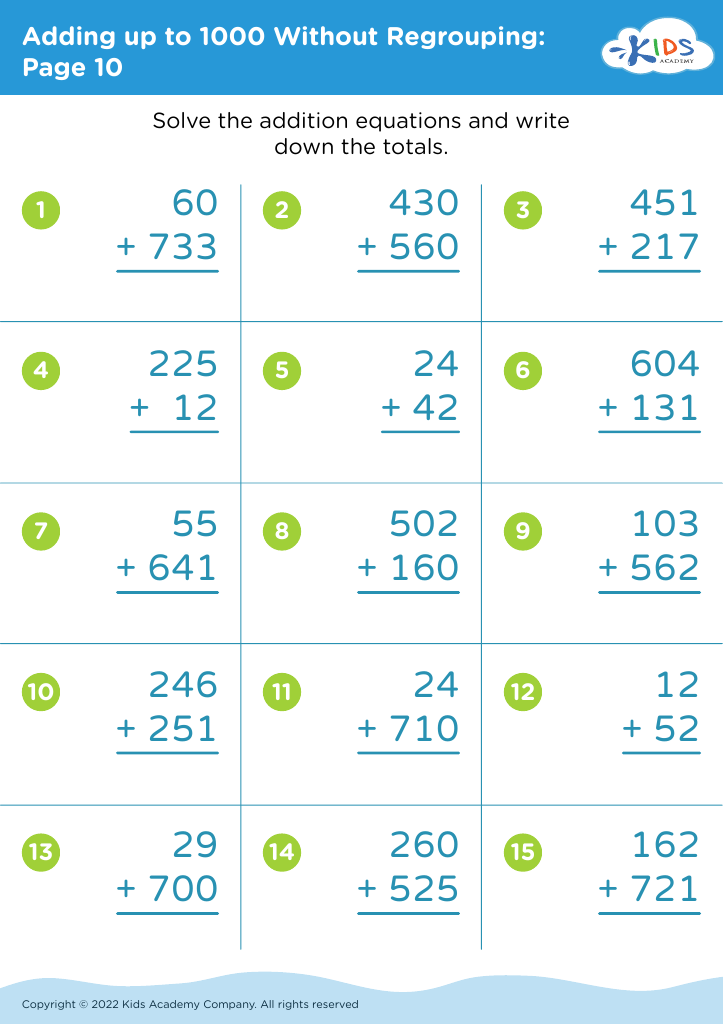
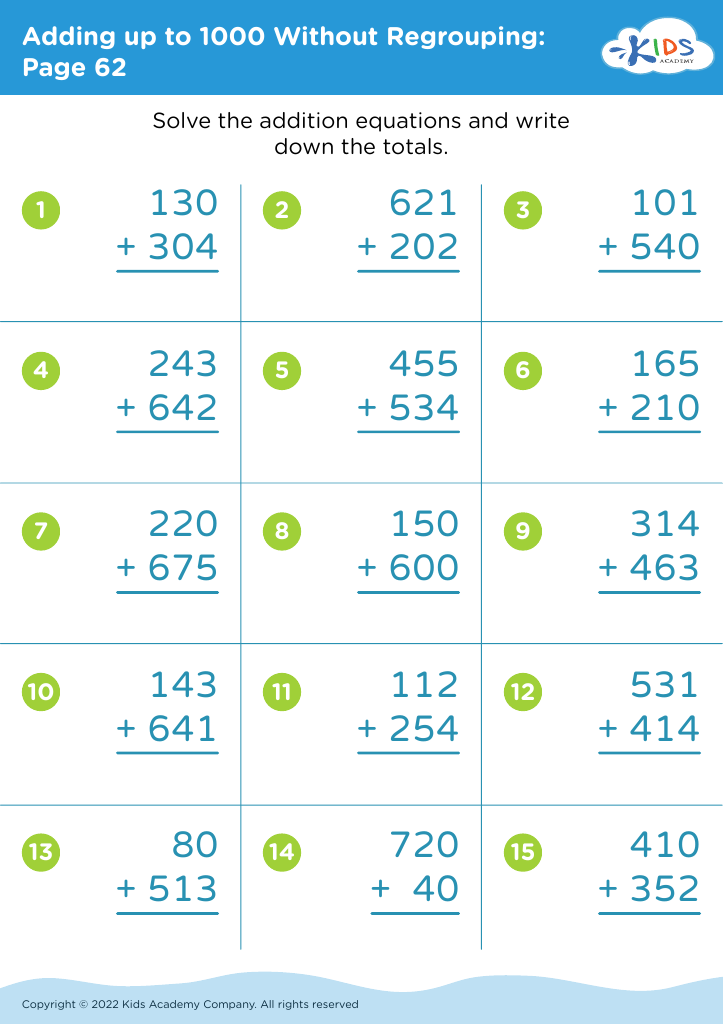


Basic math skills are the foundation for understanding more complex mathematical concepts later in life. For children aged 5-7, mastering the ability to add up to 1,000 without regrouping is an essential milestone that parents and teachers should pay careful attention to. This skill is more than just a rote academic achievement; it helps kids develop number sense, a crucial awareness of numbers and their relationships.
Early proficiency in this area boosts confidence and encourages a positive attitude towards mathematics. It aids mental math capabilities, which are not only useful in academic settings but are also practical for day-to-day activities like shopping and time management. Moreover, the sense of accomplishment children gain from mastering addition without regrouping fosters a mindset of persistence and problem-solving.
Parents and teachers should provide ample opportunities for practice through interactive and fun activities, making math feel less like a chore and more like an engaging challenge. This foundational knowledge aids in future topics such as subtraction, multiplication, and division, ensuring a smoother educational journey. By focusing on basic math skills at this early stage, we lay the groundwork for academic success and an enduring love for learning.