Comparing Fractions Adding up to 1000 Without Regrouping Worksheets for Ages 5-7
3 filtered results
-
From - To
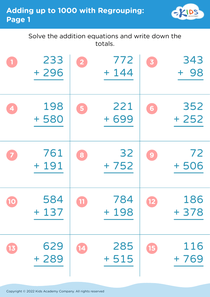
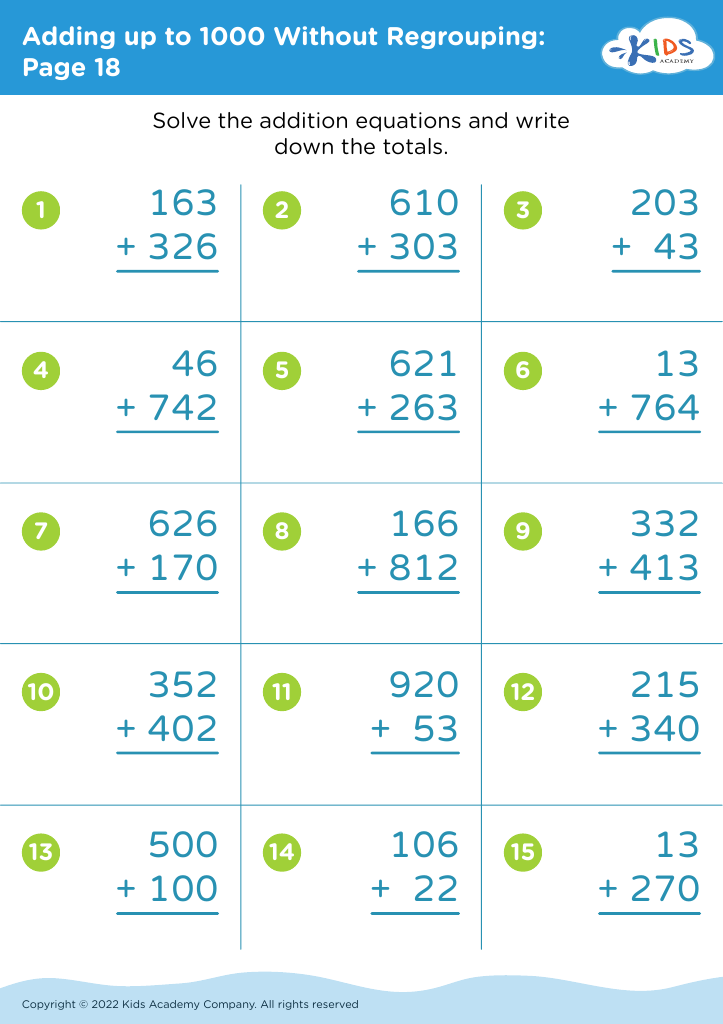
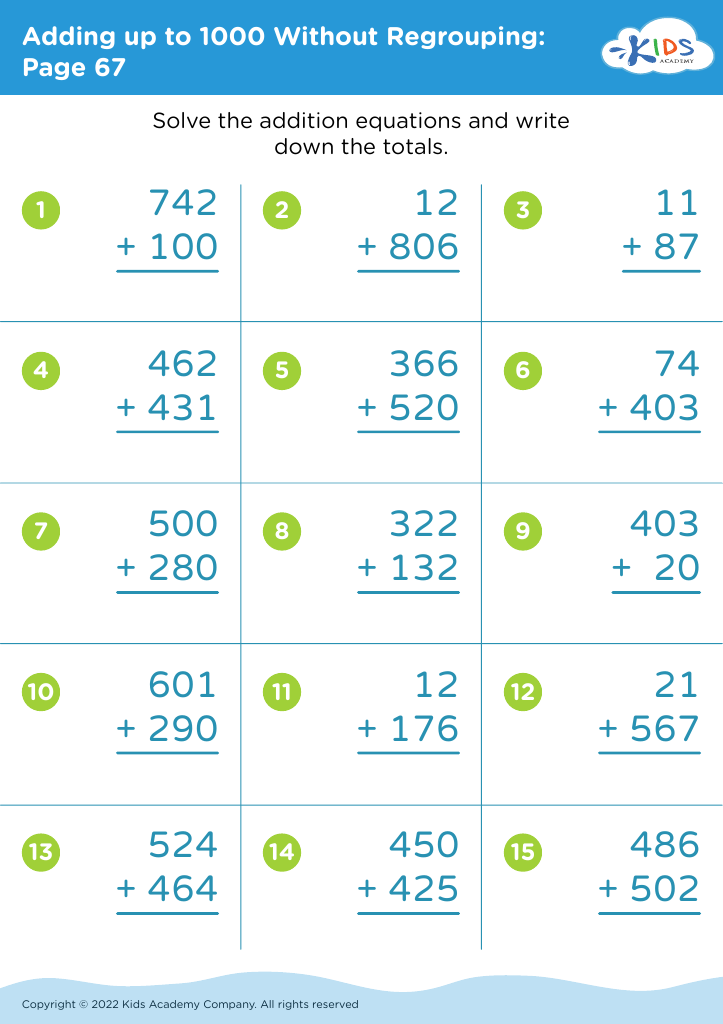
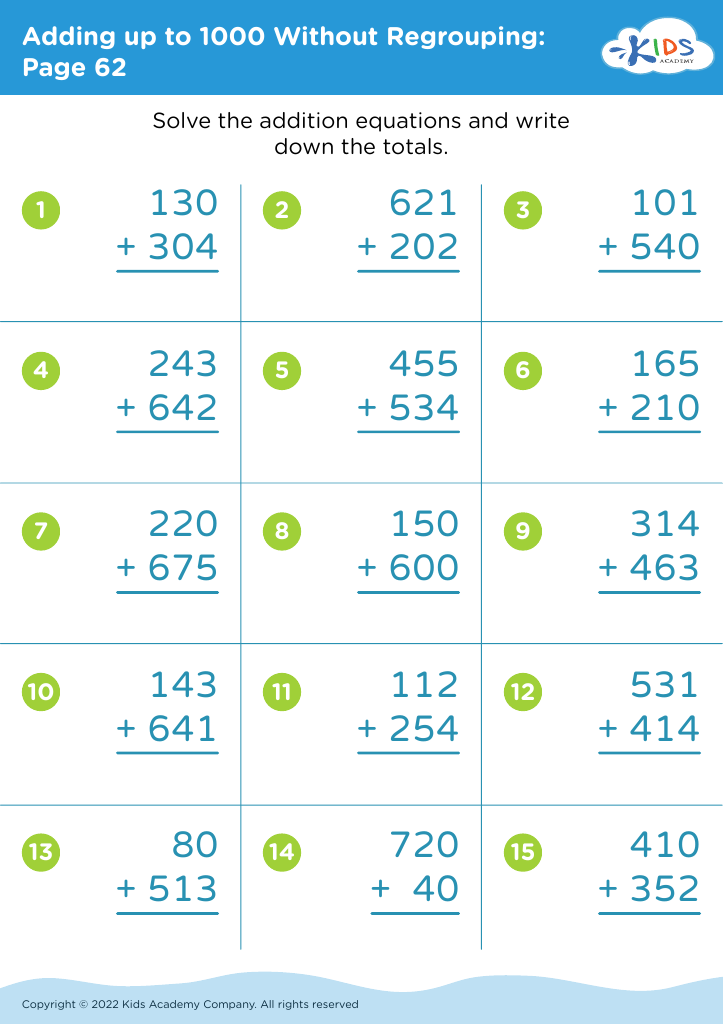
Welcome to our engaging "Comparing Fractions Adding up to 1000 Without Regrouping Worksheets" specifically designed for children aged 5-7! These colorful worksheets aim to introduce young learners to the exciting world of fractions while enhancing their addition skills without the complexities of regrouping. Each activity encourages critical thinking and helps students understand how to compare fractions effectively. By applying fun visuals and practical examples, students will gain confidence in their math abilities. Perfect for home or classroom use, these worksheets make learning enjoyable and interactive. Equip your child with the foundational skills they need for future success in mathematics!


Teaching young students about comparing fractions, particularly in the context of adding up to 1000 without regrouping, is both foundational and essential for their mathematical development. Fractions represent parts of a whole and are a fundamental concept that extends beyond simple arithmetic into real-life applications. Understanding comparisons allows children to grasp important ideas about quantities, ratios, and proportions, which are critical in various day-to-day situations.
Moreover, learning to compare fractions lays the groundwork for more advanced concepts in mathematics, such as adding and subtracting fractions, simplifying them, and applying them in problem-solving scenarios. For ages 5-7, focusing on these skills fosters critical thinking and encourages students to approach problems analytically.
Parents and teachers should also be aware of the importance of developing a strong mathematical vocabulary and reasoning during these early years. Engaging students in comparing fractions encourages conversation about size, value, and more, enhancing their cognitive skills and comprehension. When children explore these concepts through playful manipulations and relatable examples, they also build confidence in their mathematical abilities, paving the way for future academic success. Ultimately, fostering these skills helps develop a love for learning and a solid foundation for future education.