Counting practice Adding up to 1000 Without Regrouping Worksheets for Ages 5-7
4 filtered results
-
From - To
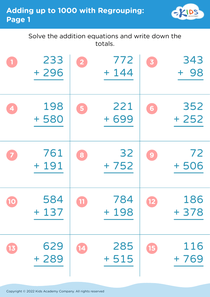
Enhance your child's math skills with our "Counting Practice: Adding Up to 1000 Without Regrouping Worksheets" designed for ages 5-7. These engaging worksheets focus on building a strong foundation in addition through fun and interactive exercises. Children will practice counting, recognizing numbers, and solving problems that reinforce their understanding of addition, all without the complexity of regrouping. Our worksheets cater to various learning styles, ensuring that your young learners grasp the concepts at their own pace. Perfect for both classroom and home use, these resources make math enjoyable while boosting confidence and proficiency in adding up to 1000!
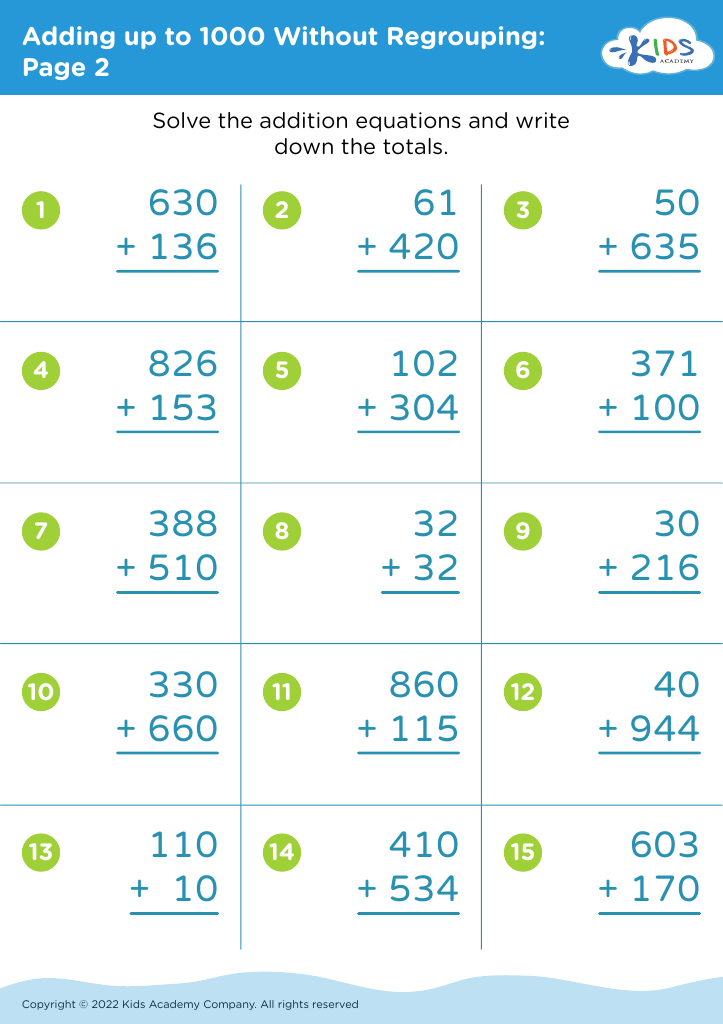
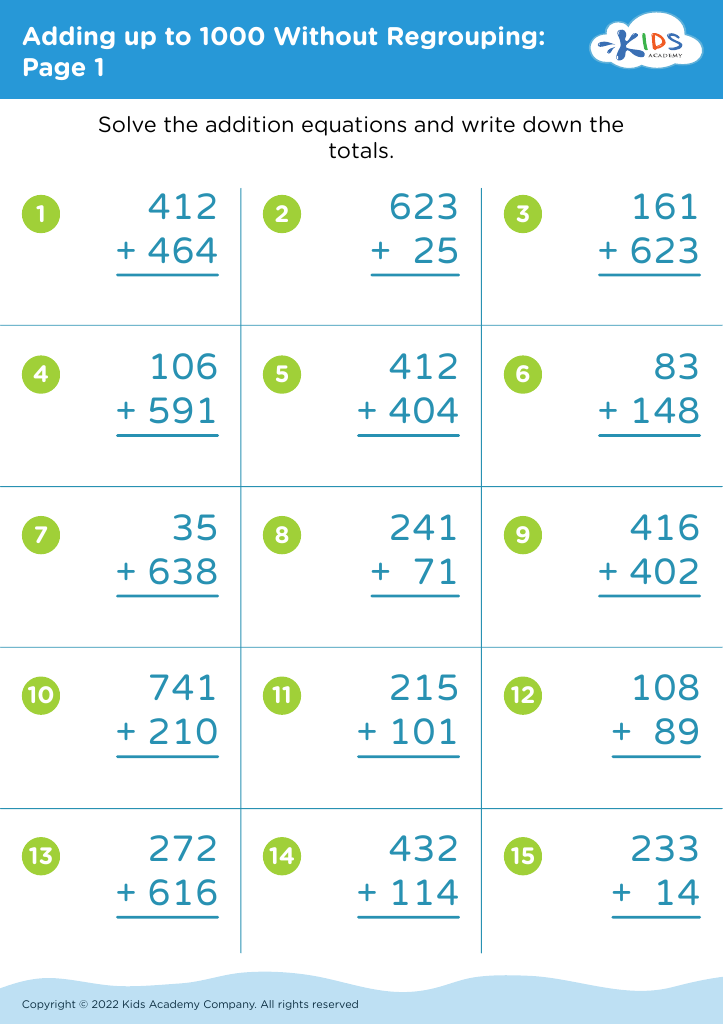
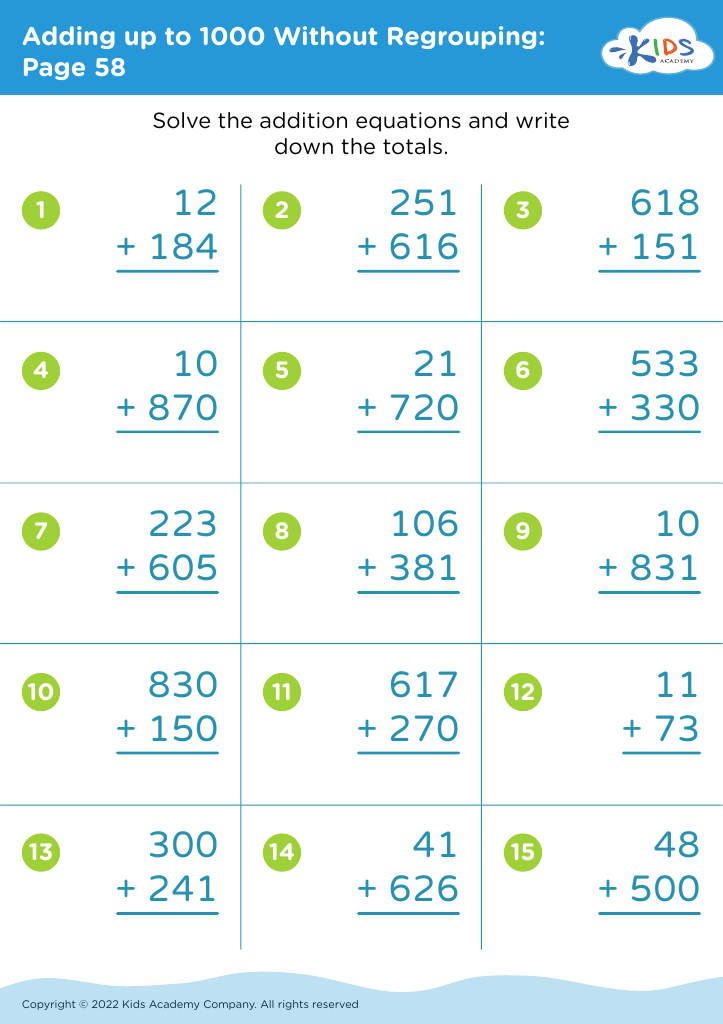
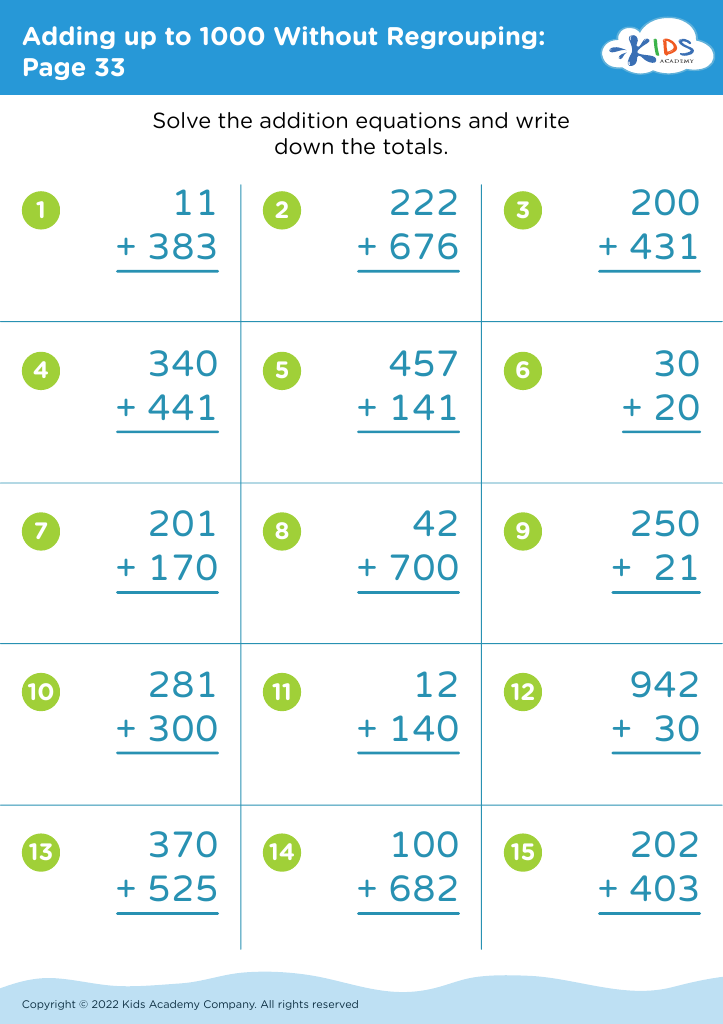


Counting practice, particularly in the context of adding up to 1000 without regrouping, is essential for children aged 5-7 as it lays a strong foundation for their future mathematical abilities. At this stage, children are developing their number sense and understanding of place value, which are critical for more complex calculations later in their education.
By focusing on adding numbers up to 1000, children learn to manipulate larger numbers while honing their skills in basic addition. This practice not only enhances their computational skills but also boosts their confidence in handling mathematical tasks. Engaging in structured counting exercises encourages early learners to recognize patterns and develop mental math strategies, sparking a love for numbers.
Moreover, this foundational practice supports cognitive development by fostering critical thinking and problem-solving skills. Parents and teachers who prioritize counting practice assist their children in becoming proficient in basic arithmetic, preparing them for future academic challenges. Ultimately, cultivating a positive attitude towards math at this tender age can lead to lifelong learning and a greater willingness to tackle more advanced concepts in mathematics as children progress through their education.