Counting skills Adding up to 1000 Without Regrouping Worksheets for Ages 5-7
10 filtered results
-
From - To
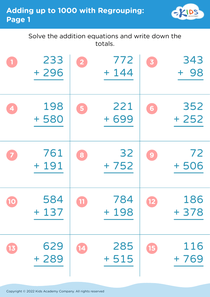
Boost your child's counting skills with our "Counting Skills: Adding up to 1000 Without Regrouping Worksheets" designed for ages 5-7. These engaging and educational worksheets help young learners practice addition up to 1000 in a fun, no-regrouping format, reinforcing basic math concepts. Ideal for both classroom and home use, each exercise encourages confidence in math, enhancing number recognition and mental arithmetic. Start your child’s journey to math mastery today with our easy-to-use, printable worksheets, effectively laying the foundation for a strong numeracy skills development! Visit Kids Academy for more resources and turn learning into an adventure.
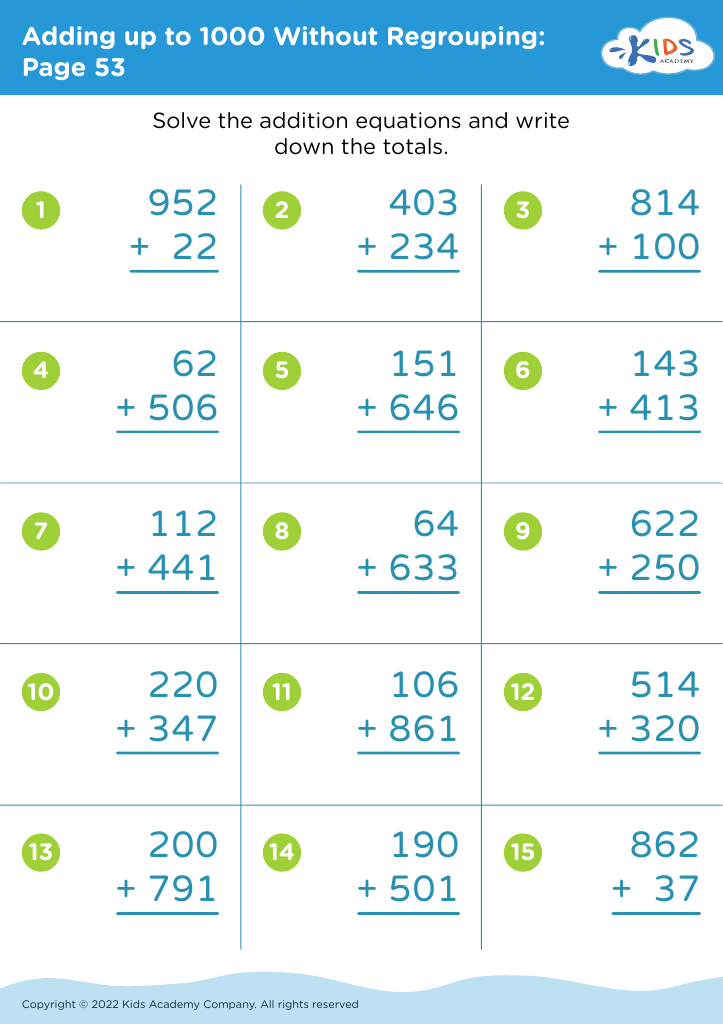
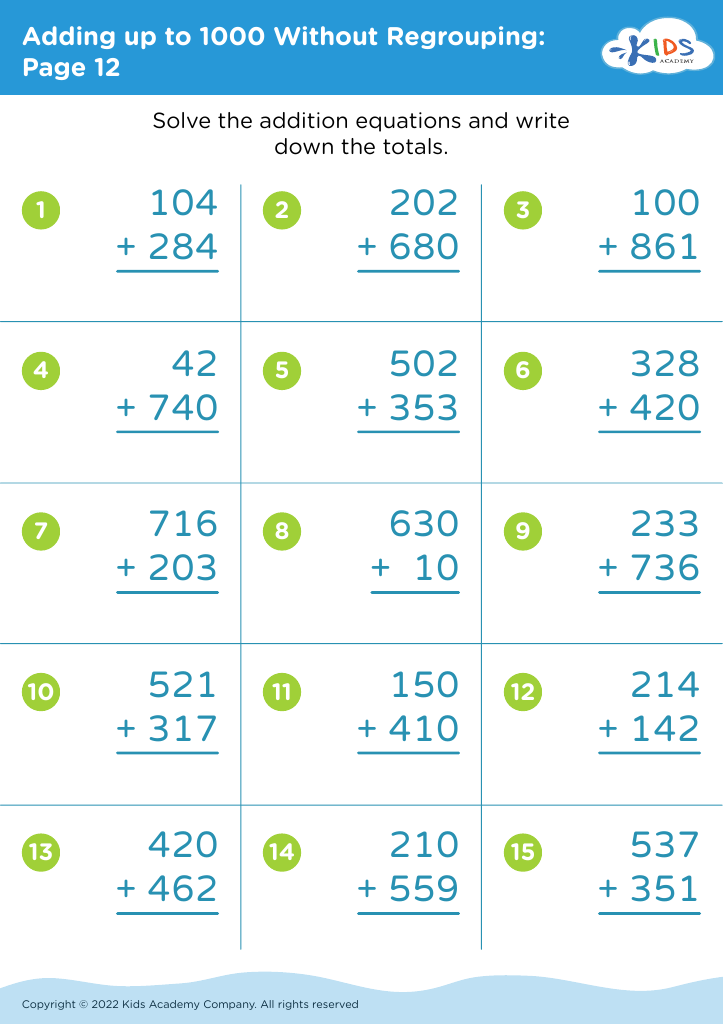
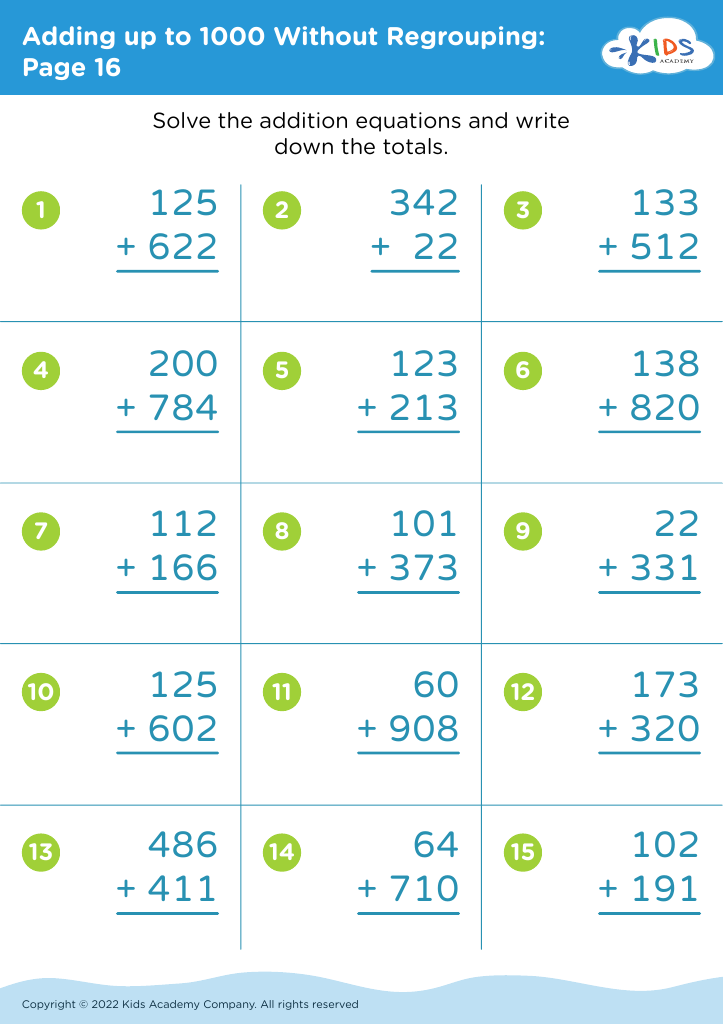
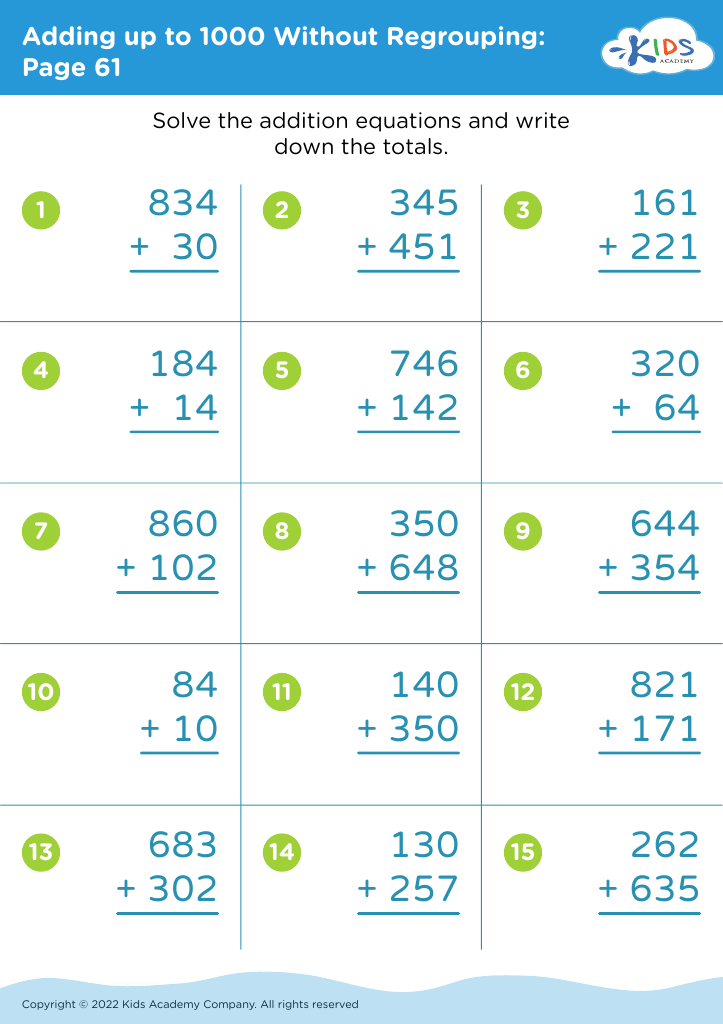
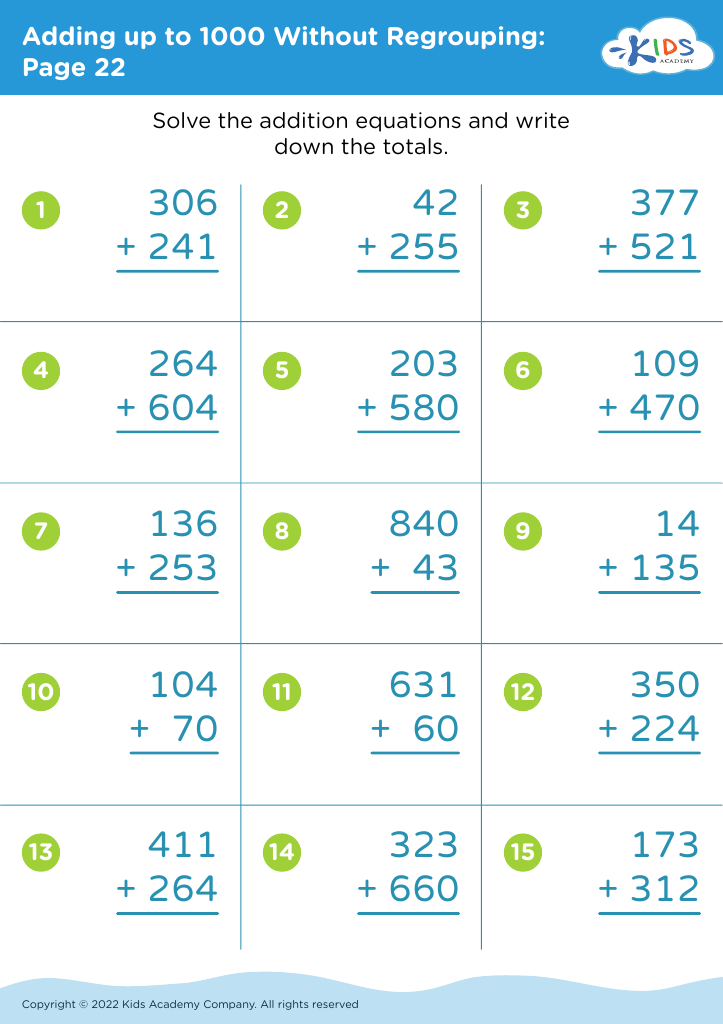
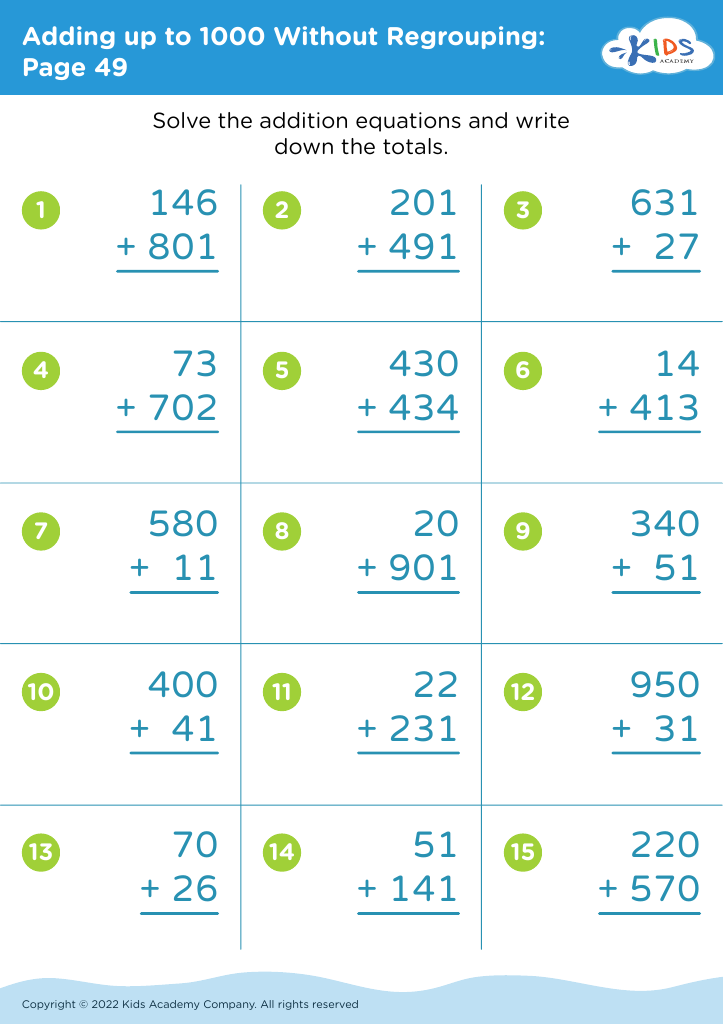
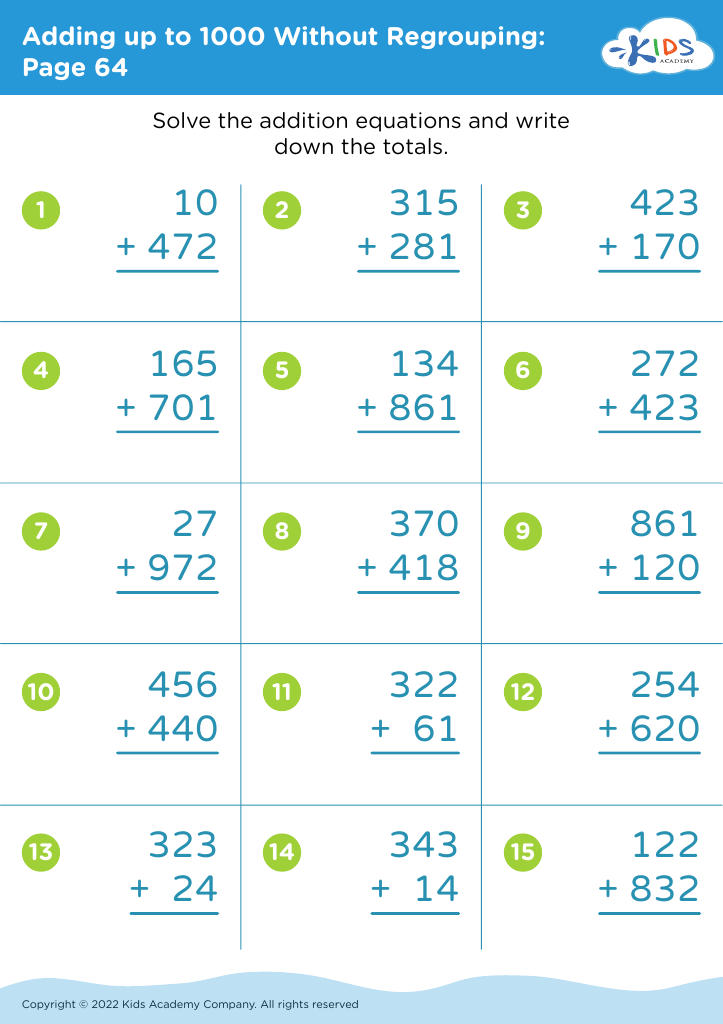
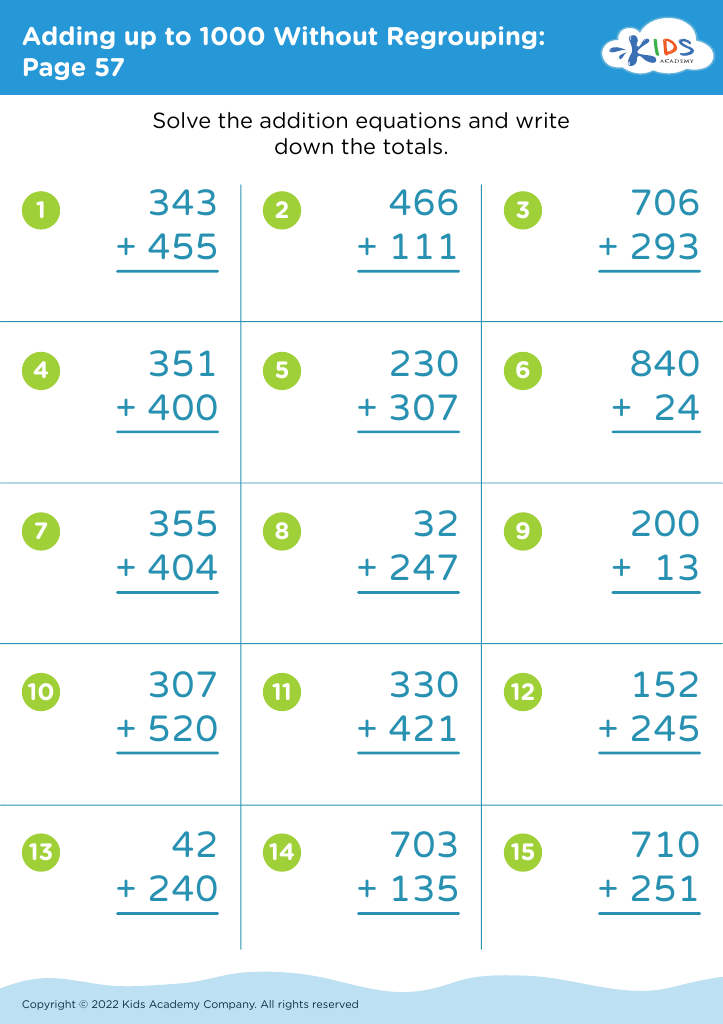
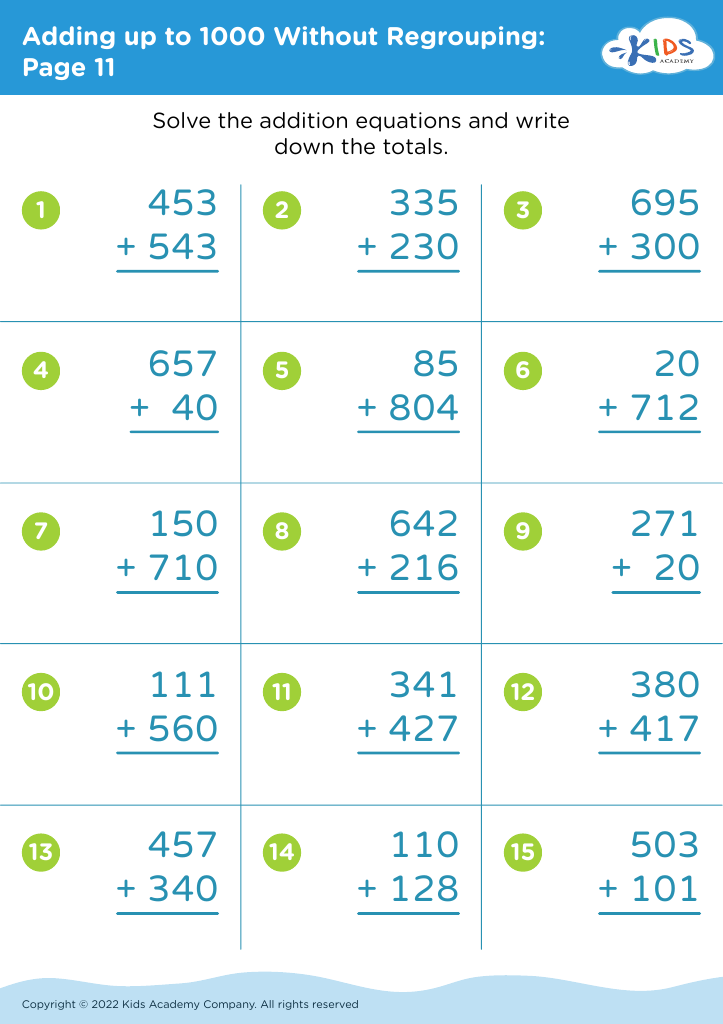
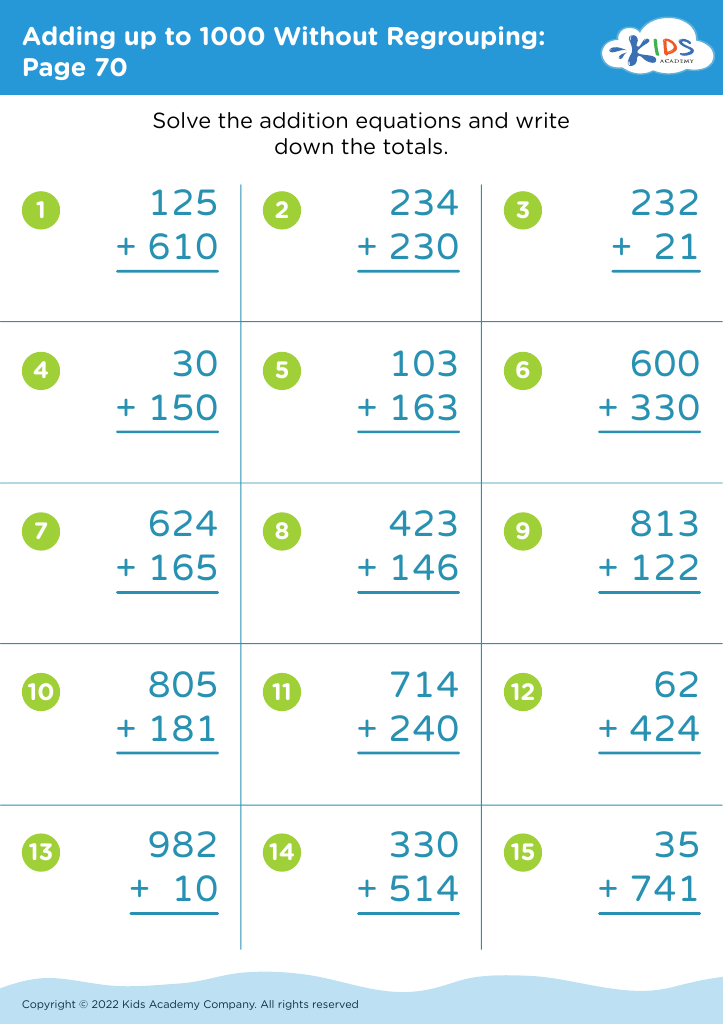


Counting skills and the ability to add up to 1000 without regrouping are crucial milestones in mathematical development for children aged 5-7. Attaining proficiency in these skills lays a foundation for advanced arithmetic and promotes logical thinking and problem-solving abilities.
For parents and teachers, fostering these early math competencies helps build a child’s numerical fluency and confidence. Mastery of counting and basic addition is fundamental for understanding more complex mathematical concepts like place value, subtraction, and even multiplication and division. When children achieve fluency in adding without regrouping, it demonstrates their grasp of number relationships and enhances their mental calculation skills.
Furthermore, by engaging with these mathematical exercises, children develop critical thinking and attention to detail. Such skills are transferable across all subjects and are integral to a child's academic success. Beyond academia, basic math skills prepare children for real-life situations, such as handling money and assessing quantities.
By prioritizing counting and addition up to 1000 during these formative years, educators and parents set children up for a lifelong appreciation of mathematics, paving the way for future learning and application of mathematical concepts in various facets of life. Developing these skills early on makes subsequent learning experiences more manageable and less intimidating for young learners.