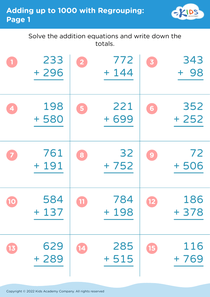
Fraction comparison Adding up to 1000 Without Regrouping Worksheets for Ages 5-7
4 filtered results
-
From - To
Explore our exciting "Fraction Comparison Adding up to 1000 Without Regrouping Worksheets" designed especially for ages 5-7! Perfect for young learners, these engaging worksheets make learning math fun and easy. Children will build foundational skills in comparing fractions, ensuring they understand fundamental concepts for future success. Our printable resources provide plenty of practice to develop confidence in addition without needing to regroup. These worksheets are the perfect way to strengthen your child's math abilities while making learning an enjoyable adventure. Visit our website to download now and give your child a head start in math excellence!
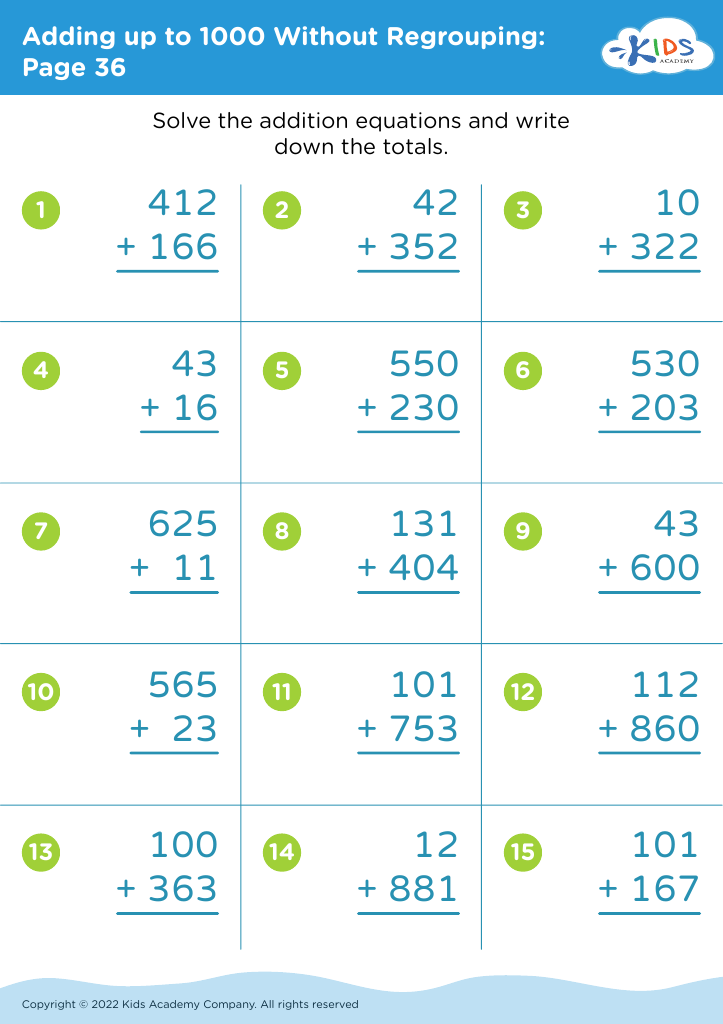
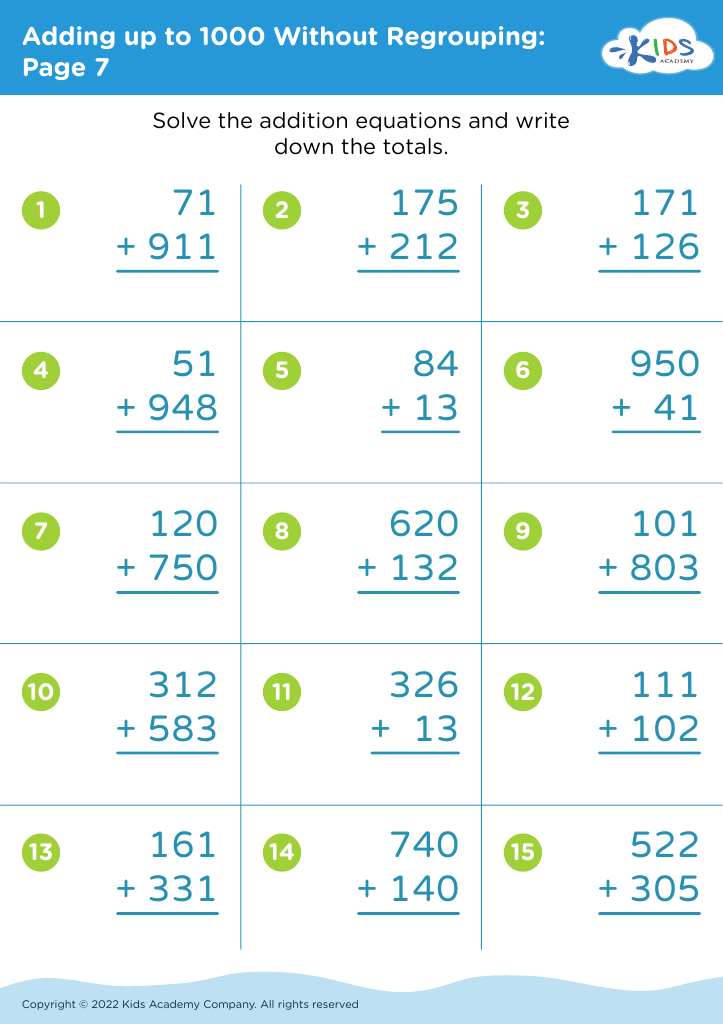
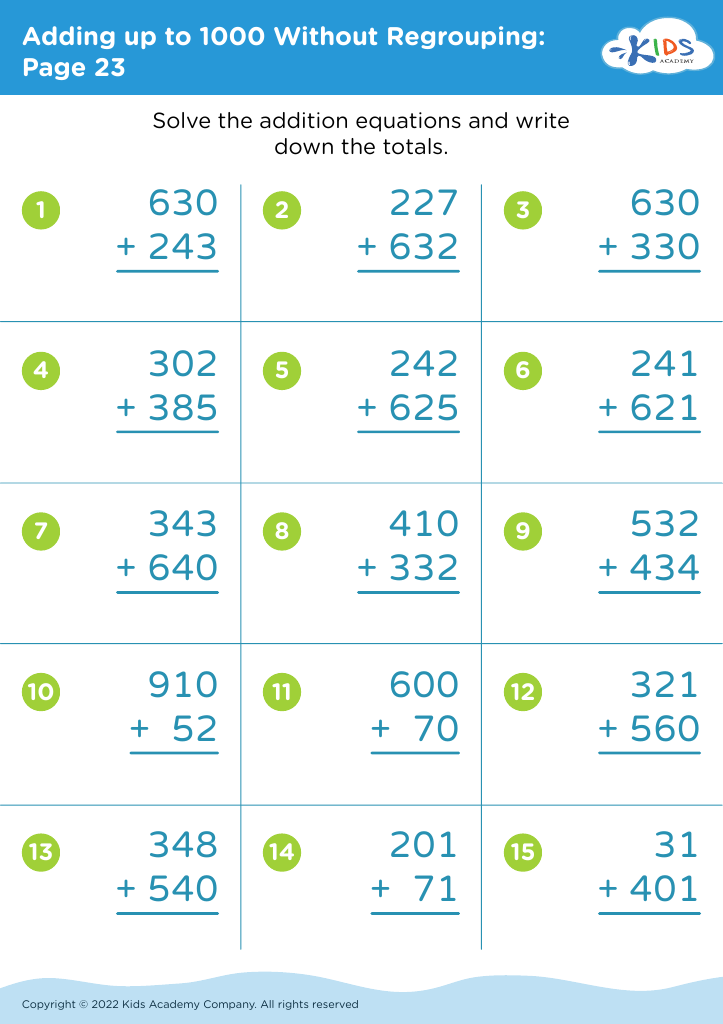
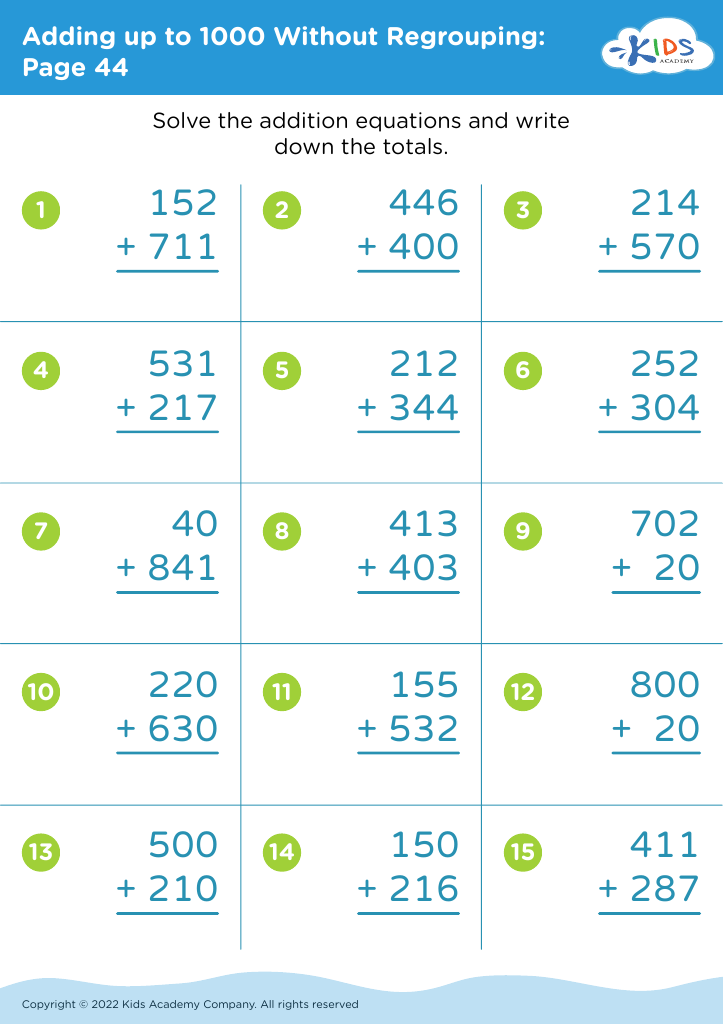


Parents and teachers should care about fraction comparison and adding up to 1,000 without regrouping for children ages 5-7 because these foundational skills set the stage for future mathematical understanding and academic success. Comparisons of fractions help develop critical thinking and understanding of relative quantities—a fundamental concept in mathematics and everyday life. These skills foster numerical literacy and enable students to make sense of sizes, proportions, and values, which are crucial for problem-solving in more complex math topics they will encounter later.
Adding up to 1,000 without regrouping helps solidify basic addition skills, ensuring that children are comfortable with simpler calculations before moving on to more challenging arithmetic that involves regrouping (carrying over). It helps young learners grasp the value of individual digits based on their position (units, tens, hundreds), reinforcing their understanding of place value. Through these exercises, students enhance their number sense and fluency with basic arithmetic, which builds their confidence and reduces anxiety when facing math.
Together, these skills equip children with essential cognitive tools, enabling smoother progression to more advanced math concepts. They support the development of logical reasoning, enhancing overall academic performance and opening the door to STEM subjects in the future. Building these capabilities early helps use math as a tool, not an obstacle, in their daily lives.