Basic Math Skills Adding up to 1000 Worksheets for Ages 5-7
13 filtered results
-
From - To
Unlock your child's potential with our "Basic Math Skills: Adding Up to 1000 Worksheets" designed for ages 5-7! These engaging worksheets provide a fun and interactive way for young learners to master essential addition skills. With a focus on building confidence and proficiency, children will practice their math abilities through colorful and varied exercises. Each worksheet encourages exploration of numbers while reinforcing early math concepts. Perfect for homeschoolers and classroom settings, these adaptable resources will make learning enjoyable and effective. Equip your child with vital math skills to set them on the path to academic success! Start their math journey today!
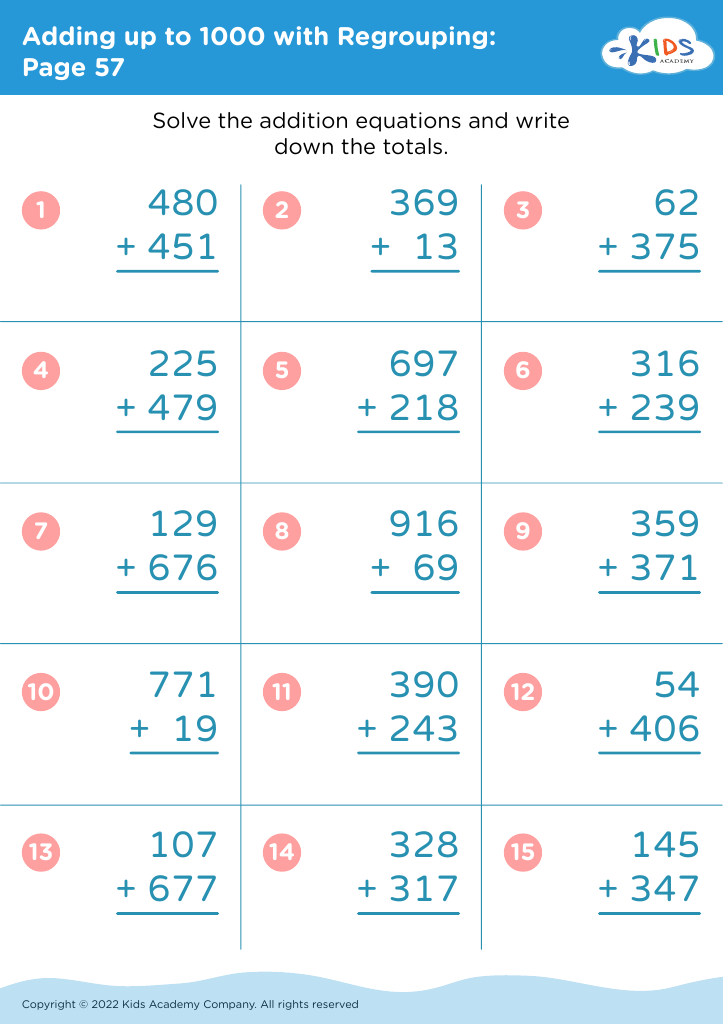
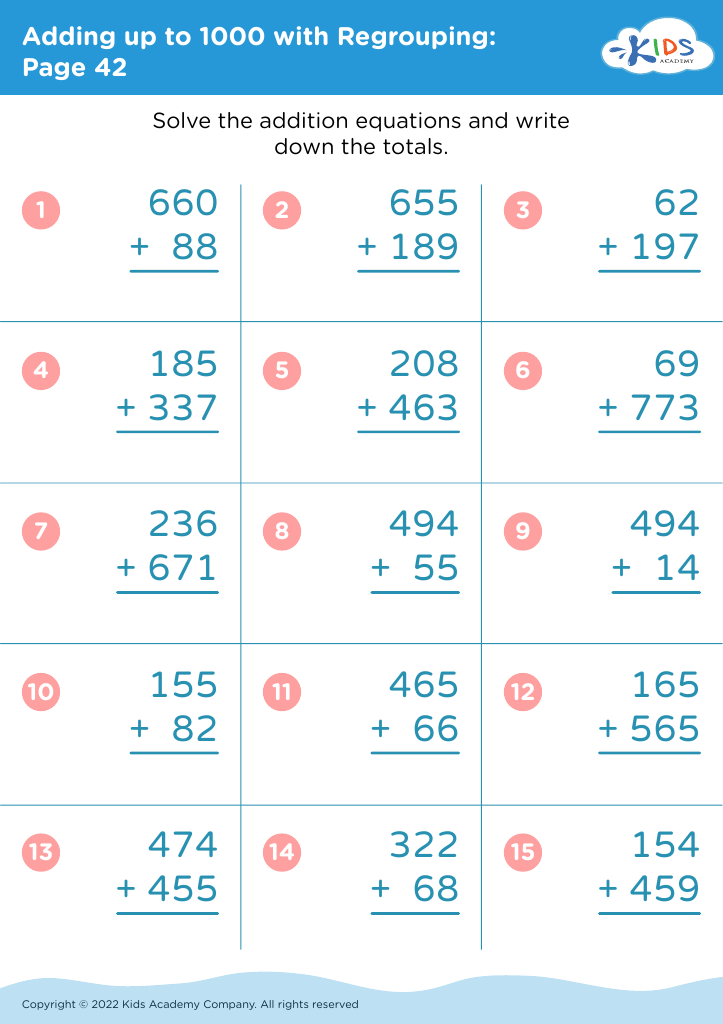
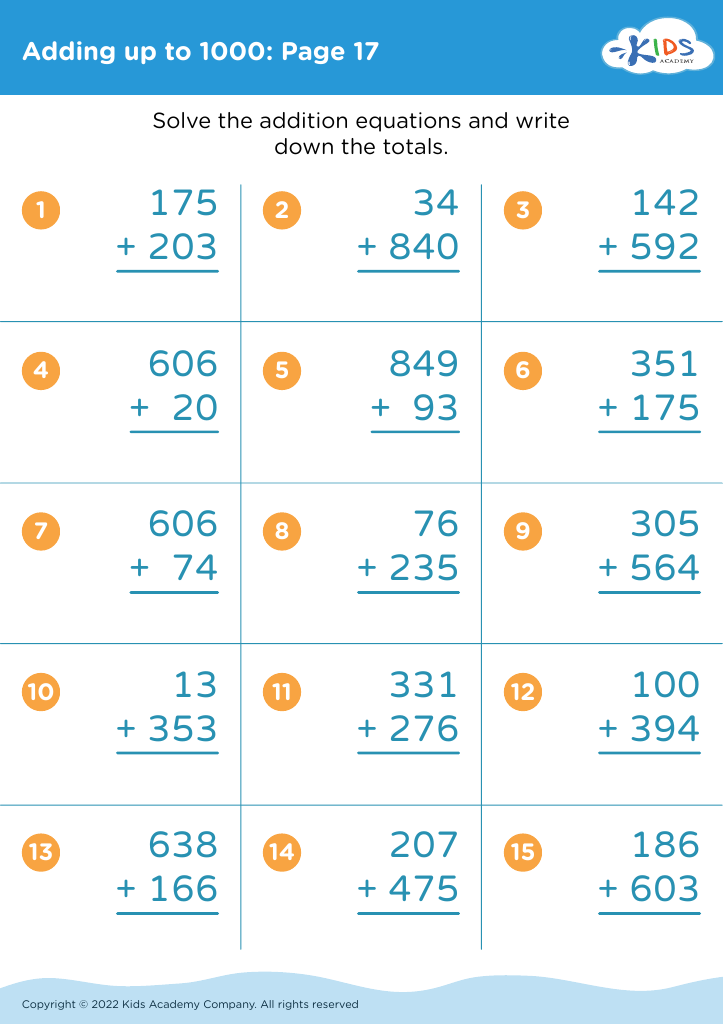
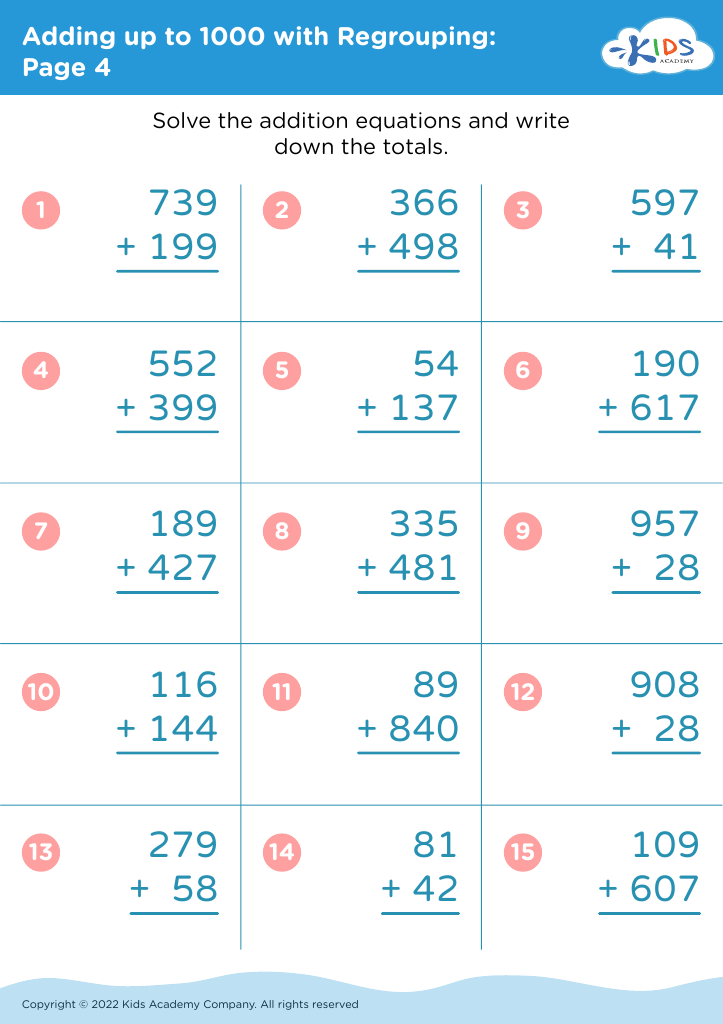
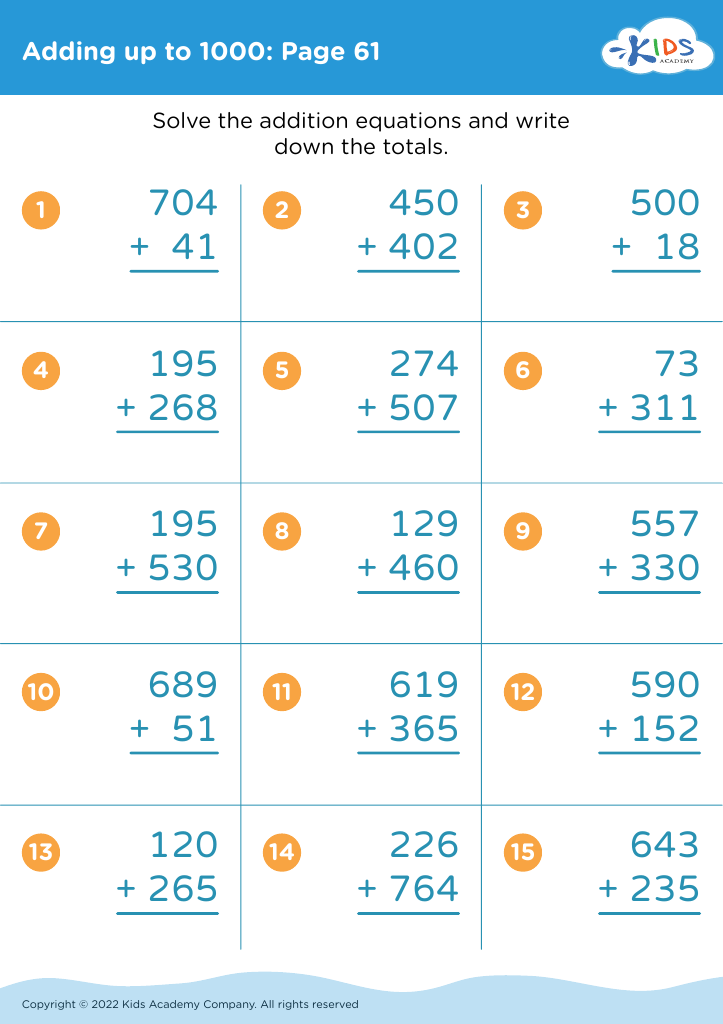
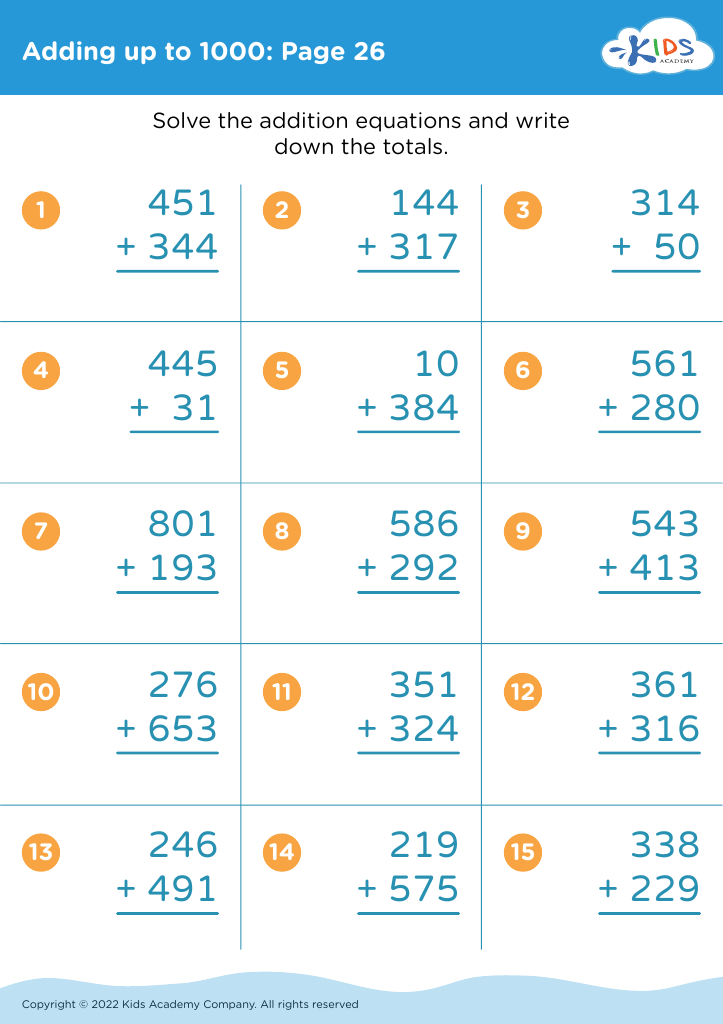
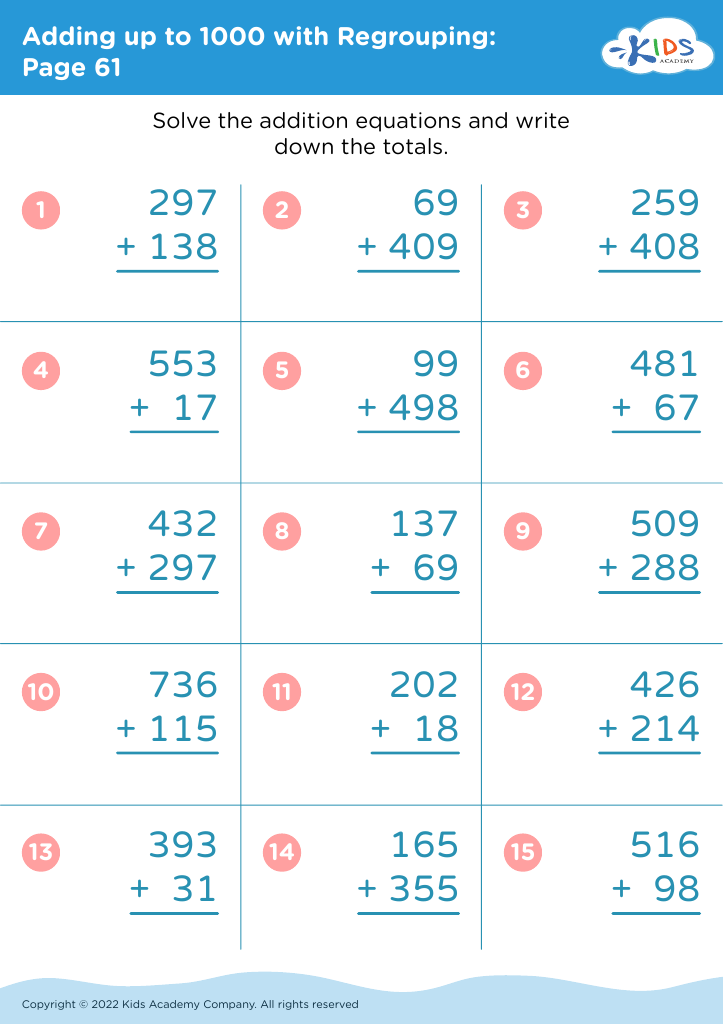
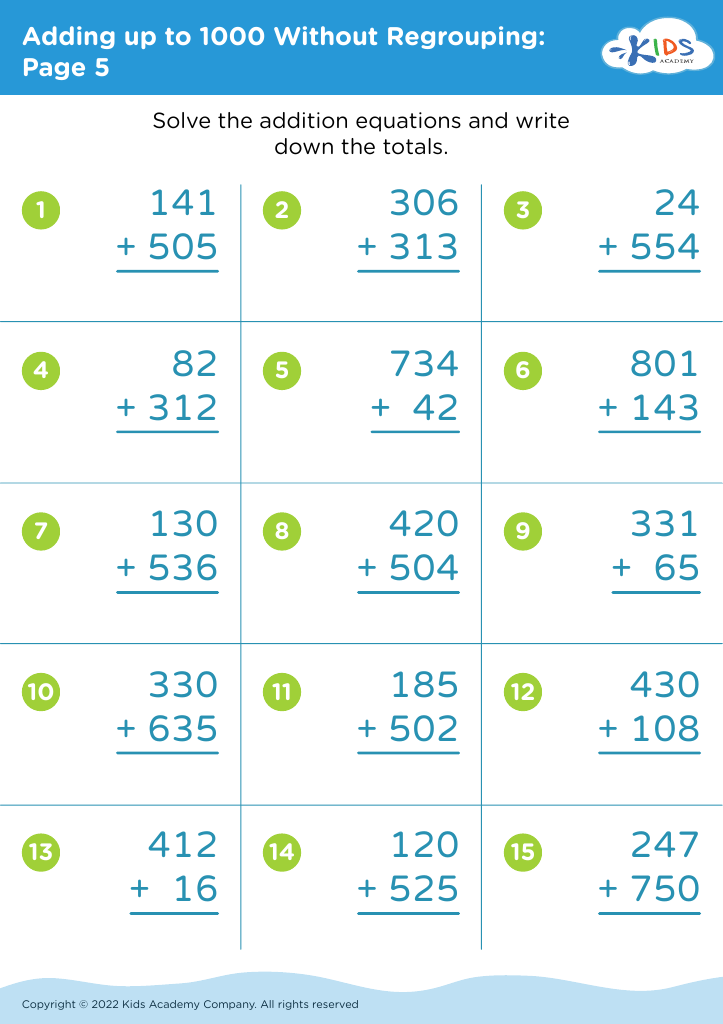
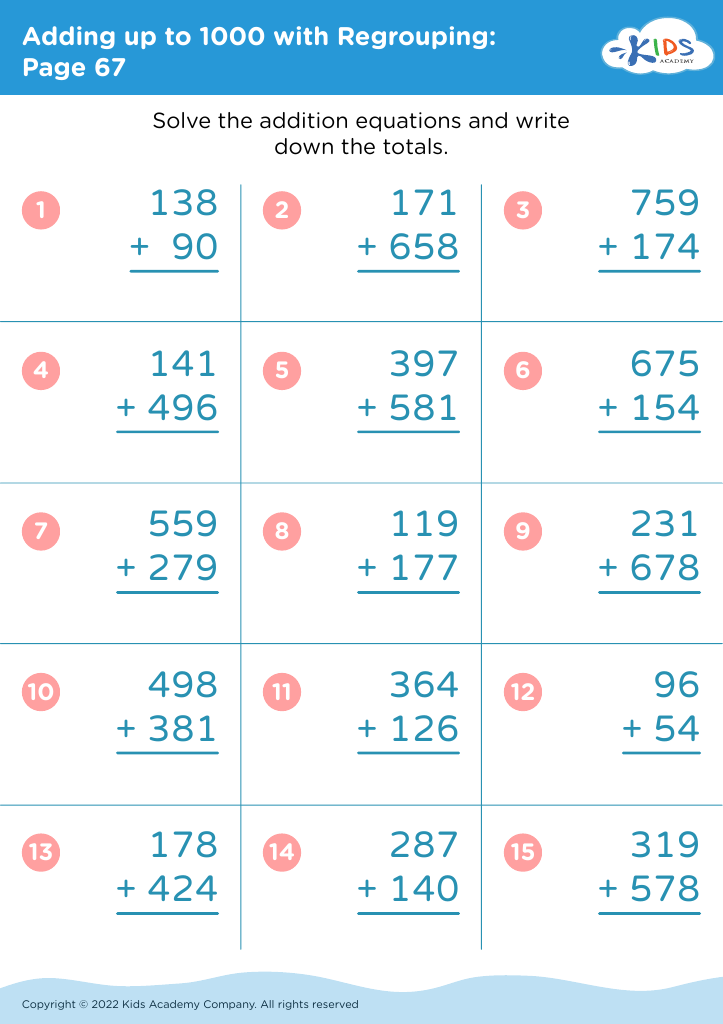
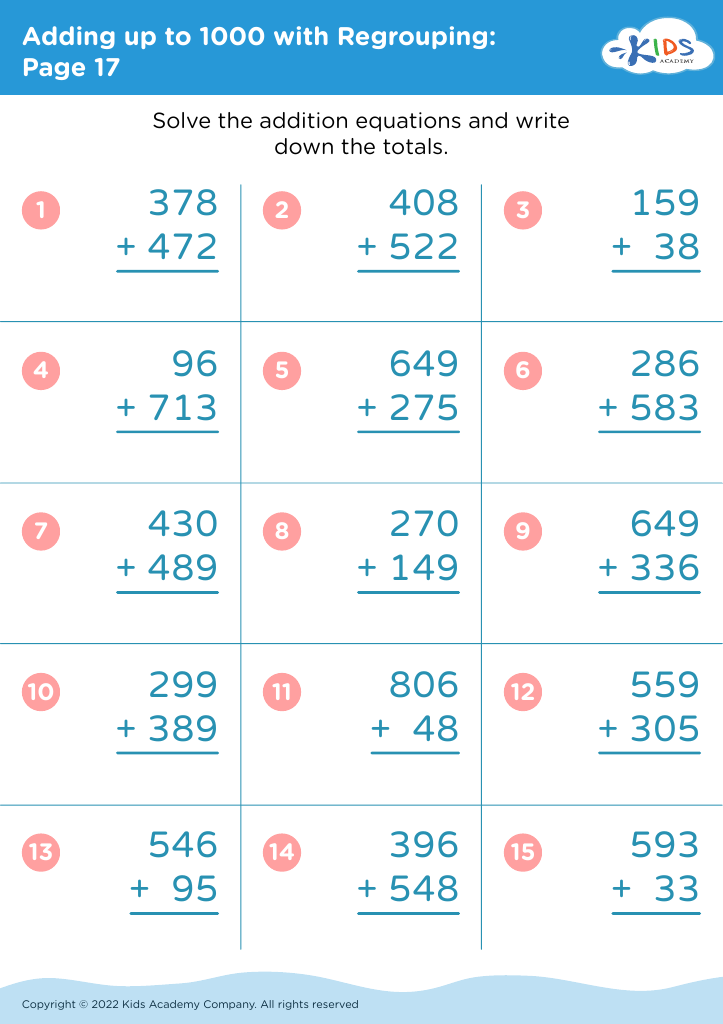
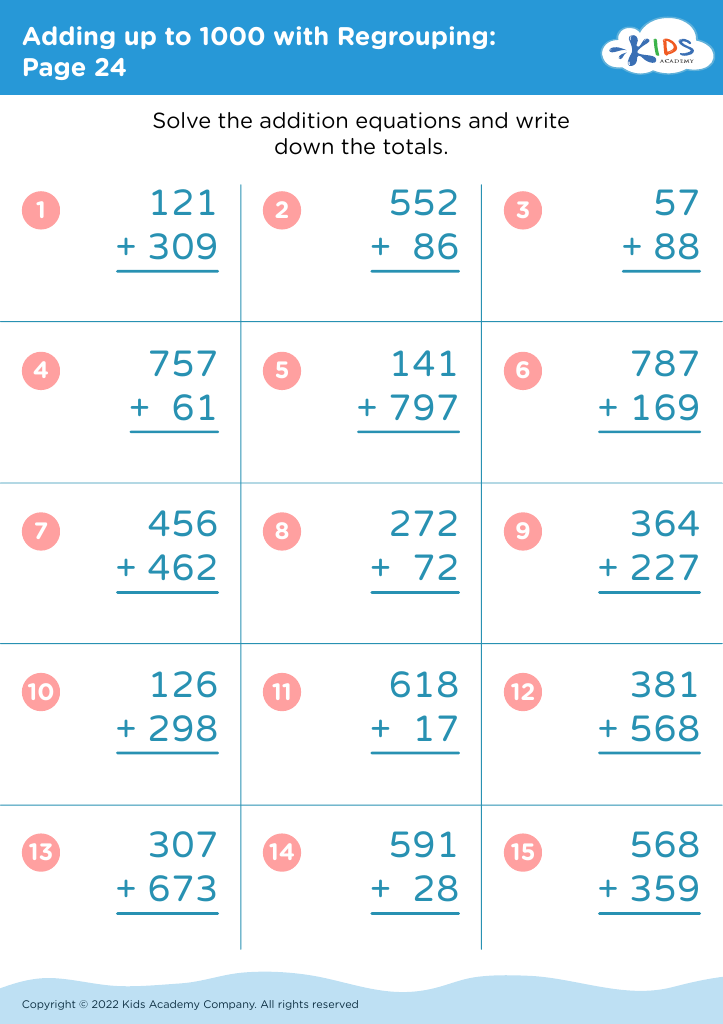
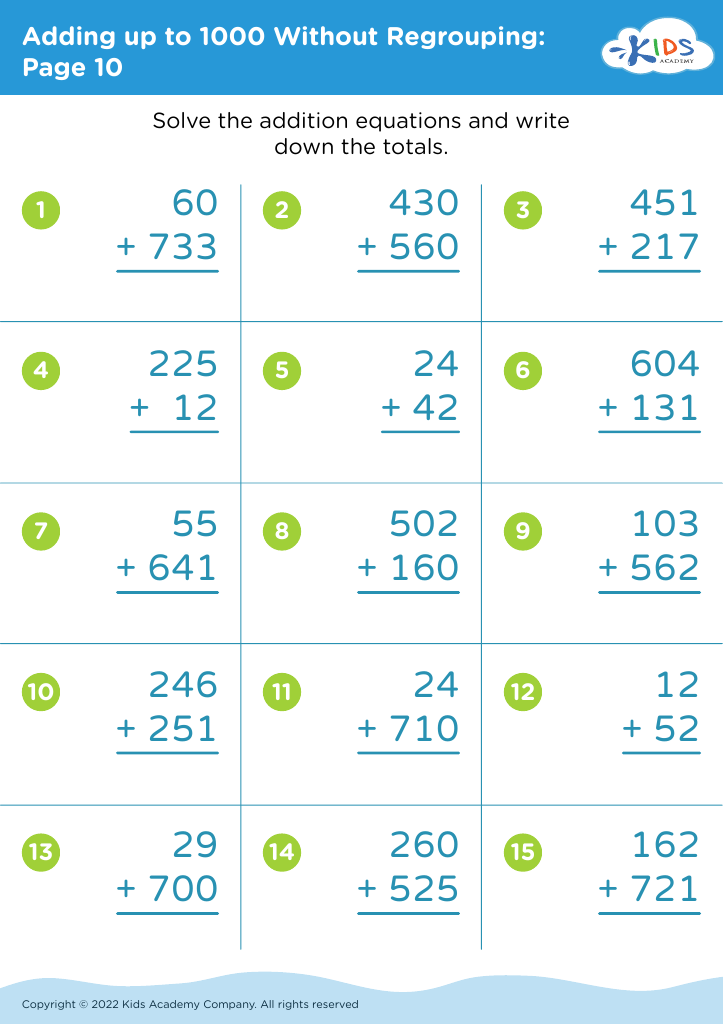
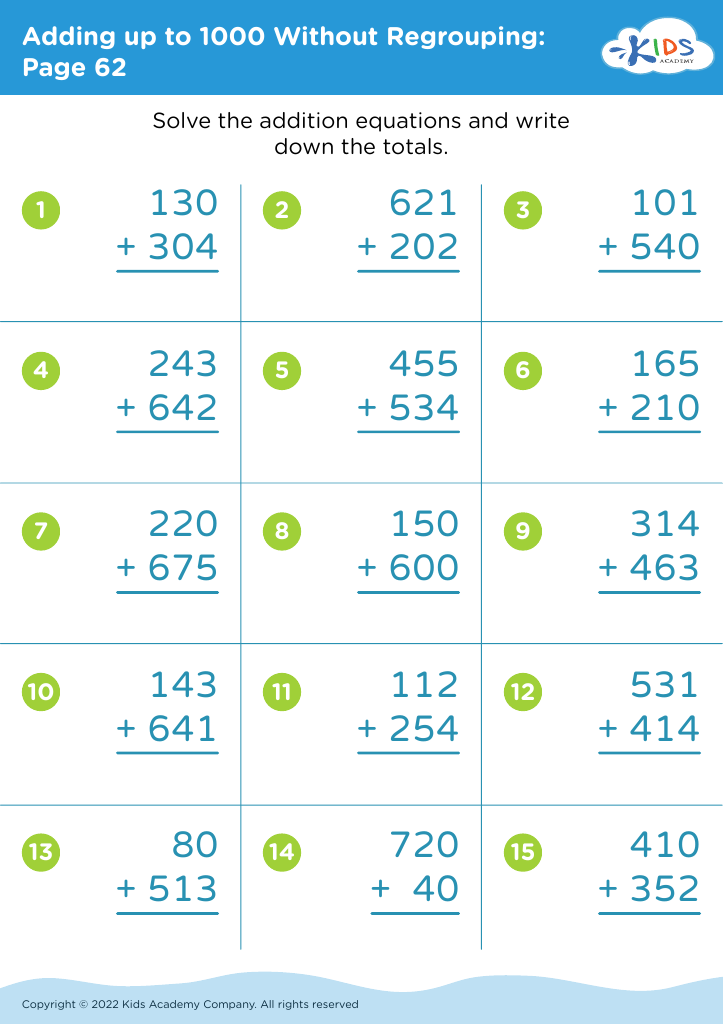



Basic math skills, particularly the ability to add up to 1000, are critical for children ages 5-7 as they lay a foundation for more complex mathematical concepts in later years. During this developmental phase, children are naturally curious and eager to learn. Introducing them to addition in a practical context prepares them for everyday situations, nurturing life skills they'll utilize throughout their lives, such as budgeting, measuring, and problem-solving.
Moreover, developing proficiency in addition enhances cognitive skills like logical thinking, pattern recognition, and spatial awareness. These skills contribute not only to math but to overall academic success. Engaging children in activities that involve adding up to 1000 encourages their emotional growth as well; it fosters a sense of achievement and builds confidence in their abilities.
Teachers and parents overlook these foundational skills at their peril, as struggles with basic concepts can lead to math anxiety and disengagement in later years. Early intervention ensures children develop a solid mathematical fluency, equipping them for more challenging tasks ahead in schooling and beyond. By prioritizing basic math education, we empower children to succeed academically and build critical thinking abilities that are essential in today’s complex world.








