Color Identification Adding up to 1000 Worksheets for Ages 5-7
6 filtered results
-
From - To
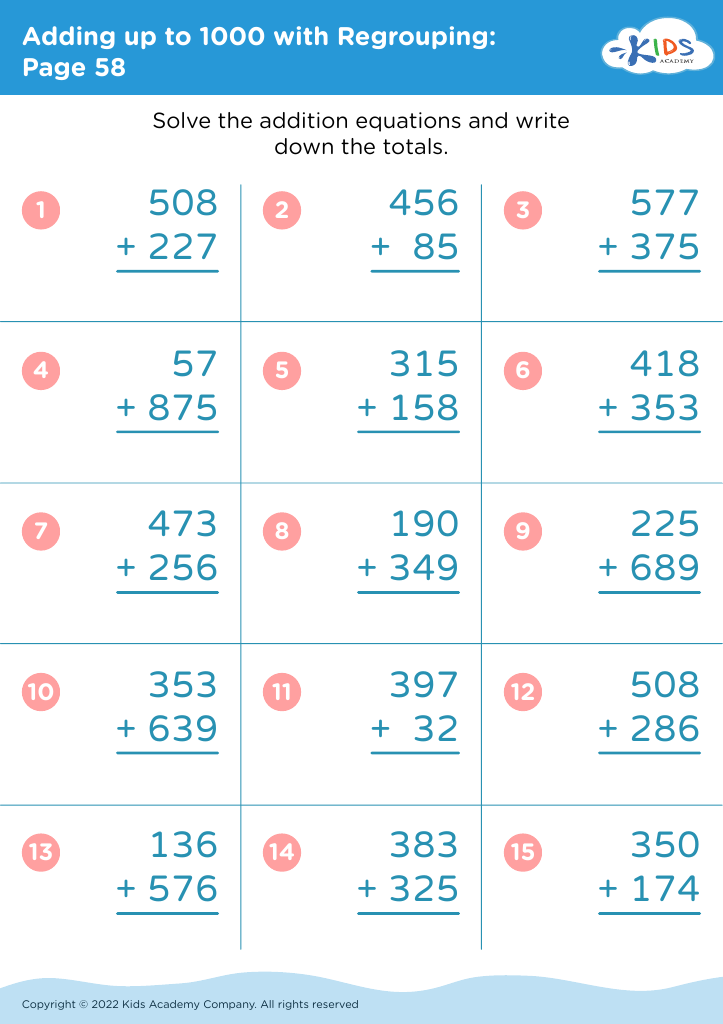
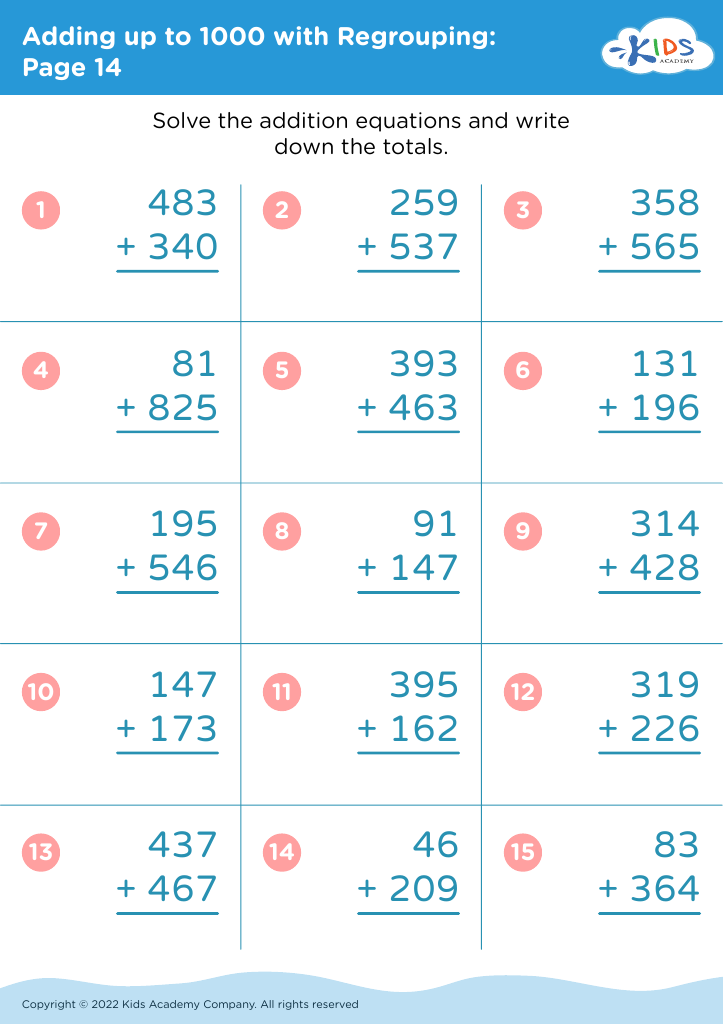
Explore our engaging "Color Identification Adding up to 1000 Worksheets," designed for children ages 5-7. These interactive worksheets combine color recognition with essential math skills, making learning both fun and educational! Our vibrant activities encourage kids to identify colors while practicing addition, enhancing their cognitive development. With a diverse range of exercises, students will match numbers with corresponding colors, reinforcing their understanding of both concepts. Ideal for parents and educators, this resource is perfect for use at home or in the classroom. Start your young learners on an exciting journey of color and math mastery today!



Color identification is a crucial early skill that contributes significantly to a child's cognitive development. For children ages 5-7, recognizing and naming colors not only enhances their visual perception but also boosts their vocabulary and language skills. As children learn to identify colors, they often describe objects and express their feelings, fostering their communication abilities.
Additionally, color identification is vital for understanding basic math concepts, particularly when matching, sorting, and classifying objects based on color. This foundational skill supports activities like adding and subtracting when involving colorful objects, making math more engaging and tangible.
Furthermore, colors play a prominent role in emotional and artistic expression. Encouraging children to explore colors during creative activities can enhance their critical thinking and problem-solving skills. Parents and teachers can use various interactive games and hands-on activities to reinforce color recognition, making learning fun and effective.
Engaging with these concepts not only supports children's intellectual growth but also promotes a sense of accomplishment, boosting their self-esteem. Therefore, color identification is not only about recognizing hues but serves as a gateway to broader educational experiences that enrich children's lives and learning journeys.








