Filters

19 filtered results

Clear all filters
Favorites
With answer key
Interactive

19 filtered results

Difficulty Level

Grade


Boost your child's math skills with our "Counting Practice: Adding up to 1000" worksheets, perfect for ages 5-7! These engaging, printable resources from Kids Academy are designed to make learning fun and effective for young learners. Each worksheet provides a variety of exercises to help children practice their counting and addition skills, bridging foundational knowledge and advancing math competency. With vibrant illustrations and step-by-step guidance, kids can enjoyably progress at their own pace. Enhance your child’s numerical abilities and build their confidence in math through interactive and educational practice today!
Check out this FREE Trial Lesson on Adding up to 1000 for age 5-7!

P

Favorites
With answer key
Interactive
  • 5-7
  • Counting practice
  • Adding up to 1000
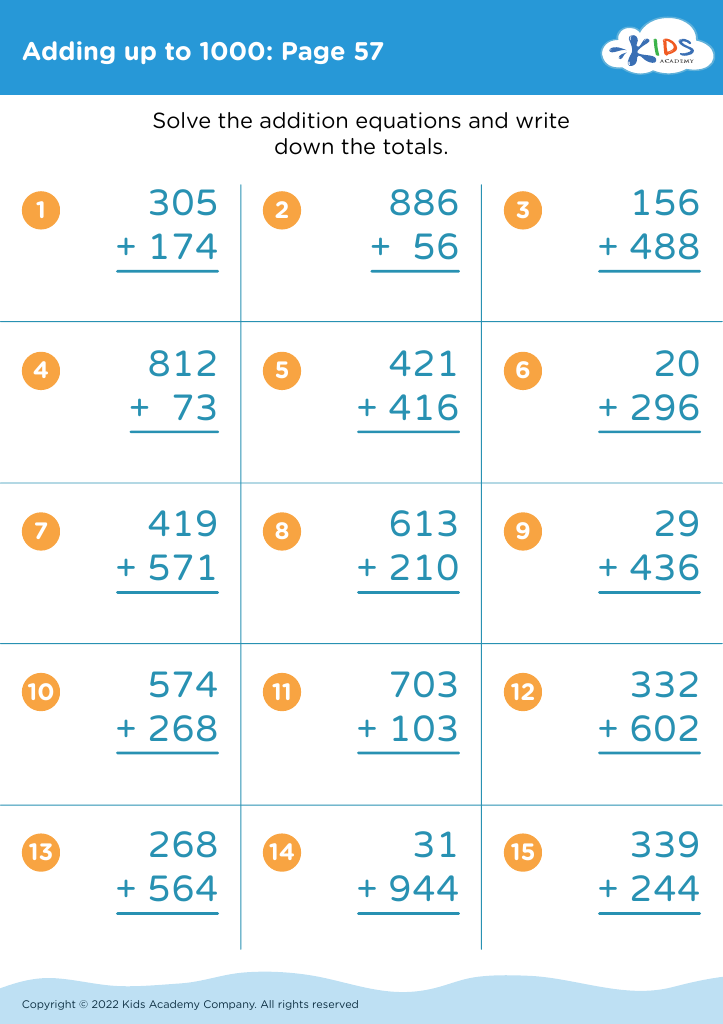
Adding up to 1000: Page 57

Adding up to 1000: Page 57

Adding up to 1000: Page 57
Worksheet
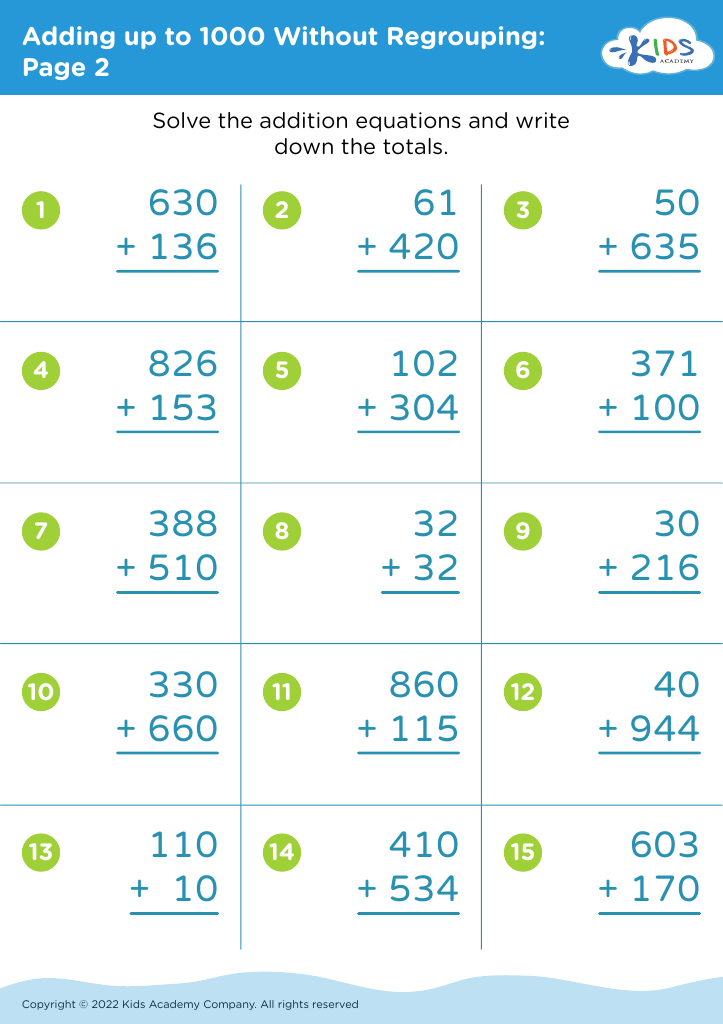
Adding up to 1000 Without Regrouping: Page 2
Worksheet
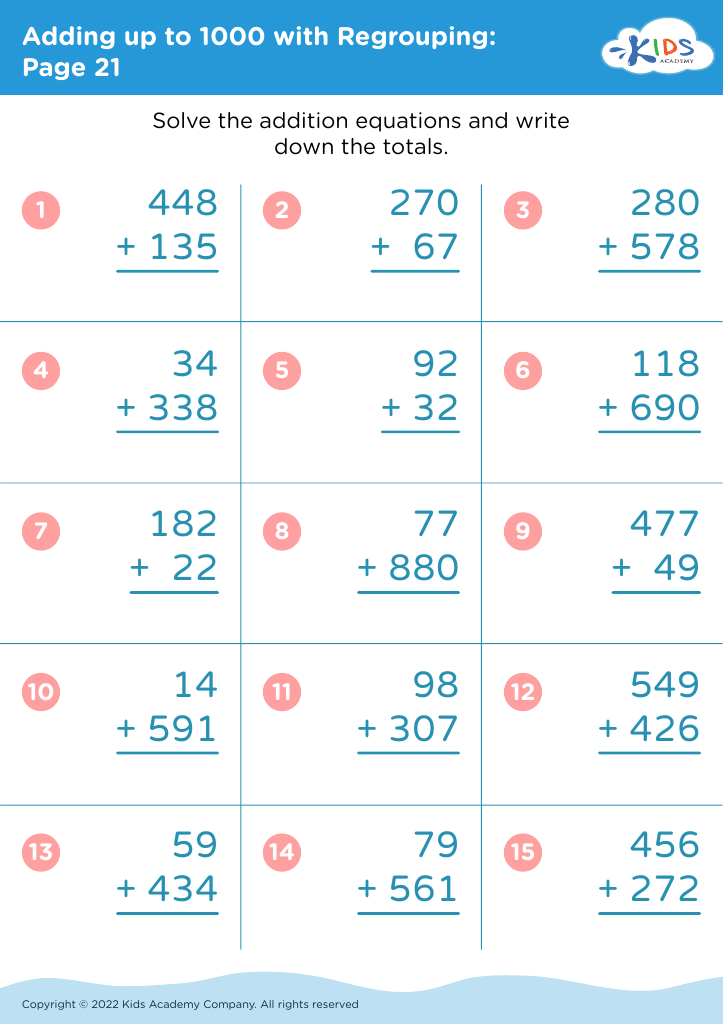
Adding up to 1000 with Regrouping: Page 21
Worksheet
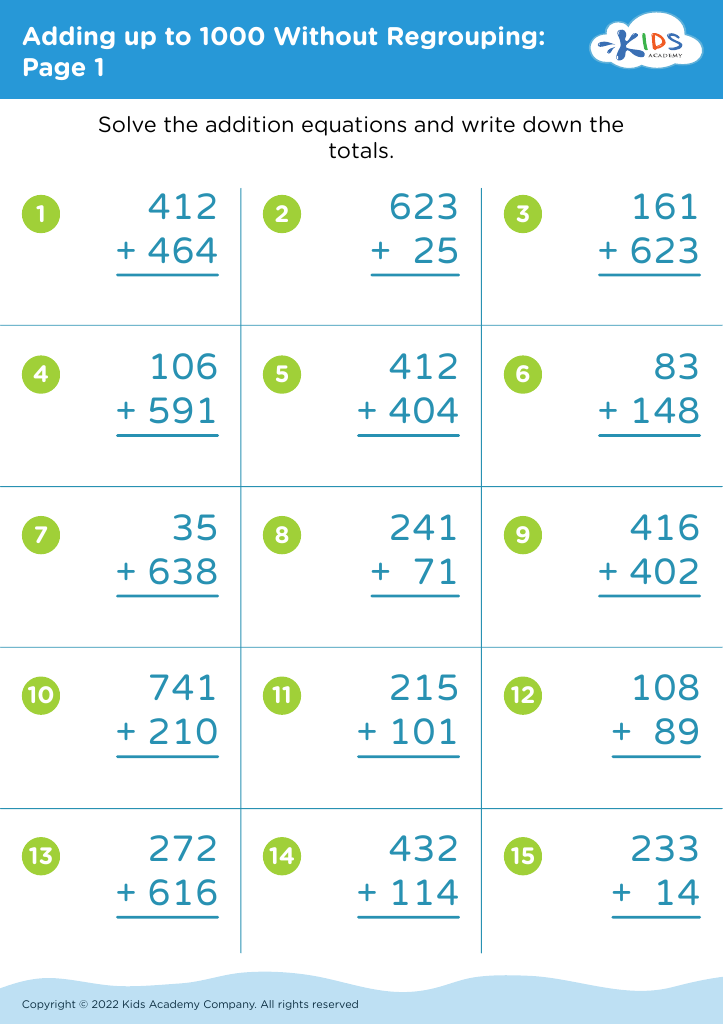
Adding up to 1000 Without Regrouping: Page 1
Worksheet
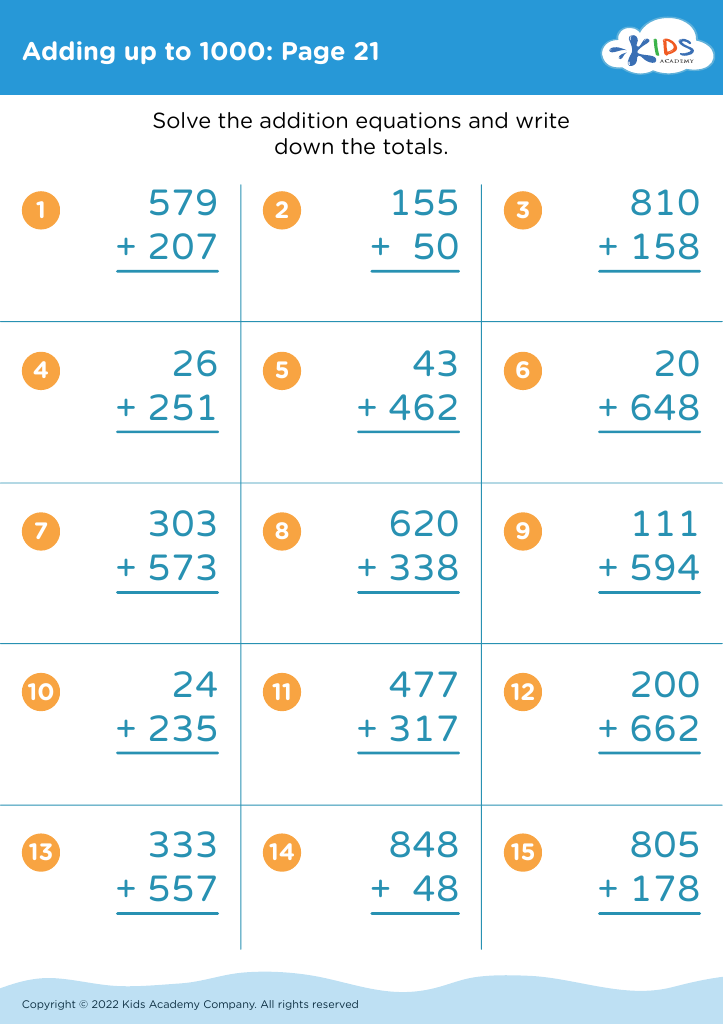
Adding up to 1000: Page 21

Adding up to 1000: Page 21

Adding up to 1000: Page 21
Worksheet
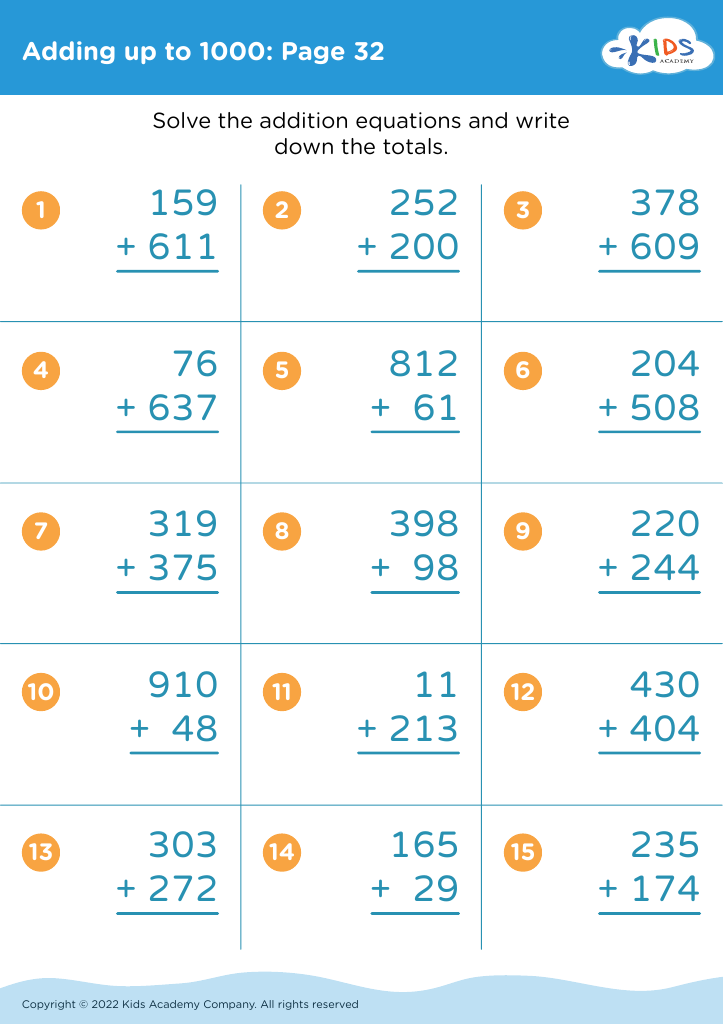
Adding up to 1000: Page 32

Adding up to 1000: Page 32

Adding up to 1000: Page 32
Worksheet
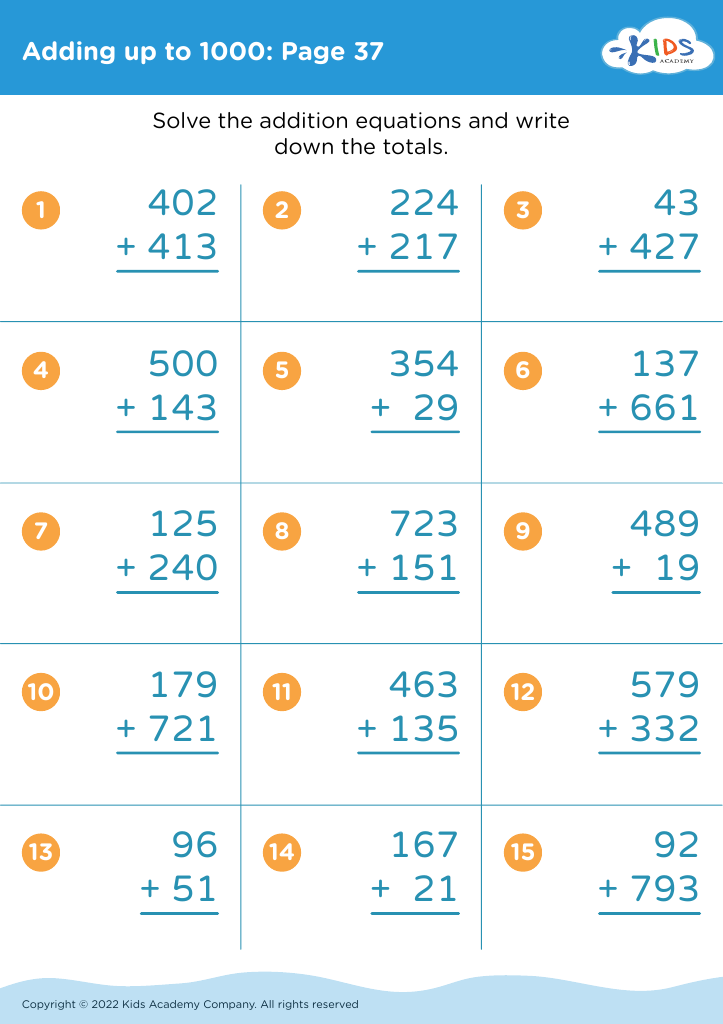
Adding up to 1000: Page 37

Adding up to 1000: Page 37

Adding up to 1000: Page 37
Worksheet
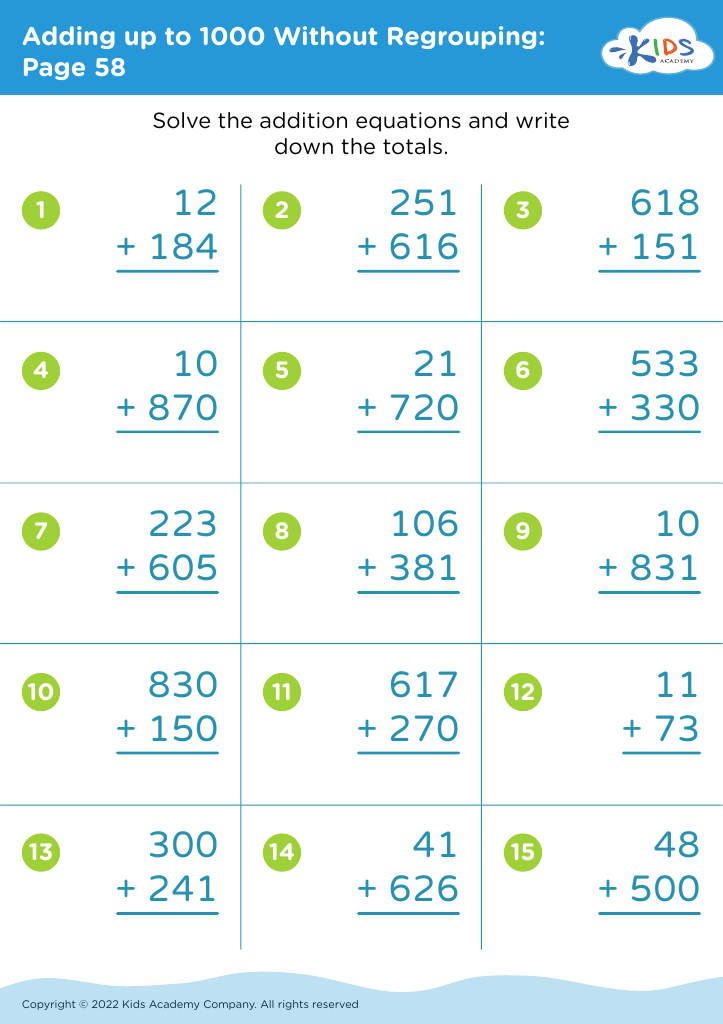
Adding up to 1000 Without Regrouping: Page 58
Worksheet
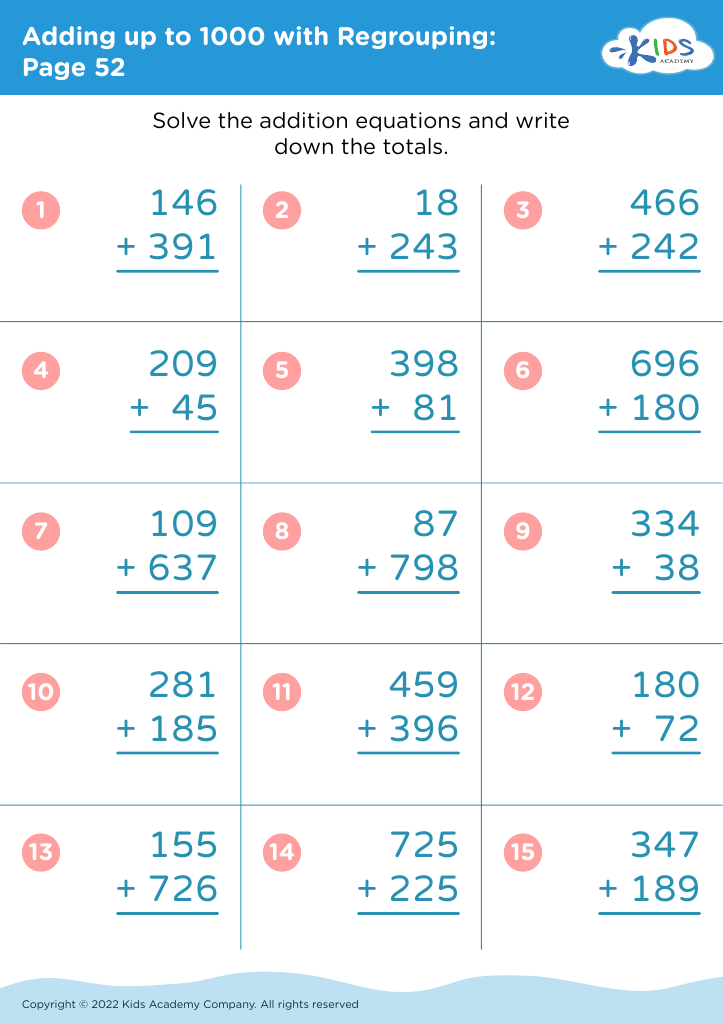
Adding up to 1000 with Regrouping: Page 52
Worksheet
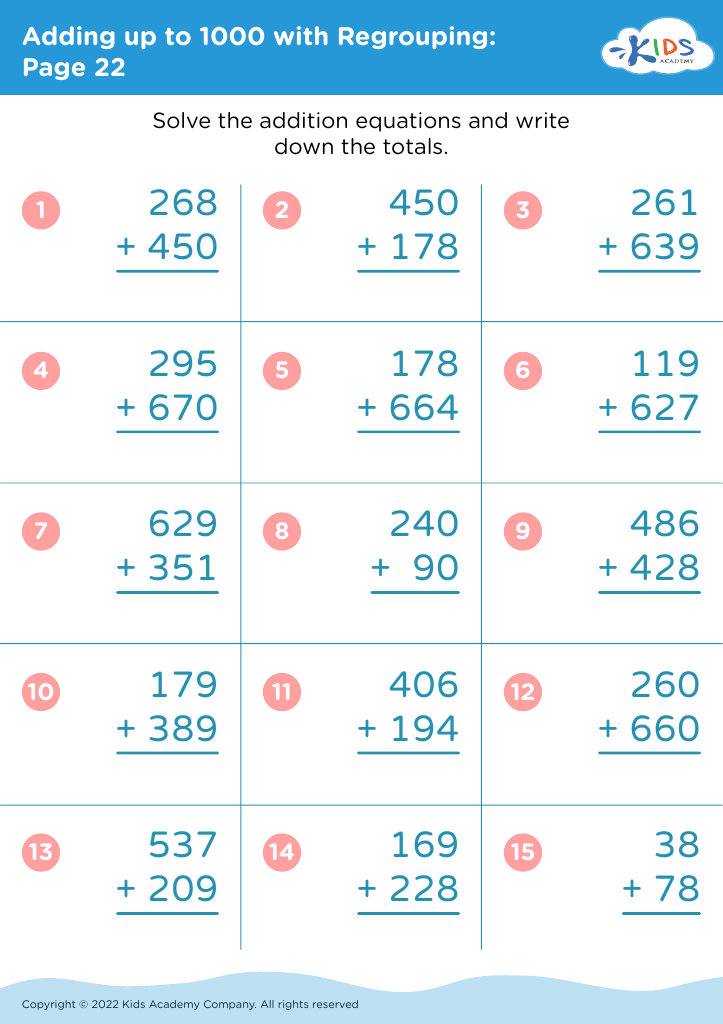
Adding up to 1000 with Regrouping: Page 22
Worksheet
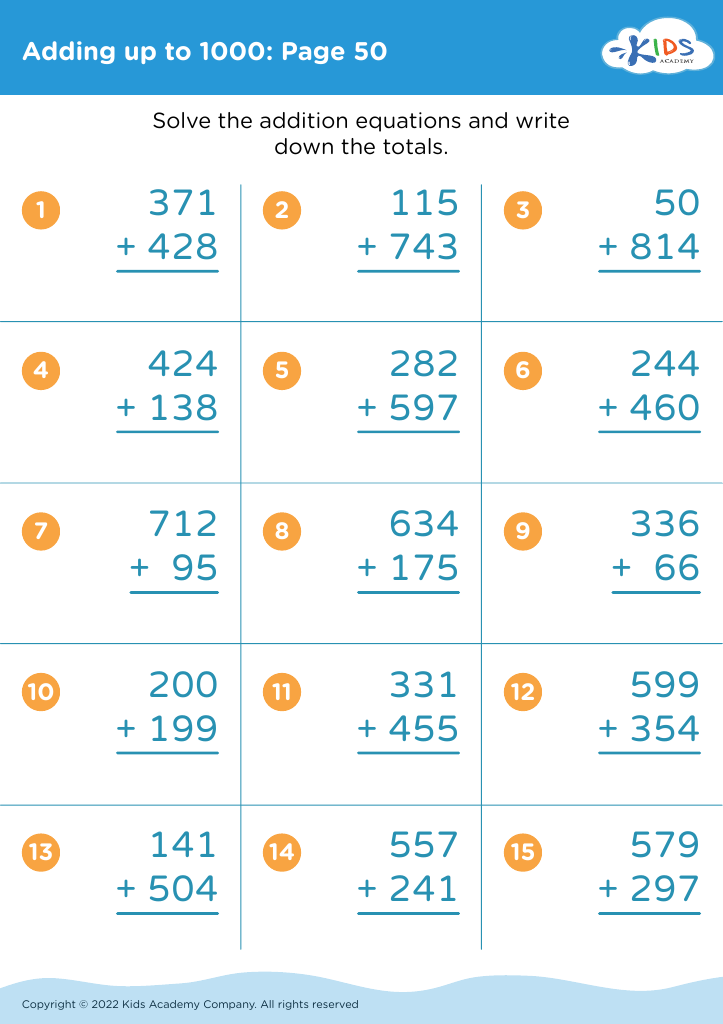
Adding up to 1000: Page 50

Adding up to 1000: Page 50

Adding up to 1000: Page 50
Worksheet
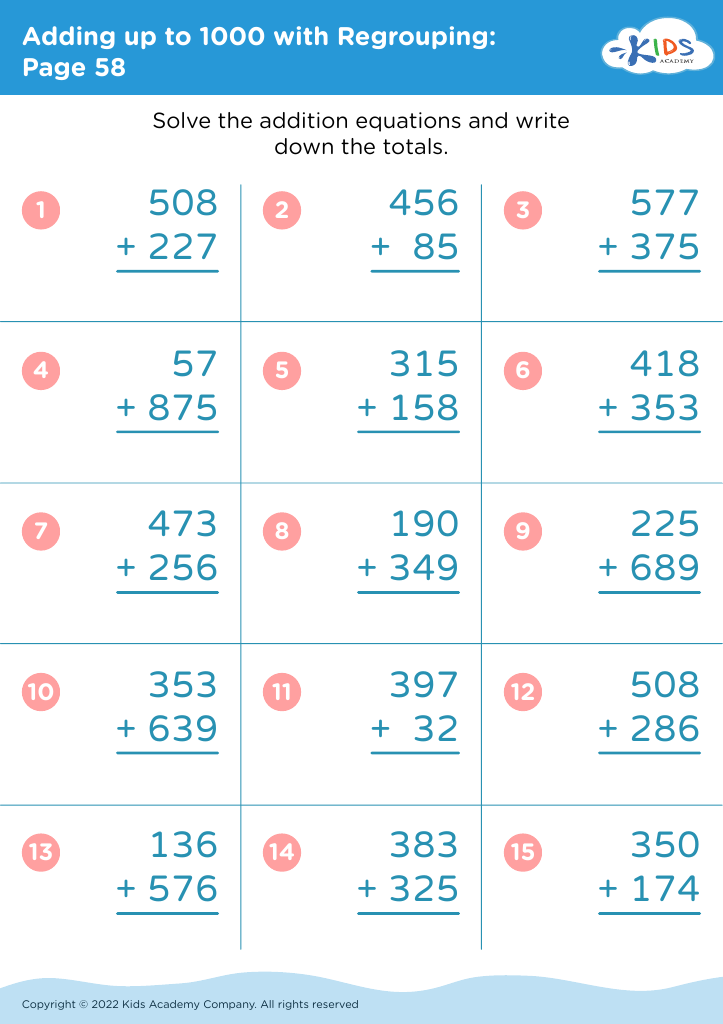
Adding up to 1000 with Regrouping: Page 58
Worksheet
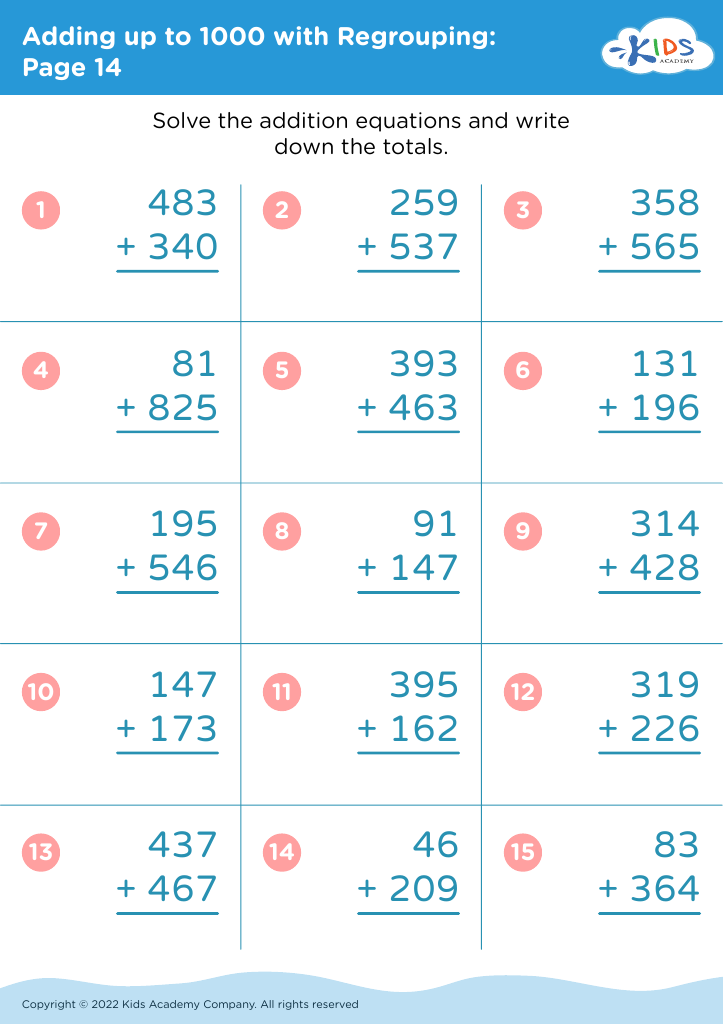
Adding up to 1000 with Regrouping: Page 14
Worksheet
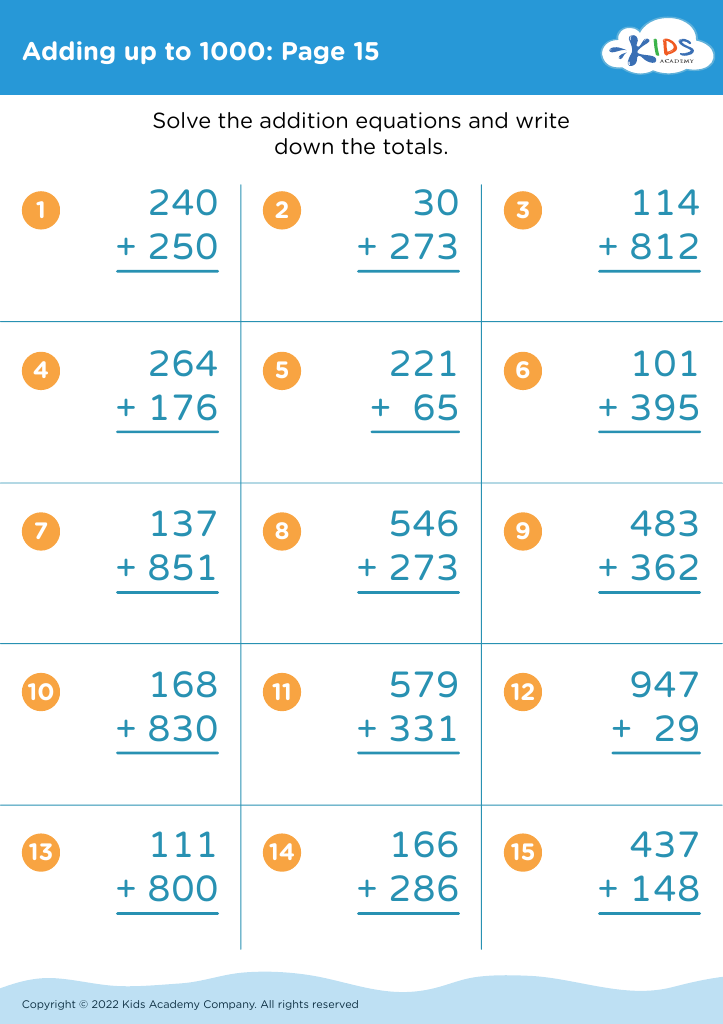
Adding up to 1000: Page 15

Adding up to 1000: Page 15

Adding up to 1000: Page 15
Worksheet
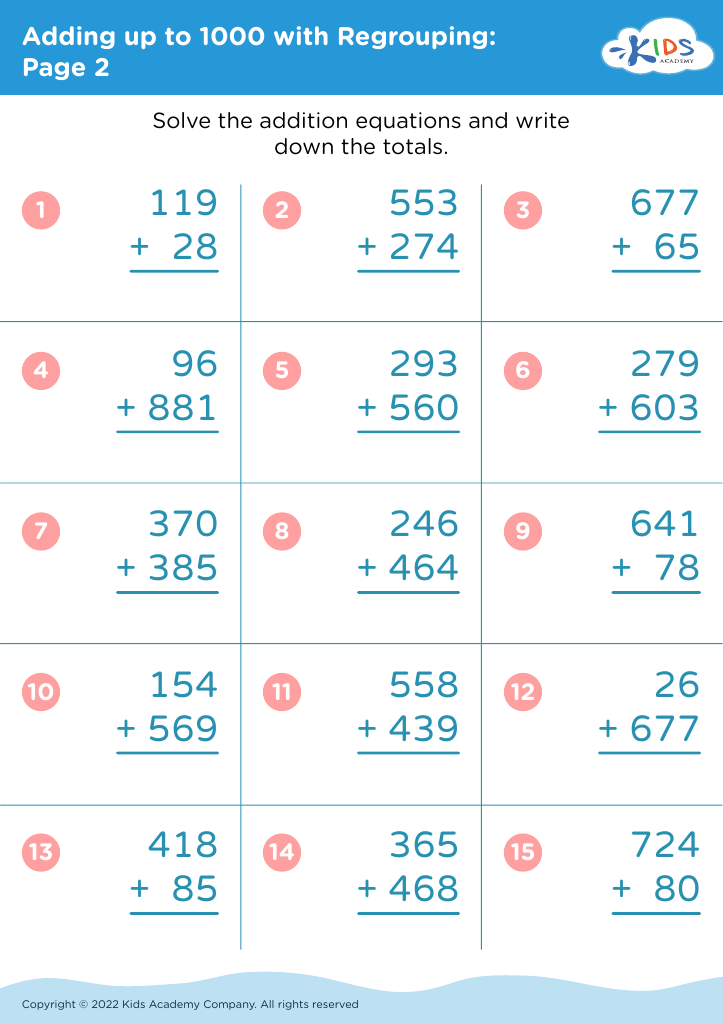
Adding up to 1000 with Regrouping: Page 2
Worksheet
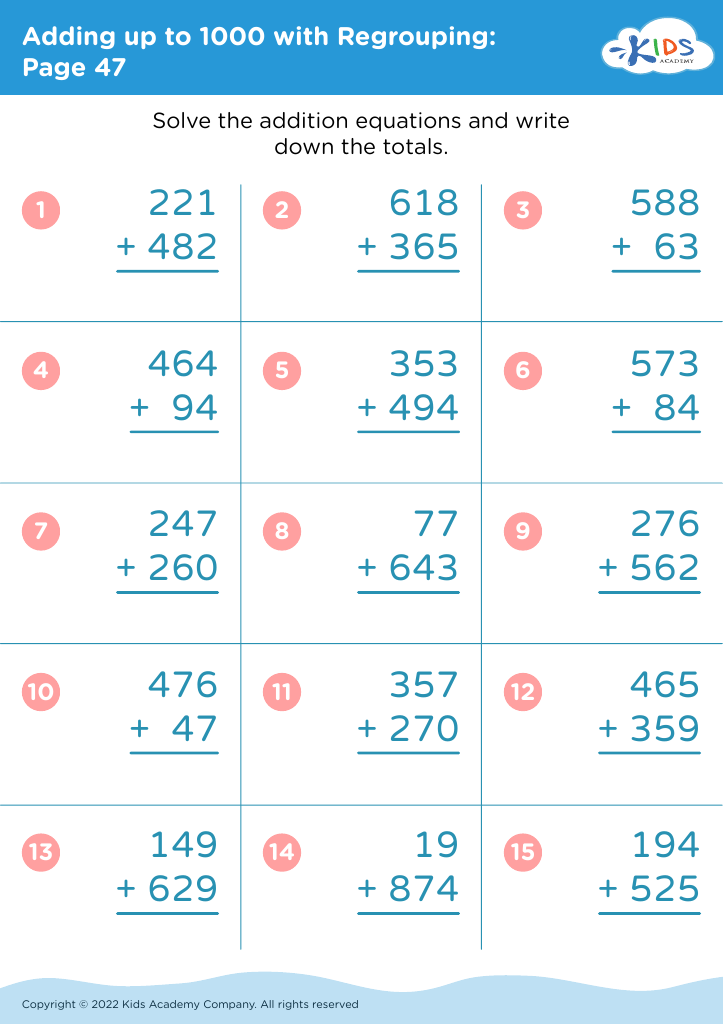
Adding up to 1000 with Regrouping: Page 47
Worksheet
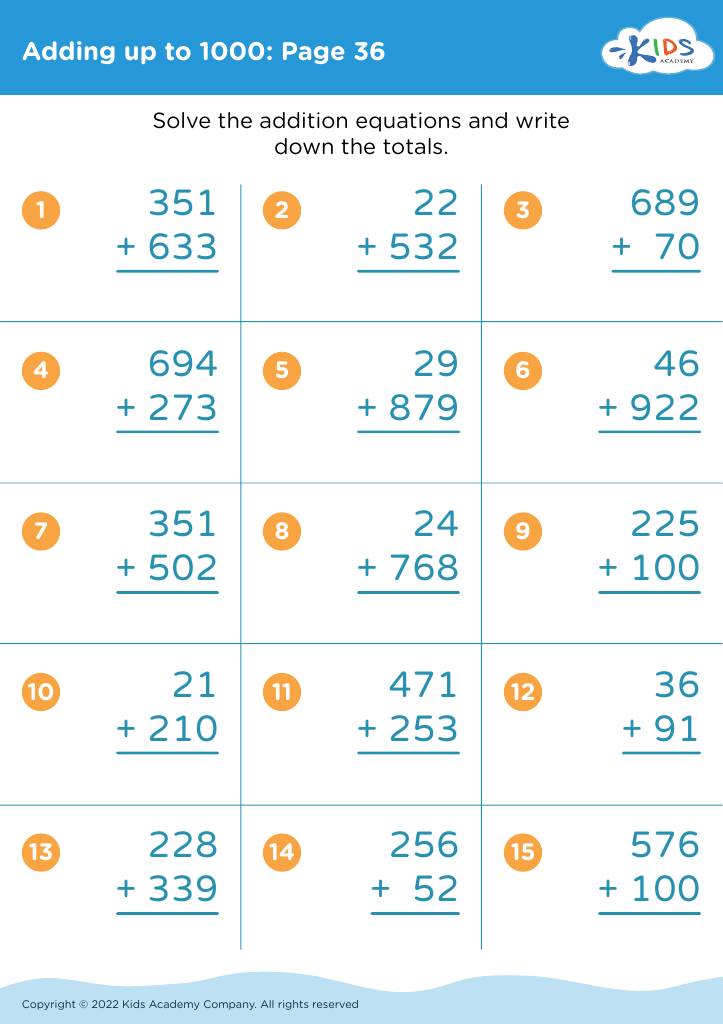
Adding up to 1000: Page 36

Adding up to 1000: Page 36

Adding up to 1000: Page 36
Worksheet
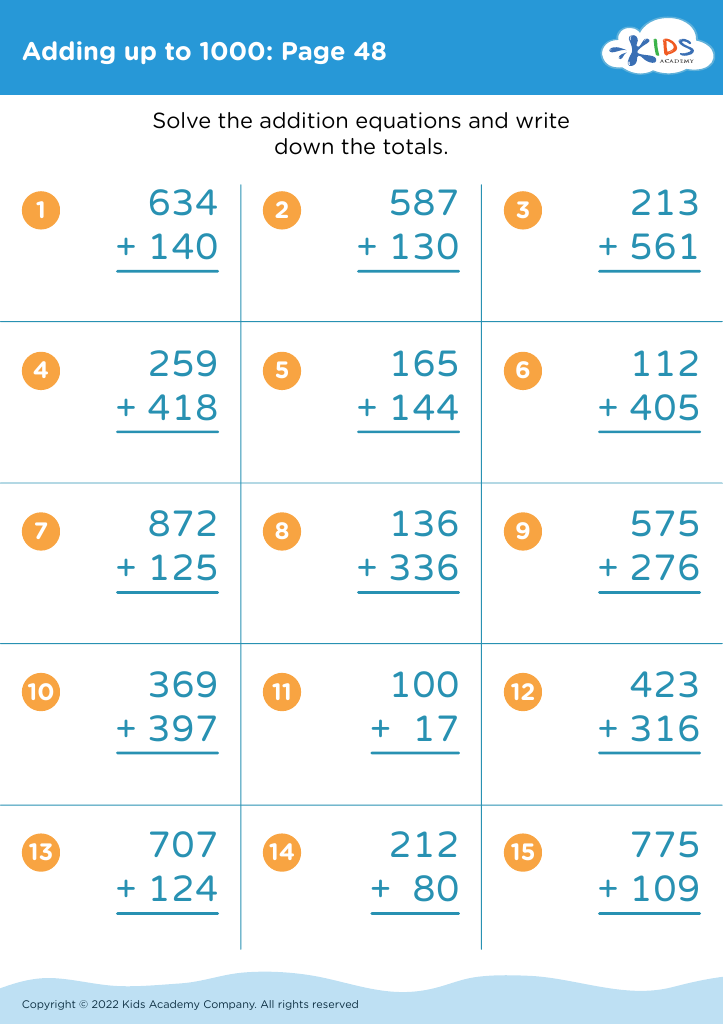
Adding up to 1000: Page 48

Adding up to 1000: Page 48

Adding up to 1000: Page 48
Worksheet
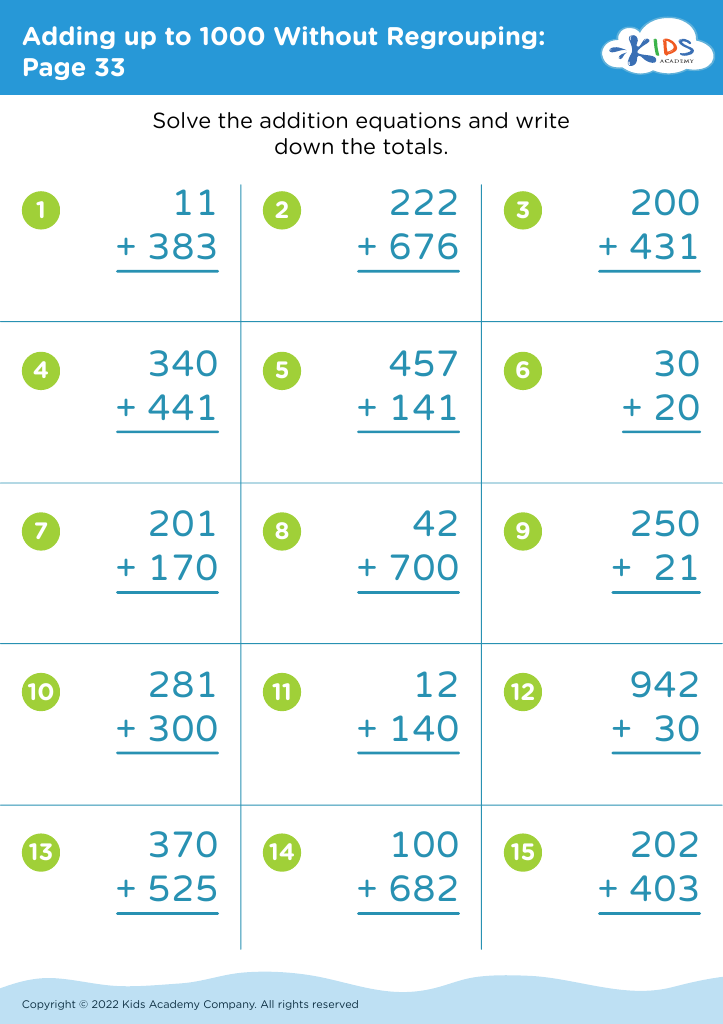
Adding up to 1000 Without Regrouping: Page 33
Worksheet


Counting and adding up to 1000 are fundamental math skills crucial for ages 5-7. Parents and teachers should prioritize these exercises because they build a strong mathematical foundation. At this early age, children absorb and recognize patterns, fostering a growth mindset towards learning and problem-solving.

First, mastering counting develops number sense, essential for understanding more complex math concepts like place value and arithmetic operations. Early proficiency in addition supplements mental math skills, which simplifies everyday tasks and builds confidence. The skills learned also translate to practical scenarios, such as shopping or telling time, promoting independence.

Second, incorporating counting up to 1000 can make math more engaging and less intimidating. Interactive activities, like games and puzzles, can make learning fun, helping children develop a positive attitude towards math.

Finally, key stages of brain development occur between ages 5 and 7. Providing mathematical challenges stimulates cognitive skills such as memory, attention, analytical thinking, and problem-solving. When children see numbers frequently and experience adding higher ranges, they experience brain growth that's advantageous for their academic future.

In essence, focusing on counting and adding up to 1000 transforms math from an abstract concept to a tangible skill, setting children up for long-term success in numerous fields.