Critical Thinking Adding up to 1000 Worksheets for Ages 5-7
5 filtered results
-
From - To
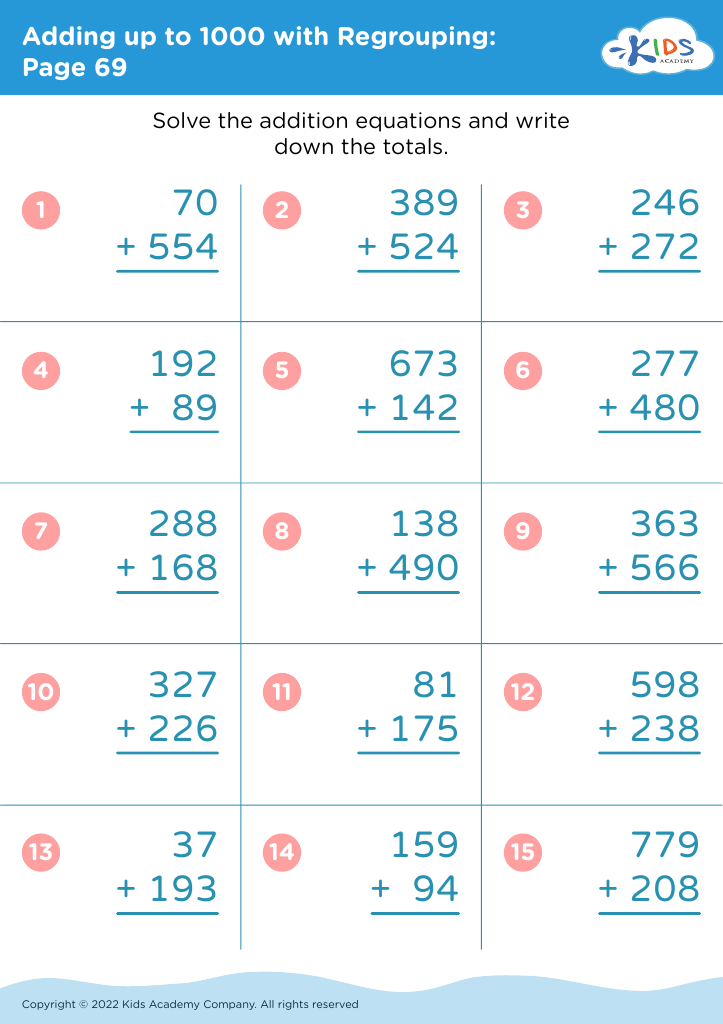
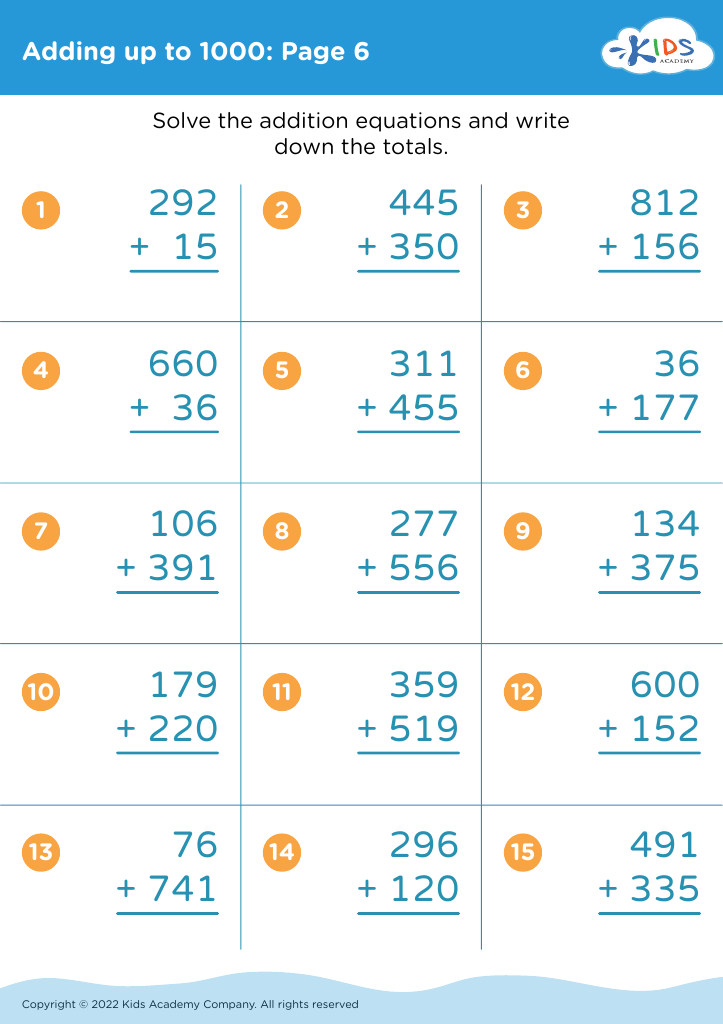
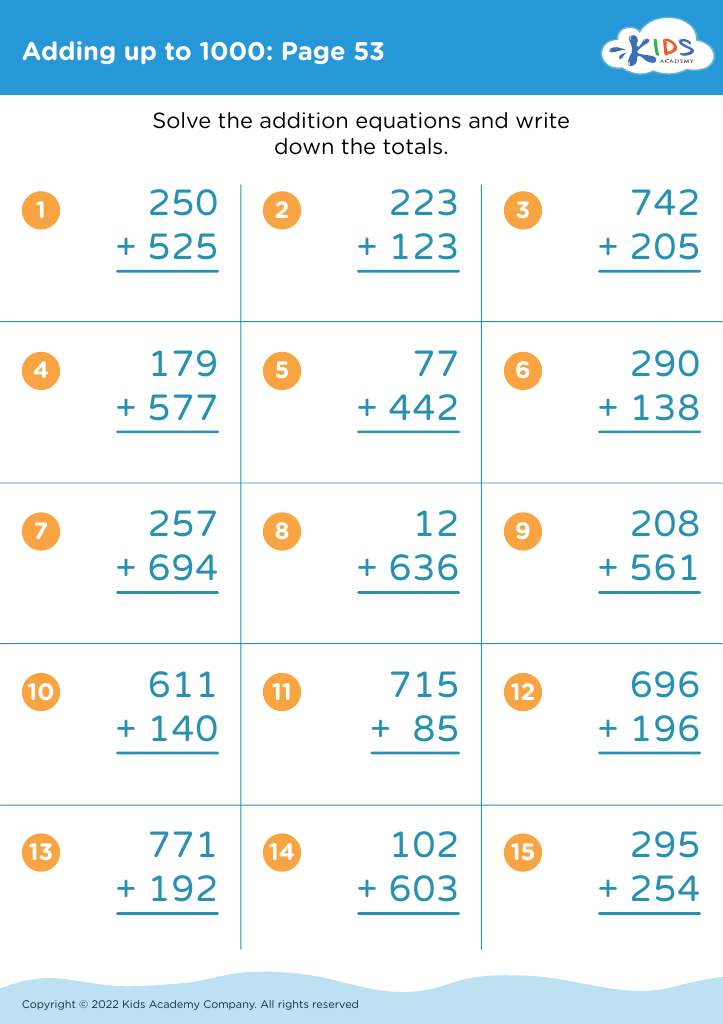
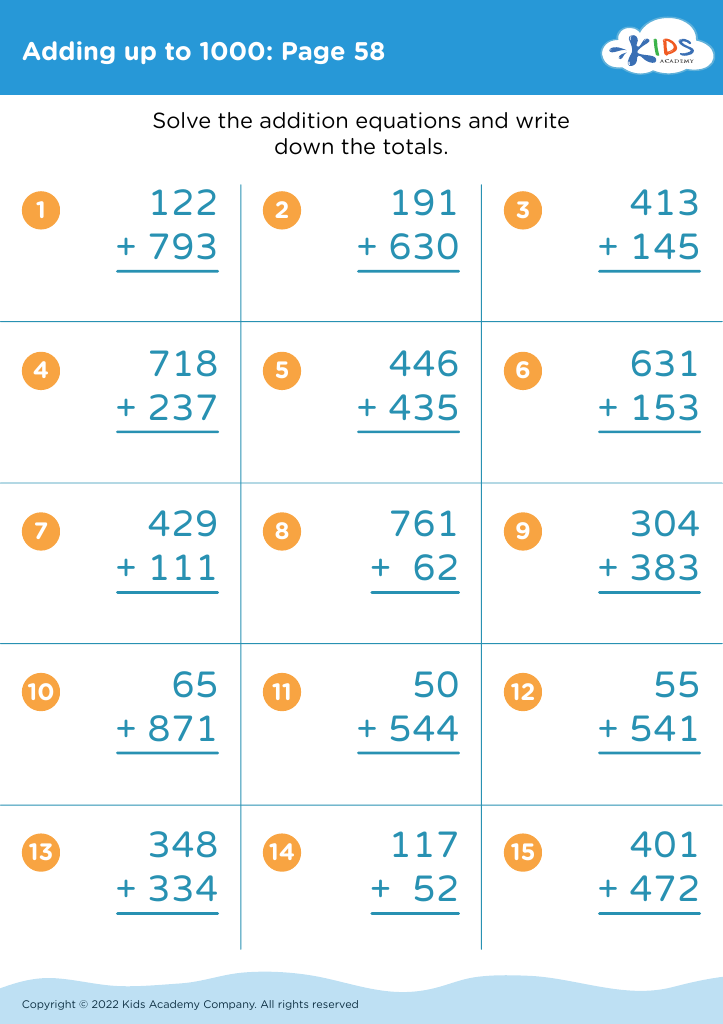
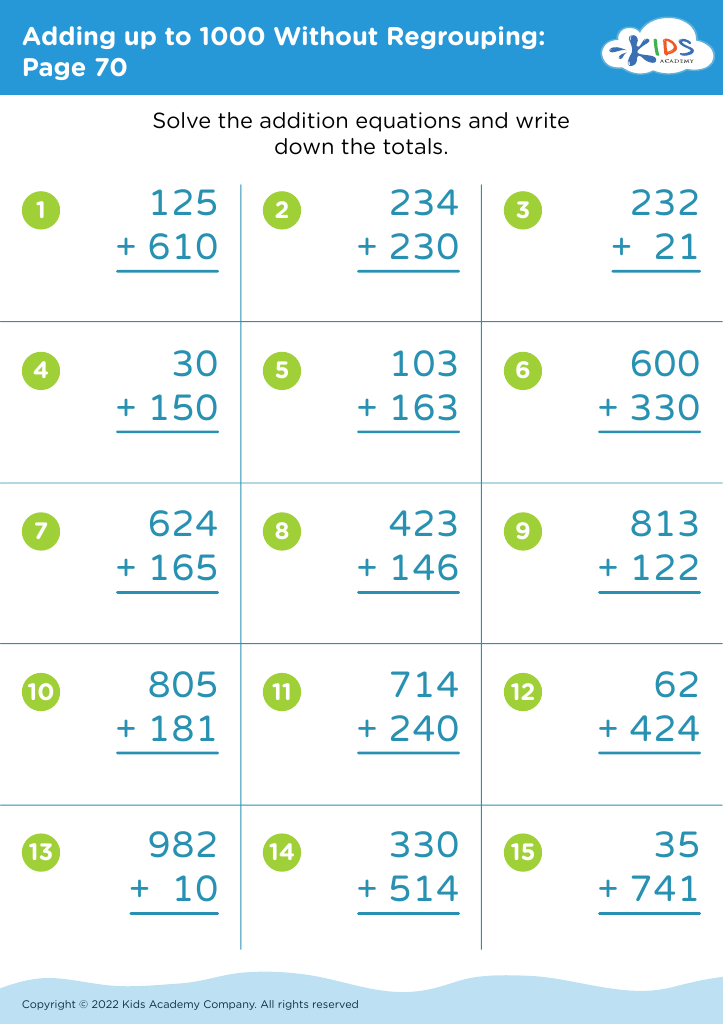
Enhance your child's critical thinking skills with our engaging "Adding Up to 1000 Worksheets" designed for ages 5-7. These carefully crafted resources not only make addition fun but also encourage young learners to think critically as they solve various math problems. Each worksheet features a blend of entertaining activities, puzzles, and real-life scenarios that challenge children to apply their reasoning skills while mastering addition concepts. Our curriculum-aligned worksheets help develop mathematical fluency, promote problem-solving capabilities, and strengthen cognitive skills. Give your child the tools they need to succeed in math and beyond while fostering a love for learning with these exciting worksheets!



Critical thinking is crucial for children aged 5-7 as it lays the foundation for lifelong learning and decision-making skills. During these formative years, children are naturally curious and eager to explore; fostering critical thinking nurtures this curiosity while teaching them how to analyze information, solve problems, and make informed choices.
Parents and teachers should prioritize critical thinking because it enhances a child's ability to evaluate situations rather than simply accepting information at face value. By engaging in discussions, asking open-ended questions, and encouraging exploration, adults can help children develop the capacity to think independently and creatively.
Moreover, critical thinking promotes social skills, teaching children to consider different perspectives and the importance of collaboration. This can lead to improved communication skills and more positive relationships with peers.
In a world filled with information, having strong critical thinking skills helps children discern fact from fiction and make educated decisions. Ultimately, investing in critical thinking for young learners equips them with essential tools for thriving academically and socially as they grow into thoughtful, engaged adults. By nurturing these skills at an early age, parents and teachers can empower children to become confident and capable thinkers in a complex world.








