Fine motor skills (writing) Adding up to 1000 Worksheets for Ages 5-7
5 filtered results
-
From - To
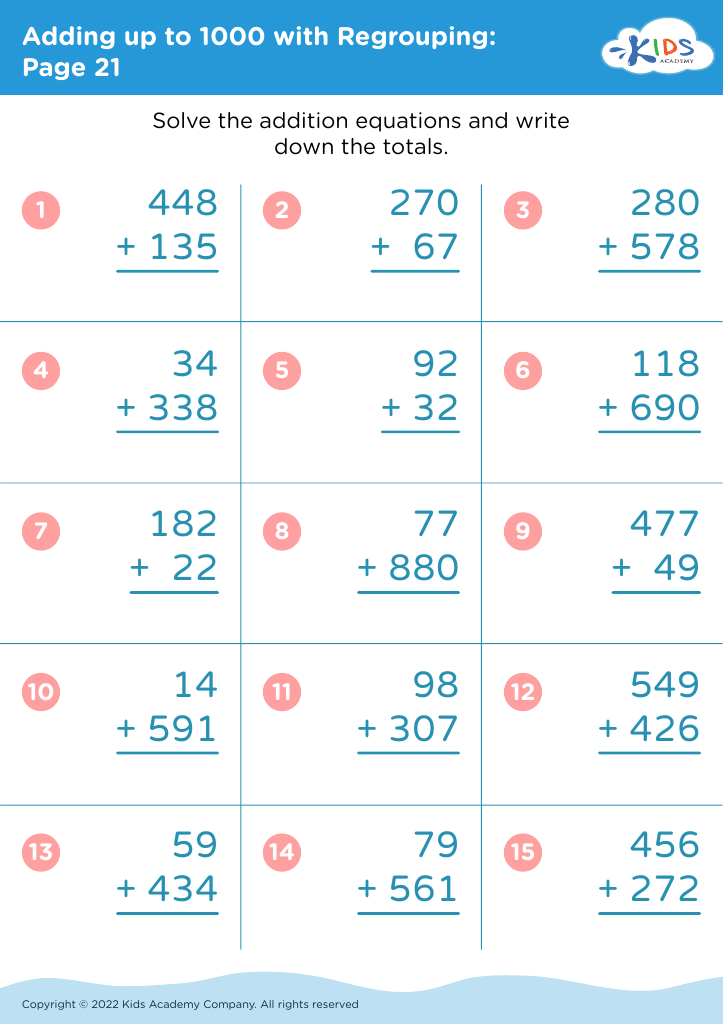
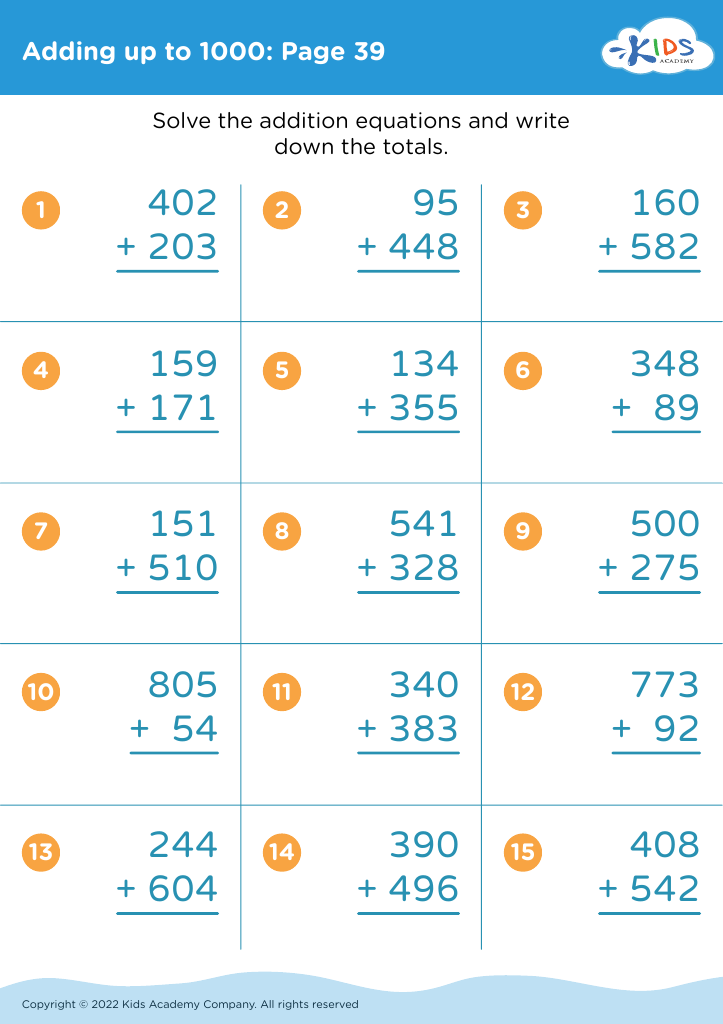
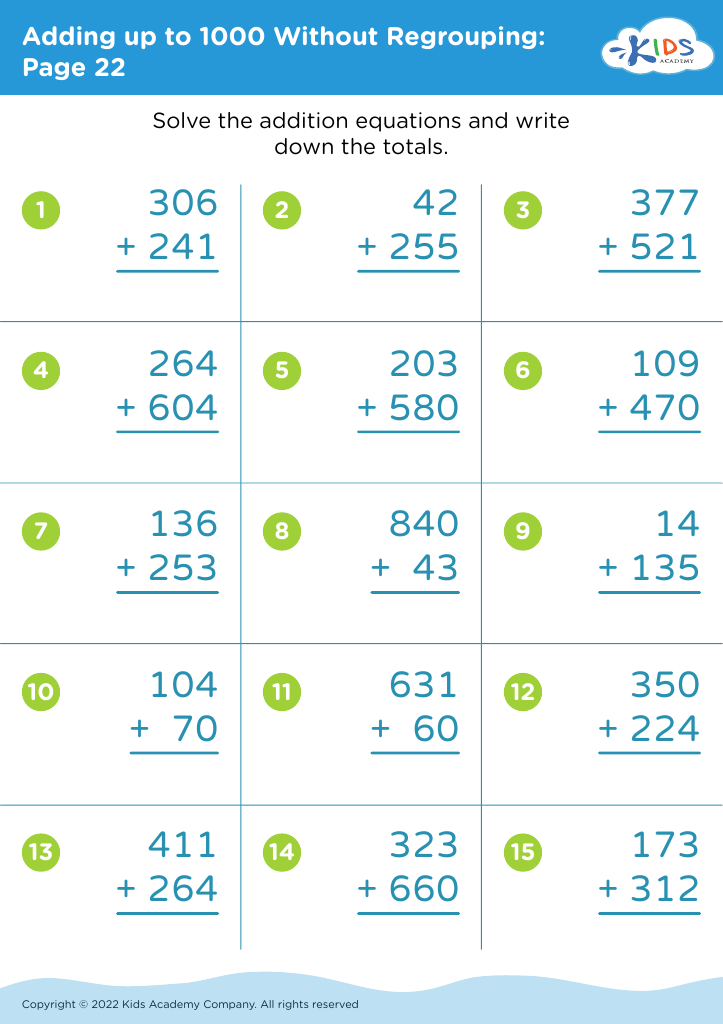
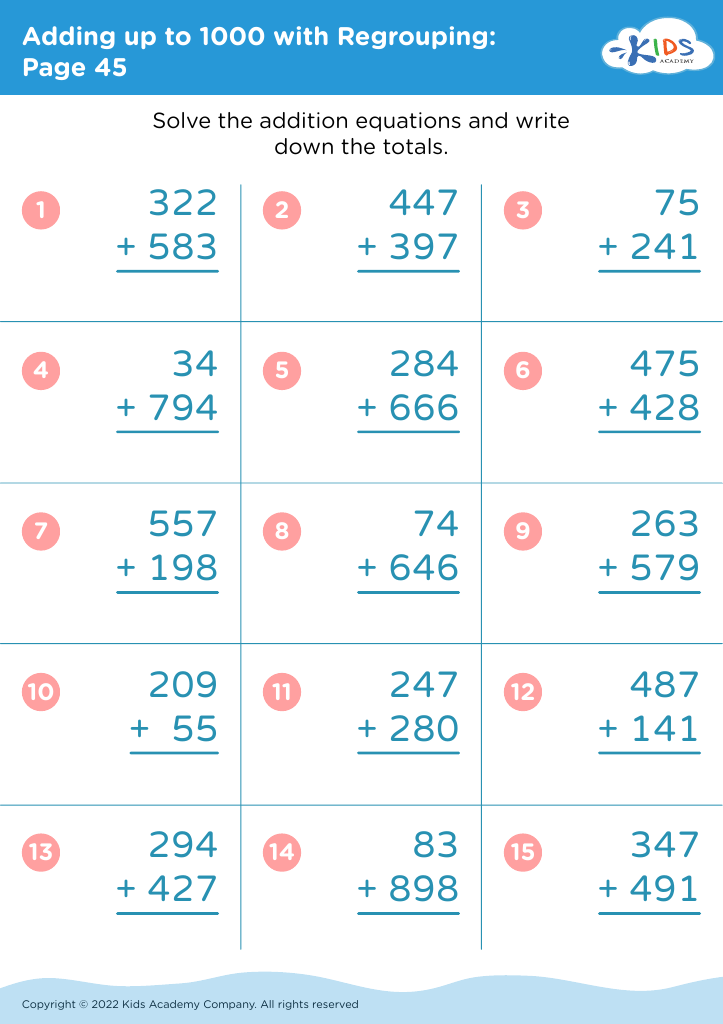
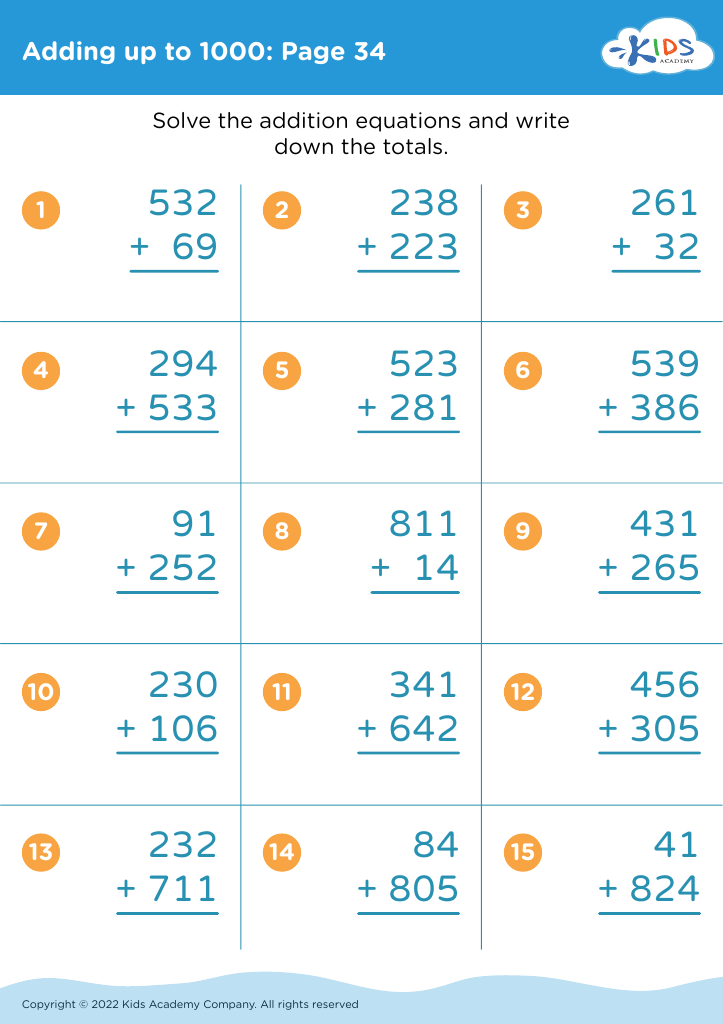
Enhance your child's fine motor skills and writing abilities with our comprehensive "Fine Motor Skills (Writing) Adding up to 1000 Worksheets" designed for ages 5-7. These interactive worksheets provide engaging activities that challenge young learners to improve their grip, coordination, and control while practicing numbers and addition skills. Each worksheet is crafted to promote hand-eye coordination through fun exercises that blend math with fine motor practice. Perfect for home or classroom use, these resources help children develop confidence in their writing and math abilities, making learning an enjoyable experience. Unlock your child's potential with our specially designed worksheets today!



Fine motor skills, particularly in writing, are essential for children aged 5-7 as they significantly impact their overall development and academic success. Fine motor skills involve the coordination of small muscles, primarily in the hands, and are foundational for various tasks beyond writing, including cutting, threading, and self-care activities like buttoning and tying shoelaces.
For parents and teachers, nurturing these skills is vital because they influence a child’s ability to express their thoughts and ideas effectively on paper. Children who struggle with fine motor skills may find writing challenging, leading to frustration and disengagement from school activities. By enhancing these skills early on, children gain confidence, which fosters a positive attitude toward learning and school environments.
Ensuring children have opportunities for fine motor practice can include engaging activities like coloring, playdough manipulation, or even simple classroom games designed to strengthen hand-eye coordination.
In summary, focusing on fine motor development during these formative years lays the groundwork for handwriting proficiency, academic achievement, and greater independence, ultimately enabling children aged 5-7 to thrive both in school and beyond. Thus, it’s crucial for parents and teachers to care about and actively promote the development of these fundamental skills.








