Identify shapes Adding up to 1000 Worksheets for Ages 5-7
4 filtered results
-
From - To
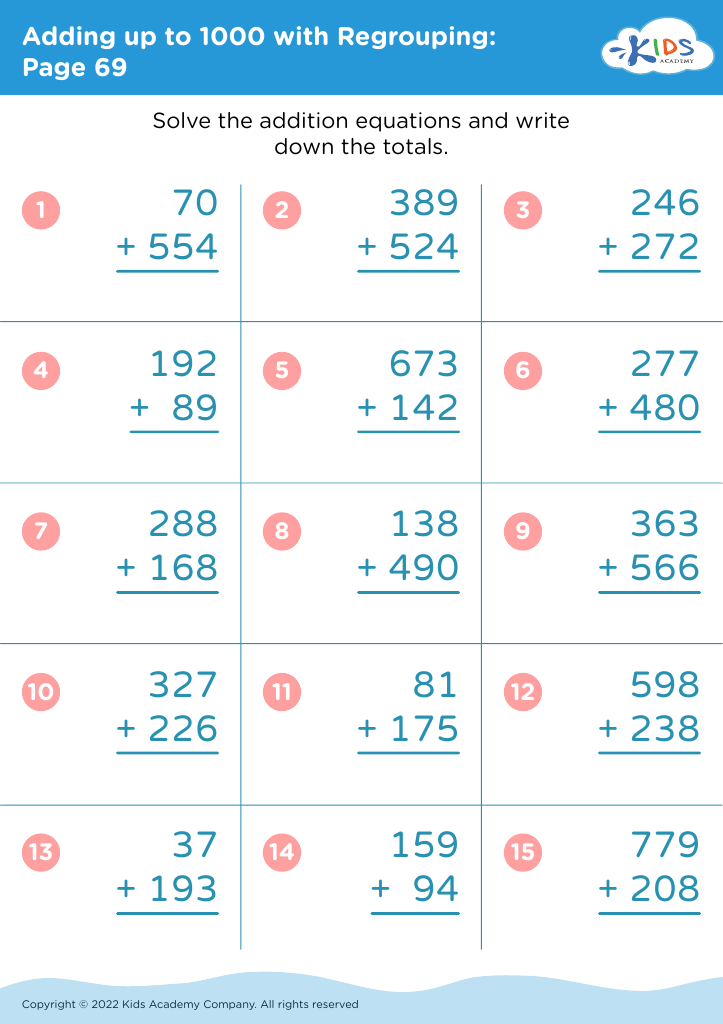
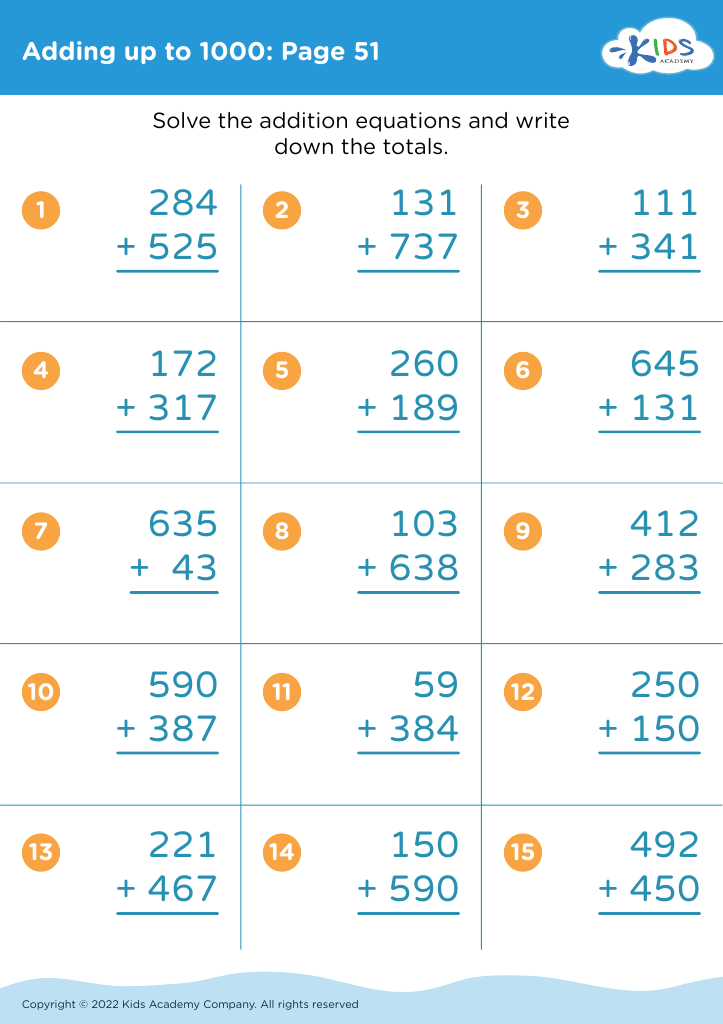
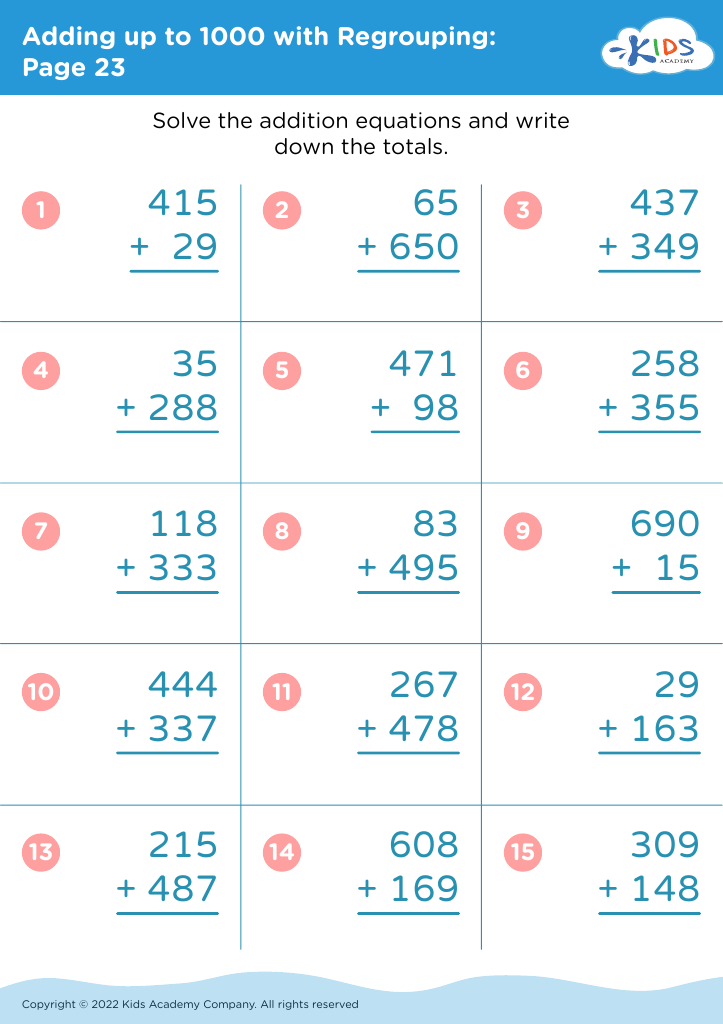
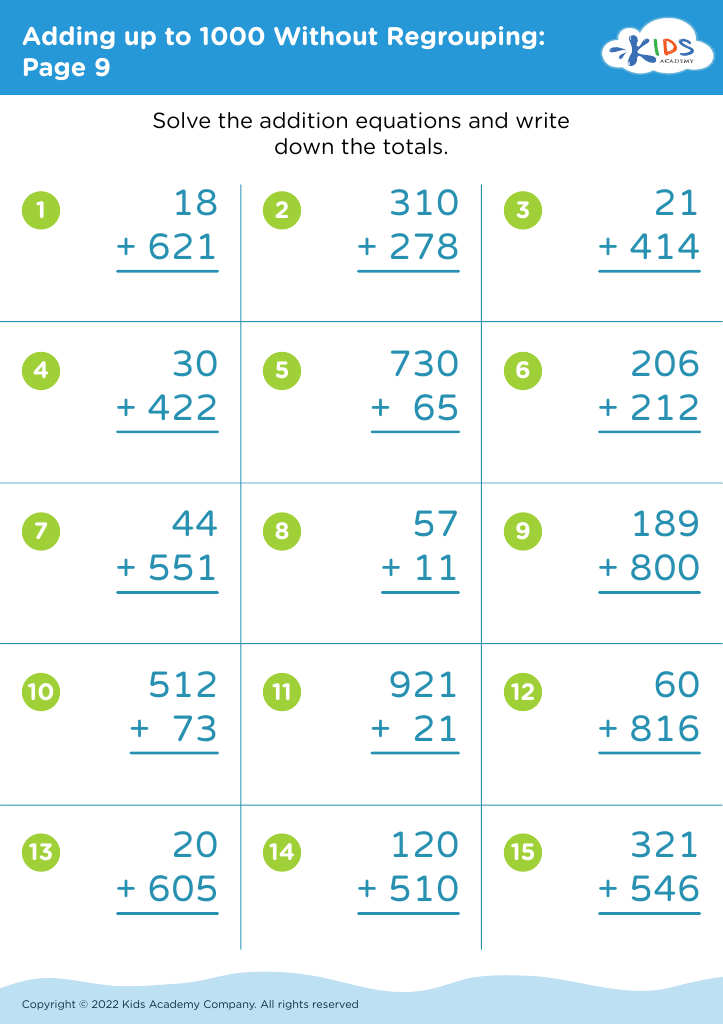
Welcome to our "Identify Shapes Adding Up to 1000 Worksheets" page! Designed for young learners aged 5-7, these engaging worksheets will help children explore and identify various geometric shapes while practicing addition skills. By combining shape recognition with addition problems up to 1000, students will enhance their math skills in a fun and interactive way. Our worksheets are colorful, easy to understand, and align with early educational standards, making them perfect for classroom or home use. Encourage your child's mathematical development and shape identification with these thoughtfully crafted activities! Start exploring today and watch your child excel in math!



Parents and teachers should care about helping children identify shapes and understand the concept of addition up to 1000 for several reasons. First, mastering shape recognition lays a crucial foundation for geometric understanding. Recognizing and understanding shapes not only enhances spatial reasoning skills, but it also links to various mathematical concepts children will encounter later. Learning shapes can inspire creativity in art and design, fostering holistic development.
Additionally, introducing addition up to 1000 enhances numeracy skills crucial for daily life and higher-level math. By incorporating practical exercises, children learn to add numbers efficiently, build number sense, and develop problem-solving skills. This expertise aids them in tackling more significant math challenges that will arise in their future education, ensuring they remain engaged and confident in their abilities.
Furthermore, strong mathematical and spatial skills correlate with success in other academic fields, paving the way for better performance across the curriculum. When parents and teachers actively participate in this learning process, they're not only nurturing a child's cognitive development but also fostering a love for learning. Ultimately, such engagement is essential in guiding children towards becoming confident, capable learners ready to explore the world around them.








