Improve math skills Adding up to 1000 Worksheets for Ages 5-7
6 filtered results
-
From - To
Boost your child’s math proficiency with our "Improve Math Skills Adding Up to 1000 Worksheets" tailor-made for ages 5-7. These engaging, expertly crafted worksheets guide young learners through the fundamentals of addition, building their confidence and accuracy in adding up to four-digit numbers. Perfectly designed to cater to early learners, our worksheets utilize colorful visuals, fun scenarios, and step-by-step instructions to make learning both effective and enjoyable. Ensure your child’s success in math by integrating these valuable resources into their learning routine! Watch them develop essential arithmetic skills while fostering a love for numbers. Download and print today!
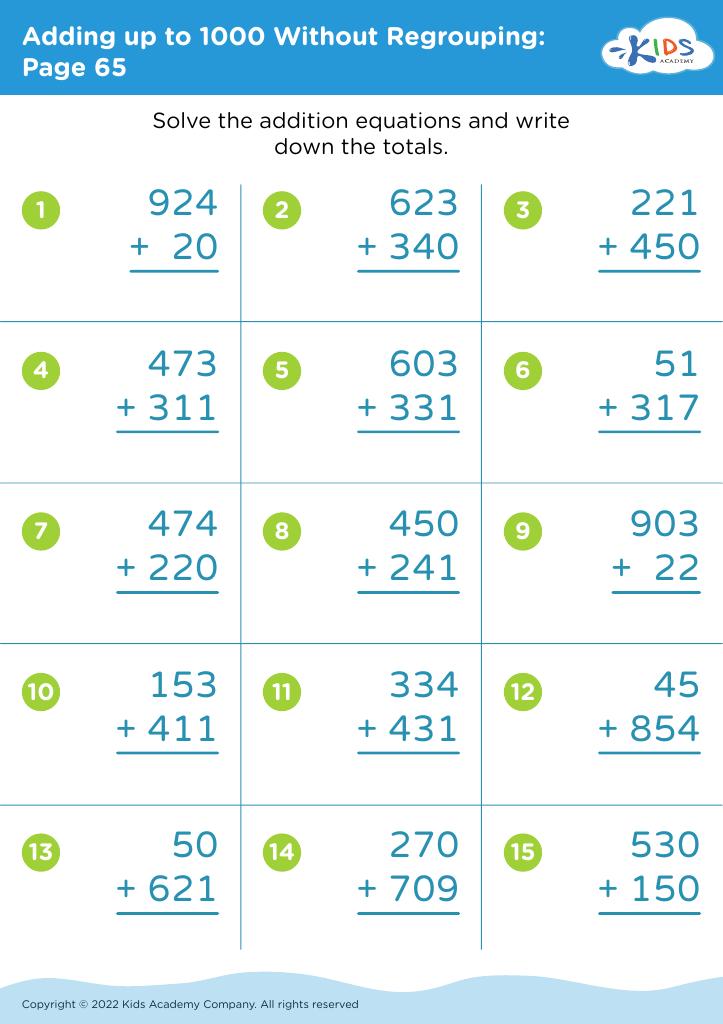
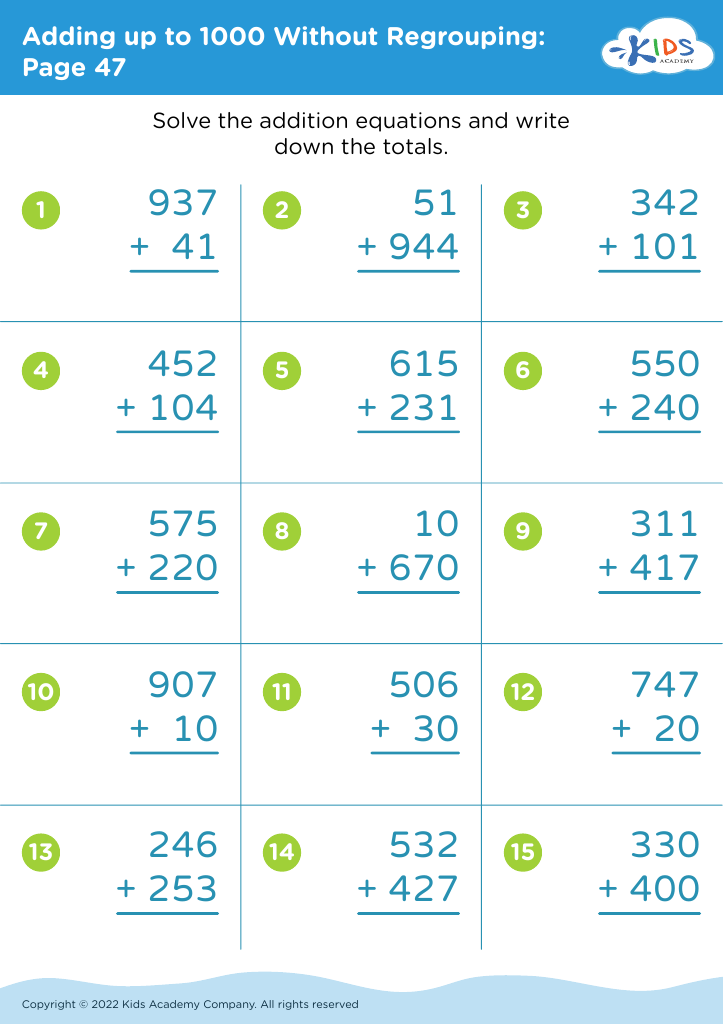
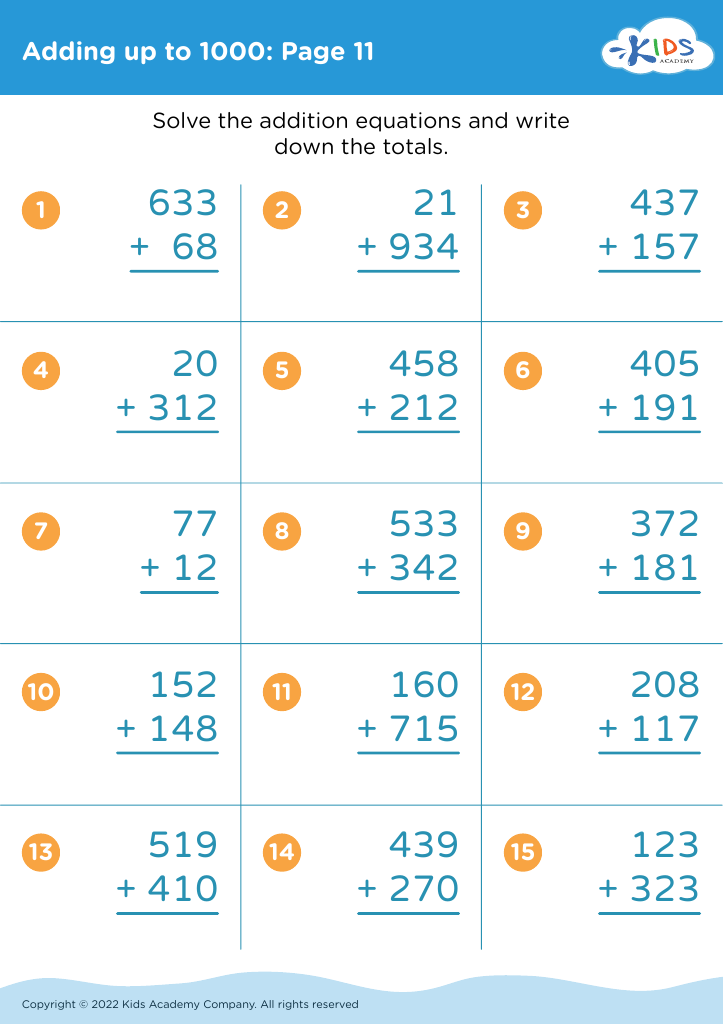
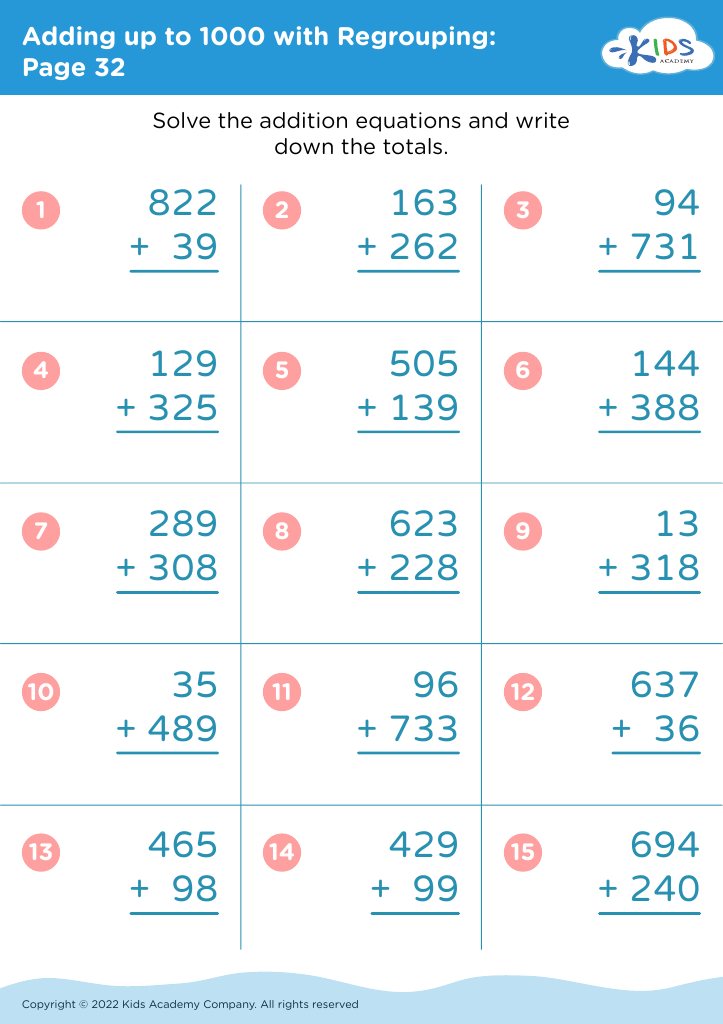
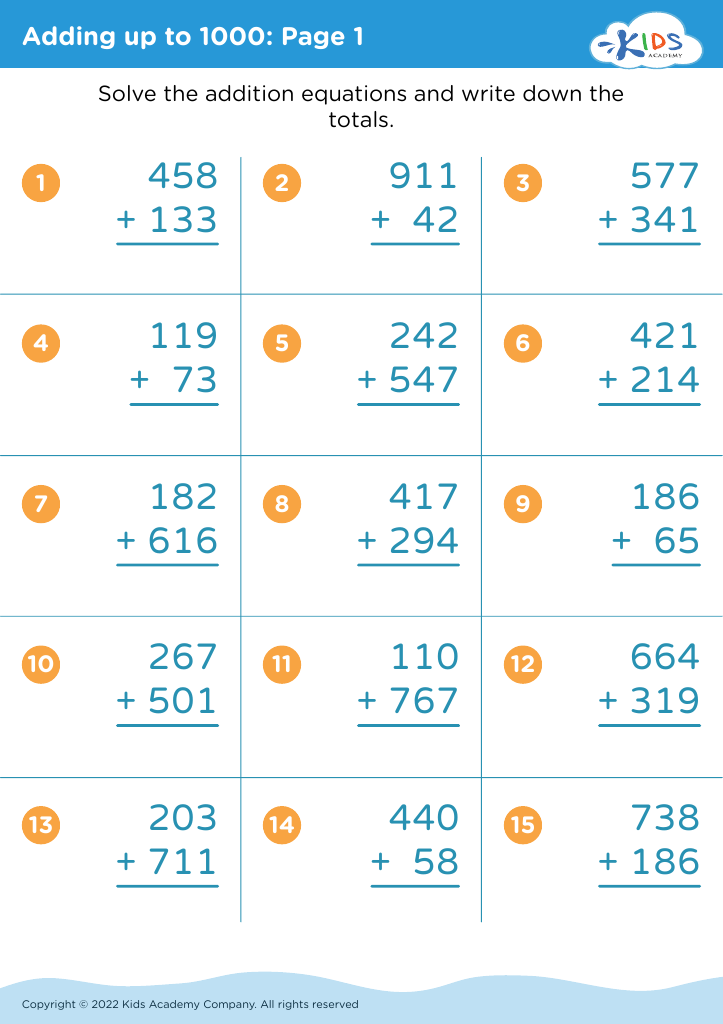
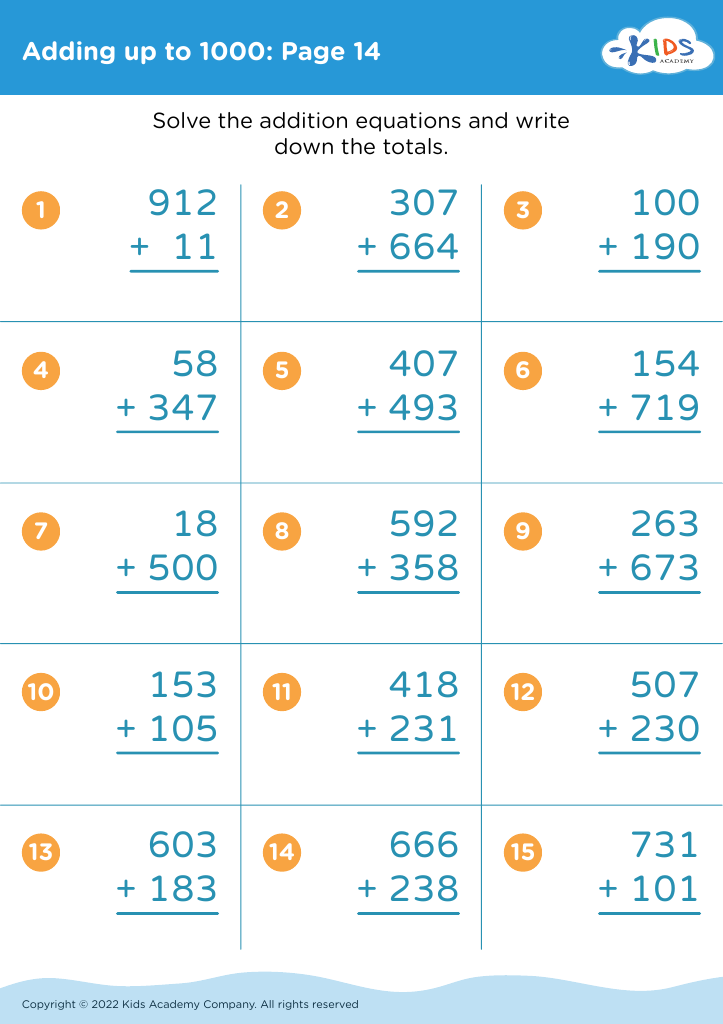



Improving math skills, particularly the ability to add numbers up to 1000 for children aged 5-7, is crucial for several reasons. Firstly, math forms a foundational pillar of not just academic success, but also everyday functioning. Being proficient in basic arithmetic equips children with the problem-solving skills they need to navigate daily tasks such as handling money, measuring ingredients in a recipe, or even understanding sports scores.
Additionally, early proficiency in math can boost a child's confidence and engagement in the subject. When children achieve mathematical fluency early, they are more likely to participate actively and positively in math-related activities, thereby cultivating a lifelong interest in the subject. This skill set also sets them up for success in more advanced mathematical concepts taught in later grades, such as multiplication, division, and eventually algebra and geometry.
Moreover, early math skills are strongly linked to better outcomes in other academic areas, including science and reading comprehension. Math teaches logical reasoning, pattern recognition, and systematic thinking—all skills that are transferable across the curriculum.
Lastly, embedding a strong numerical understanding at a young age can help close educational gaps. Children who struggle with early mathematics might face cumulative learning disadvantages over time. Thus, ensuring that all children develop strong addition skills by age 7 not only supports individual educational advancement but also helps achieve broader educational equity.








