Number identification Adding up to 1000 Worksheets for Ages 5-7
3 filtered results
-
From - To
Discover the ultimate resource for young learners with our "Number Identification Adding up to 1000 Worksheets for Ages 5-7." Specially designed to boost math skills, these worksheets help children confidently identify and sum numbers up to 1000 while making learning fun. Each engaging activity sharpens number recognition, enhances problem-solving abilities, and builds a strong math foundation. Perfect for both classroom and home use, these worksheets pave the way for academic success. Inspire a love for math and watch your students master every number with ease. Explore our collection at Kids Academy and unlock a world of educational excellence!
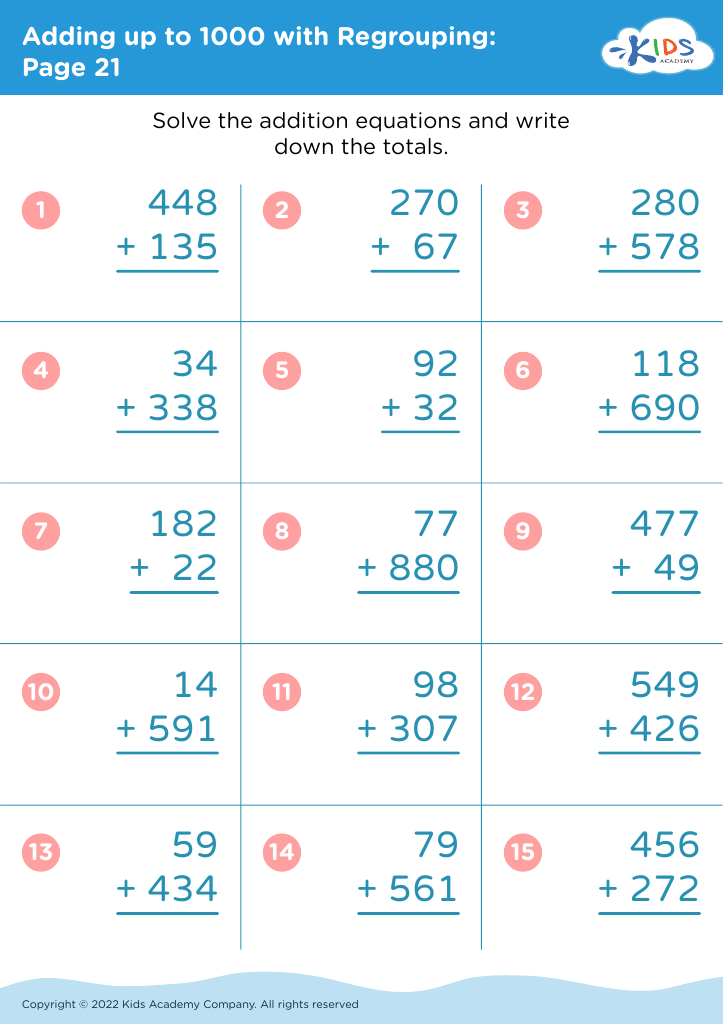
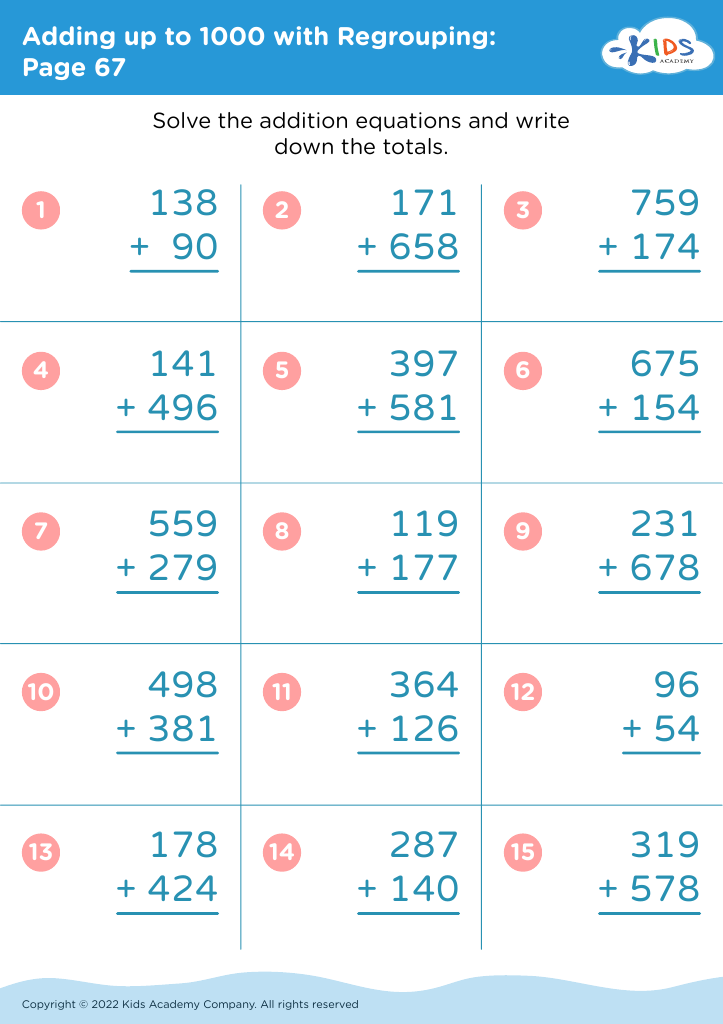
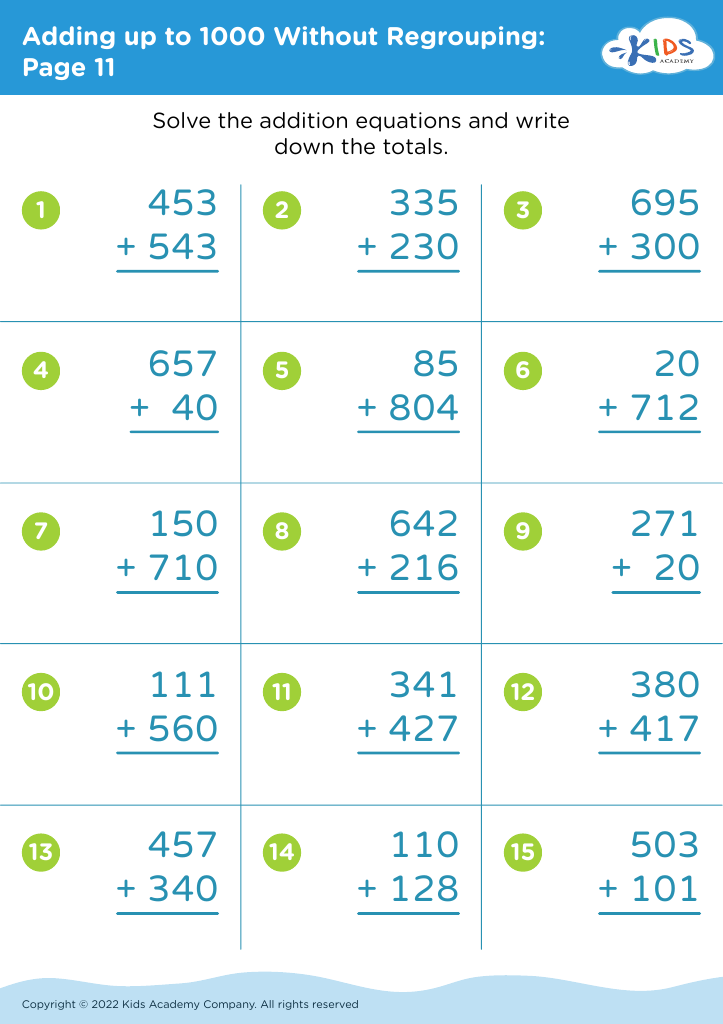



Number identification and the ability to add up to 1000 are foundational mathematical skills crucial for children aged 5-7. Developing strong number identification skills ensures that children can recognize and understand numbers, setting the groundwork for more advanced mathematical concepts. At this critical developmental stage, when neural pathways are highly adaptable, mastery of numbers fosters numeracy, allowing children to relate to and find patterns in the world around them.
Learning to add ensures that children grasp the concept of combining quantities, leading to better problem-solving skills. By practicing addition up to 1000, children enhance their mental arithmetic, stimulating cognitive development and logical thinking. Encouraging these skills early on builds their confidence in math-related tasks, reducing anxiety associated with the subject.
Parents and teachers play a vital role in influencing positive attitudes towards mathematics. Engaging children with fun and interactive number games or exercises that incorporate adding up to 1000 can transform math from a daunting subject to an enjoyable activity. This involvement at an early age is linked to better academic performance and a greater likelihood of pursuing STEM (Science, Technology, Engineering, Mathematics) careers later in life. Therefore, investing time in these numerical basics secures essential life skills and paves the way for a future of limitless possibilities.








