Practice writing numbers Adding up to 1000 Worksheets for Ages 5-7
3 filtered results
-
From - To
Help your child master number writing with our engaging "Practice Writing Numbers Adding Up to 1000" worksheets, specially designed for ages 5-7. These worksheets offer a delightful way to enhance numerical literacy, encouraging young learners to practice writing numbers clearly and accurately. As children work through exercises that involve numbers up to 1000, they'll develop essential counting skills and number recognition. With vibrant designs and interactive format, your child will enjoy learning while building their confidence in math. Ideal for homeschoolers and classroom settings, these practical worksheets make numbers fun and easy to grasp! Begin your child’s math journey today!
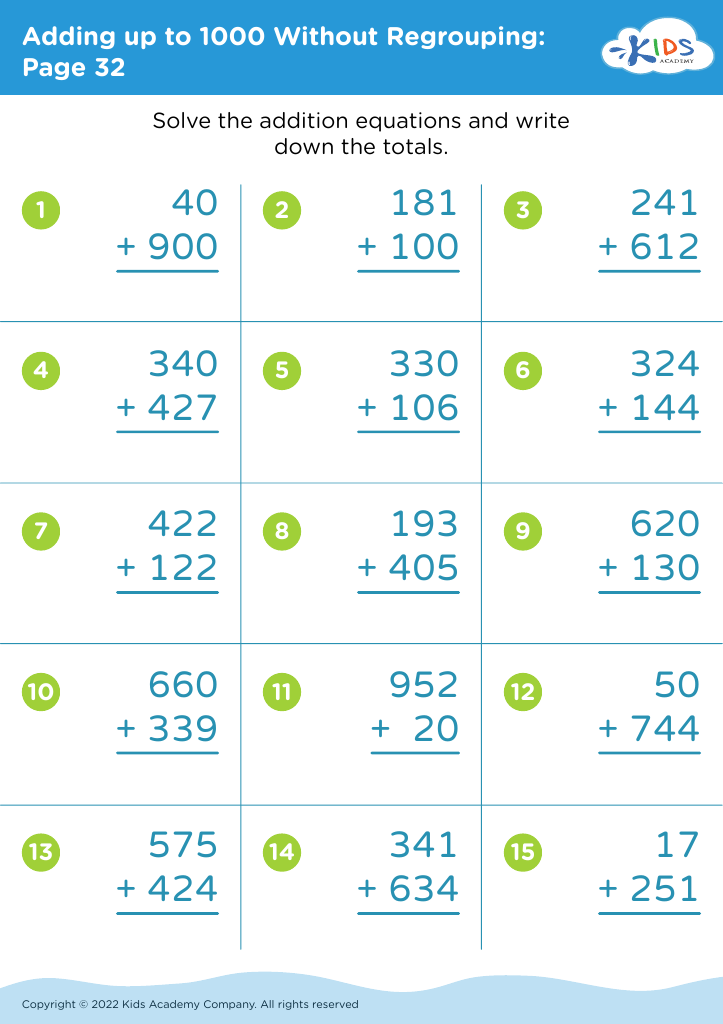
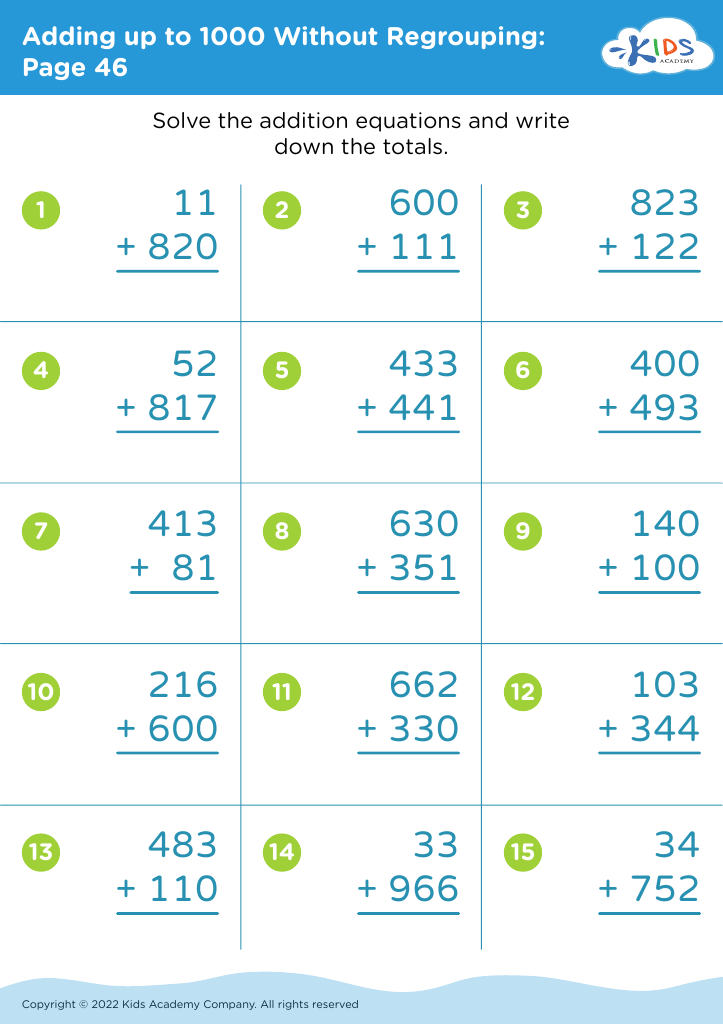
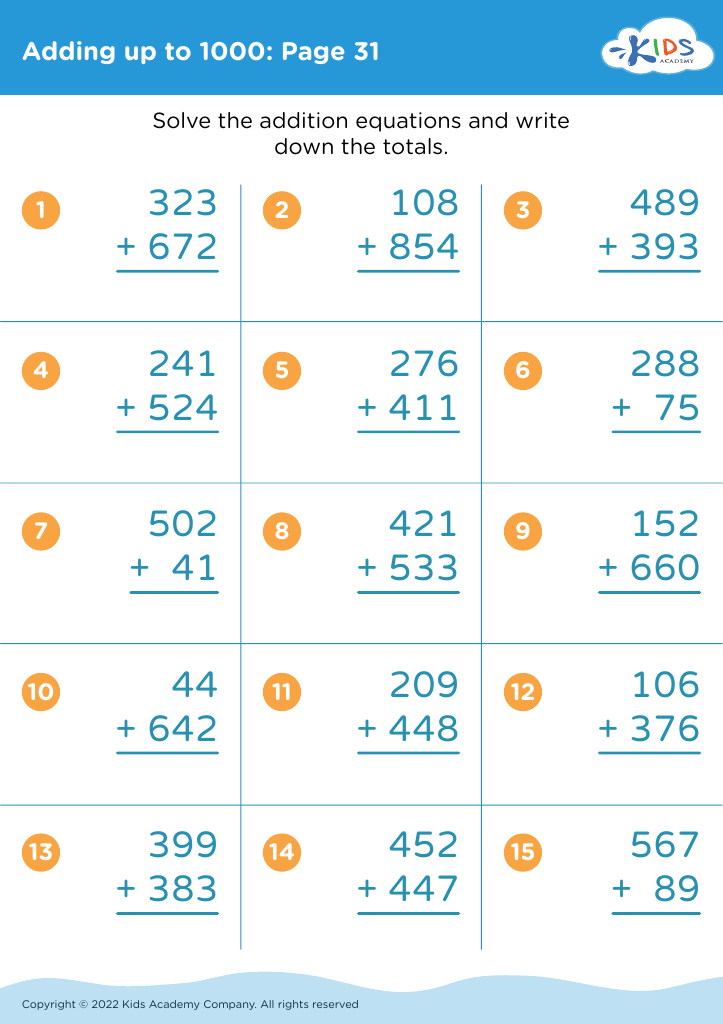



Practicing writing numbers and addition up to 1000 is crucial for children aged 5-7 for several reasons. First, it lays a vital foundation for mathematical understanding. As young learners develop number sense, they begin to recognize patterns, understand place value, and grasp the concept of addition, which are essential skills for future math learning. Mastery of numbers up to 1000 helps children become comfortable with larger numerical concepts.
Second, encouraging practice in writing and calculating not only improves mathematical skills but also enhances fine motor skills and hand-eye coordination as children repeatedly write numbers. It fosters discipline and concentration, essential skills for both academic and life success.
Additionally, this practice can boost a child's confidence. As they experience success in tackling numbers, students gain a sense of accomplishment, which can motivate them to engage more with math. Moreover, it encourages problem-solving and critical-thinking skills that are foundational not only in core subjects but also in day-to-day life.
Finally, parents and teachers play a vital role in nurturing these skills through engaging activities, ensuring that children develop a positive attitude toward math, which can set the stage for lifelong learning and curiosity.








