Reading analog clocks Adding up to 1000 Worksheets for Ages 5-7
3 filtered results
-
From - To
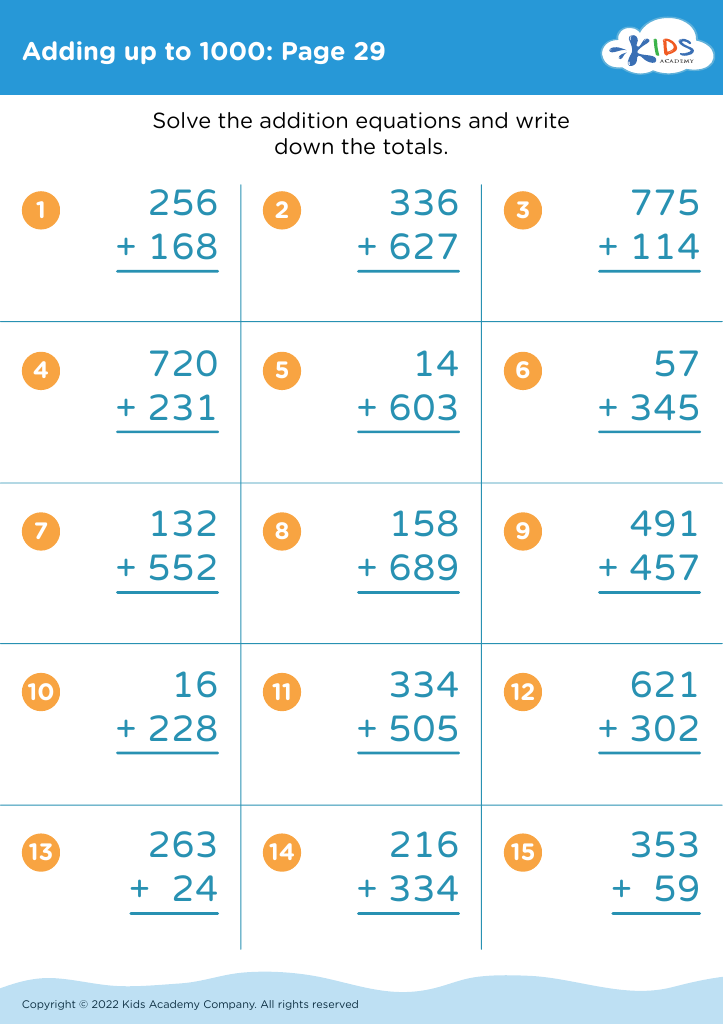
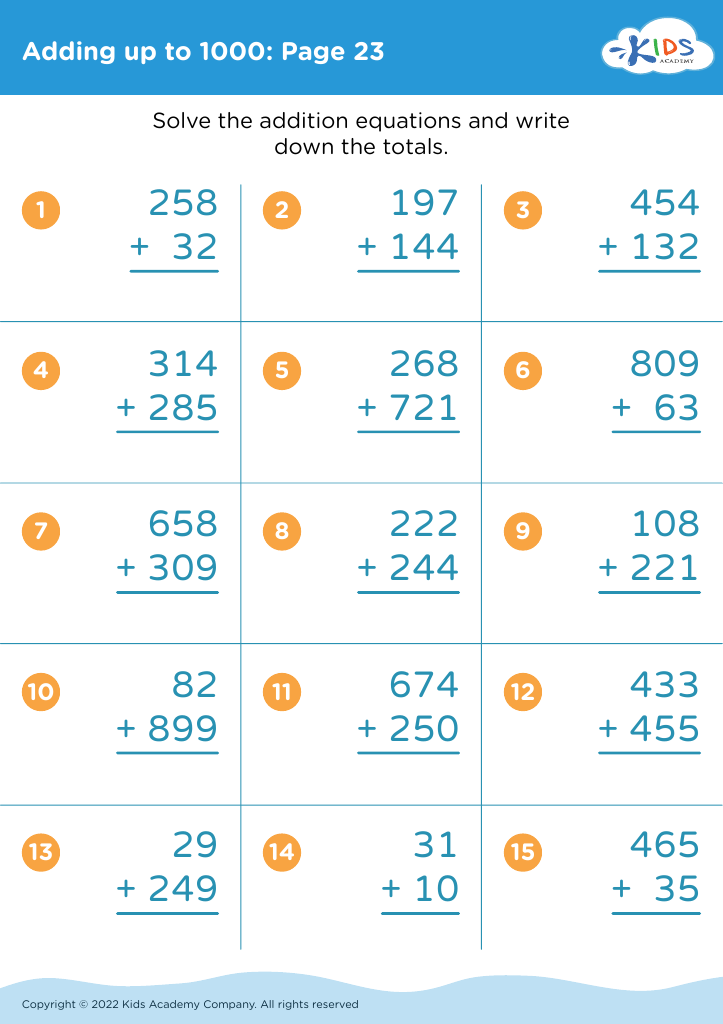
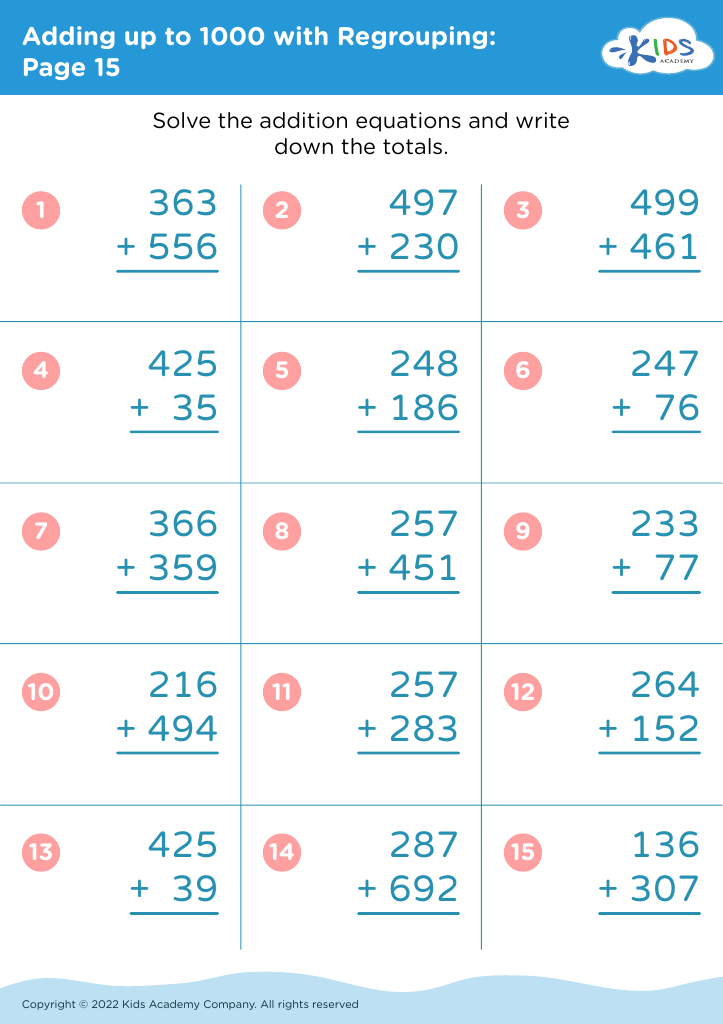
Discover our engaging "Reading Analog Clocks Adding up to 1000 Worksheets", specifically designed for children ages 5-7. These educational worksheets are perfect for helping young learners enhance their time-telling skills while practicing addition up to 1000. With colorful graphics and interactive activities, kids will journey through the concepts of hours and minutes on analog clocks, building their confidence in both time management and math. Ideal for home or classroom use, these worksheets make learning fun and effective! Equip your child with essential skills they’ll use for years to come. Start exploring our worksheet collection today!



Teaching children to read analog clocks is essential for their overall development, particularly for ages 5-7. During this critical learning period, children not only enhance their understanding of time but also develop essential cognitive skills. Learning to read an analog clock allows children to visualize time in a way that is often more intuitive than digital clocks. It encourages them to think critically and engage with their environment, reinforcing their numerical skills and understanding of the passage of time.
Moreover, mastering this skill supports greater independence as children begin to manage their own routines, such as knowing when it's time to play, eat, or rest. It helps cultivate responsibility and punctuality, key attributes that benefit them throughout their lives.
Encouraging this learning at home or in school also fosters meaningful interactions between parents, teachers, and children as they practice together. This shared experience can be both fun and educational, promoting a love for learning. Furthermore, grasping the concept of time aids children in grasping more complex math skills later on, laying the groundwork for future academic success. Therefore, reading analog clocks is a valuable skill that parents and teachers should prioritize in the early stages of education.








