Shape Recognition Adding up to 1000 Worksheets for Ages 5-7
11 filtered results
-
From - To
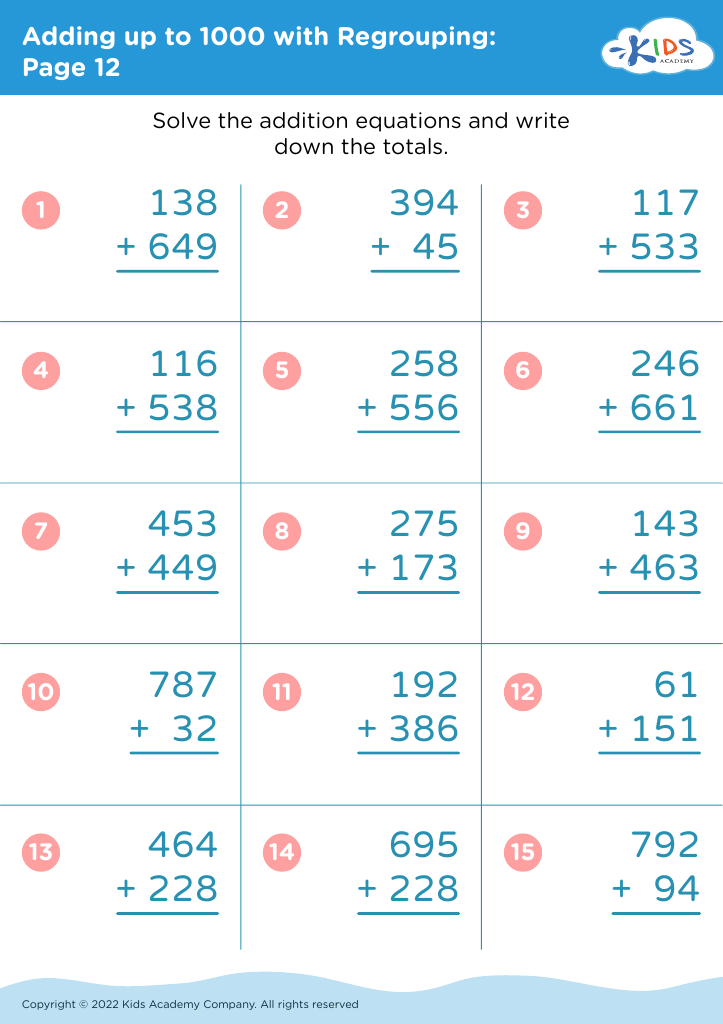
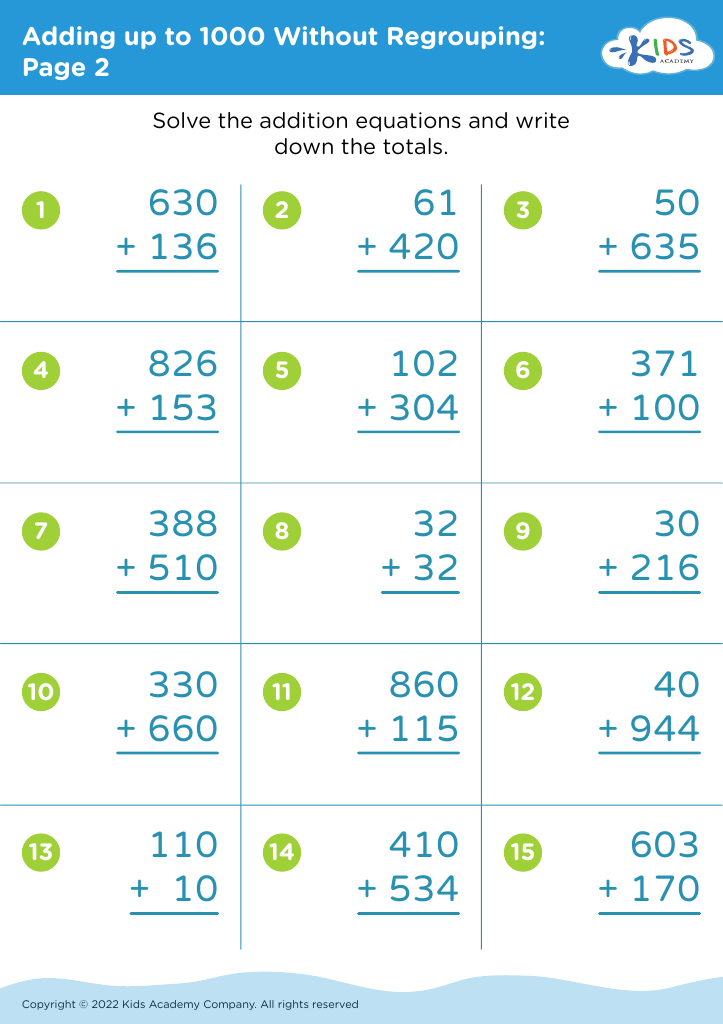
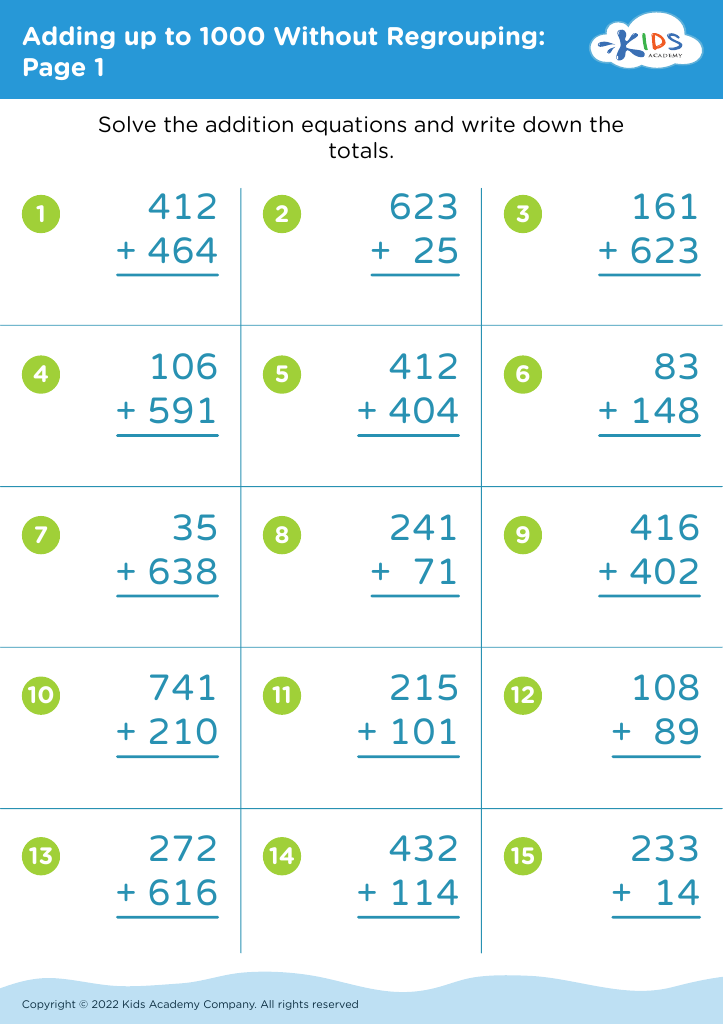
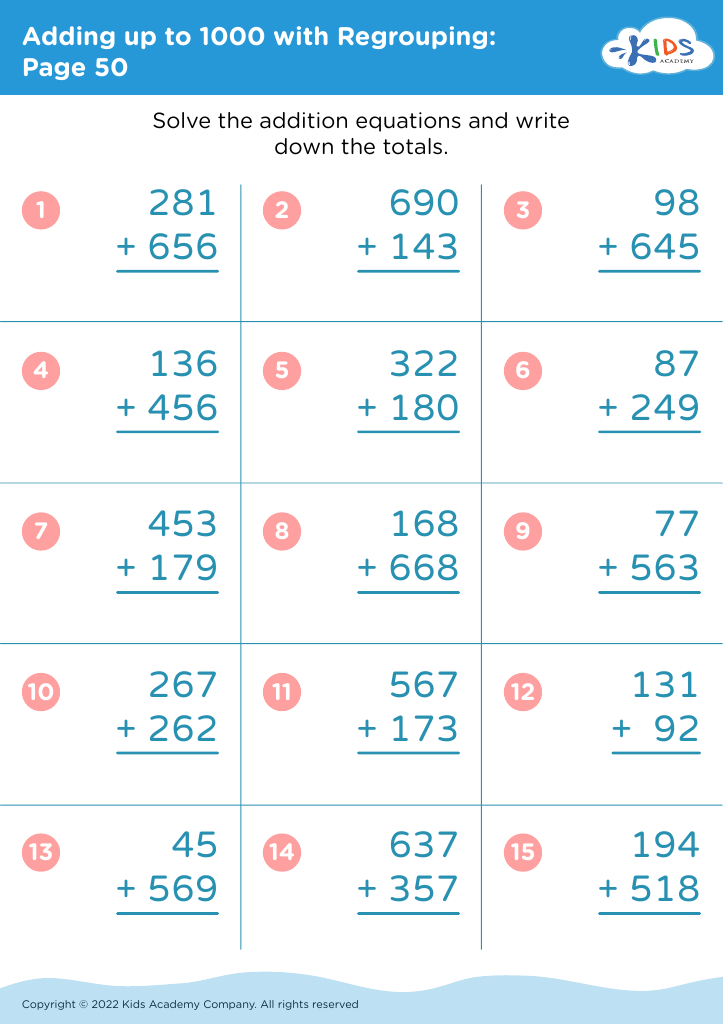
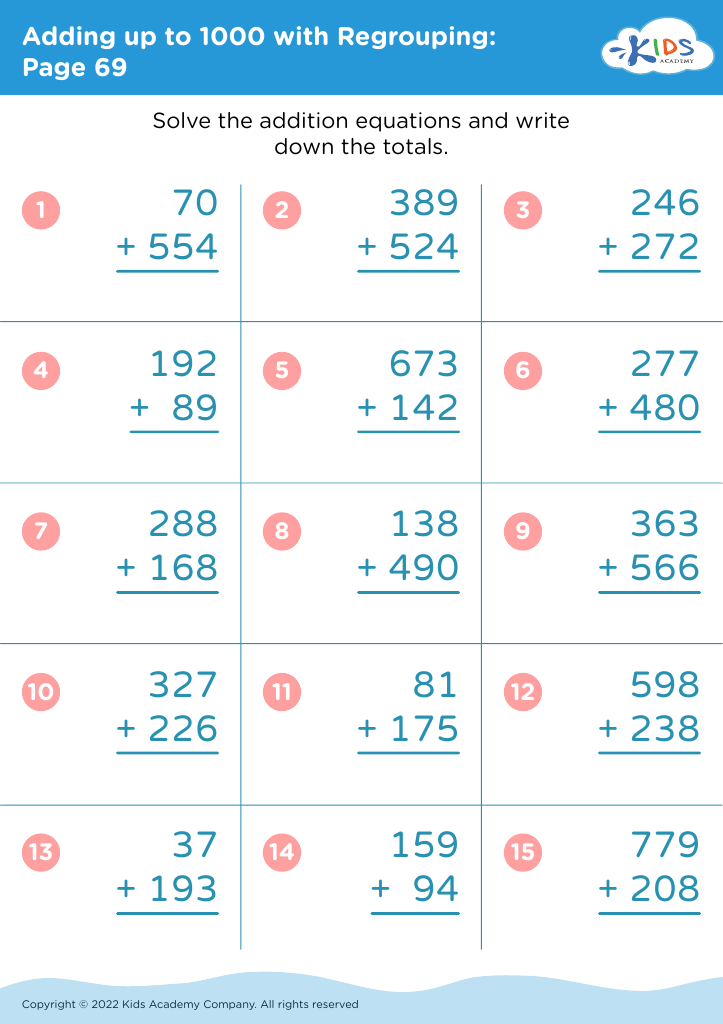
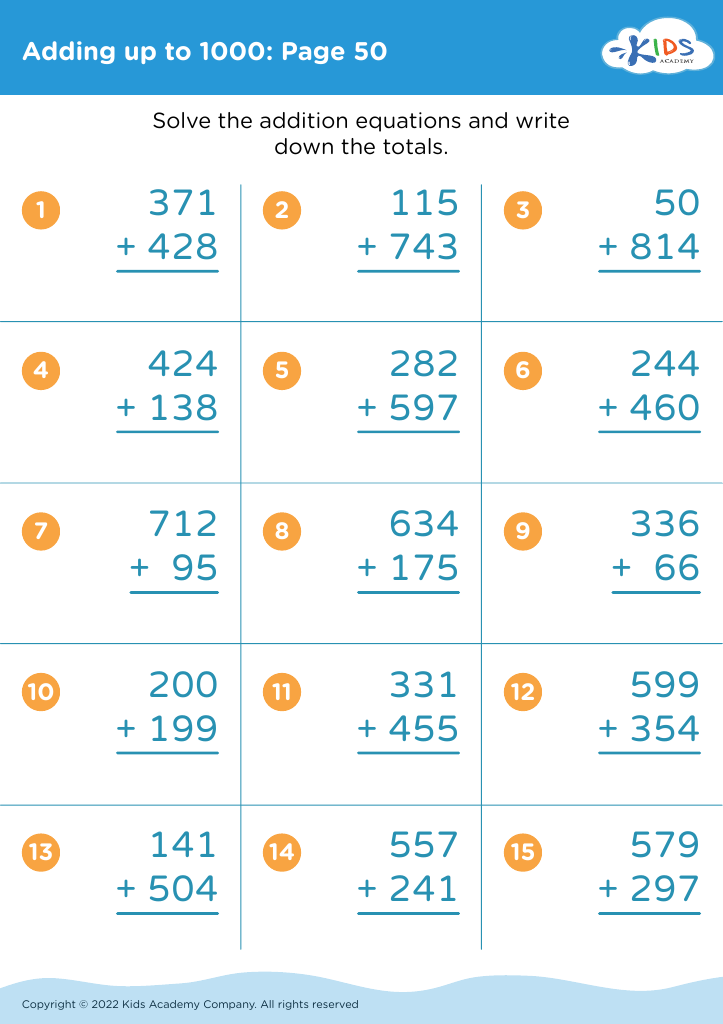
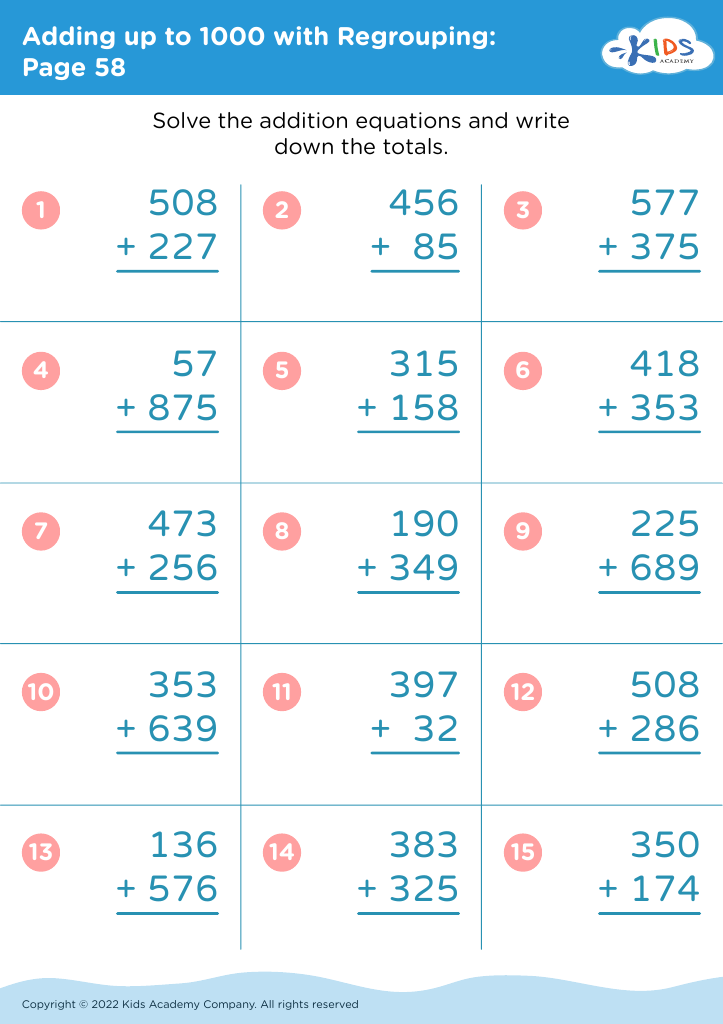
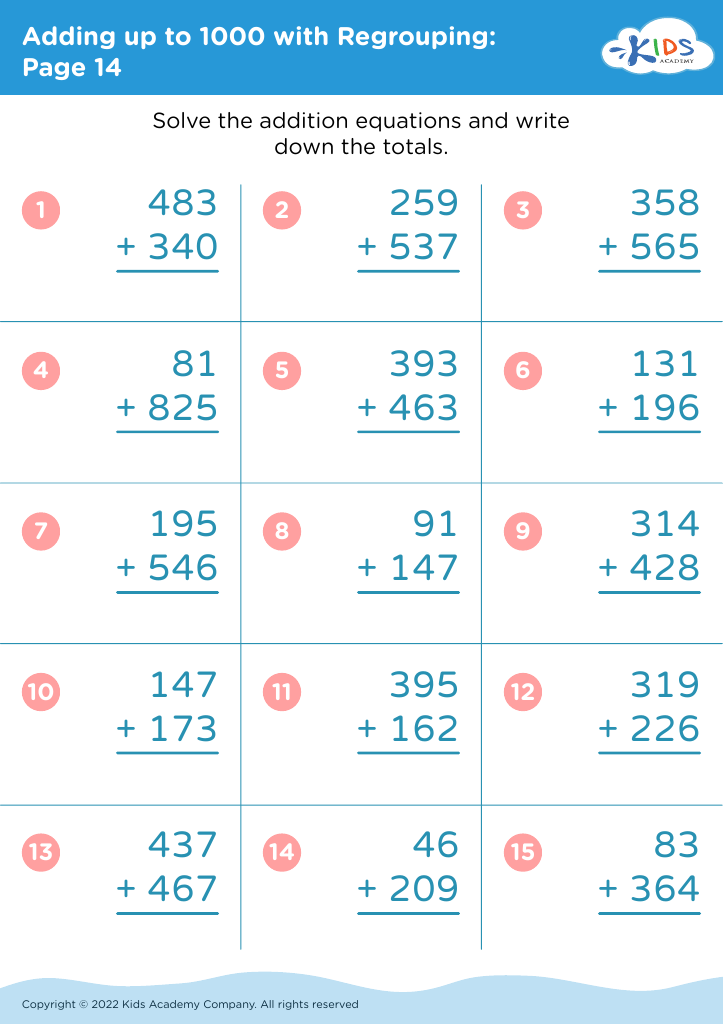
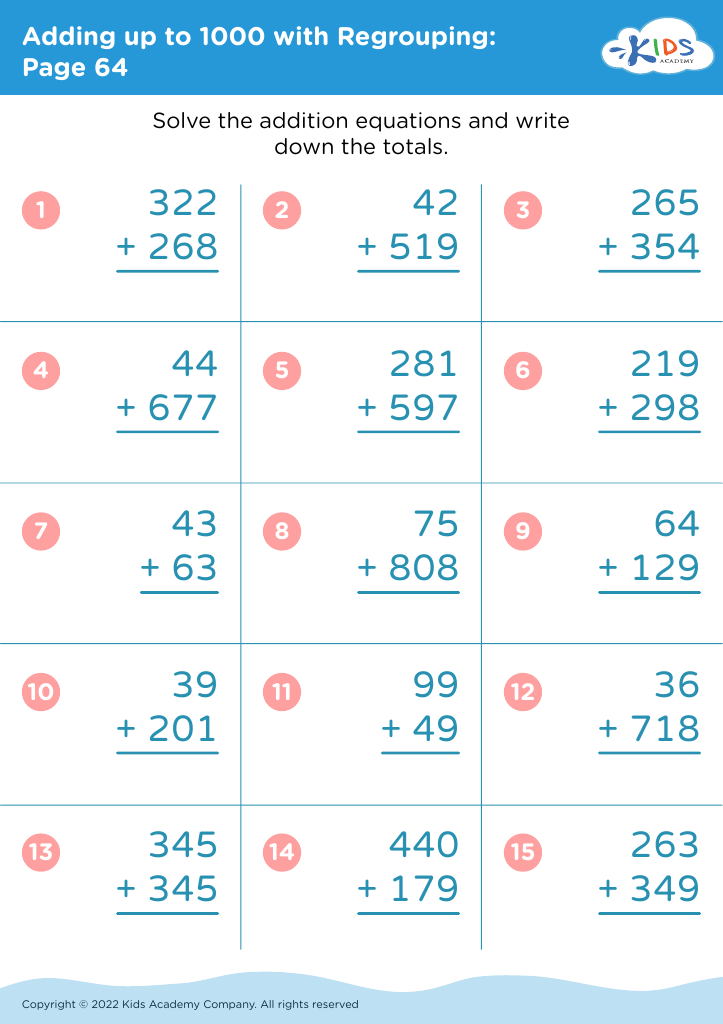
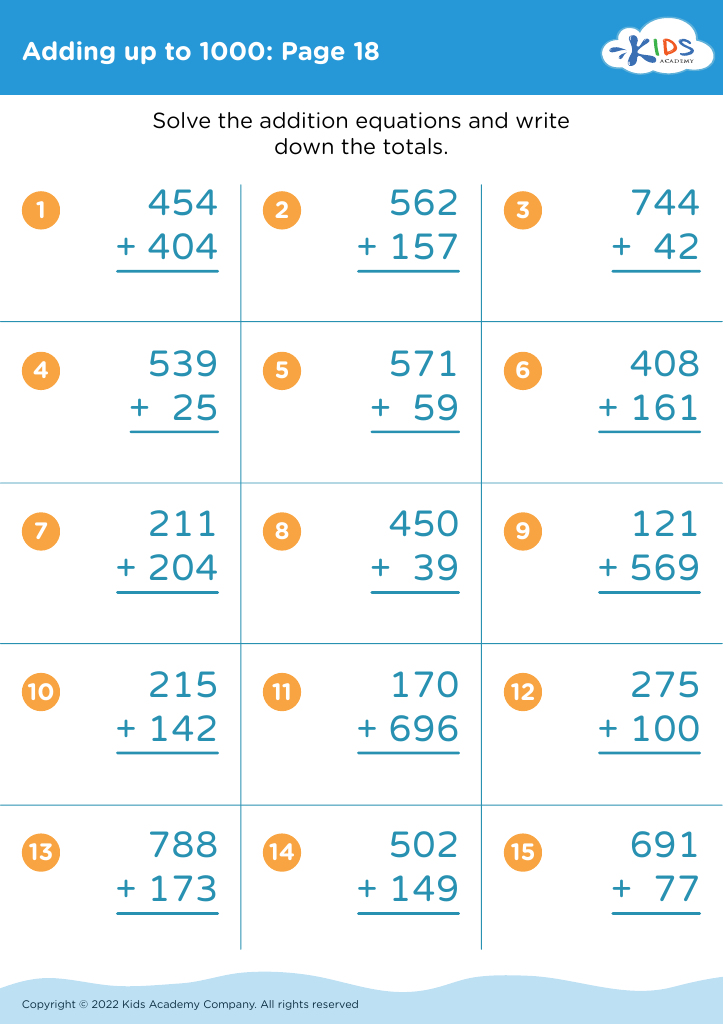
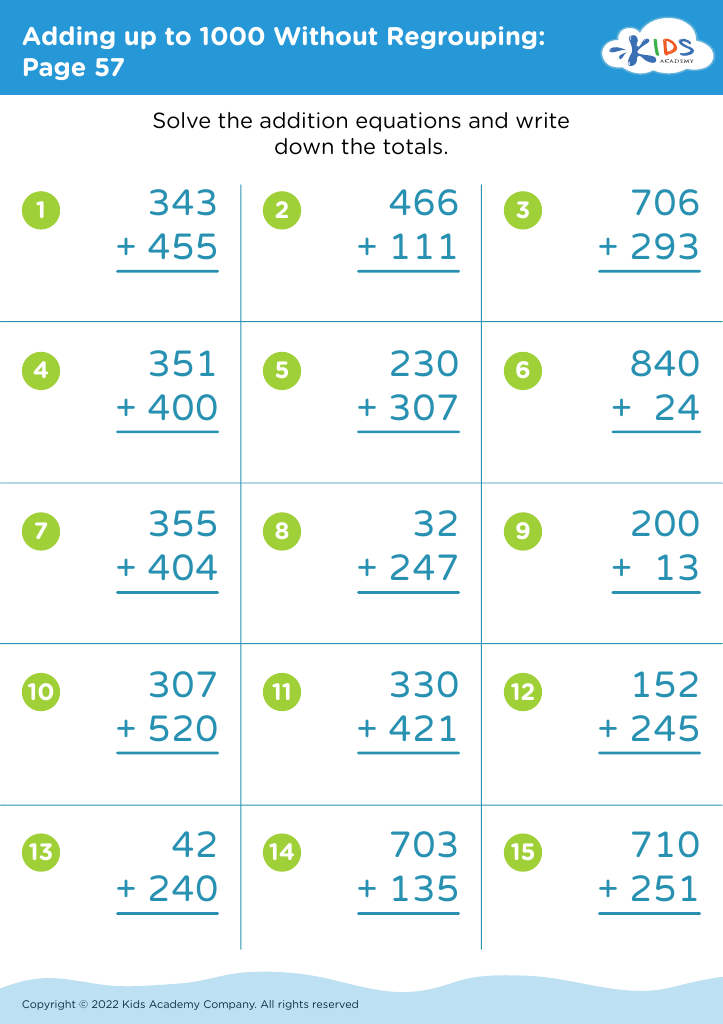
Explore our engaging "Shape Recognition Adding up to 1000 Worksheets" designed specifically for children aged 5-7! These worksheets provide young learners with the opportunity to identify and analyze various shapes while practicing their addition skills up to 1000. Through fun and colorful activities, students will strengthen their understanding of geometry and numerical concepts. Each worksheet promotes spatial awareness and encourages mathematical reasoning, making learning enjoyable and effective. Whether at home or in the classroom, these resources foster independent learning and cater to different learning styles. Dive in today and support your child's mathematical journey with our comprehensive and interactive worksheets!



Shape recognition is a fundamental skill that plays a crucial role in a child's overall cognitive development and academic success, particularly for children aged 5-7. Parents and teachers should prioritize this learning area because it lays the groundwork for essential mathematical concepts and spatial awareness.
Understanding shapes enables children to identify and differentiate a variety of geometric forms, which is foundational for later learning in math, art, and science. Recognizing shapes bolsters critical thinking and problem-solving skills, as children learn to categorize and make connections between objects in their environment.
Moreover, strong shape recognition paves the way for advanced mathematical concepts, such as symmetry, patterns, and measurement. Children who grasp these concepts early are more likely to excel in later math education. This knowledge also reinforces creative skills; for example, it informs an understanding of design and construction in art projects.
Additionally, promoting shape recognition supports fine motor skills as children engage in hands-on activities, like building with blocks or drawing. By integrating shape recognition into everyday learning, parents and teachers cultivate a stimulating environment that encourages exploration and discovery, ultimately fostering a solid foundation for academic achievement and lifelong learning.








