Understand subtraction Adding up to 1000 Worksheets for Ages 5-7
3 filtered results
-
From - To
Our "Understand Subtraction Adding up to 1000 Worksheets" are specially designed for children ages 5-7, aiming to build their foundational math skills in a fun and engaging way. These printable worksheets use vibrant visuals and carefully structured exercises to help young learners grasp subtraction concepts and practice problems up to 1000. Each worksheet is tailored to strengthen problem-solving abilities, ensuring kids can confidently subtract and achieve math proficiency. Ideal for classroom sessions or home practice, these resources provide an excellent opportunity for children to develop their arithmetic skills while enjoying the learning process.
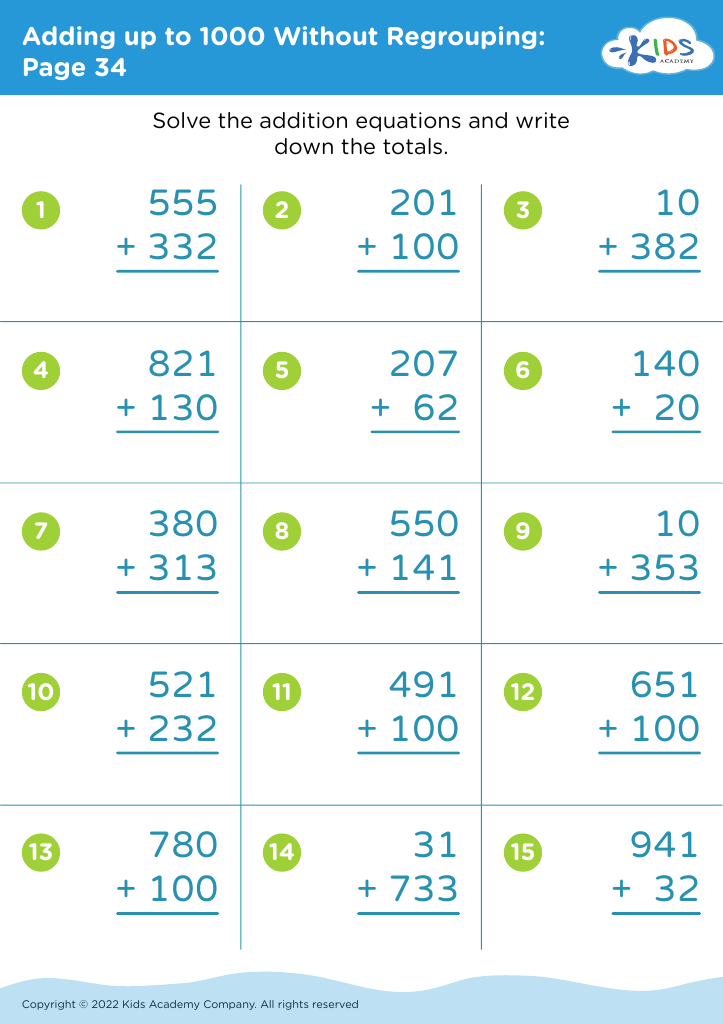
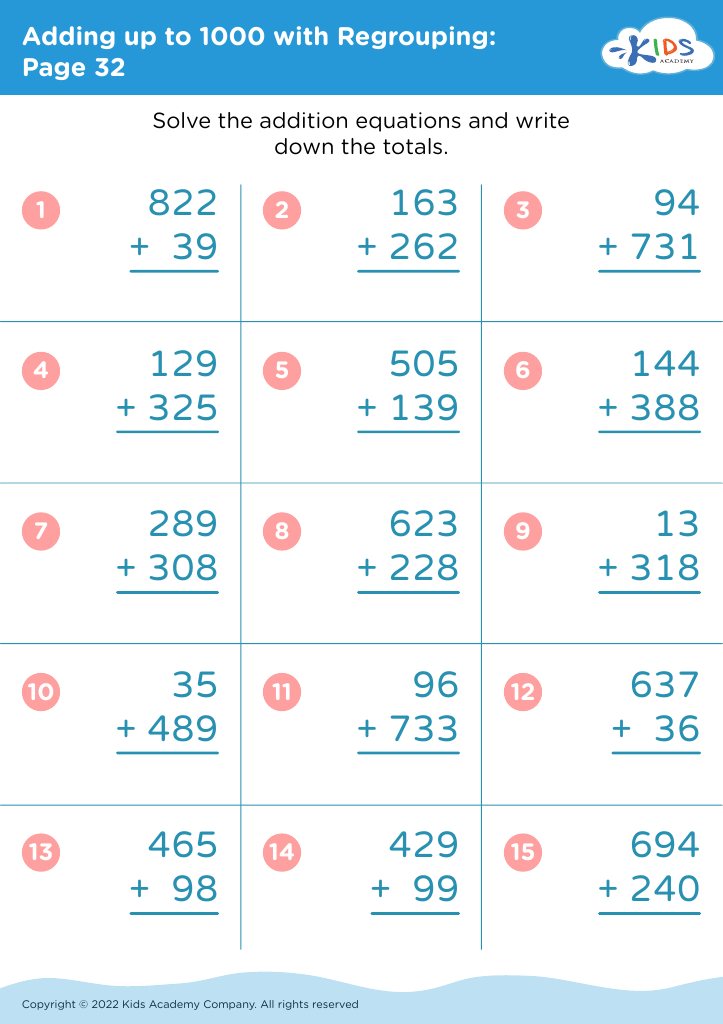
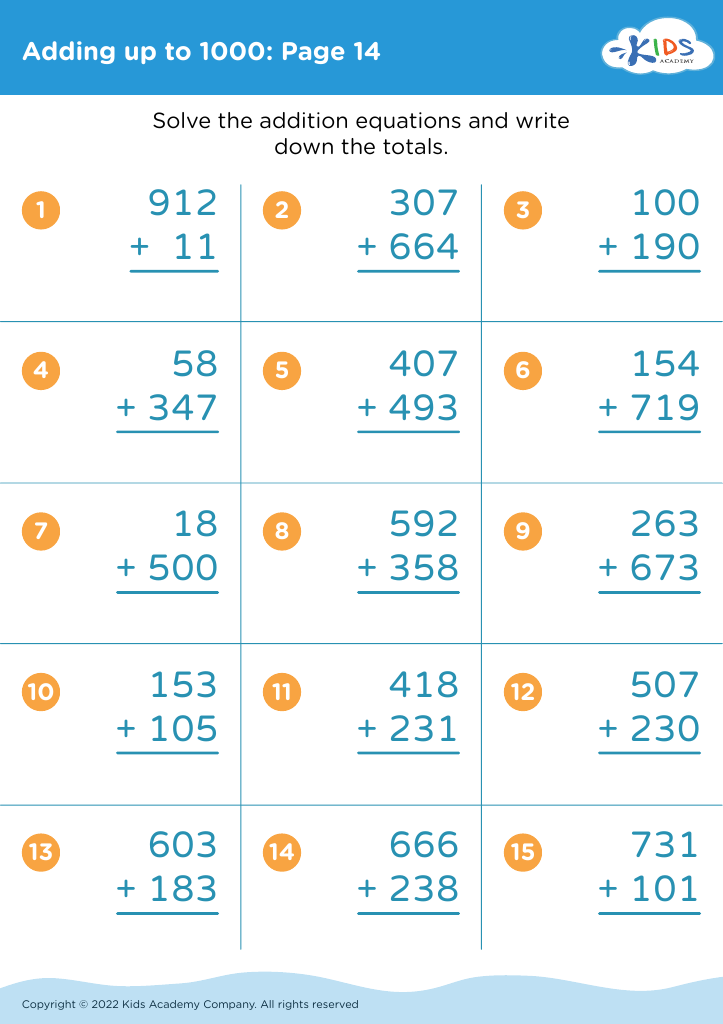



Understanding subtraction up to 1,000 for children ages 5-7 is crucial for several reasons. At this early stage of education, young learners are developing foundational math skills that will support their future academic success. Grasping subtraction not only enhances their numeracy but also strengthens their problem-solving and critical-thinking abilities. This skill forms a basis for more complex mathematical concepts they will encounter later, such as multiplication, division, and fractions.
Subtraction within 1,000 allows children to work with larger numbers, which in turn helps build their confidence. It moves them beyond simple, single-digit computations to understanding place value, borrowing, and the relationship between addition and subtraction. This deeper understanding is vital for practical daily tasks, such as counting money, measuring quantities, and telling time.
Parents and teachers play a pivotal role in this learning process. By prioritizing and fostering these skills, they give children the tools to navigate academic challenges more easily and instill a positive attitude towards learning. Engaging activities, supportive guidance, and consistent practice at home and in the classroom can dramatically improve a child's proficiency and enjoyment of mathematics. Ensuring a solid grasp of subtraction up to 1,000 sets a strong cornerstone for lifelong mathematical literacy and problem-solving capabilities.








