Understanding patterns Adding up to 1000 Worksheets for Ages 5-7
5 filtered results
-
From - To
Unlock the world of early mathematics with our "Understanding Patterns Adding Up to 1000 Worksheets" designed for children ages 5-7. These engaging worksheets help young learners discover and identify number patterns, enhancing their addition skills up to 1000. Aligned with educational standards, our resources encourage critical thinking and problem-solving while keeping kids entertained. Each activity promotes hands-on learning and reinforces concepts in a fun, interactive way. Perfect for both classroom use and at-home practice, these worksheets will support your child’s mathematical journey as they build confidence and competence in adding numbers smoothly and fluently. Start exploring patterns today!
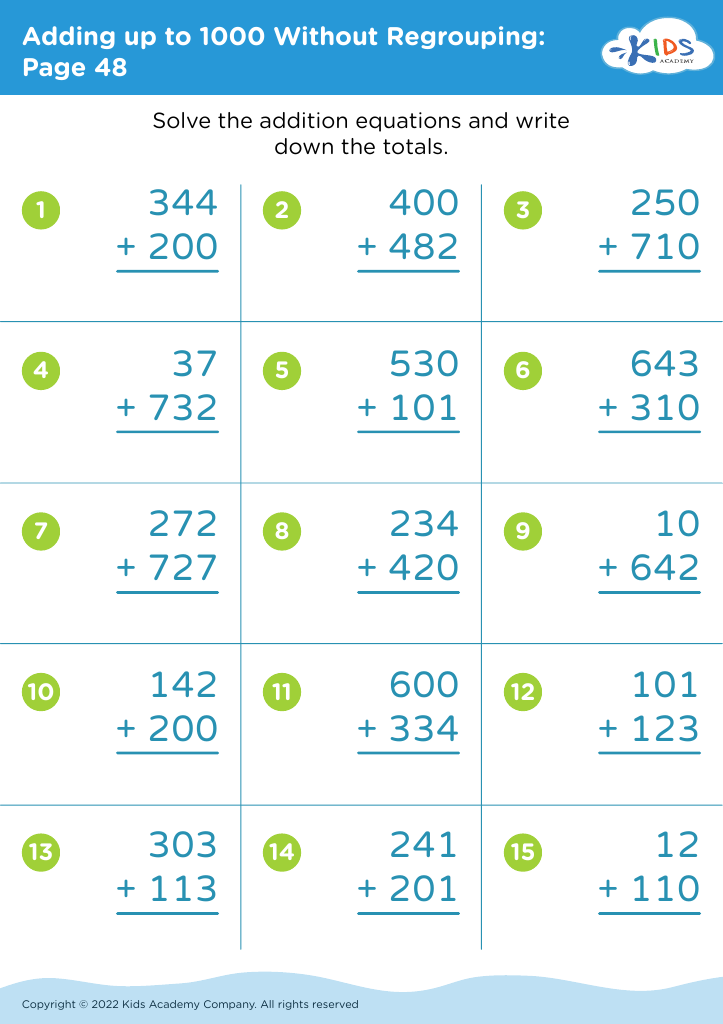
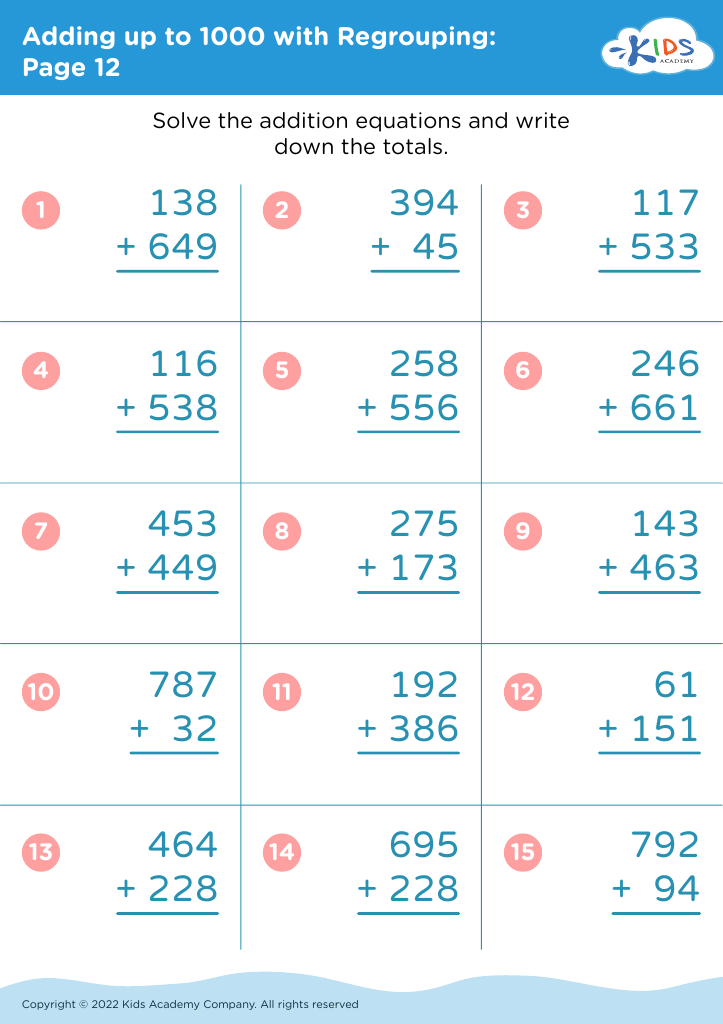
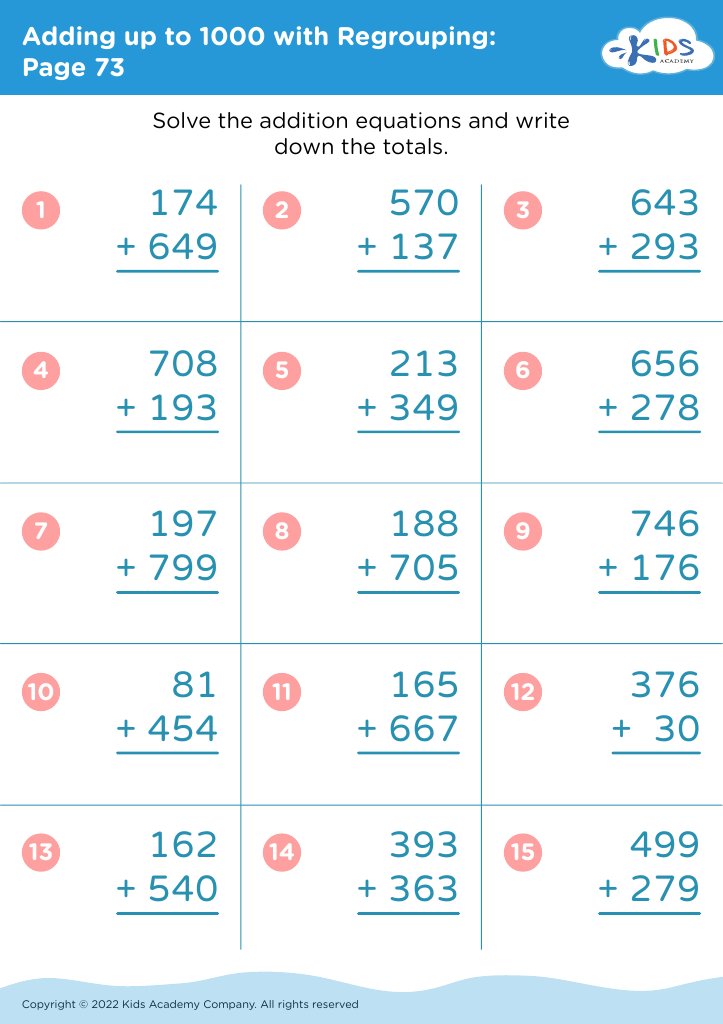
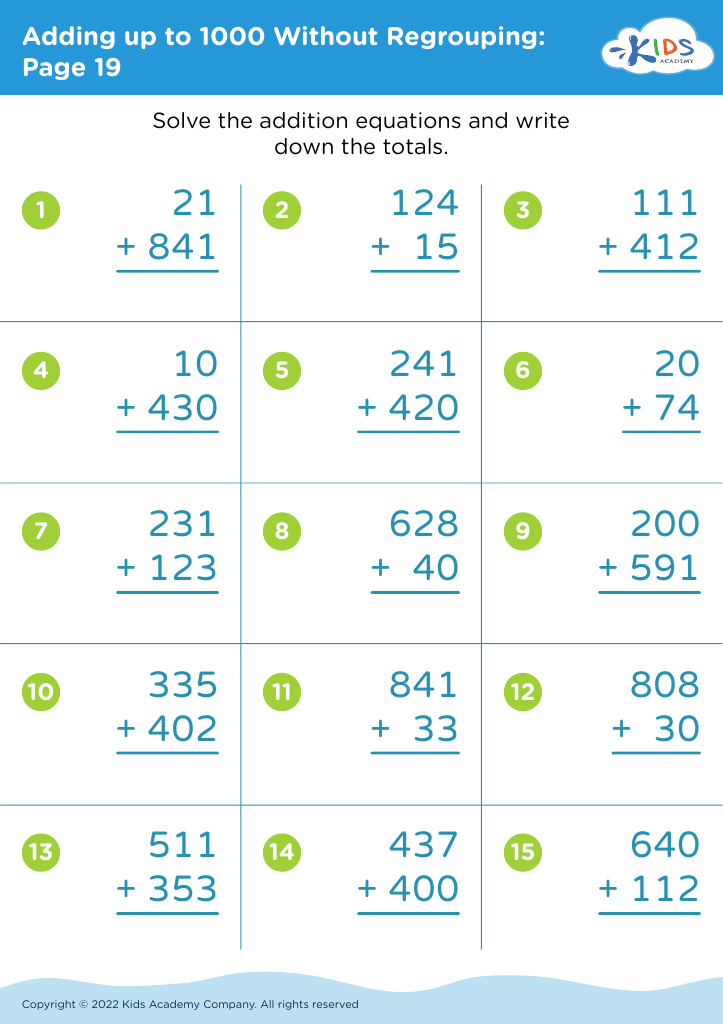
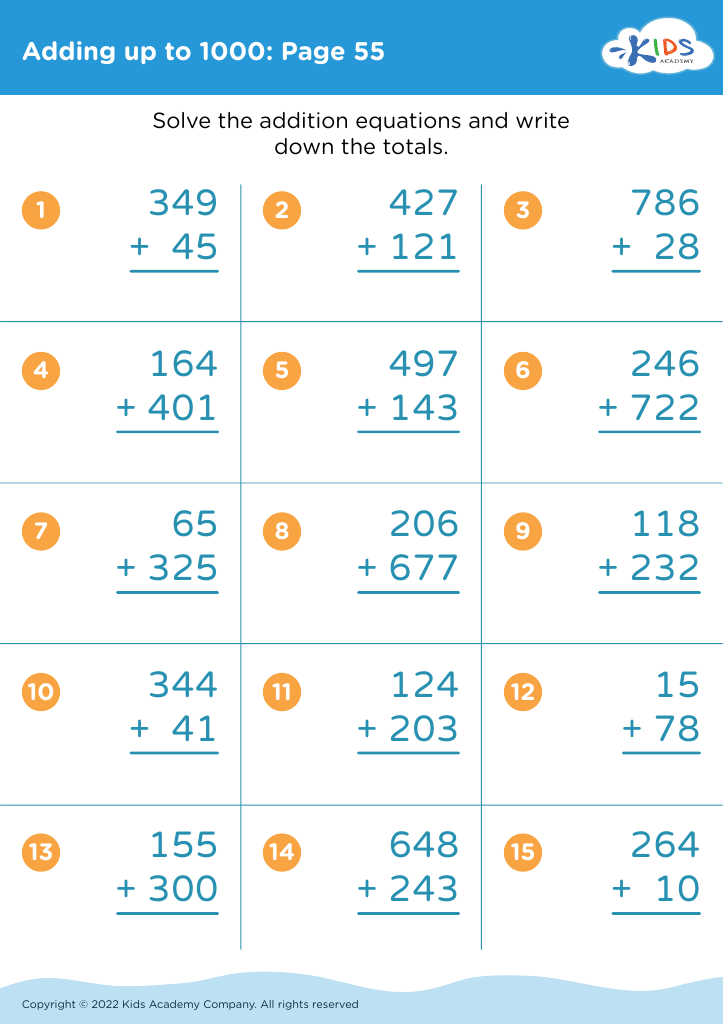



Understanding patterns and the concept of adding up to 1000 is crucial for children aged 5-7 as it lays the foundation for their mathematical development. At this age, children are naturally curious and eager to explore relationships between numbers. Engaging them in activities that involve recognizing patterns, whether numerical, visual, or auditory, helps them make sense of mathematics in a tangible way. This understanding fosters critical thinking and problem-solving skills, which are essential across all academic disciplines.
When children learn to add up to 1000, they grasp the concept of number magnitude and start to appreciate place value, rounding, and grouping. These are foundational concepts for their future work in addition, subtraction, multiplication, and division. Instilling a strong number sense makes mathematical operations not just memorization but also logical reasoning.
Moreover, recognizing patterns aids in enhancing memory and making predictions—skills that are applicable in everyday life. For parents and teachers, emphasizing these concepts not only boosts children's confidence in math but also nurtures a lifelong love for learning. By supporting early mathematics education, caregivers set children on a path toward academic success and competence in real-world situations. Thus, focusing on patterns and addition contributes significantly to shaping well-rounded, capable learners.








