Understanding symmetry Adding up to 1000 Worksheets for Ages 5-7
4 filtered results
-
From - To
Dive into the fascinating world of symmetry and addition with our curated "Understanding Symmetry: Adding up to 1000 Worksheets for Ages 5-7". Specially designed for young learners, these worksheets blend the concepts of symmetry and basic arithmetic to make learning engaging and fun. Perfect for home or classroom use, each activity enhances critical thinking, pattern recognition, and math skills. By practicing symmetry and addition up to 1000, children develop a strong foundation in math, preparing them for future academic success. Explore and download our worksheets today and watch your child's excitement grow as their understanding deepens.
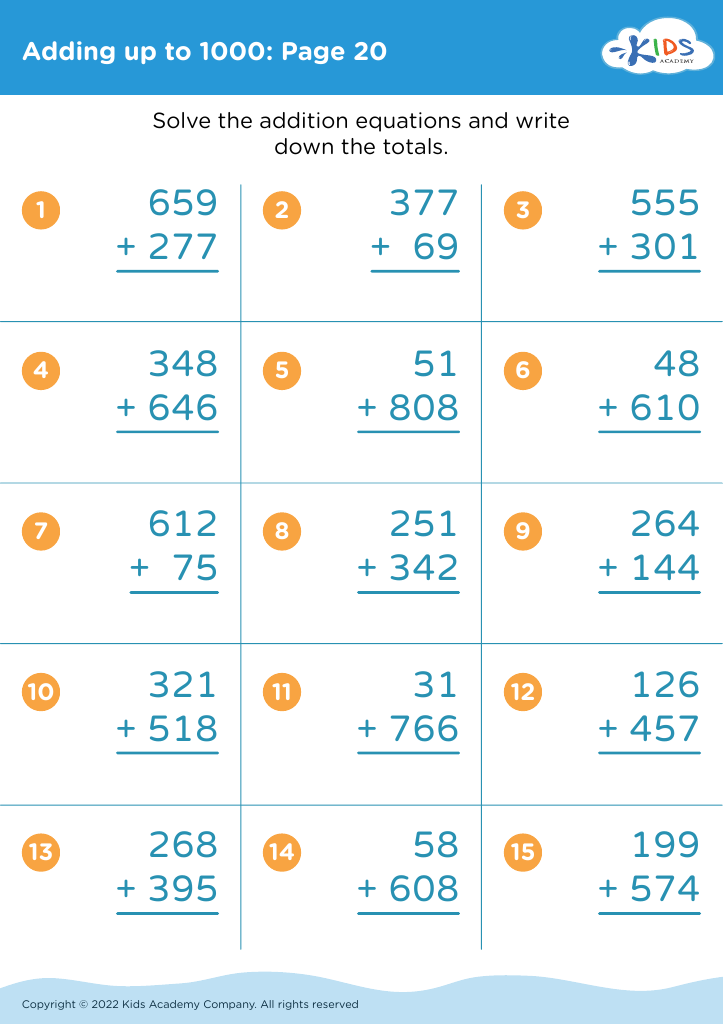
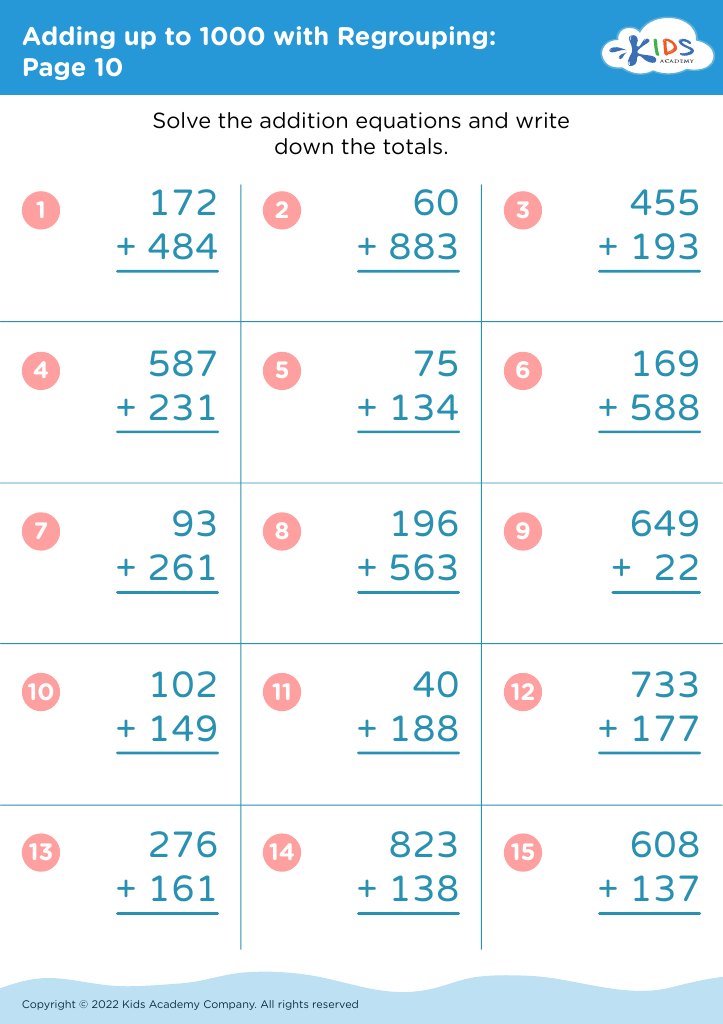
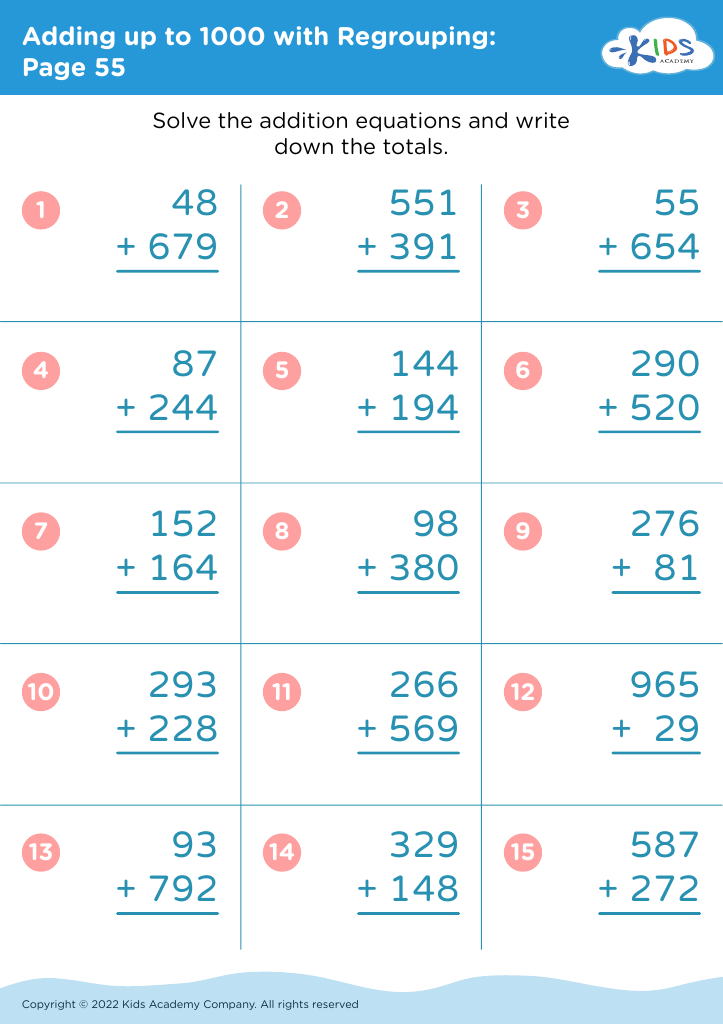
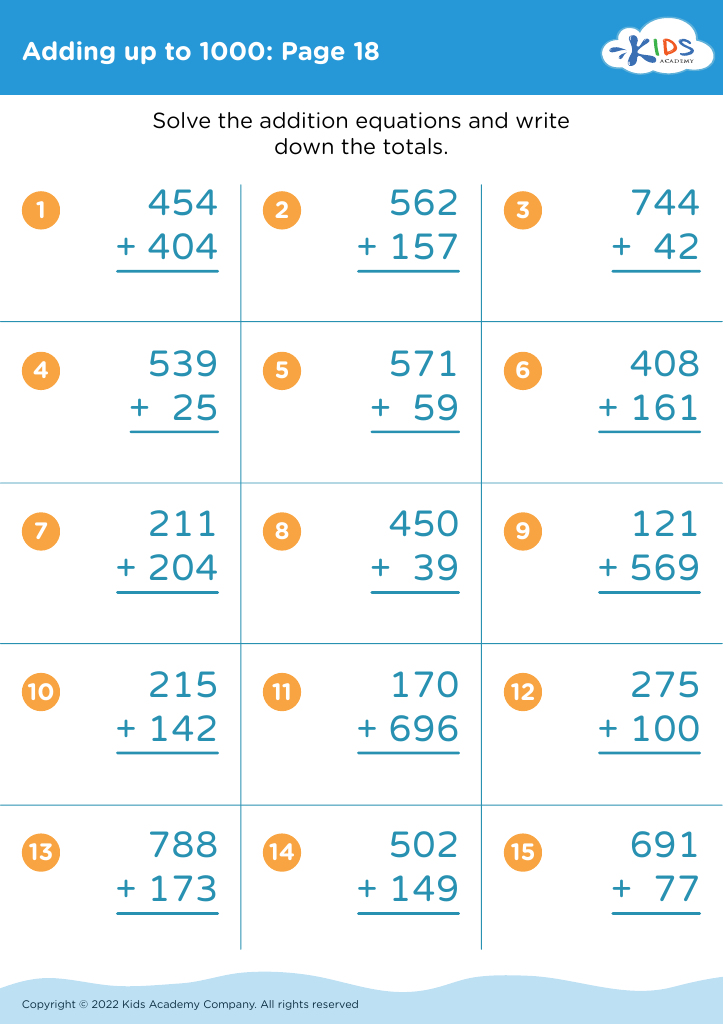



Understanding symmetry and adding numbers up to 1000 are foundational mathematical skills crucial for ages 5-7.
Symmetry boosts spatial awareness, problem-solving, and pattern recognition. It helps children understand balance and proportion, which are vital for daily tasks and more advanced math. For example, recognizing symmetrical shapes enhances children’s abilities in geometry and algebra later in their academic journey. It also fosters creativity and art skills, making learning more fun and engaging. Imagine a child fascinated by butterflies; understanding symmetry can improve their ability to recreate one accurately, building confidence and observational skills.
On the other hand, adding up to 1000 sharpens numerical fluency and prepares children for more complex arithmetic. Early proficiency in addition creates a solid base for subtraction, multiplication, and division. Achieving this milestone enhances a child’s confidence in tackling larger math problems, an essential skill for future educational success. Being able to add numbers accurately up to 1000 helps in practical life too, such as making calculations while shopping or managing simple budgets.
Overall, these skills are cornerstones in a child’s mathematical development. They enhance critical thinking, improve academic performance, and offer practical life skills. Parents and teachers who prioritize them are setting young learners up for a lifetime of success.








