Visual interpretation Adding up to 1000 Worksheets for Ages 5-7
3 filtered results
-
From - To
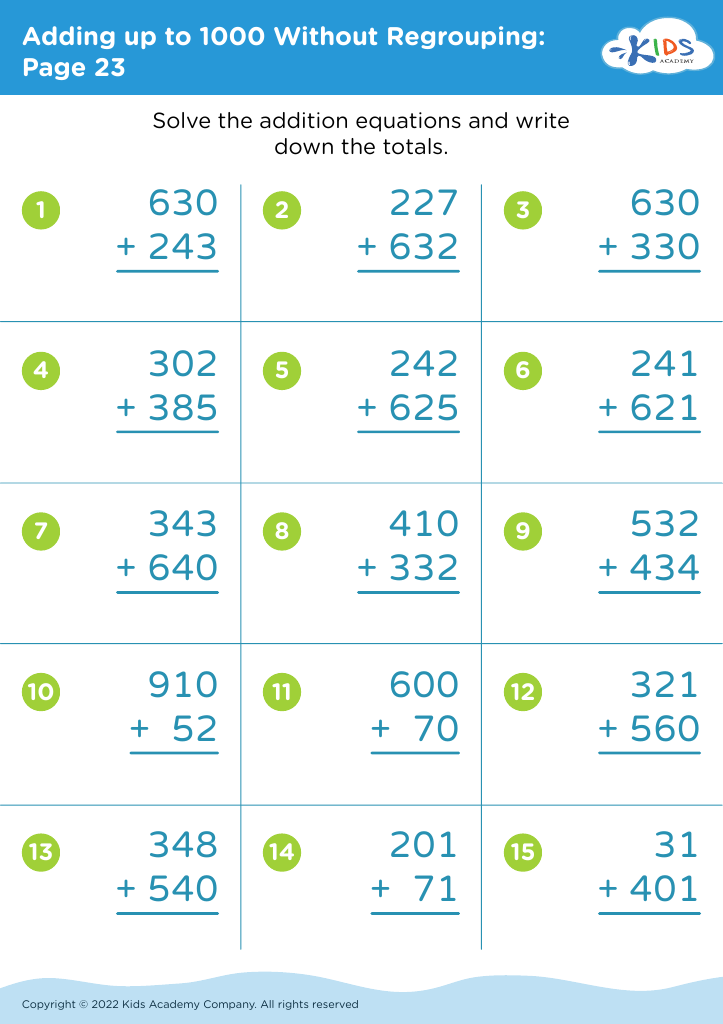
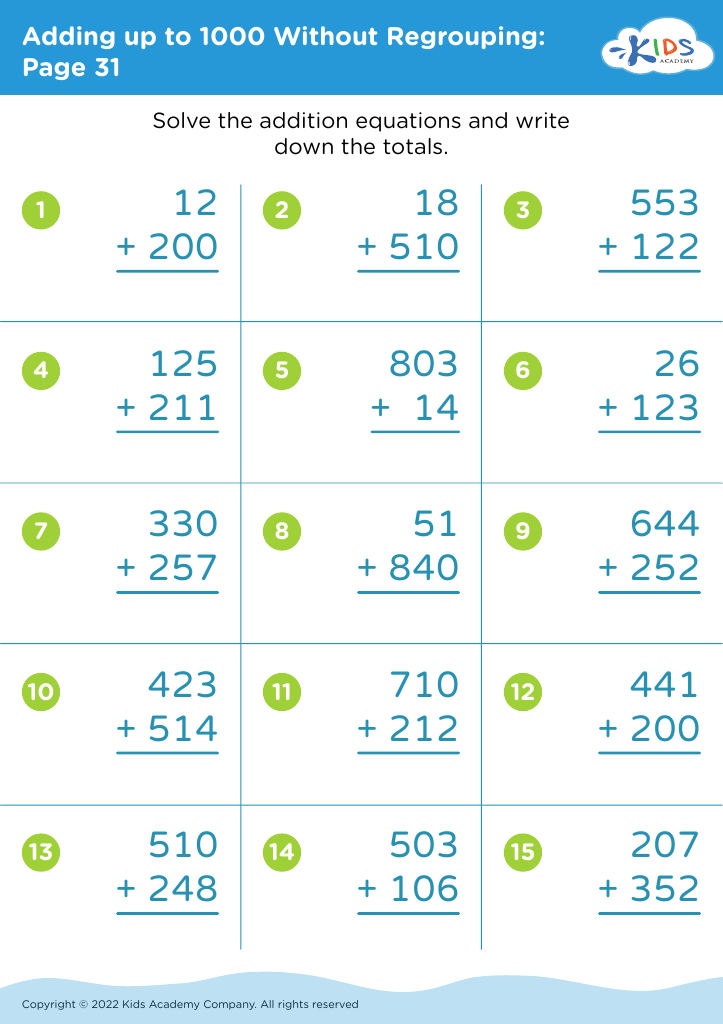
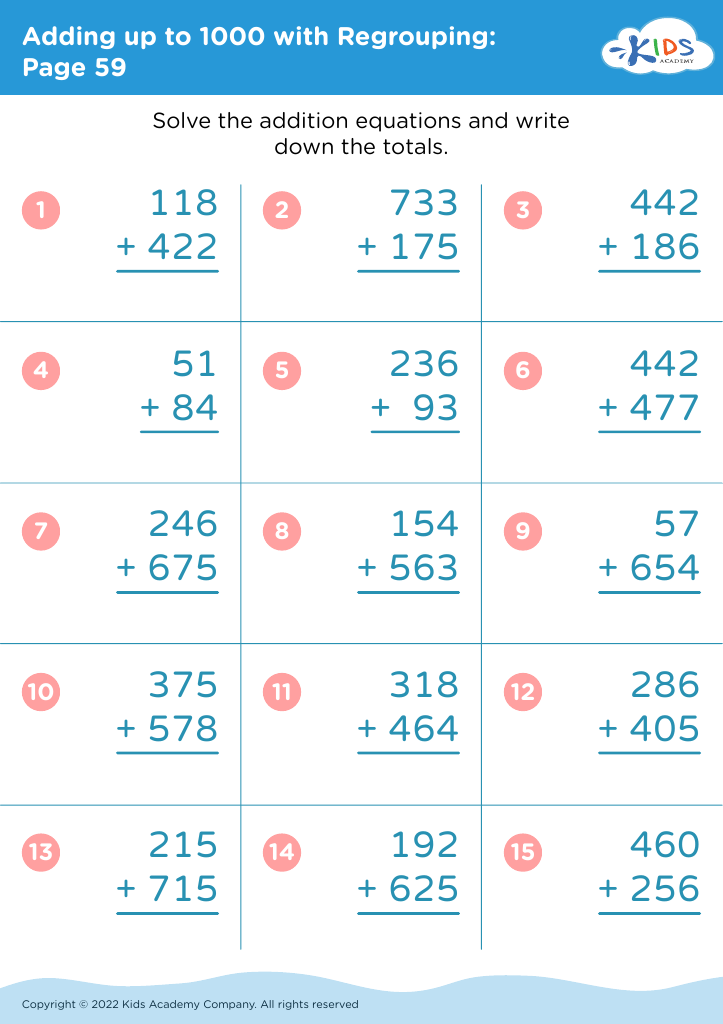
Introduce your young learners to the world of mathematics with our engaging "Visual Interpretation: Adding Up to 1000 Worksheets" designed specifically for ages 5-7. These colorful and interactive worksheets utilize visual aids to help children understand addition concepts up to 1000. Through fun imagery and creative exercises, students will enhance their number recognition and problem-solving skills while building a strong mathematical foundation. Perfect for parents and educators, these worksheets promote active learning and make math enjoyable. Dive into this collection to nurture a love for numbers and support your child’s journey toward math proficiency! Start exploring today!



Visual interpretation is a crucial skill for children aged 5-7, and both parents and teachers should prioritize its development. At this young age, children are in a formative stage of learning where they begin to make sense of the world around them through visual cues. Understanding and interpreting visuals—such as graphs, charts, pictures, and diagrams—enhances their ability to communicate thoughts and ideas effectively.
By engaging with visual materials, children boost their critical thinking skills. For example, when they interpret a pictorial story or analyze images representing numbers, they practice making connections and drawing conclusions. This ability to see beyond the surface helps cultivate a deeper level of understanding and encourages curiosity.
Furthermore, visual interpretation aids in literacy and numeracy skills. Being able to read pictures helps children build narratives, while interpreting graphs or objects can reinforce their understanding of basic math concepts.
Ultimately, promoting visual interpretation equips children with tools for lifelong learning, creativity, and problem-solving. Parents and teachers can create an enriching environment by providing diverse visual experiences that motivate and inspire young learners. Supporting this skill can positively influence their academic journey, fostering both confidence and competence in various subjects.








