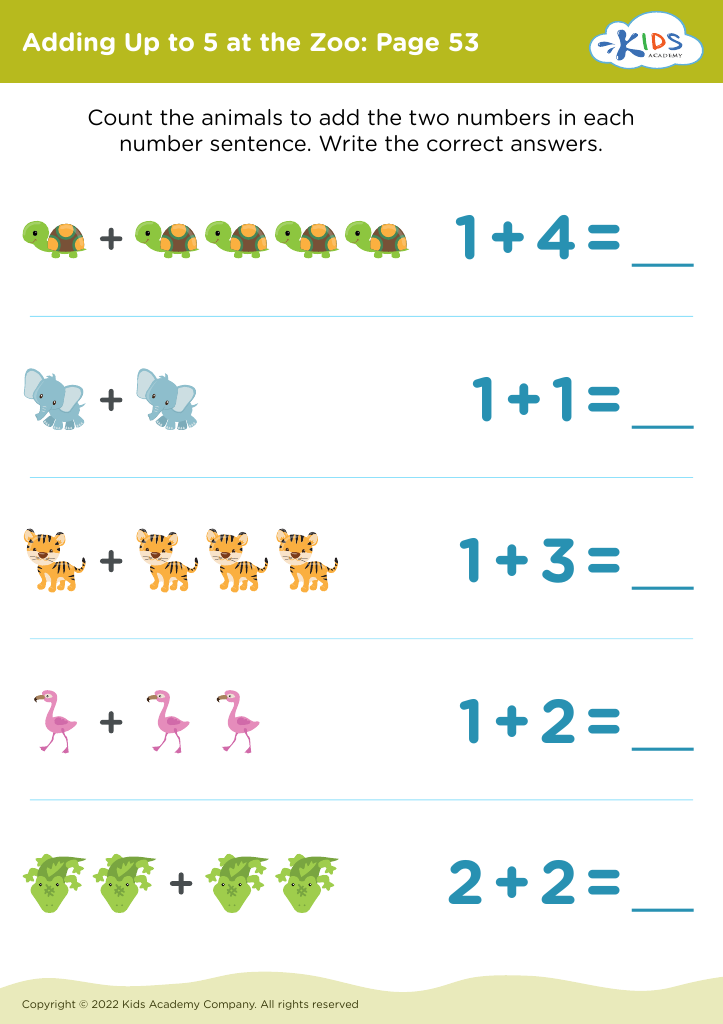
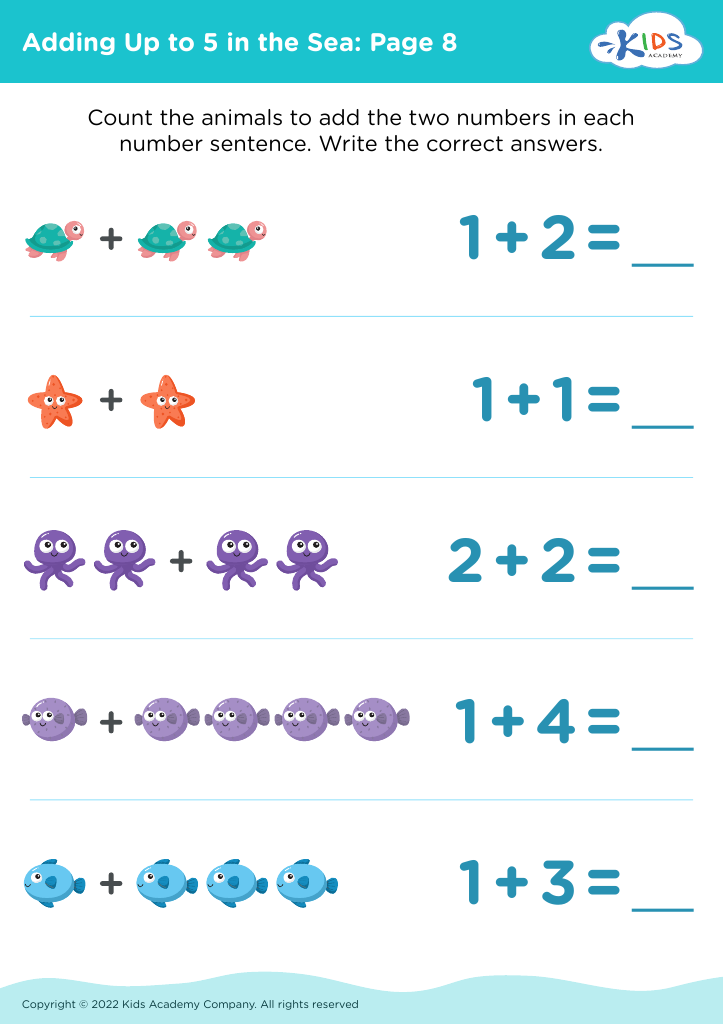
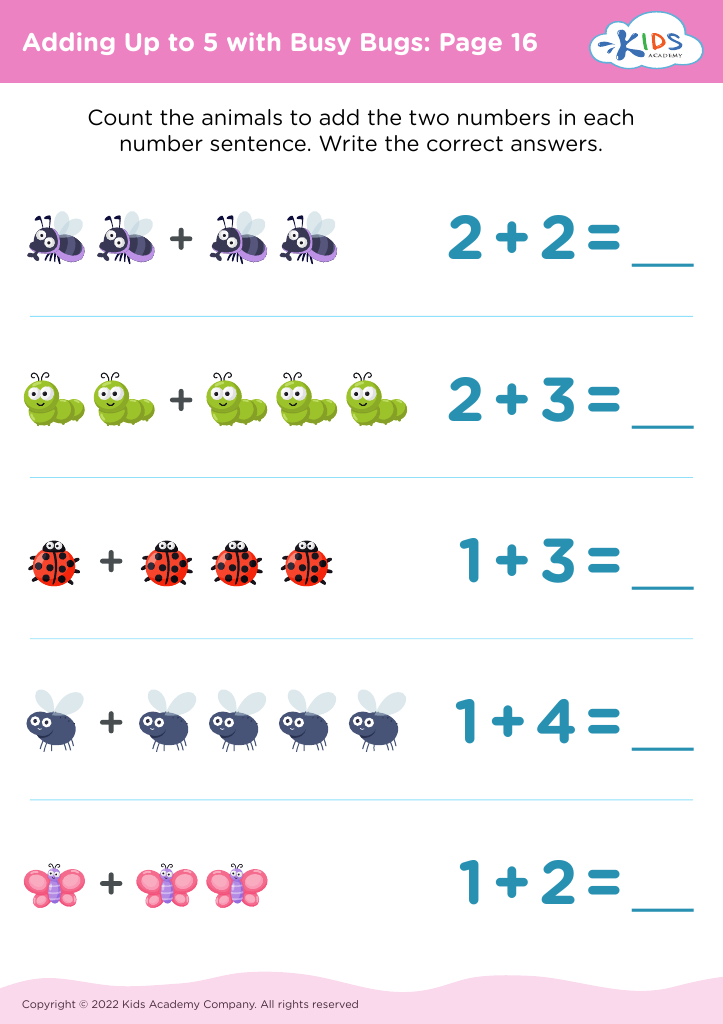
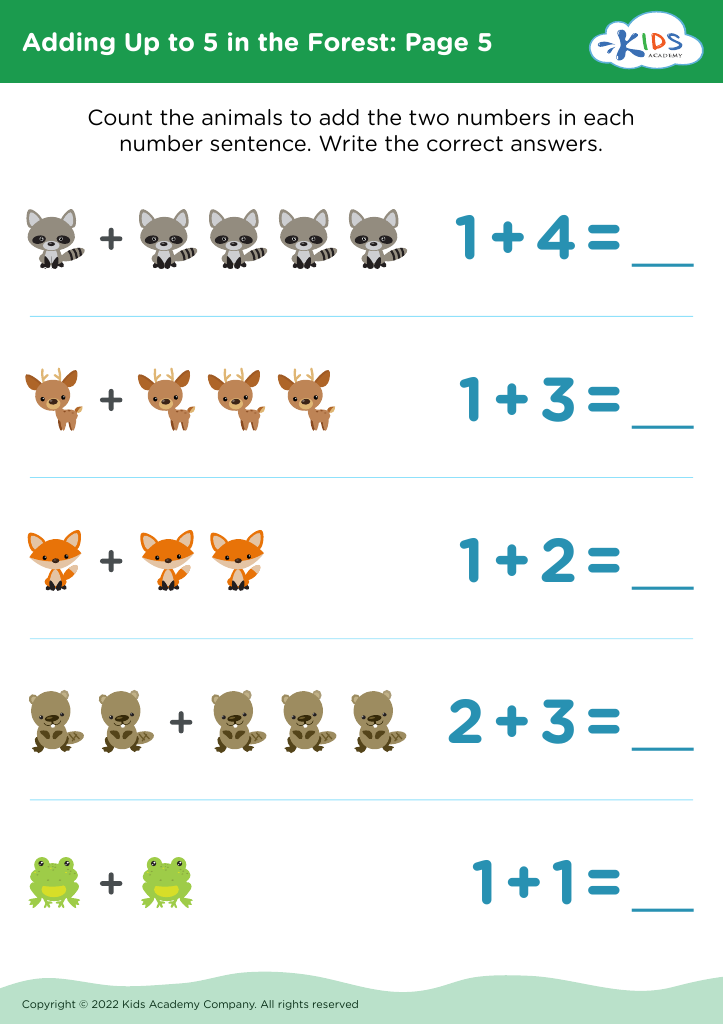
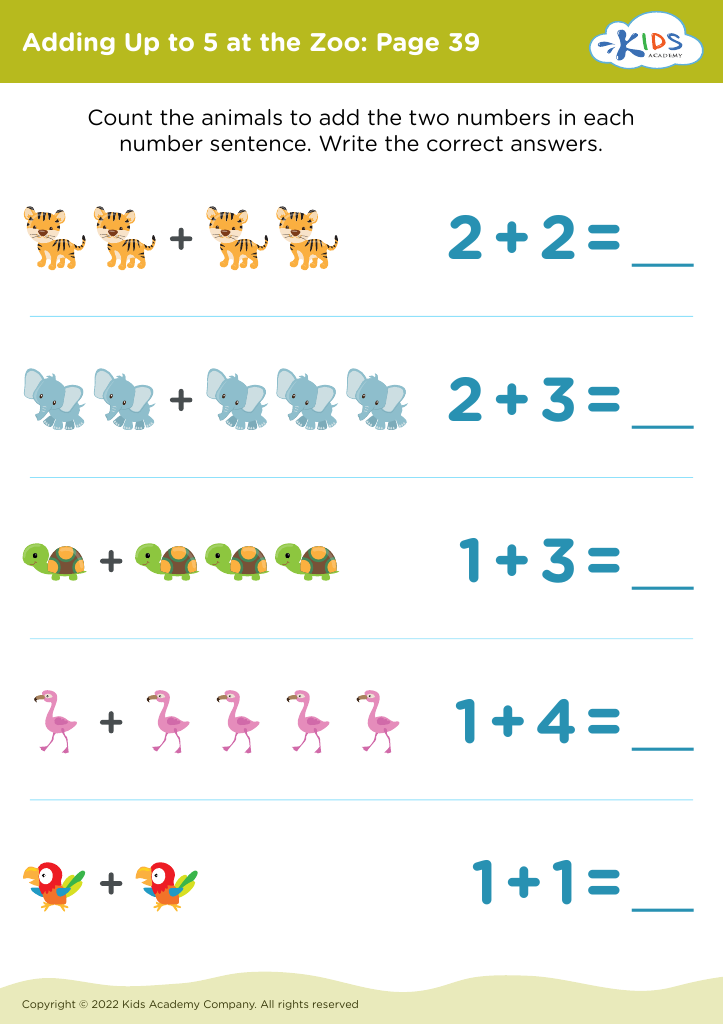
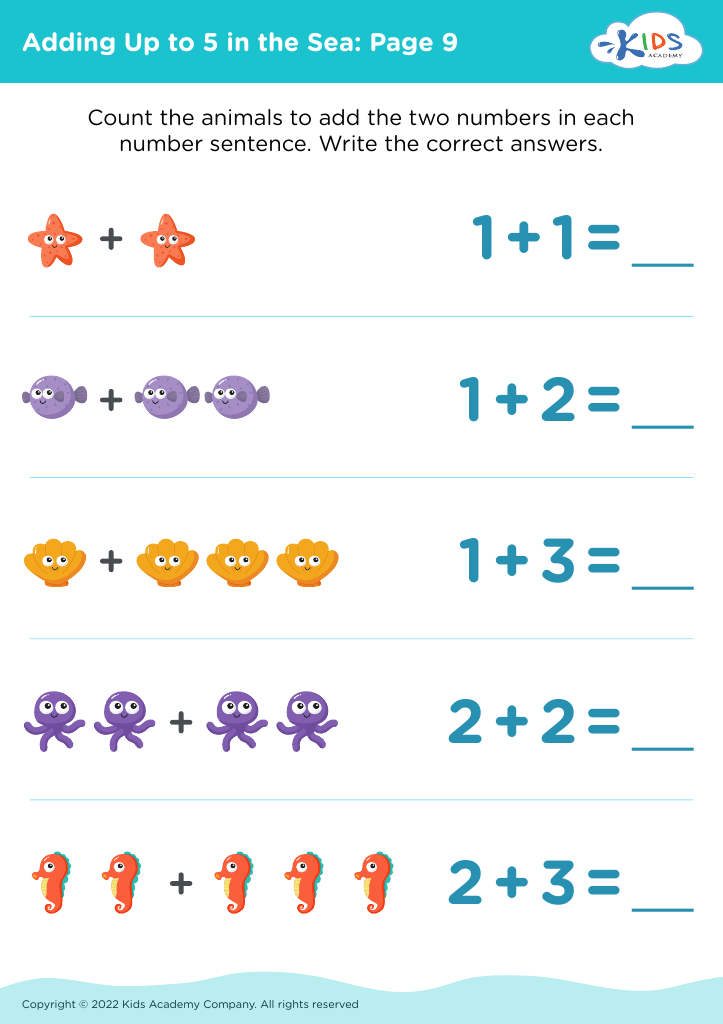








Addition skills, particularly the ability to add up to 5, are foundational for children aged 5-7. This early mathematical concept not only lays the groundwork for future mathematical learning but also enhances cognitive and problem-solving skills. When children confidently add numbers within this range, they build number sense—an intuitive understanding of quantities and their relationships.
Parents and teachers should care about teaching these skills because they provide a springboard for more complex math concepts. Mastering addition up to 5 fosters a sense of achievement and encourages a positive attitude towards math, reducing anxiety around the subject later in school. Engaging in activities like counting objects, playing addition games, or using visual aids can make learning interactive and enjoyable.
Furthermore, developing strong addition skills at this stage helps children in real-life situations, facilitating practical problem-solving, such as managing money or understanding time. This formative period is critical; a solid grasp of addition fosters confidence and independence, setting children on a path to academic success. By focusing on these foundational skills, parents and teachers can better prepare children for the math challenges they will encounter in their educational journeys.








