Addition up to 5 Adding Up to 5 Worksheets for Ages 5-7
4 filtered results
-
From - To
Discover our engaging "Addition Up to 5" worksheets tailored for children ages 5-7! These interactive resources provide a fun and effective way for young learners to master basic addition concepts. Our worksheets feature colorful visuals and relatable objects, making math enjoyable and accessible. With a variety of exercises designed to reinforce numerical relationships, your child will develop confidence in their math skills. Perfect for classroom use or at-home practice, these worksheets support early mathematical learning and promote cognitive development. Explore our collection today and watch your child’s addition skills blossom! Suitable for parents, teachers, and homeschoolers alike!
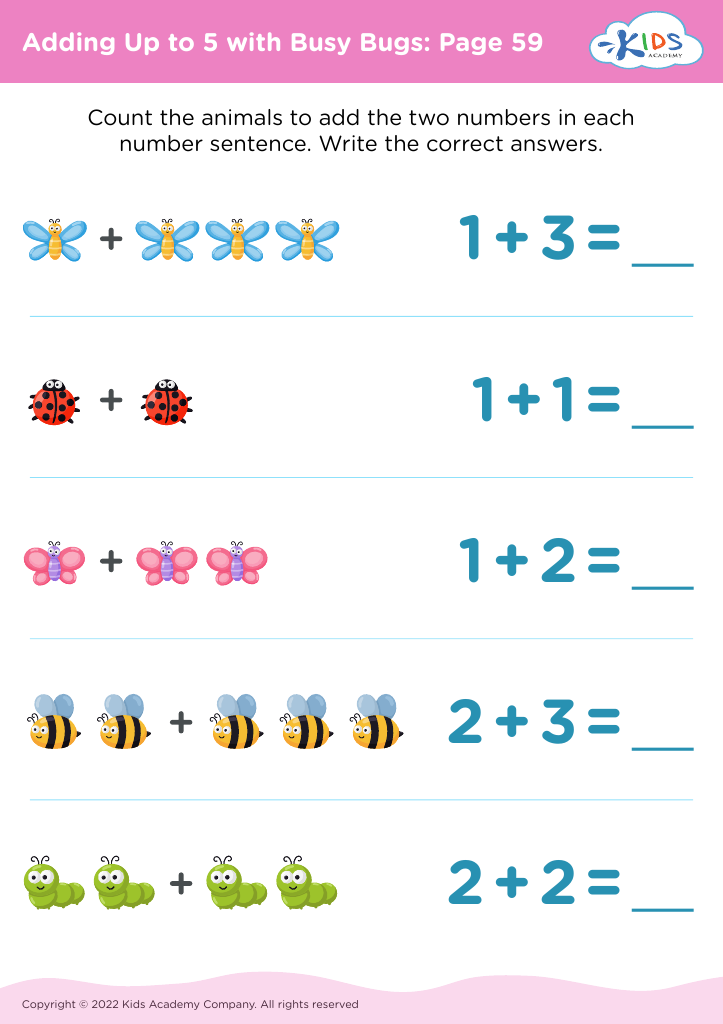
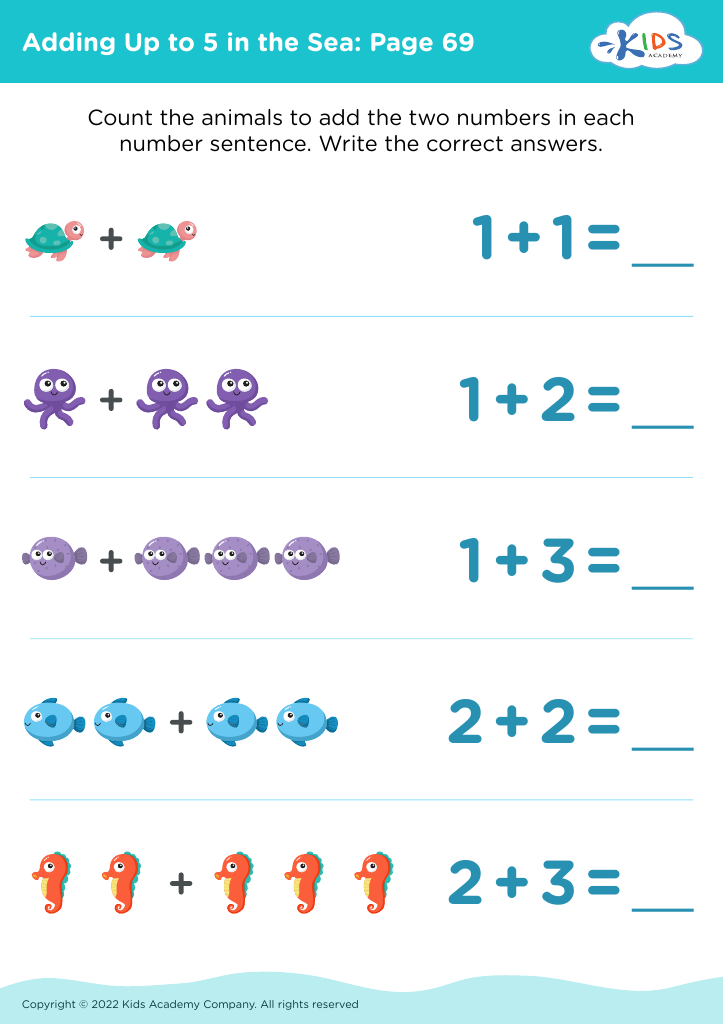
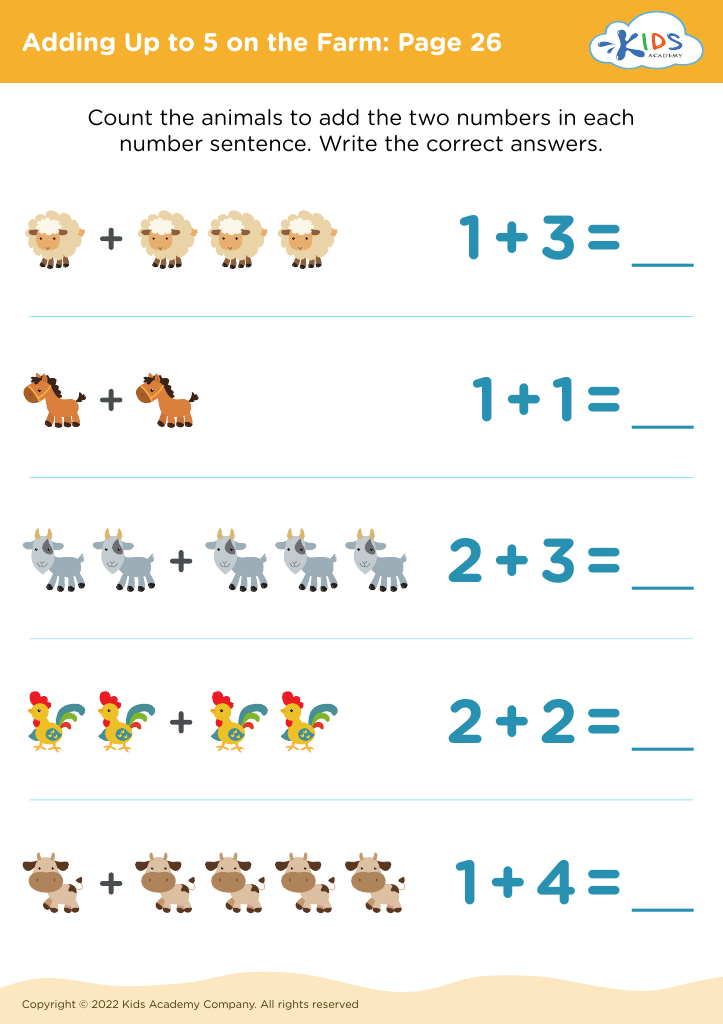
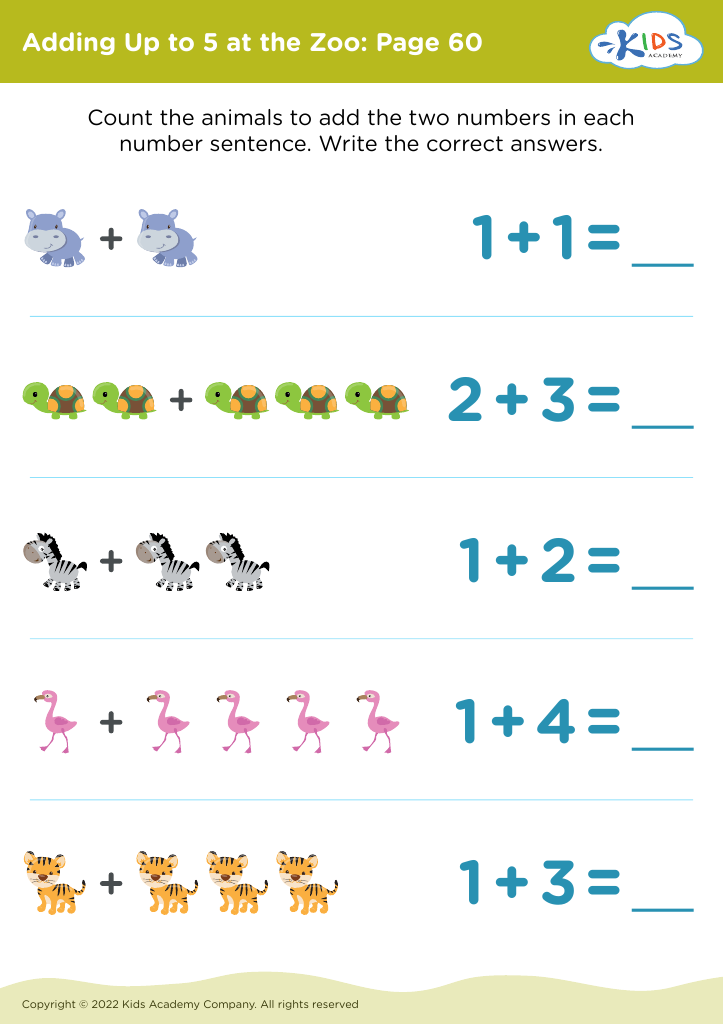








Addition up to 5 is a foundational skill that plays a crucial role in early mathematics for children aged 5-7. Understanding simple addition helps build a child’s number sense, allowing them to recognize quantities and relationships between numbers. Mastering addition within this range fosters confidence and encourages positive attitudes toward math, setting the stage for future success in more complex mathematical concepts.
When parents and teachers emphasize this skill, they support cognitive development through engaging activities that can enhance learning, such as counting objects, using fingers, or incorporating interactive games. These forms of engagement make learning enjoyable and age-appropriate.
Moreover, addition exercises help develop critical thinking as children learn to solve problems and make connections between numbers. The skill also strengthens fine motor skills when children write or manipulate objects to visualize addition.
Additionally, parental and teacher involvement in reinforcing these concepts underscores their importance, helping children understand that math is relevant in everyday life—from sharing snacks to counting toys. By caring about these fundamental skills, adults can create a strong mathematical foundation that bridges into higher-level math, enabling children to approach future challenges with confidence and curiosity.








