Basic arithmetic practice Adding Up to 5 Worksheets for Ages 5-7
8 filtered results
-
From - To
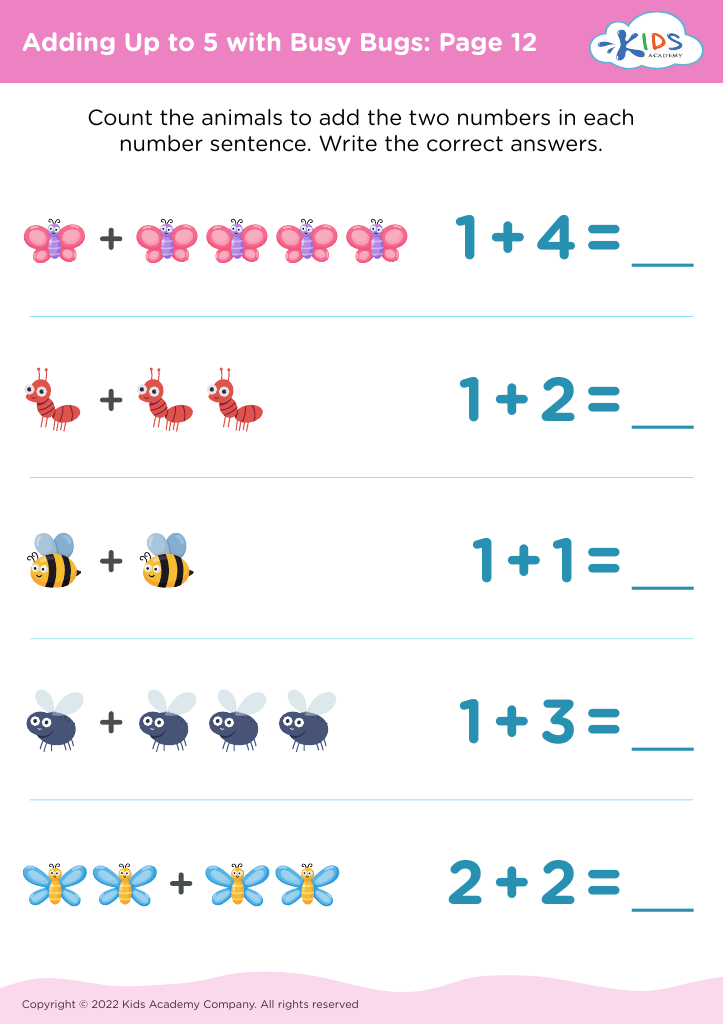
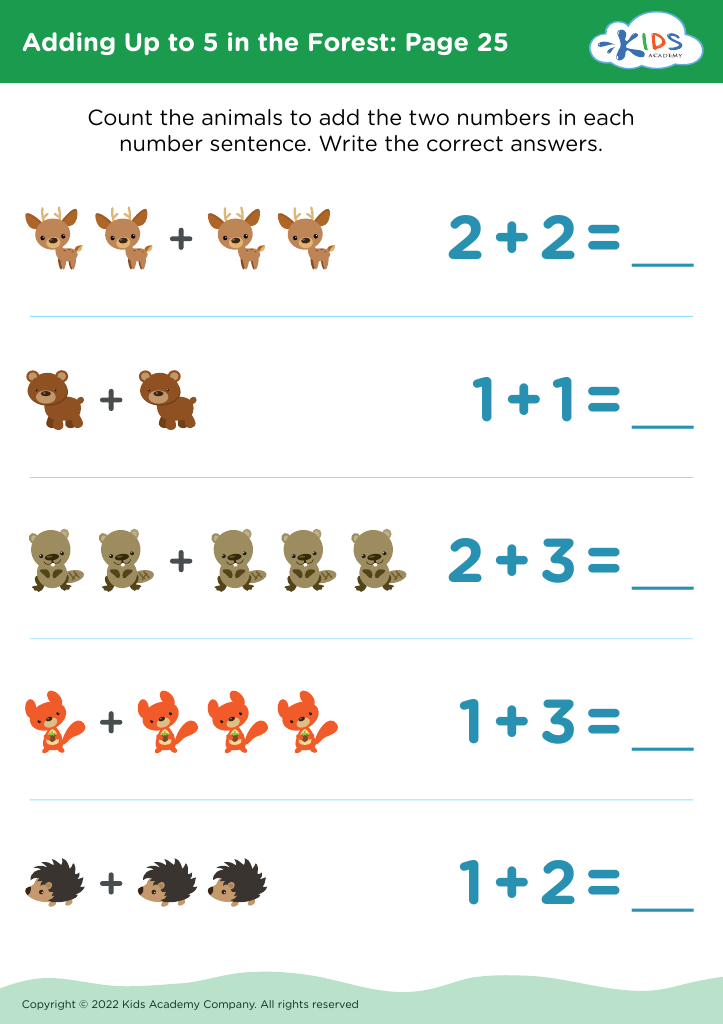
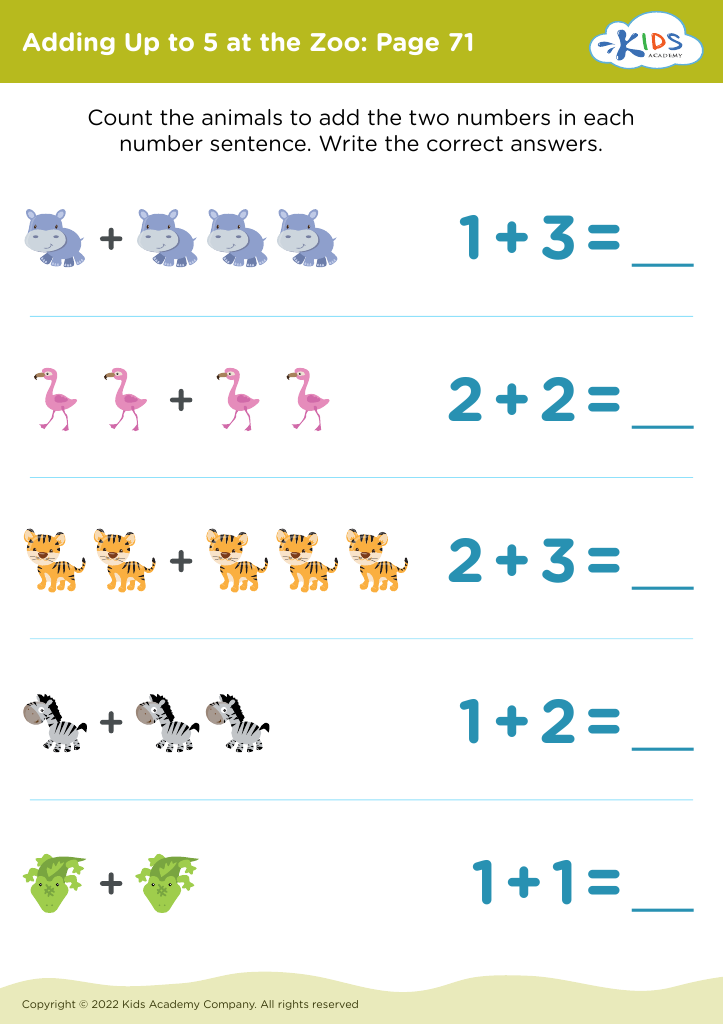
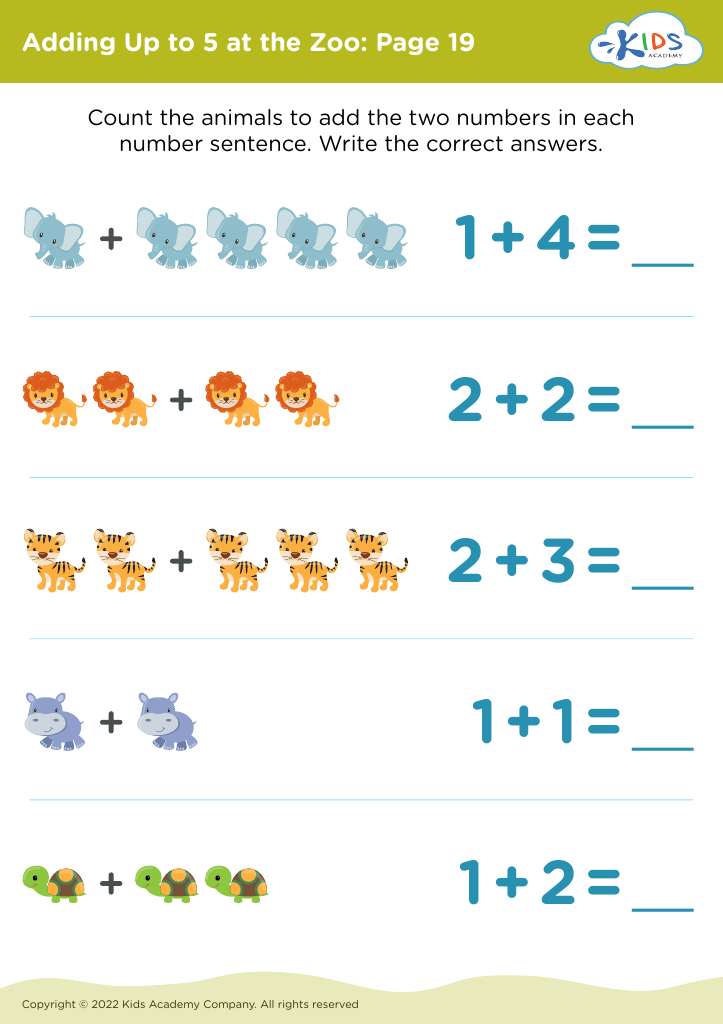
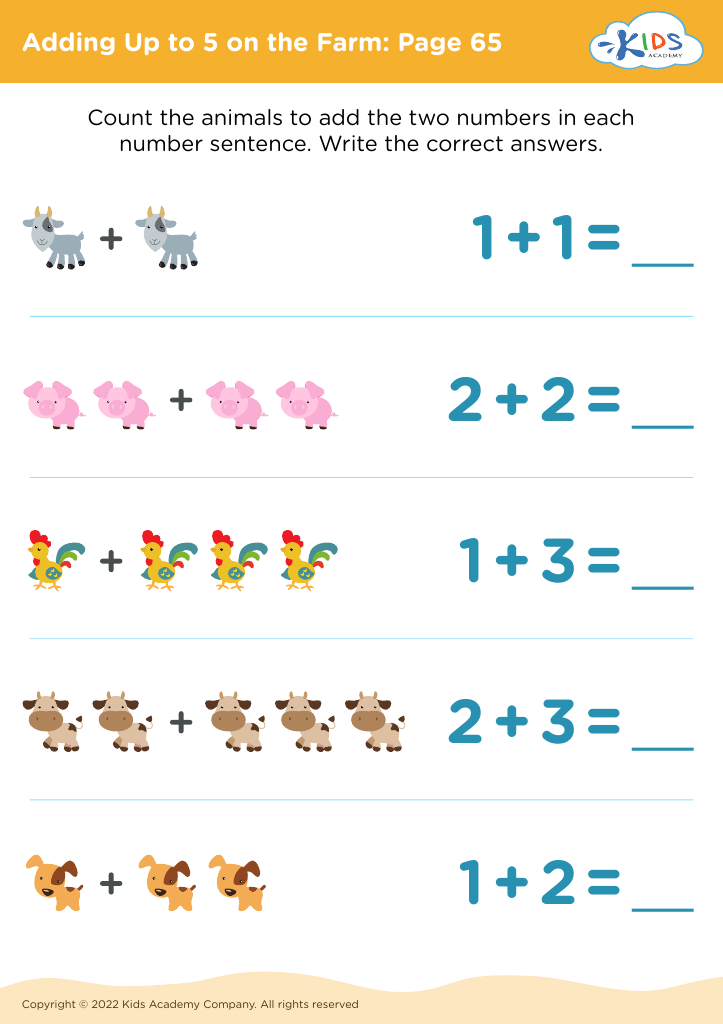
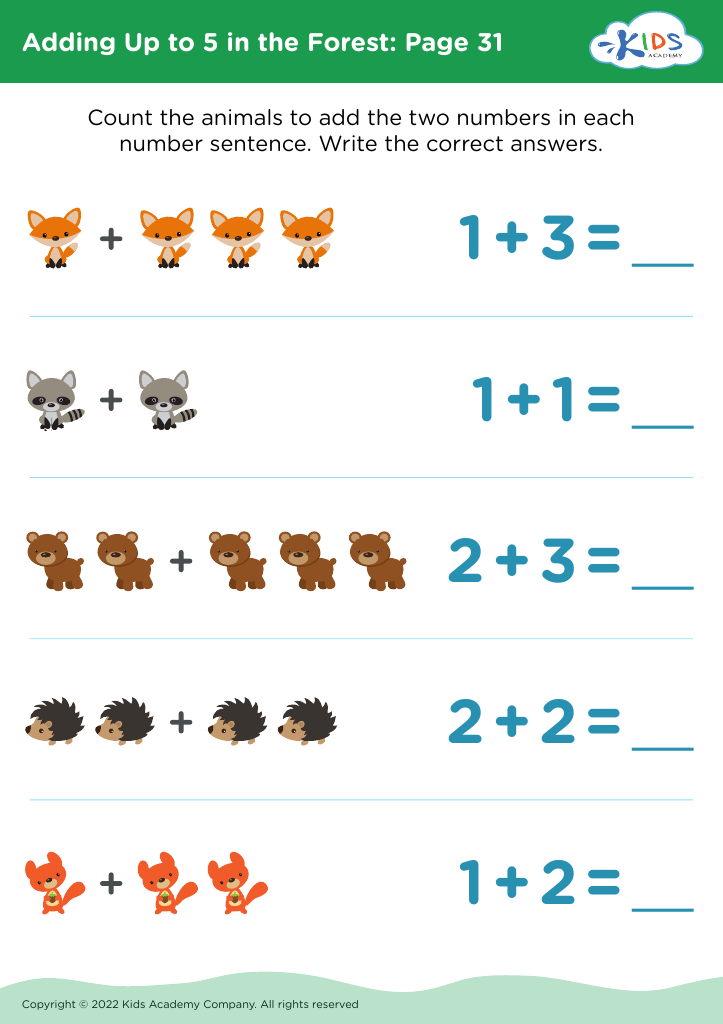
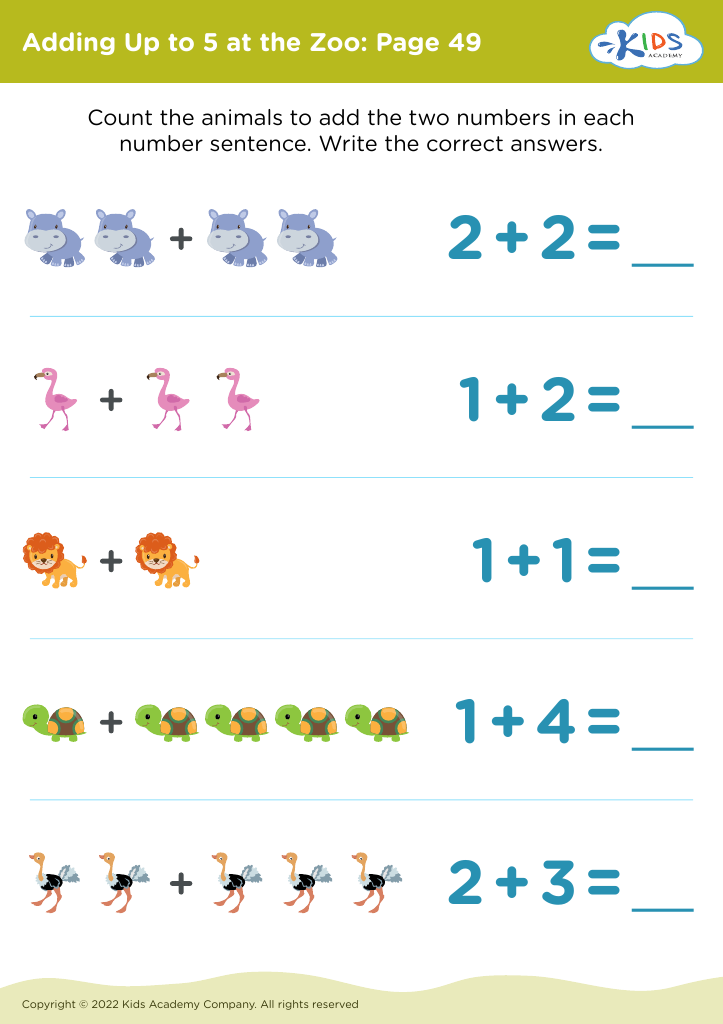
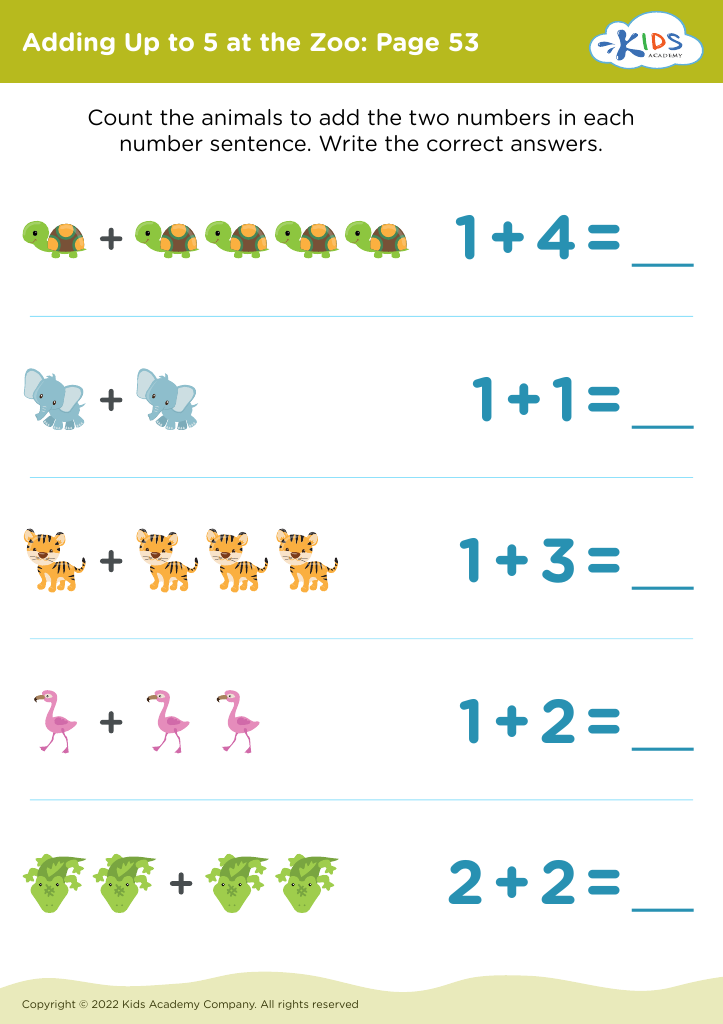
Welcome to our "Basic Arithmetic Practice: Adding Up to 5 Worksheets" designed specifically for children ages 5-7! These engaging worksheets offer a fun and interactive way for young learners to master basic addition skills. Each activity helps kids confidently practice adding numbers from 1 to 5, fostering their mathematical understanding through colorful illustrations and relatable themes. Perfect for classroom or home use, our worksheets are tailored to enhance number recognition and problem-solving abilities while providing essential practice. Help your child build a strong foundation in math with these easy-to-use resources that make learning enjoyable and effective!


.jpg)





Basic arithmetic practice, particularly in adding up to 5, is crucial for children ages 5-7 as it lays the foundation for their mathematical understanding and skills. During these formative years, children are developing cognitive functions like problem-solving, critical thinking, and logical reasoning. Mastering basic addition promotes number sense, which is the understanding of numbers and their relationships, enabling children to comprehend larger mathematical concepts later on.
Engaging in addition activities helps improve memory and concentration, and it enhances language development by pairing numbers with verbal expressions. Moreover, a solid grasp of addition can boost a child's confidence in math, reducing anxiety surrounding the subject as they progress to more complex operations.
For parents and teachers, actively incorporating simple addition exercises into daily routines nurtures an engaging learning environment. Fun and interactive methods, such as games, visual aids, and manipulatives, can make learning enjoyable and effective. By caring about and prioritizing basic arithmetic practice, they equip children with essential tools for academic success, fostering a positive attitude toward learning that can last a lifetime. Early mastery of addition not only benefits future math skills but also supports broader educational achievements across subjects.








