Filters

95 filtered results

Clear all filters
Favorites
With answer key
Interactive

95 filtered results

Difficulty Level

Grade


Subject

Check out this FREE Trial Lesson on Adding Up to 5 for age 5-7!

My Family

Favorites
With answer key
Interactive
  • 5-7
  • Cognitive Development
  • Adding Up to 5
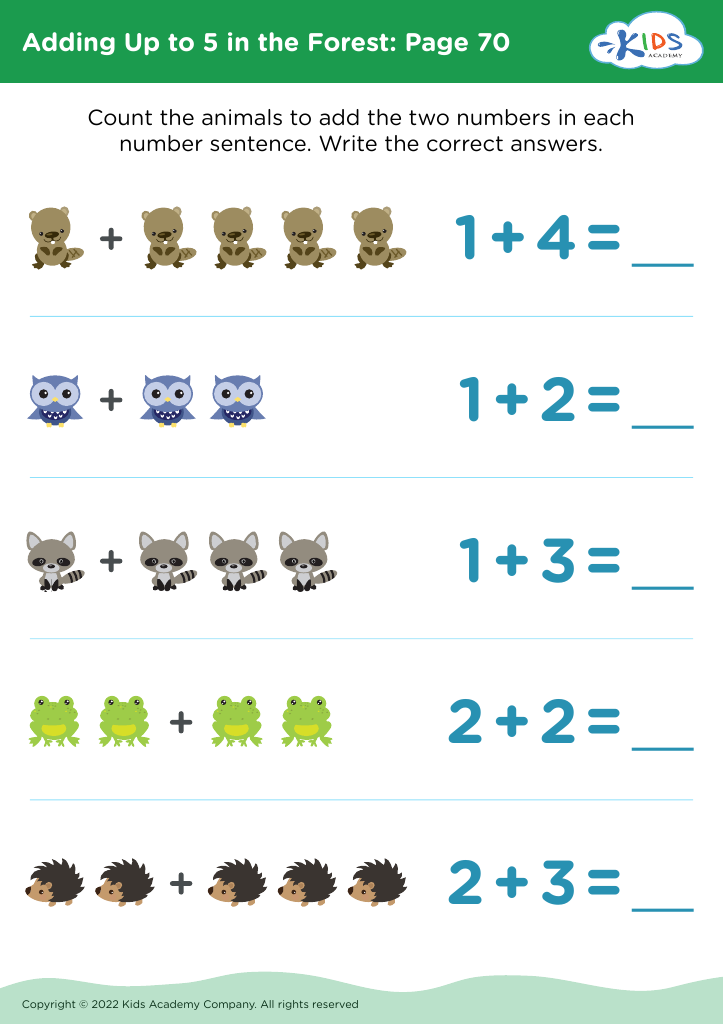
Adding Up to 5 in the Forest: Page 70
Worksheet
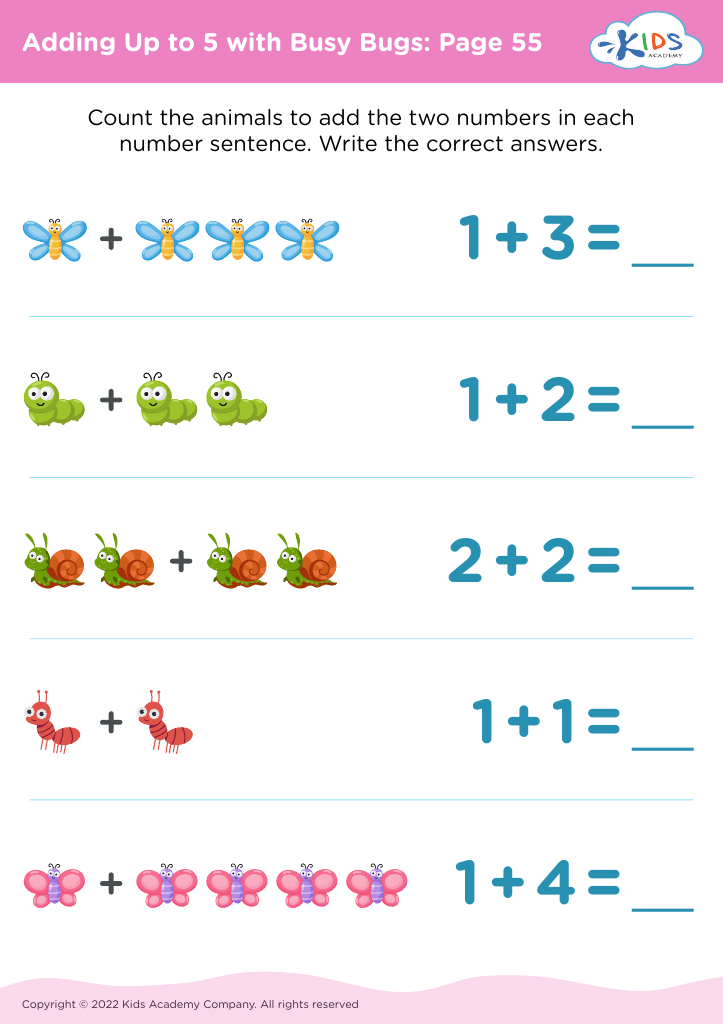
Adding Up to 5 with Busy Bugs: Page 55
Worksheet
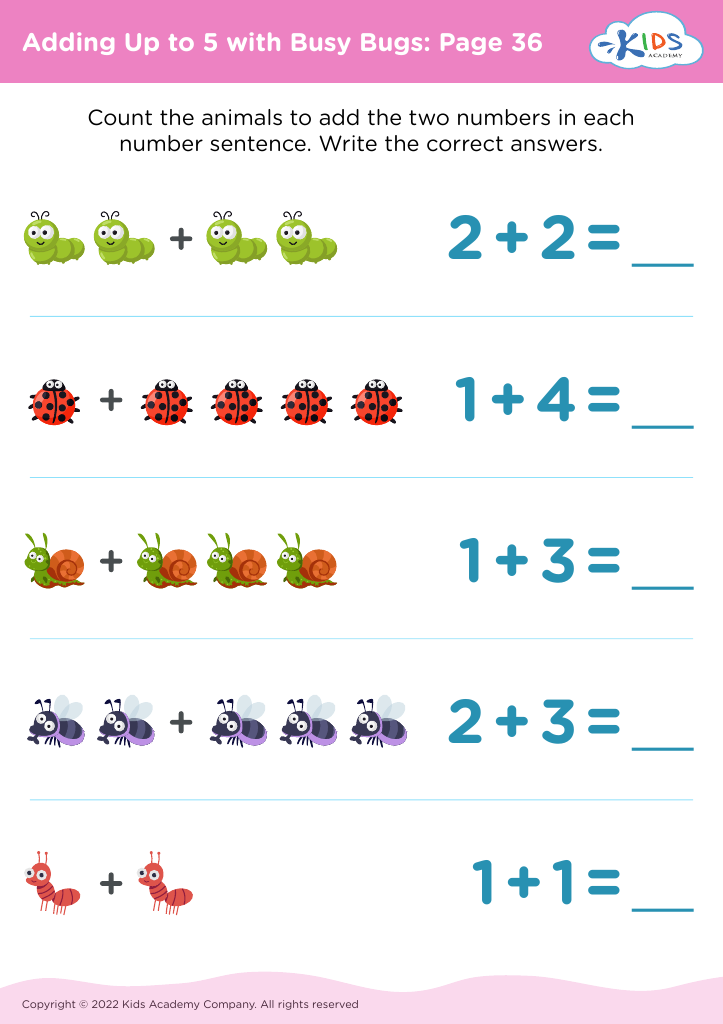
Adding Up to 5 with Busy Bugs: Page 36
Worksheet
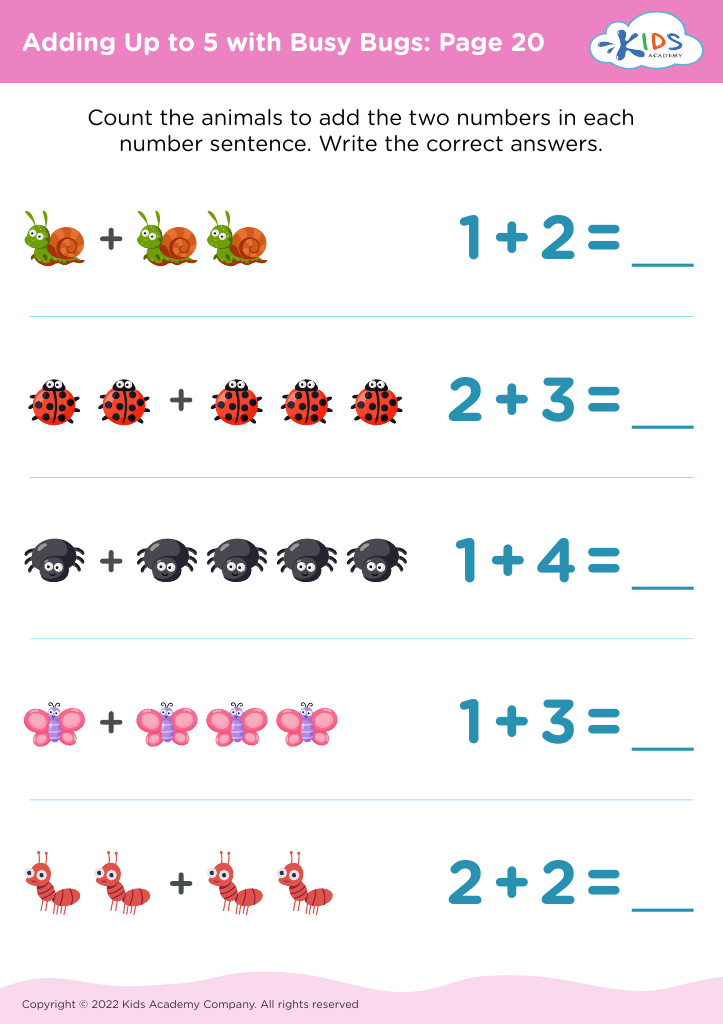
Adding Up to 5 with Busy Bugs: Page 20
Worksheet
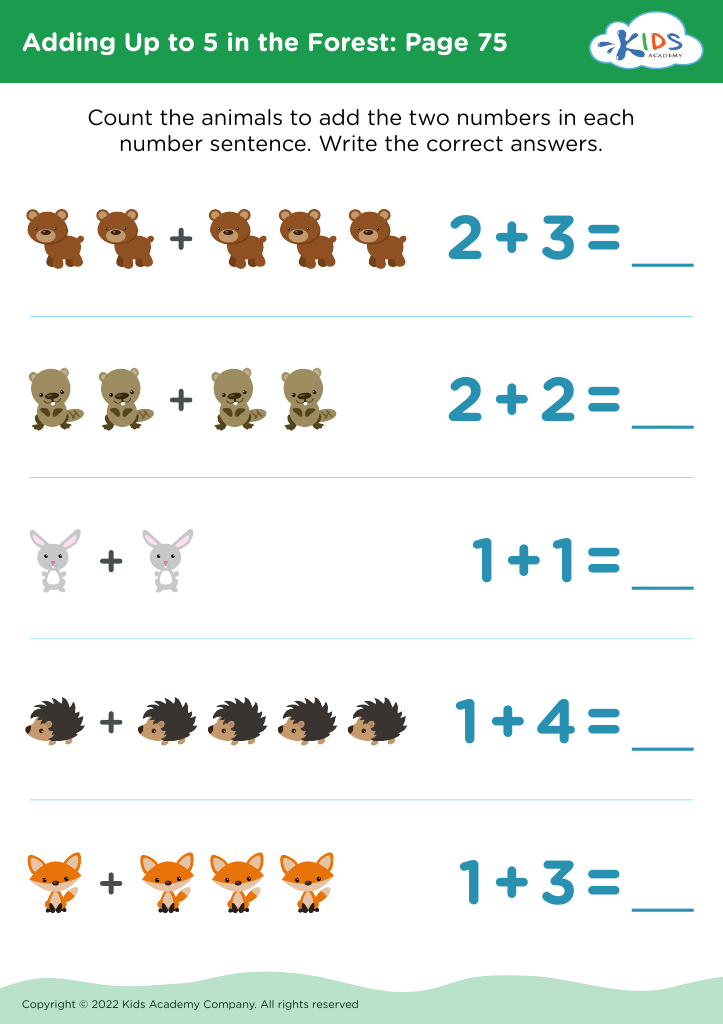
Adding Up to 5 in the Forest: Page 75
Worksheet
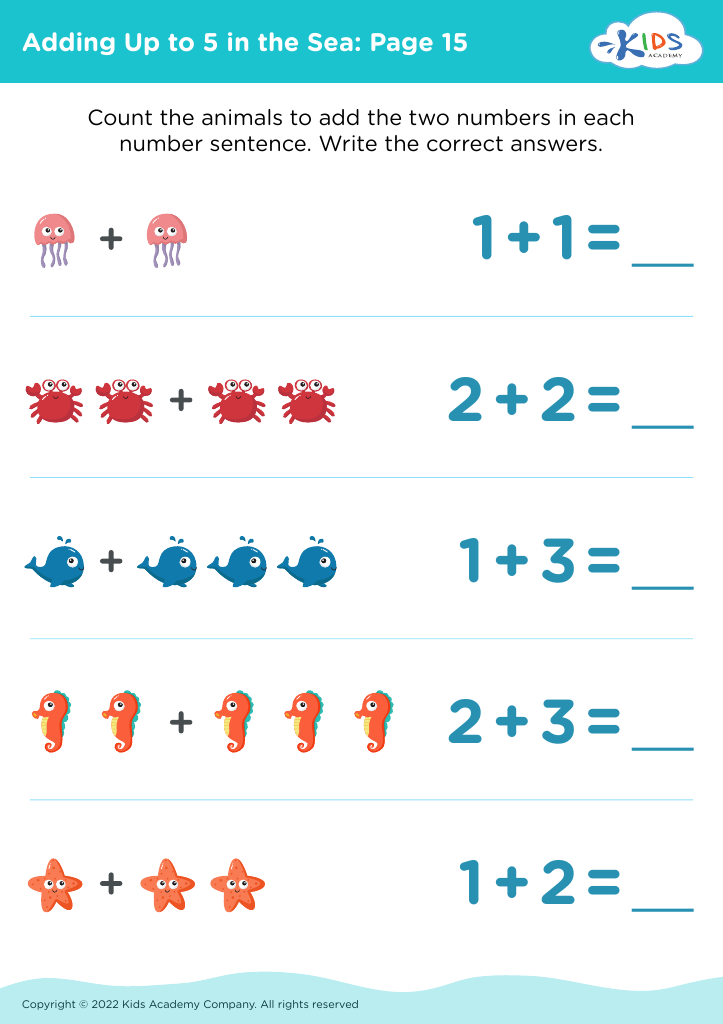
Adding Up to 5 in the Sea: Page 15
Worksheet
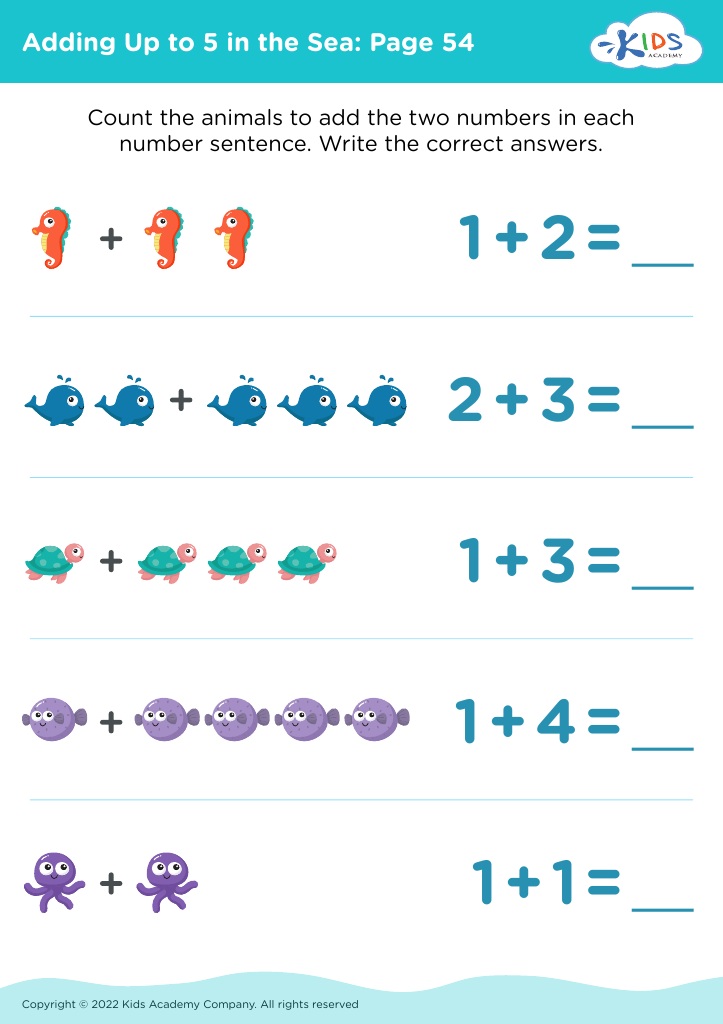
Adding Up to 5 in the Sea: Page 54
Worksheet
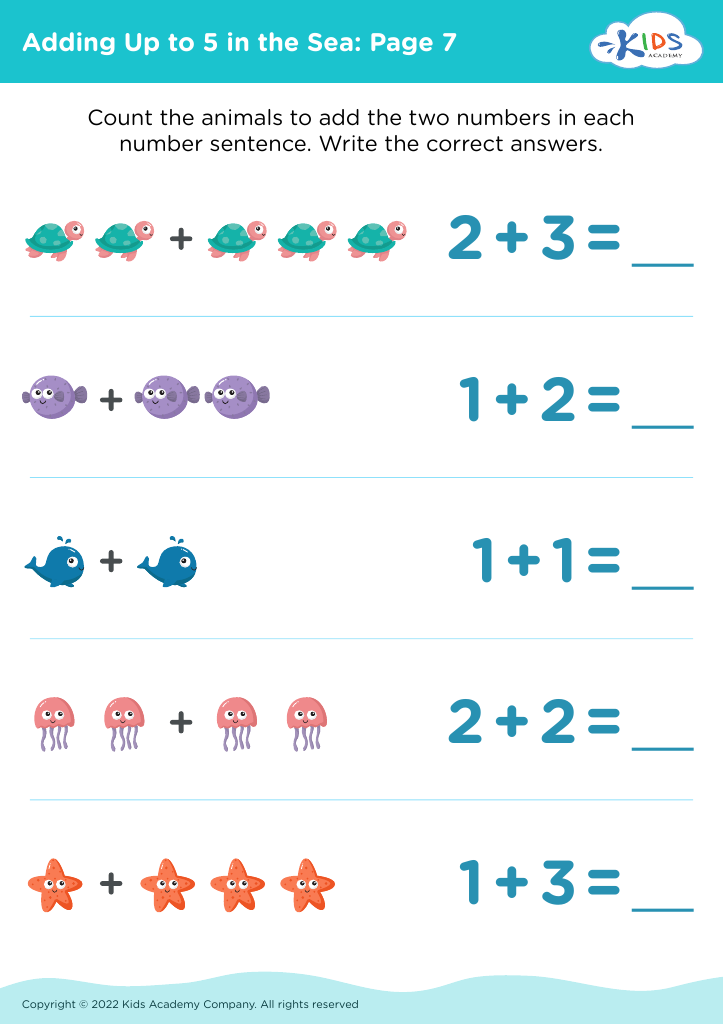
Adding Up to 5 in the Sea: Page 7

Adding Up to 5 in the Sea: Page 7

Adding Up to 5 in the Sea: Page 7
Worksheet
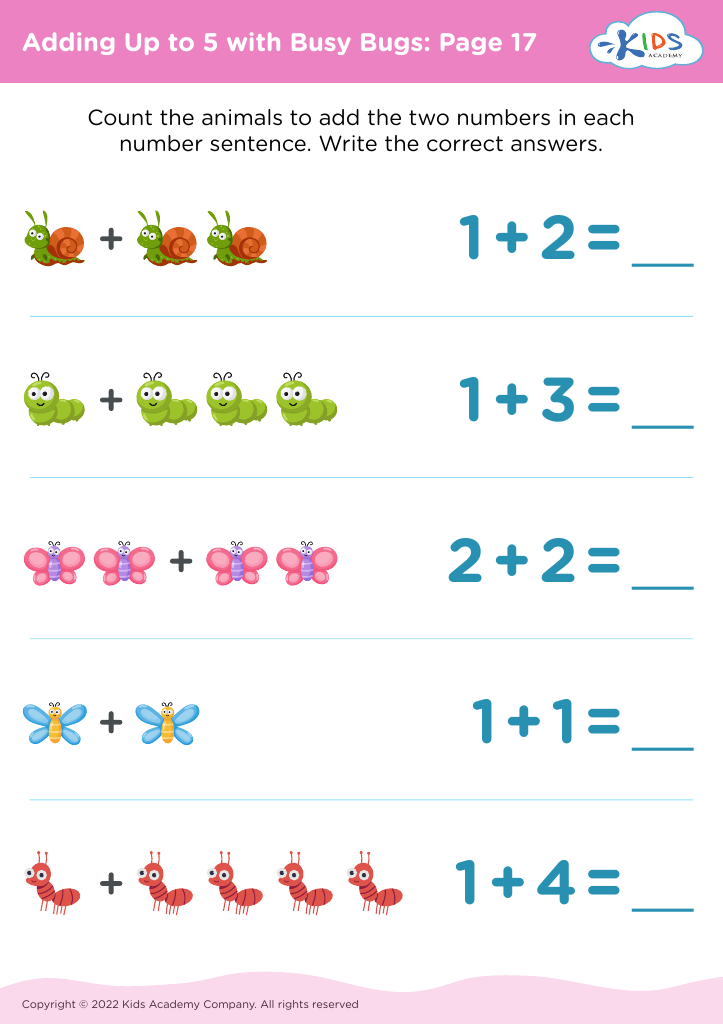
Adding Up to 5 with Busy Bugs: Page 17
Worksheet
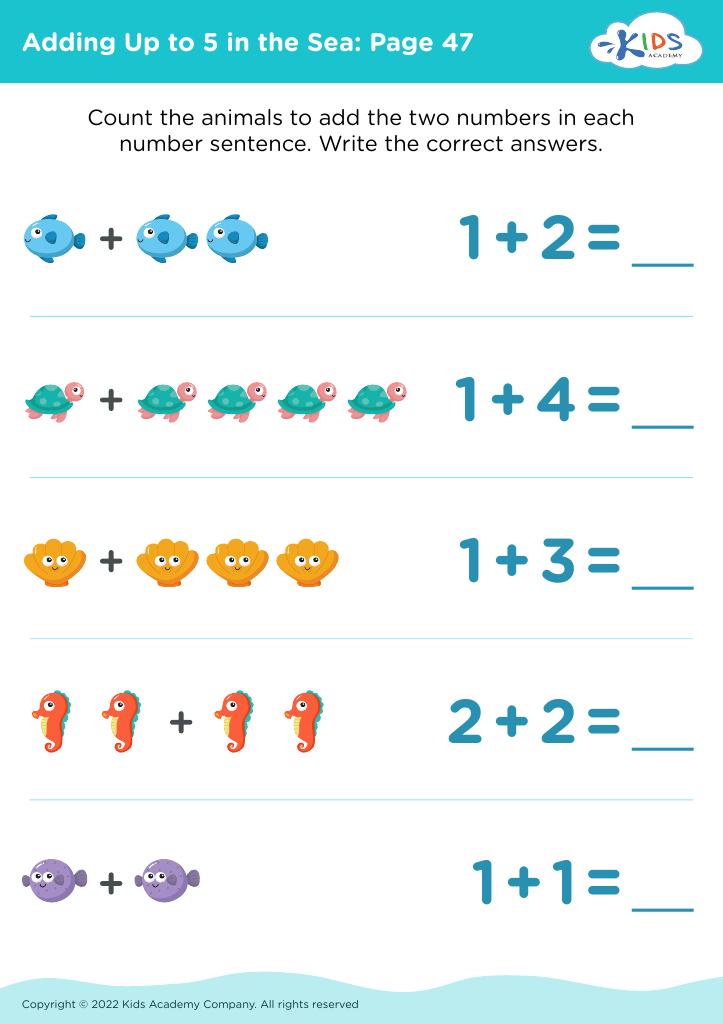
Adding Up to 5 in the Sea: Page 47
Worksheet
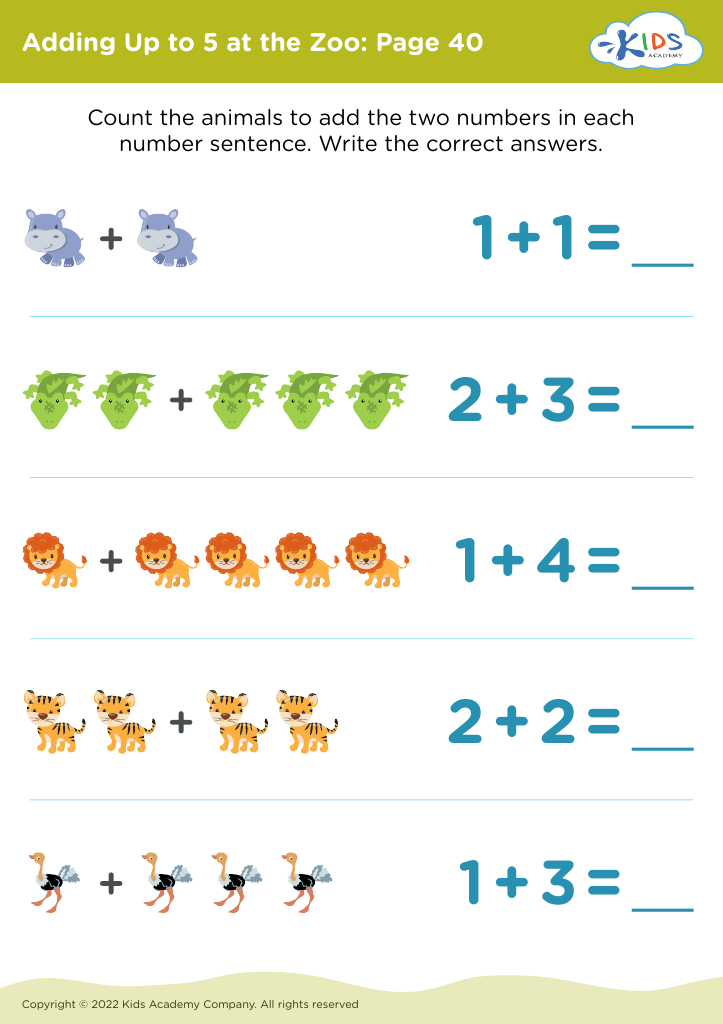
Adding Up to 5 at the Zoo: Page 40
Worksheet
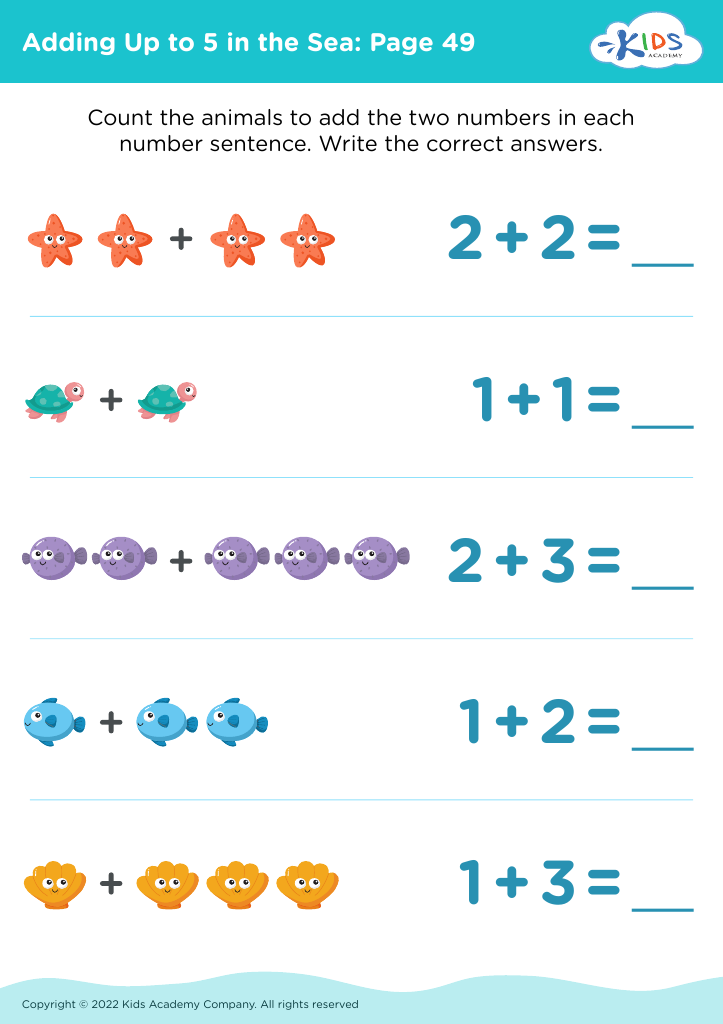
Adding Up to 5 in the Sea: Page 49
Worksheet
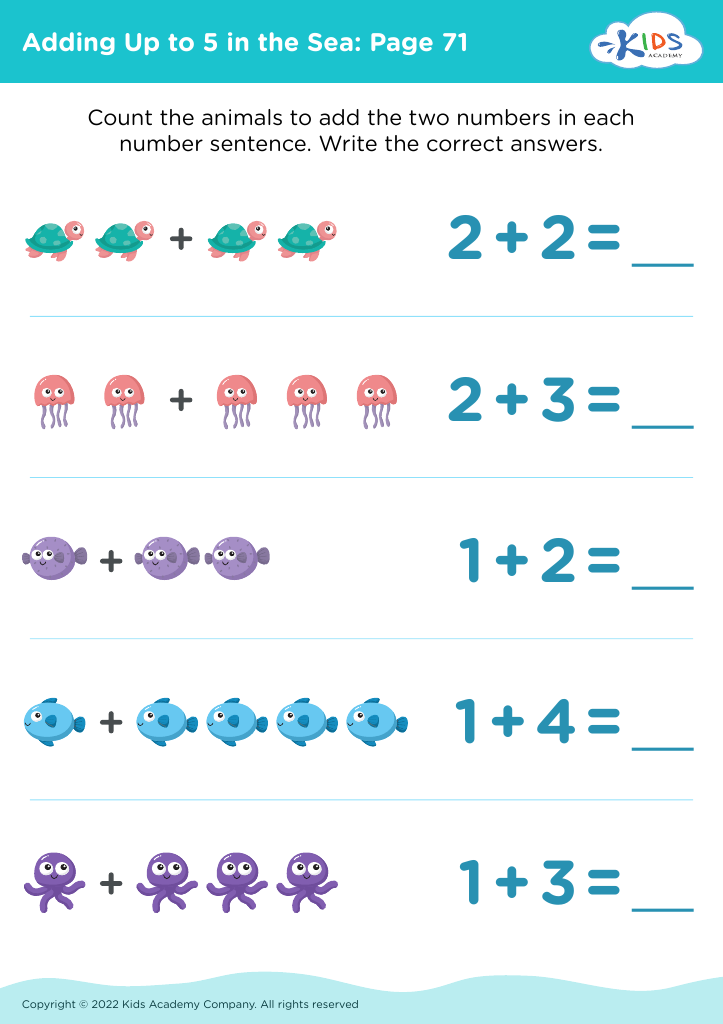
Adding Up to 5 in the Sea: Page 71
Worksheet
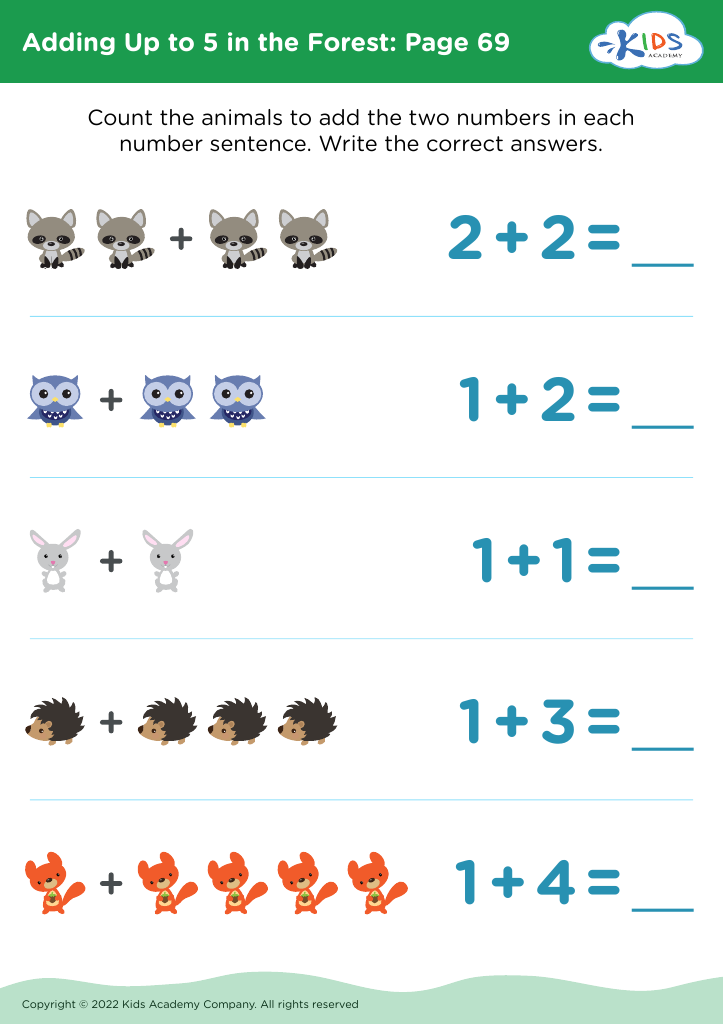
Adding Up to 5 in the Forest: Page 69
Worksheet
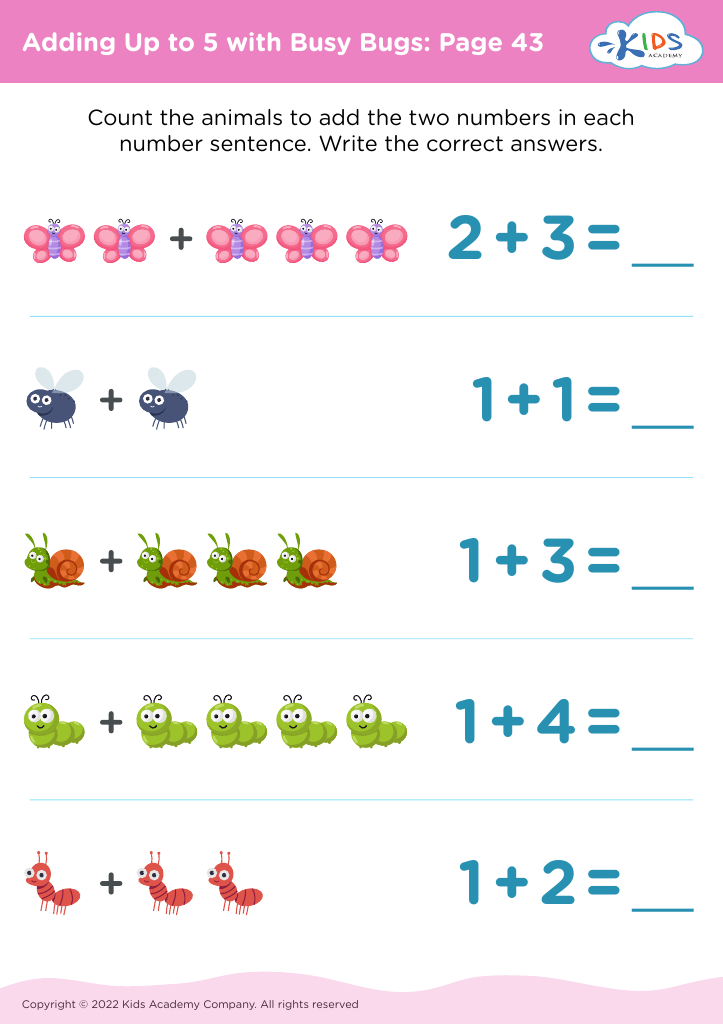
Adding Up to 5 with Busy Bugs: Page 43
Worksheet
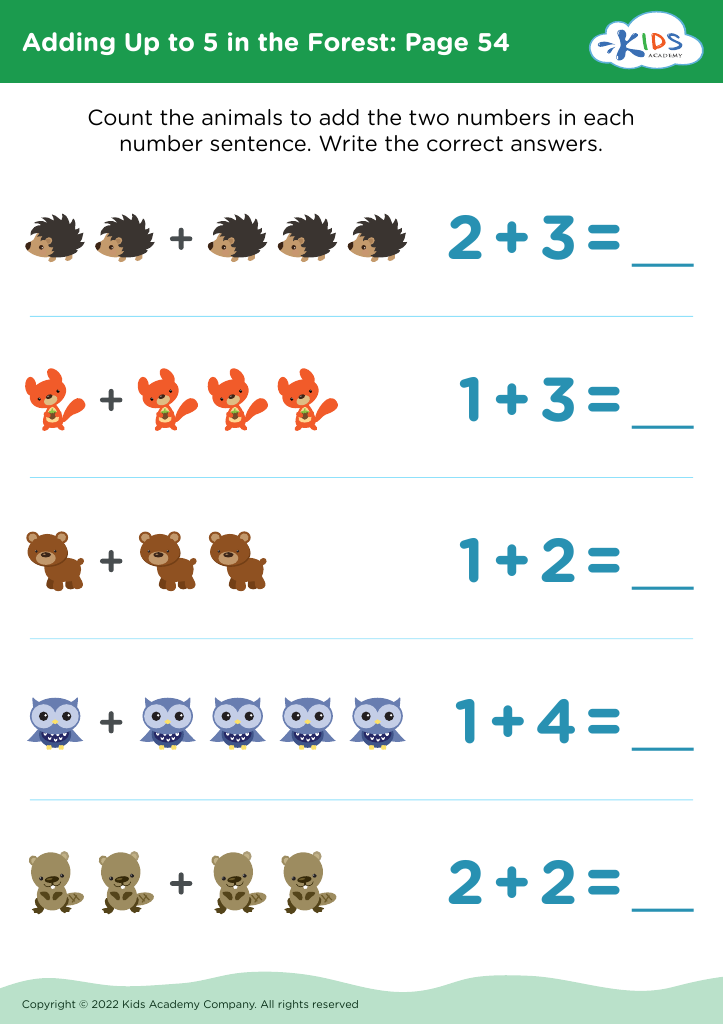
Adding Up to 5 in the Forest: Page 54
Worksheet
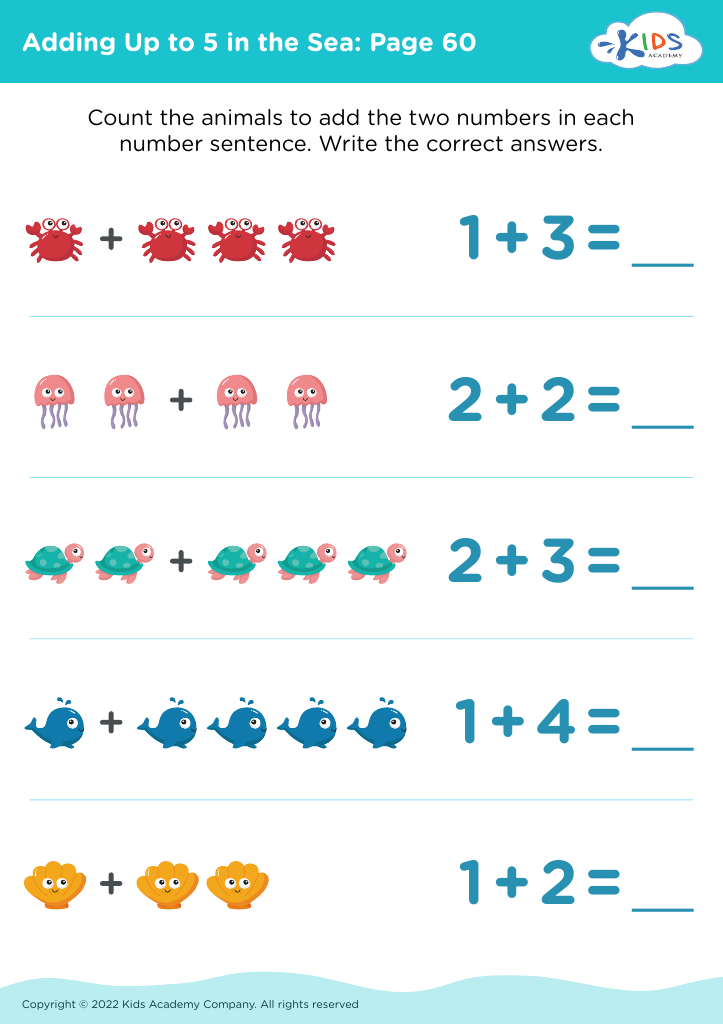
Adding Up to 5 in the Sea: Page 60
Worksheet
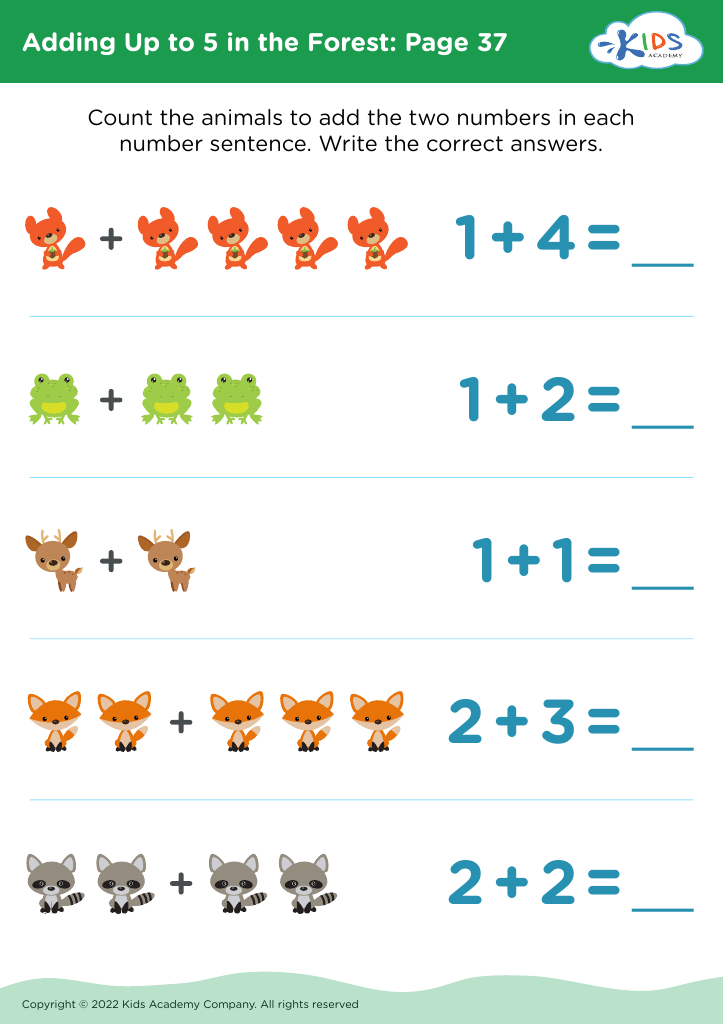
Adding Up to 5 in the Forest: Page 37
Worksheet
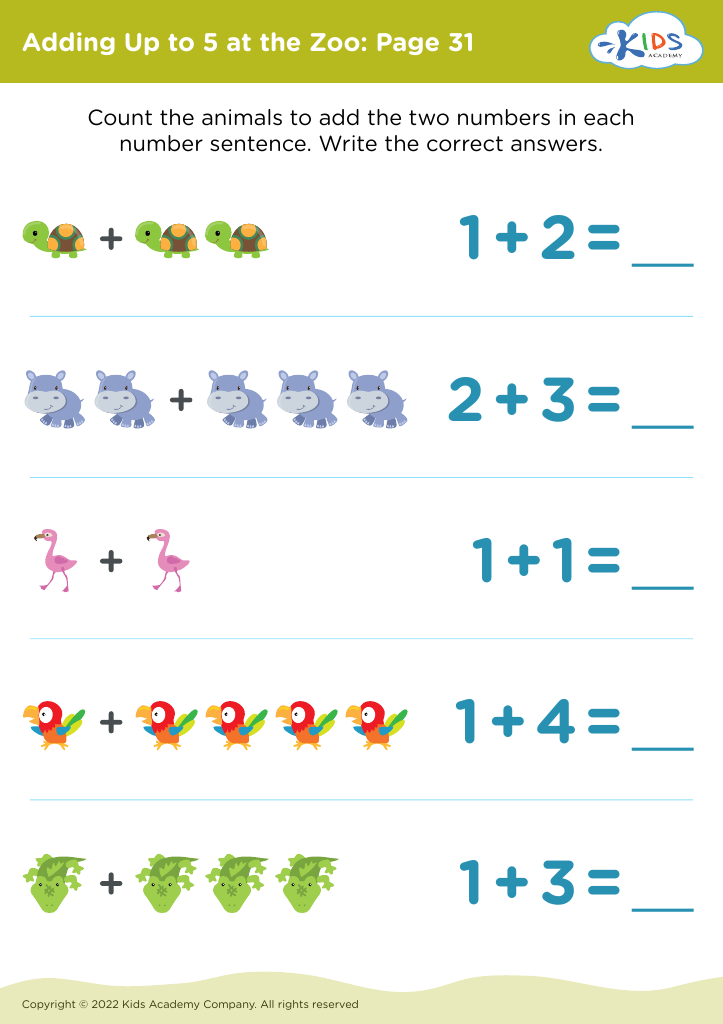
Adding Up to 5 at the Zoo: Page 31
Worksheet
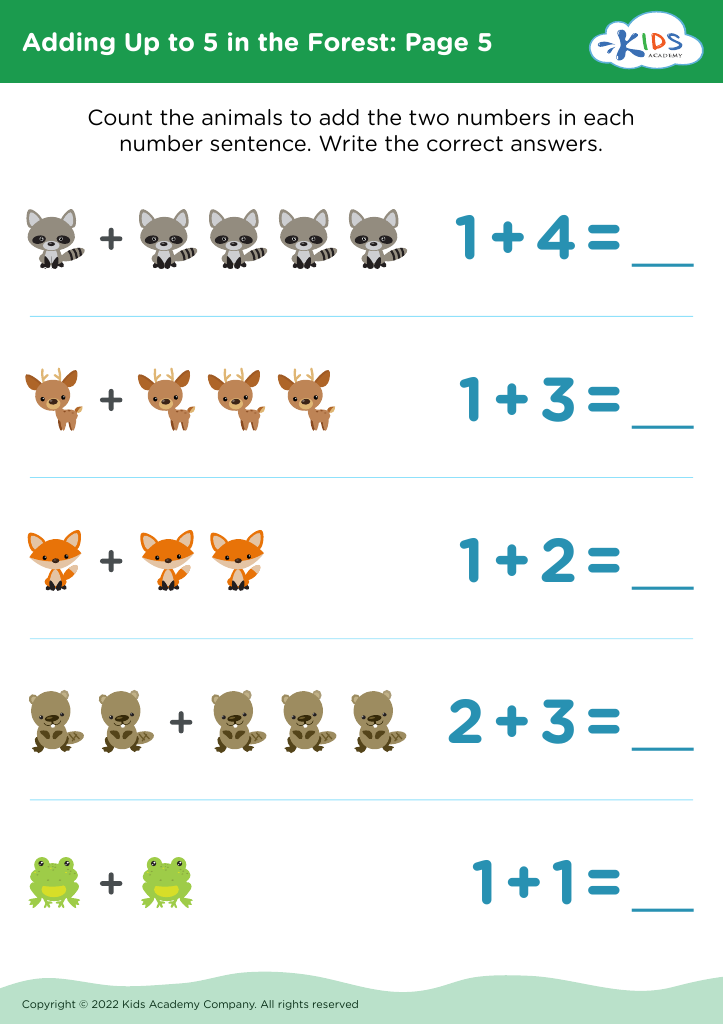
Adding Up to 5 in the Forest: Page 5
Worksheet
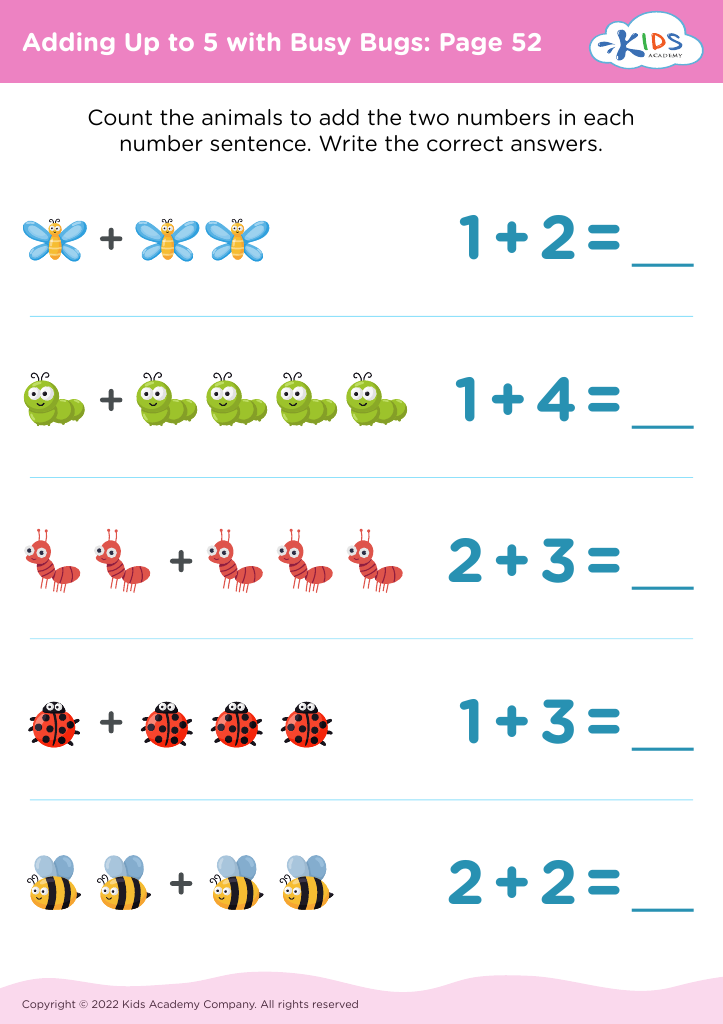
Adding Up to 5 with Busy Bugs: Page 52
Worksheet
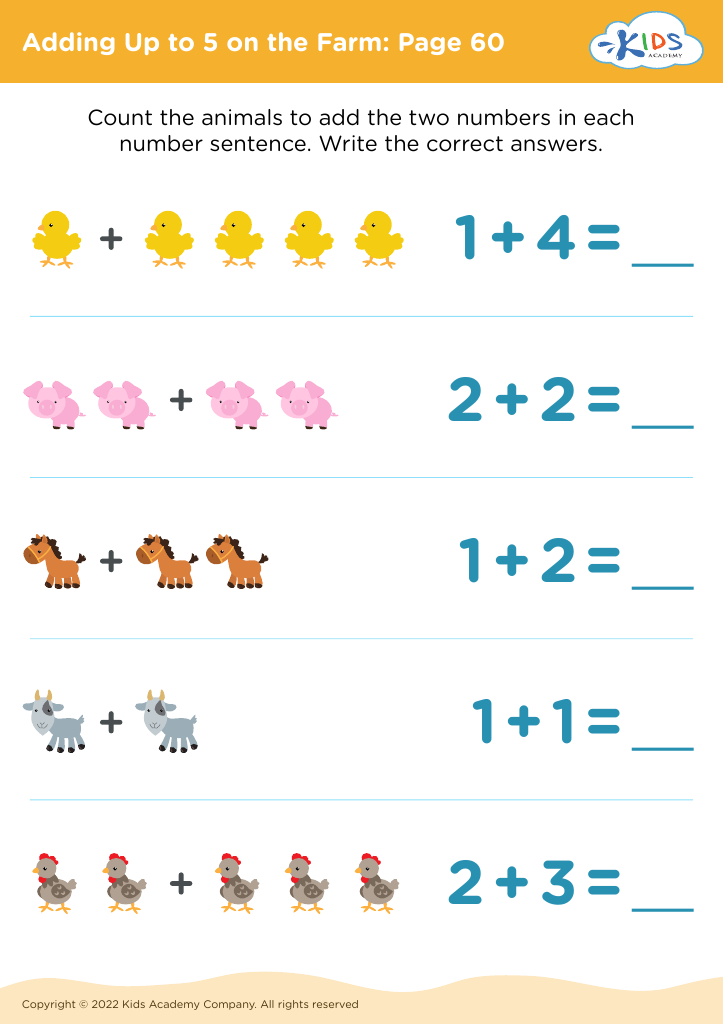
Adding Up to 5 on the Farm: Page 60
Worksheet
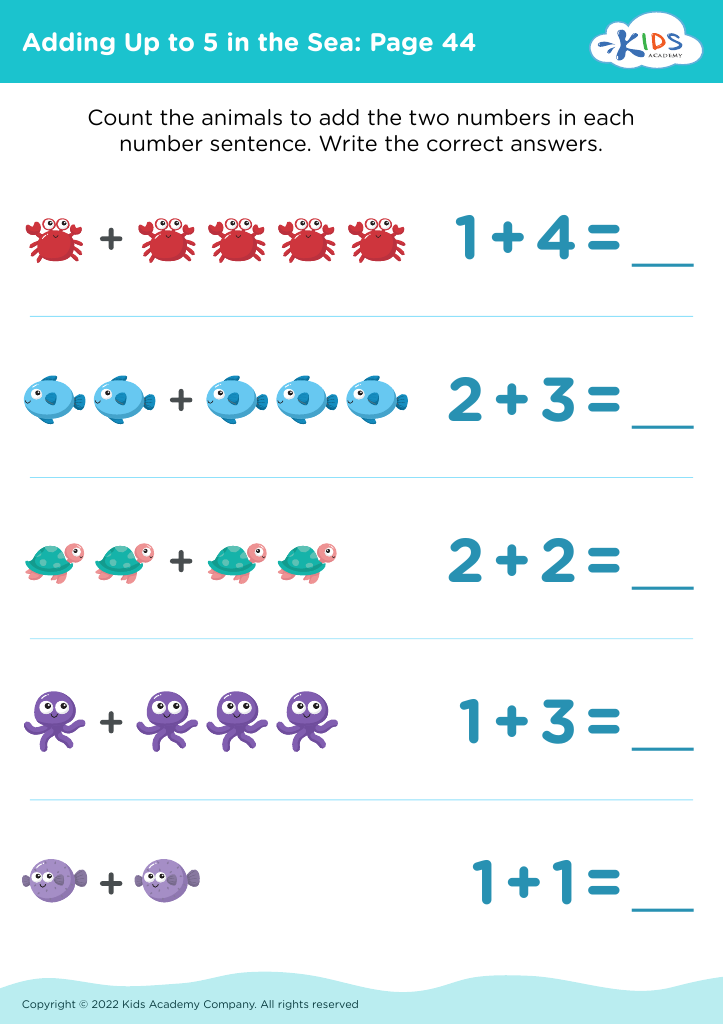
Adding Up to 5 in the Sea: Page 44
Worksheet


... 3 4

Parents and teachers play a crucial role in nurturing cognitive development, especially in foundational skills like adding up to 5 for children aged 5-7. During these formative years, children's brains are incredibly receptive and capable of learning new concepts rapidly. Teaching basic addition not only strengthens their arithmetic skills but also lays the groundwork for more complex mathematical thinking. It helps them understand the concept of numbers, addition, and even introduces them to patterns and sequences.

Early numeracy skills are strongly linked to future academic success. Being able to competently add up to 5 boosts the child's confidence, promotes problem-solving skills, and nurtures logical thinking. These foundational skills are crucial as they transition to higher grades and face more challenging subjects.

Moreover, engaging children in fun and interactive activities that reinforce these concepts can create a positive learning environment that fosters curiosity and enthusiasm for math. Simple activities like using physical objects (counters, toys), number games, and storytelling involving numbers make learning enjoyable and relevant.

Involving parents in this process adds an extra layer of support, as learning extends from school to home, ensuring consistent practice and reinforcement. In sum, ensuring children grasp basic addition by this age not only enriches their cognitive development but also sets a solid foundation for lifelong learning and intellectual growth.