Basic Math Skills Adding up to 50 Misc Worksheets for Ages 5-7
5 filtered results
-
From - To
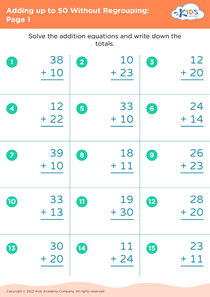
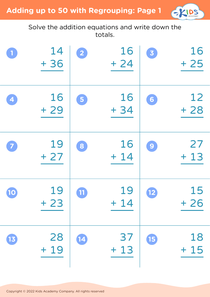
Welcome to our "Basic Math Skills: Adding Up to 50 Misc Worksheets" designed specifically for children aged 5-7! This engaging collection of worksheets offers a fun and interactive way to help young learners develop essential math skills. Through varied exercises that reinforce addition concepts, kids will gain confidence while practicing addition problems up to 50. Our worksheets cater to different learning styles, ensuring every child can enjoy math while enhancing their problem-solving abilities. Perfect for classroom use or at-home practice, these resources provide a strong foundation in basic math skills, encouraging a love for learning from an early age. Start counting today!
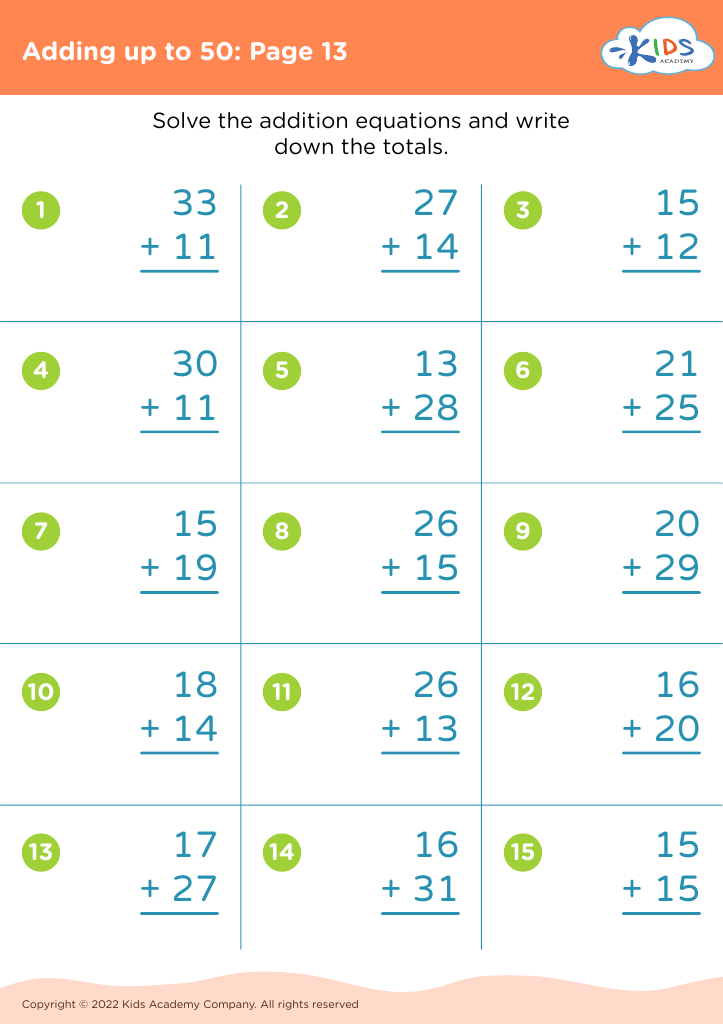
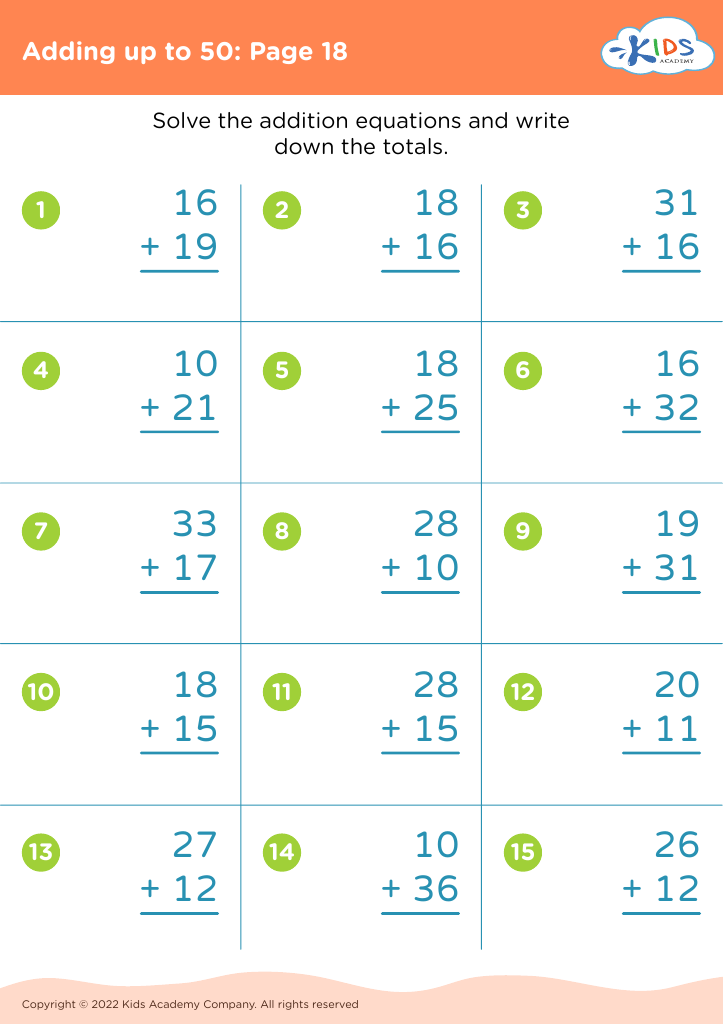
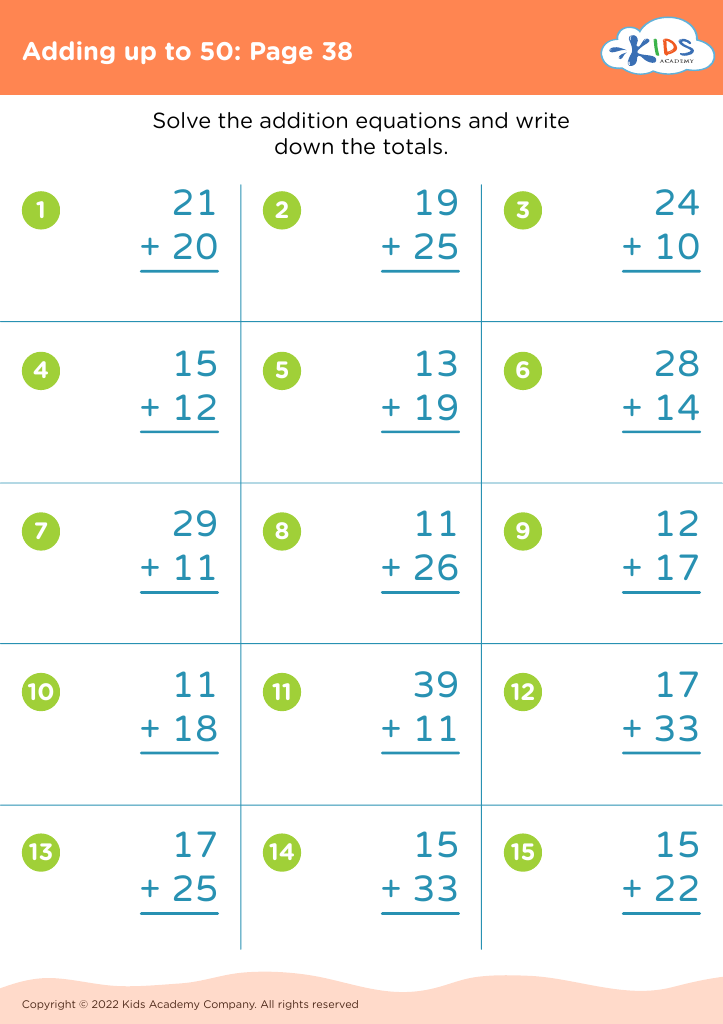
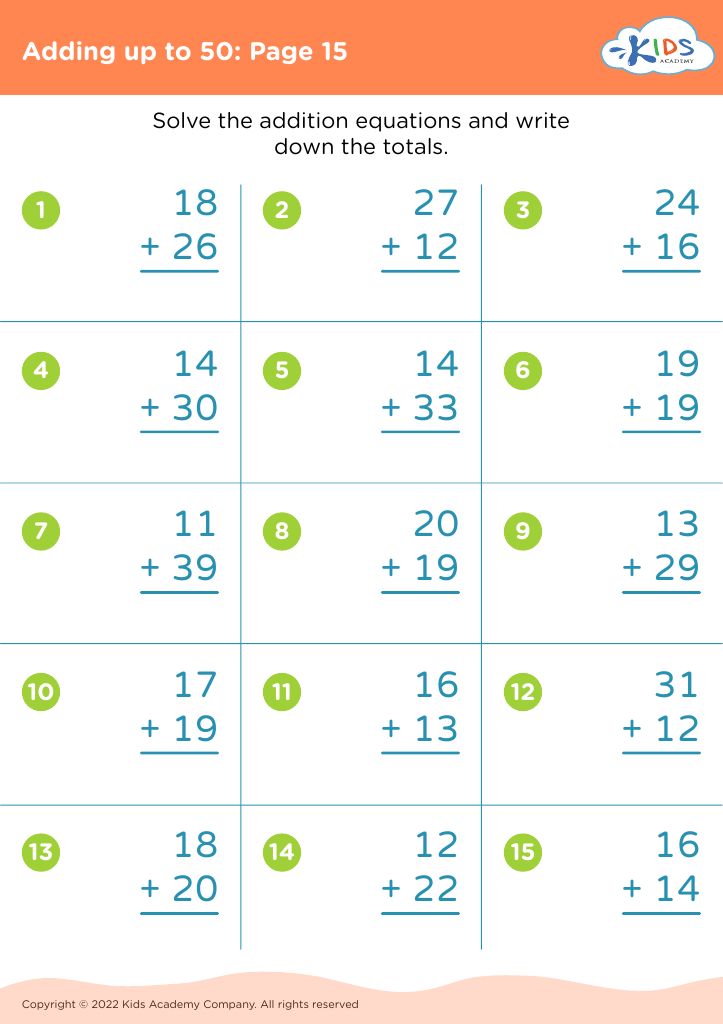
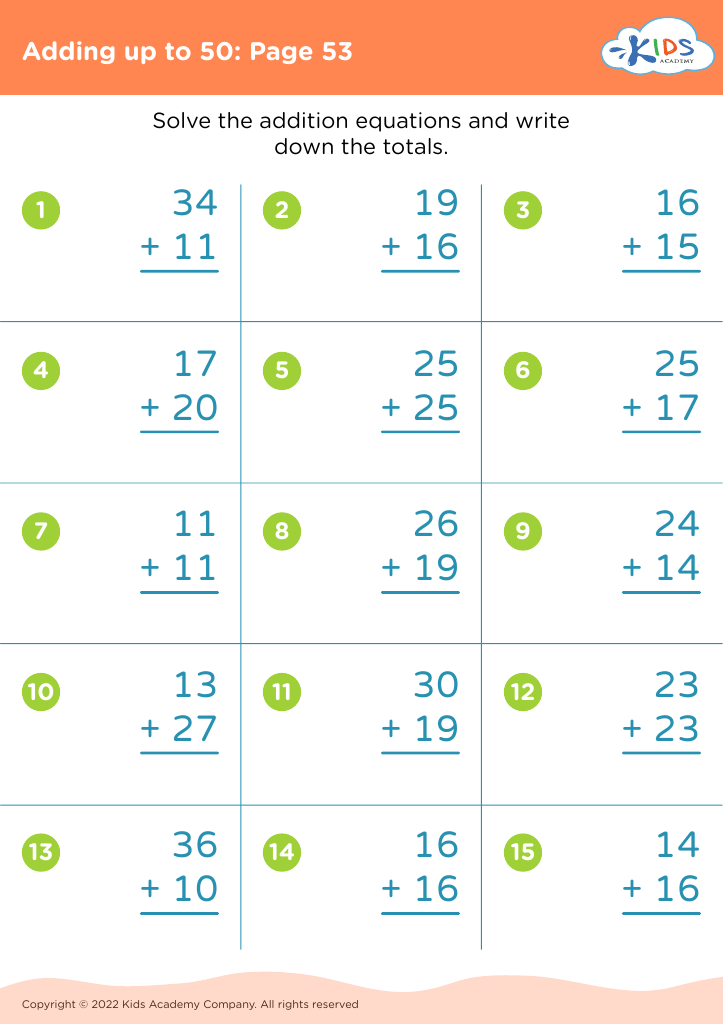


Basic math skills are crucial for children aged 5-7, particularly when it comes to addition up to 50. At this developmental stage, kids are laying the groundwork for their critical thinking and problem-solving abilities. Mastery of basic addition paves the way for more complex concepts in mathematics, fostering confidence and a positive attitude towards learning.
When children can smoothly add numbers up to 50, they build a solid understanding of number sense, which is essential for daily life. This skill aids them in understanding quantities, making sense of money, and engaging in real-world problem-solving scenarios. Proficiency in adding lays the foundation for future mathematical concepts, including subtraction, multiplication, and even early algebra.
Furthermore, parents and teachers serve a significant role in nurturing these skills. Engaging children with fun, interactive methods—such as games, stories, and practical examples—can make learning math enjoyable and less daunting. Encouraging a curious and exploratory mindset around numbers helps demystify math and motivates children to embrace challenges.
By nurturing basic math competencies, parents and teachers are investing in children’s intellectual growth and helping them develop essential skills that can be beneficial throughout their educational journey and in their everyday lives.