Fraction simplification Adding up to 50 Misc Worksheets for Ages 5-7
5 filtered results
-
From - To
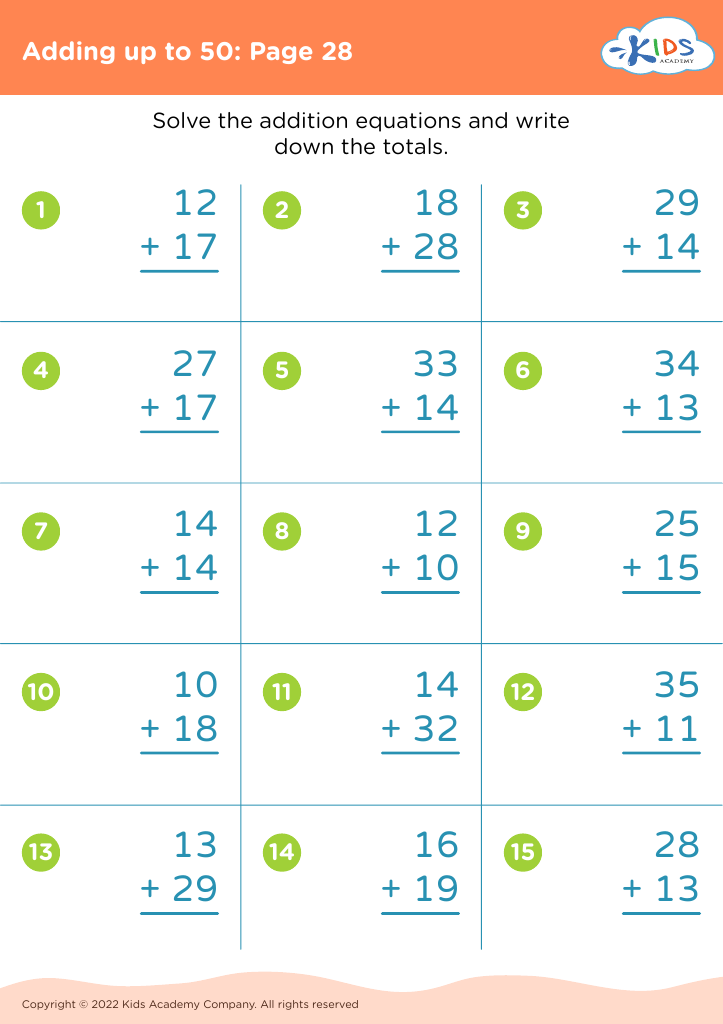
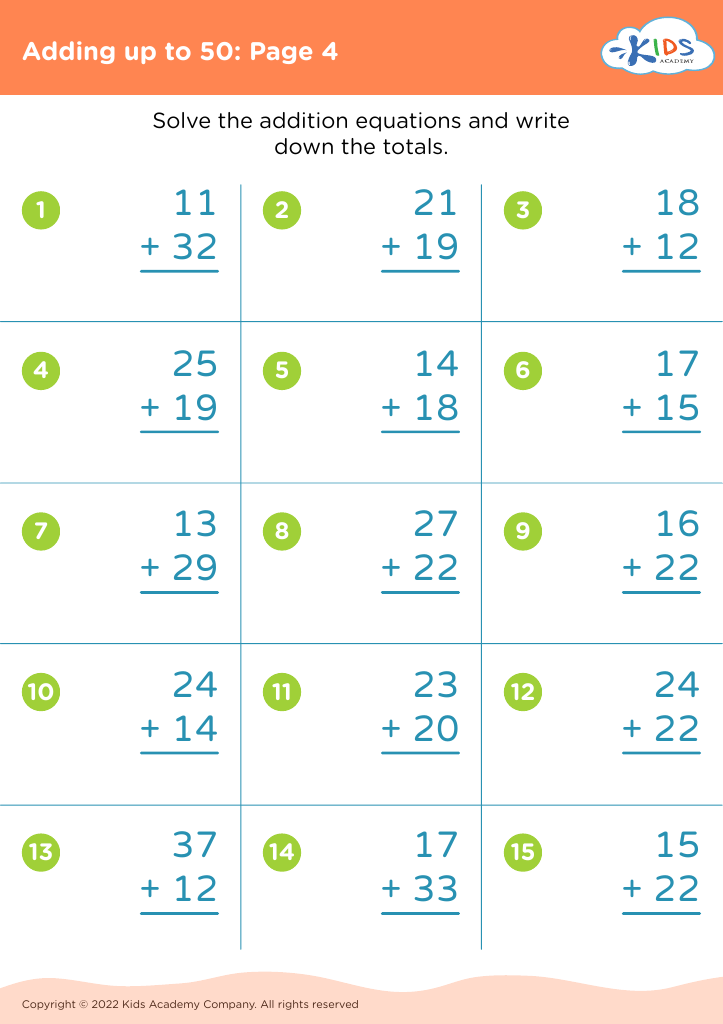
Enhance your child's math skills with our "Fraction Simplification Adding Up to 50 Misc Worksheets" curated for children aged 5-7. These engaging worksheets provide a fun and interactive way for young learners to grasp the concept of fractions while practicing addition skills up to 50. Each worksheet is designed to simplify fractions in an easily understandable format, helping kids build a strong mathematical foundation. Ideal for home or classroom use, these resources encourage independent learning and reinforce essential skills through colorful illustrations and relatable examples. Explore our collection and watch your child's confidence in math grow while enjoying the learning process!
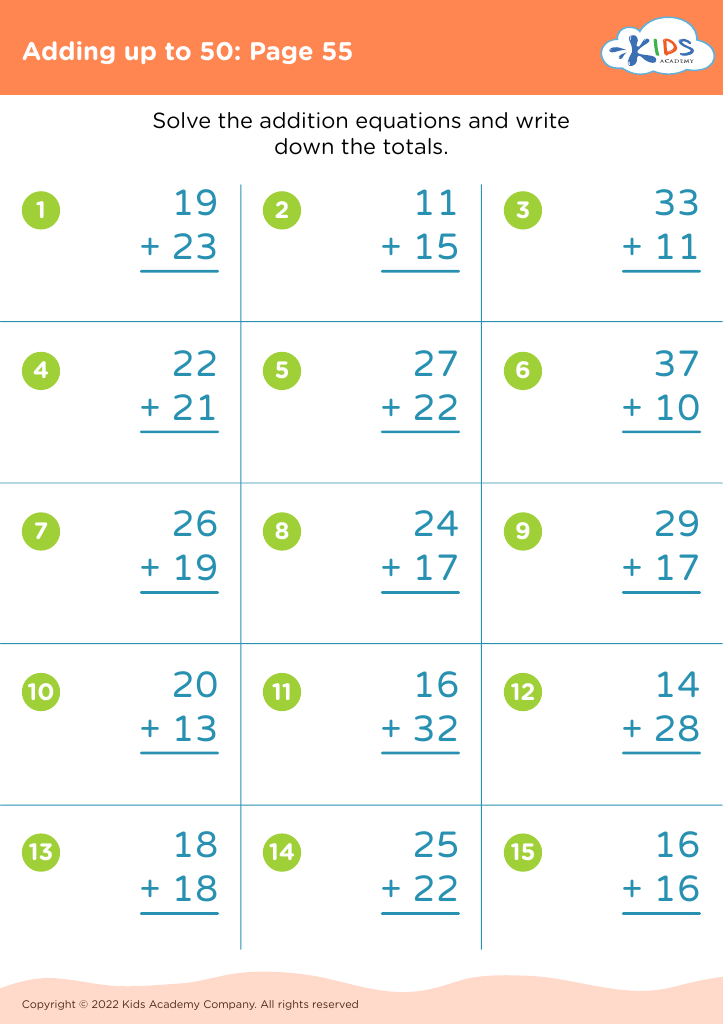
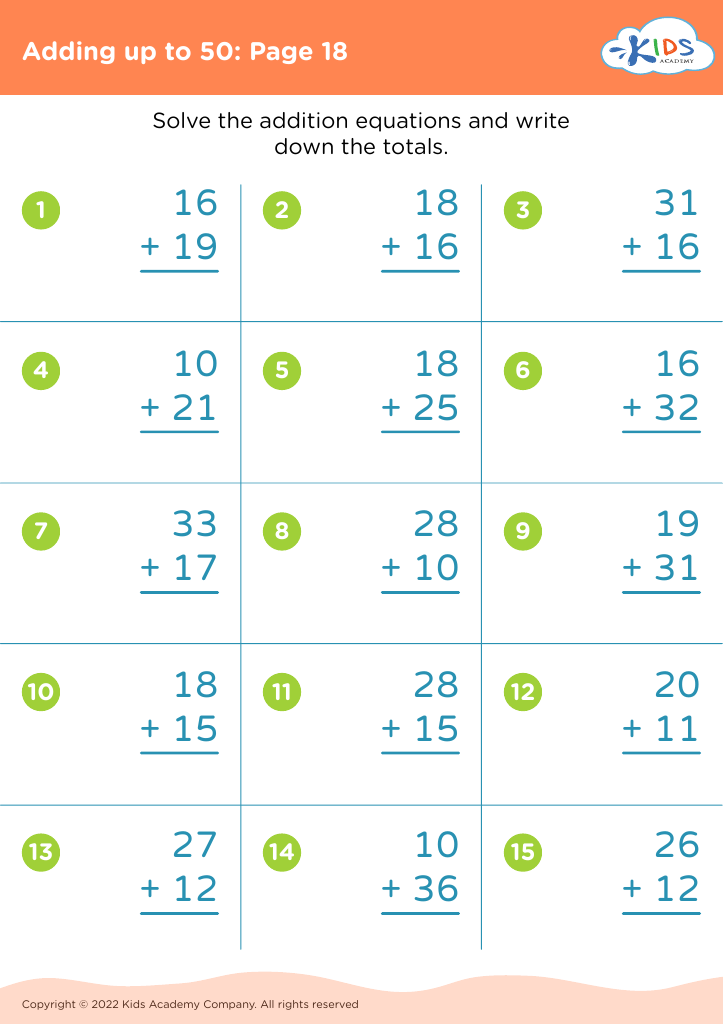
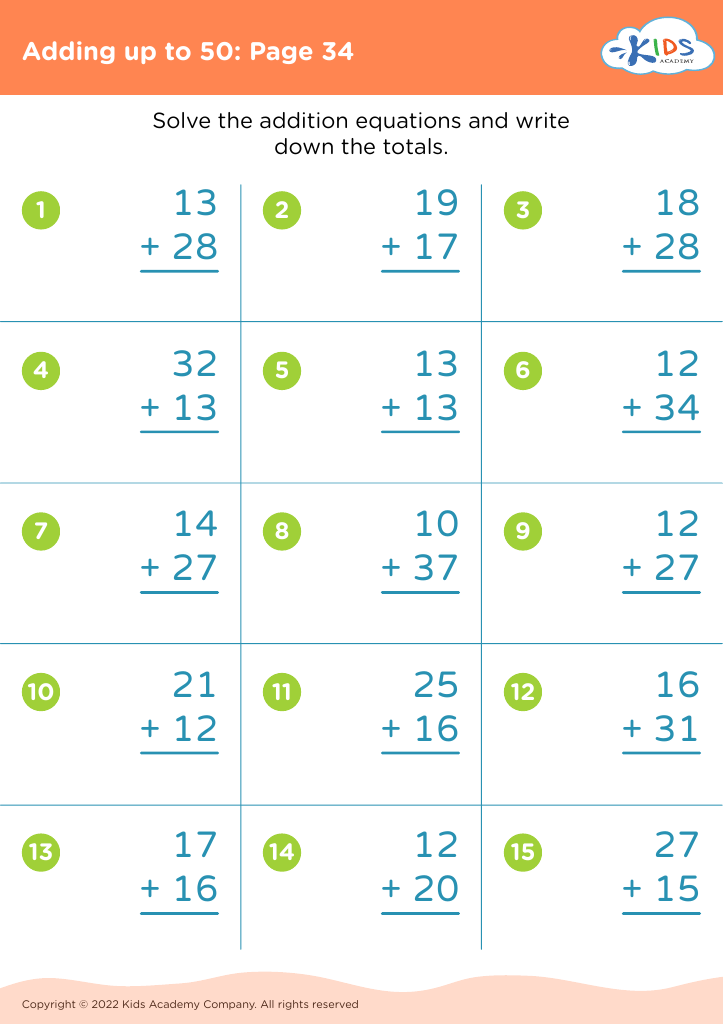


Understanding fraction simplification and addition is crucial for children aged 5-7 as it lays a foundation for essential mathematical skills. At this age, children are starting to engage with basic math concepts, and fractional knowledge encourages critical thinking. When they learn to simplify fractions, they grasp the idea of equivalency and proportional reasoning, fostering a deeper comprehension of numbers.
Parents and teachers should care because mastering these skills can lead to increased confidence in math. Simplification helps students recognize patterns, making problem-solving easier as they progress to more complex concepts in later grades. Additionally, teaching basic fraction addition supports collaboration and social learning during group activities, bolstering communication skills.
Moreover, integrating fraction concepts, like visual aids and hands-on experiences, taps into various learning styles, ensuring all students are engaged. This emphasis on foundational math helps prepare children for everyday scenarios, ultimately contributing to their academic success and fostering a lifelong appreciation for learning.
Involving parents in supportive math activities reinforces skills at home, promoting a positive math culture. Parents and teachers collaborating on fractional learning will strengthen the child's development, setting them up for success in future mathematical endeavors.