Understanding fractions Adding up to 50 Misc Worksheets for Ages 5-7
17 filtered results
-
From - To
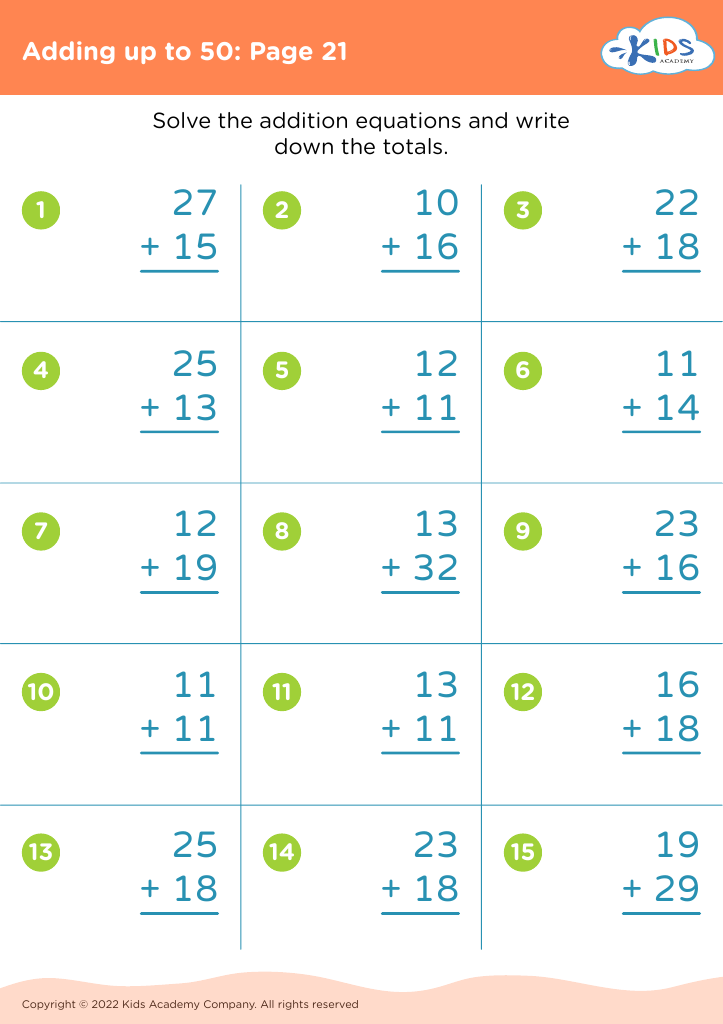
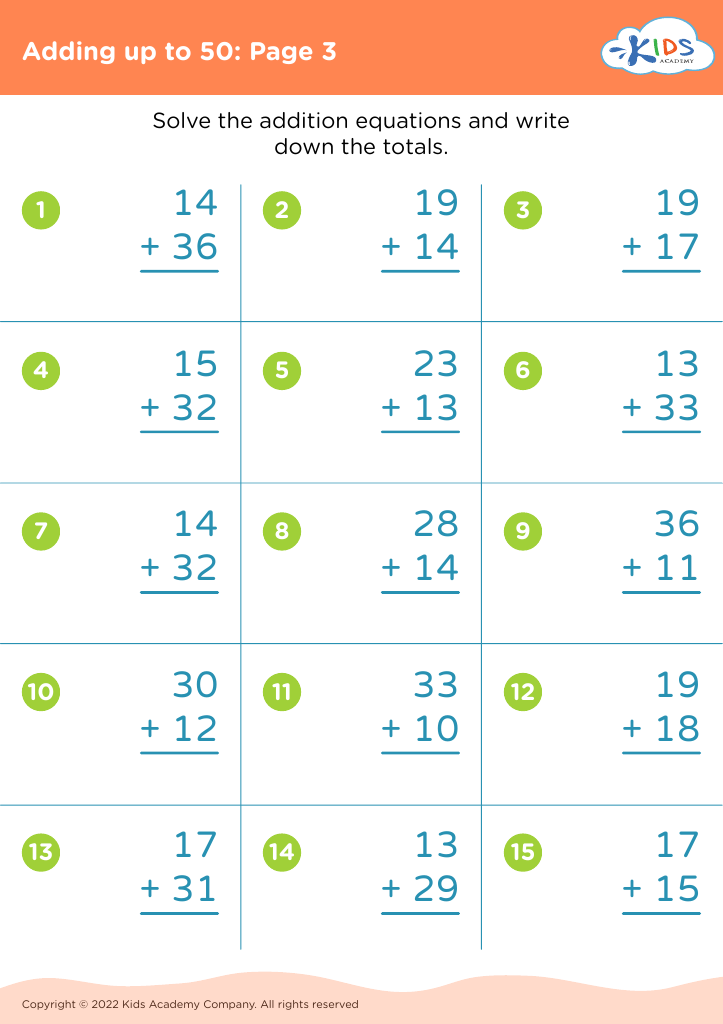
Discover our engaging “Understanding Fractions: Adding Up to 50” worksheets, specially designed for children aged 5 to 7. These resources introduce young learners to the world of fractions in a fun and interactive way. With colorful visuals and relatable examples, your child will practice identifying, comparing, and adding fractions while working within the context of numbers up to 50. Our diverse range of exercises promotes critical thinking and enhances math skills foundational for future learning. perfect for at-home practice or classroom activities, these worksheets make math exciting and accessible for young minds. Start your child’s journey in mastering fractions today!
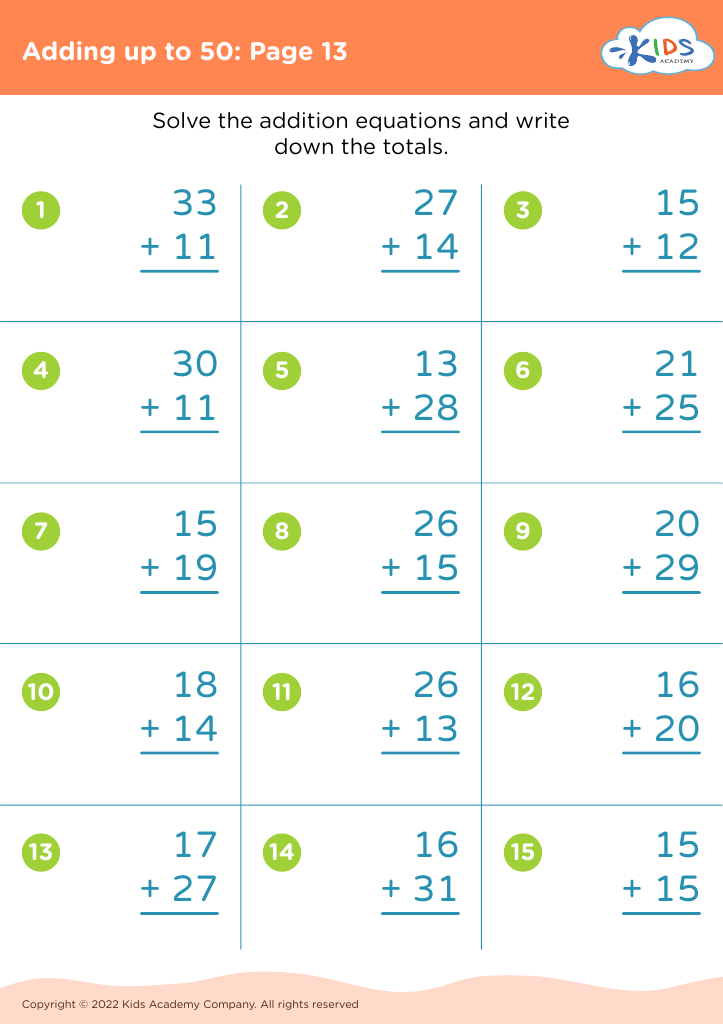
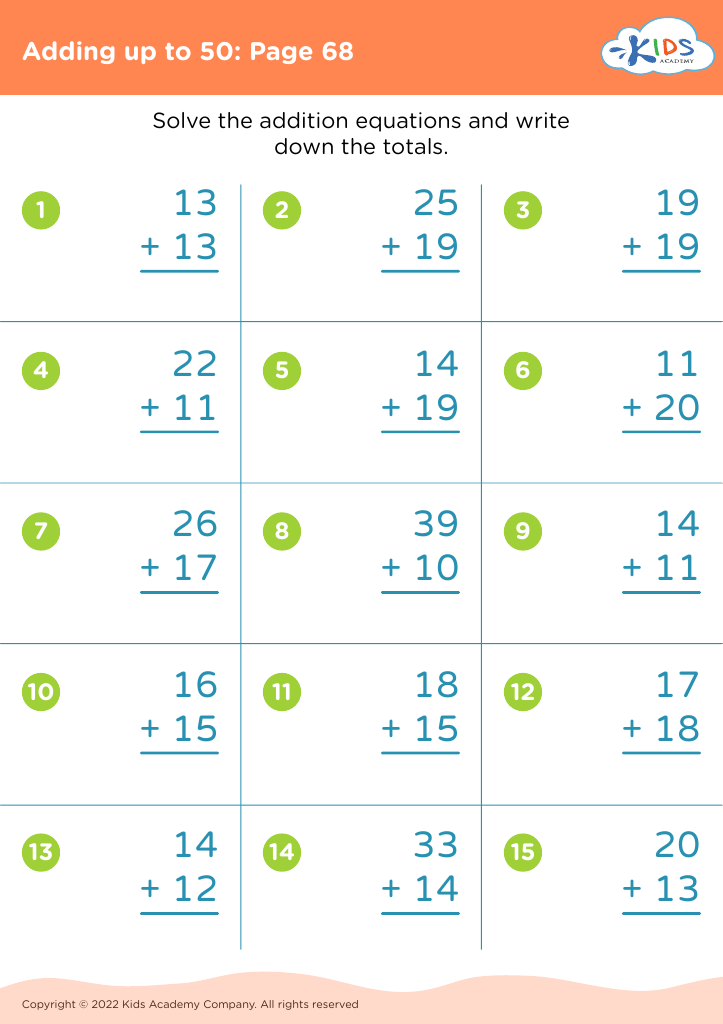
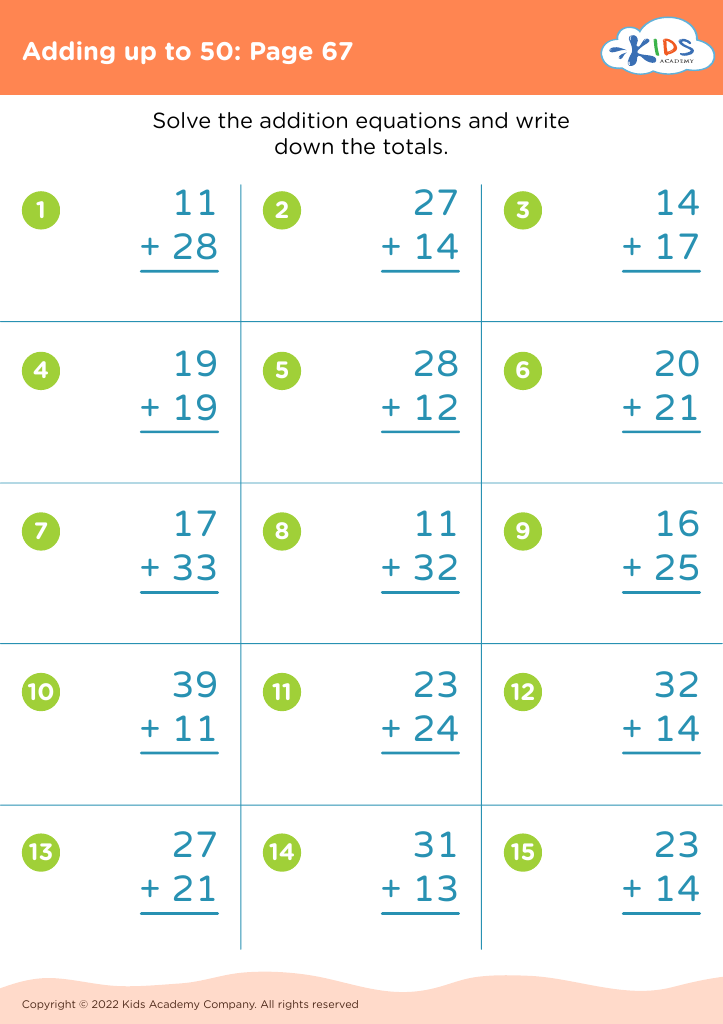
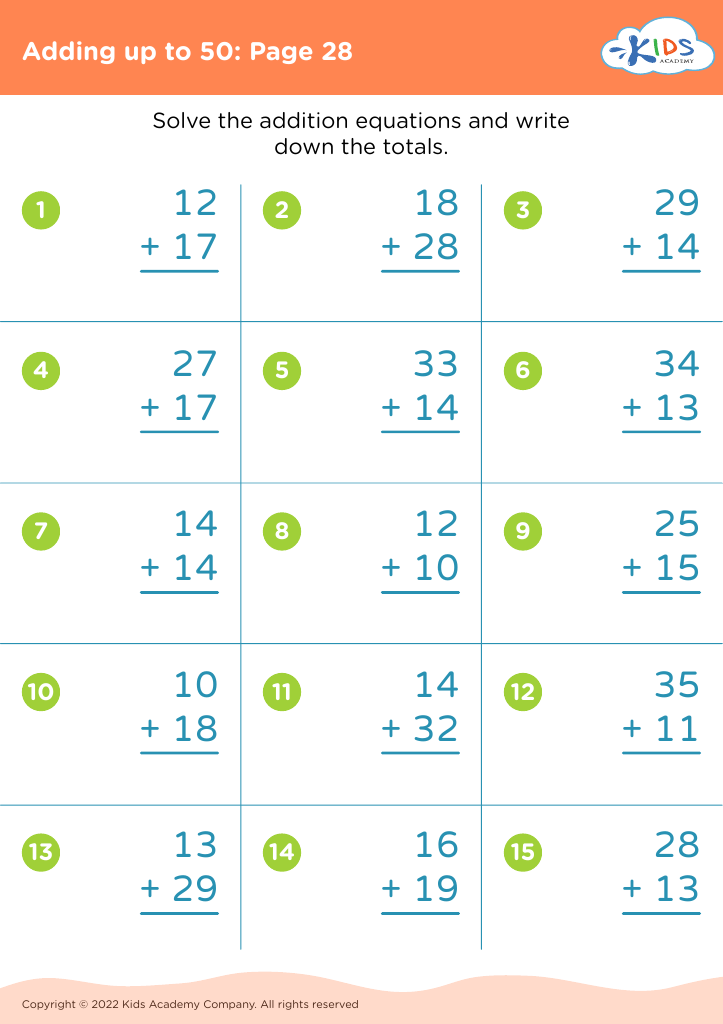
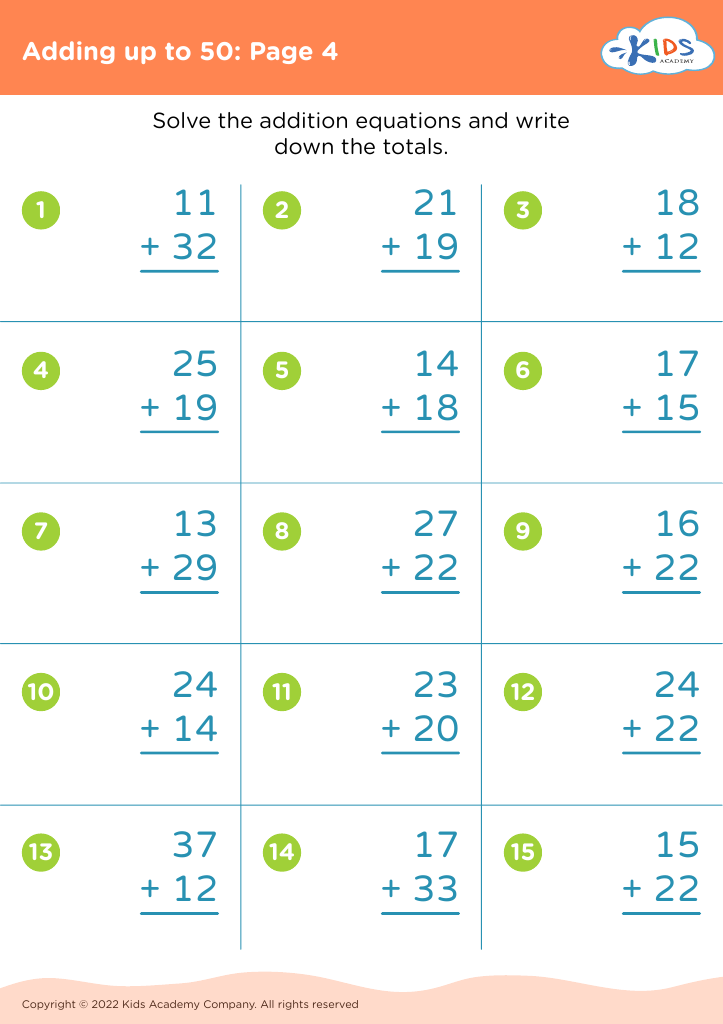
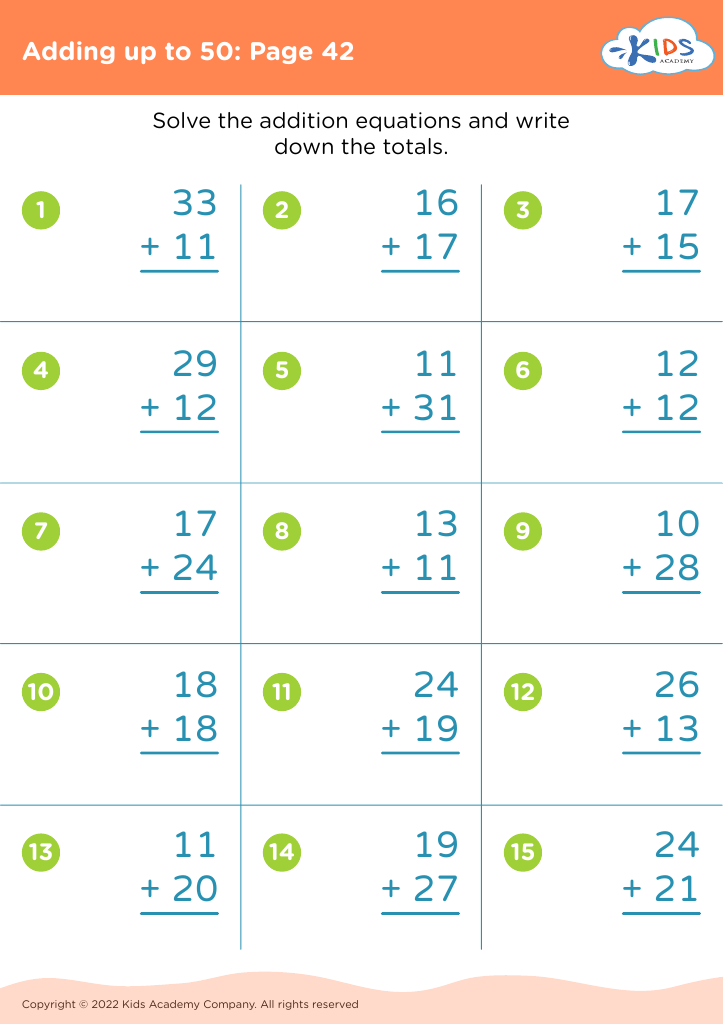
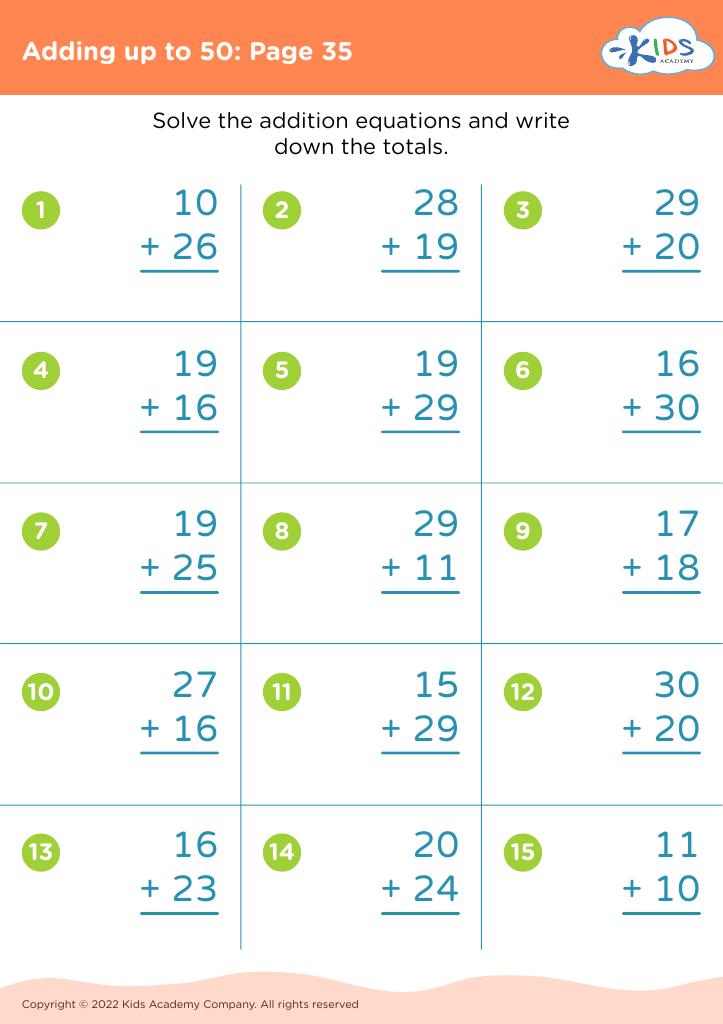
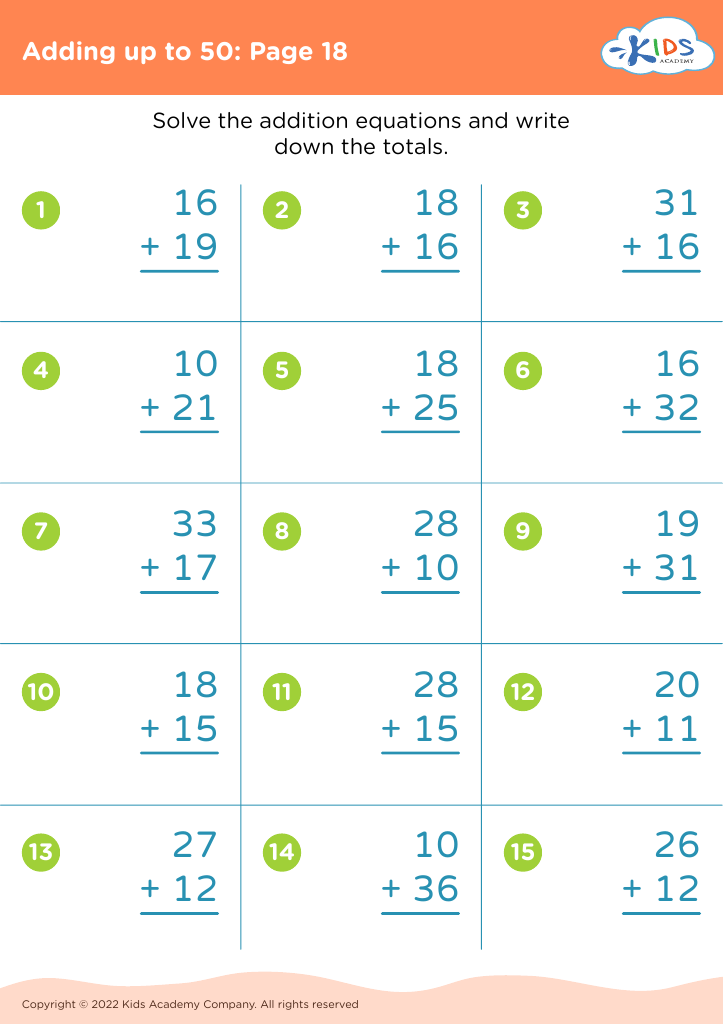
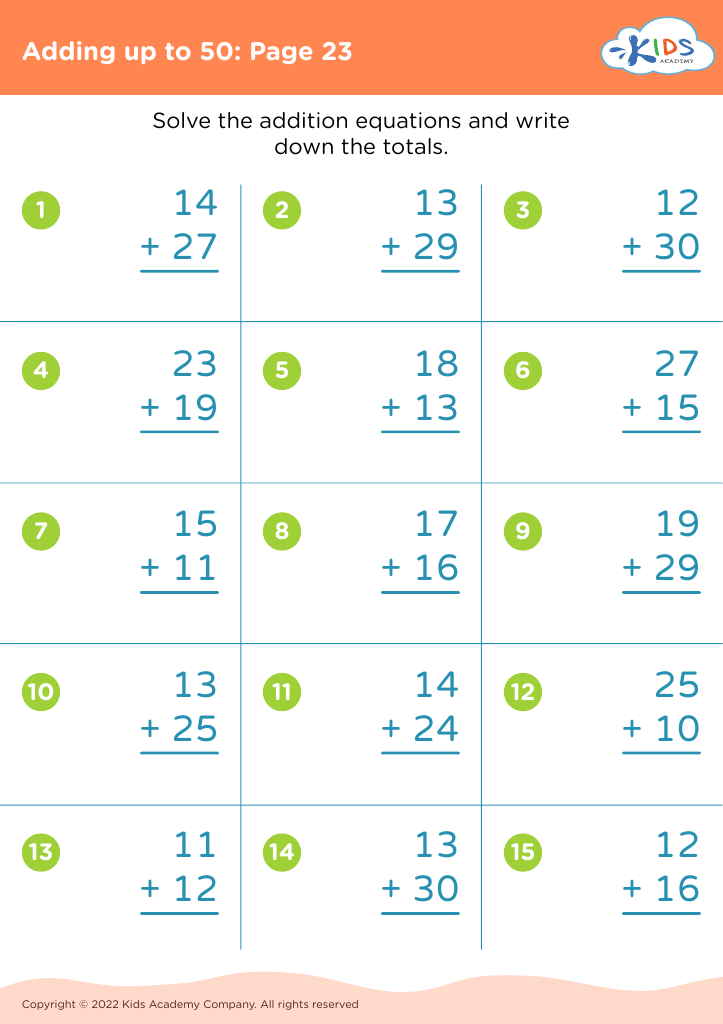
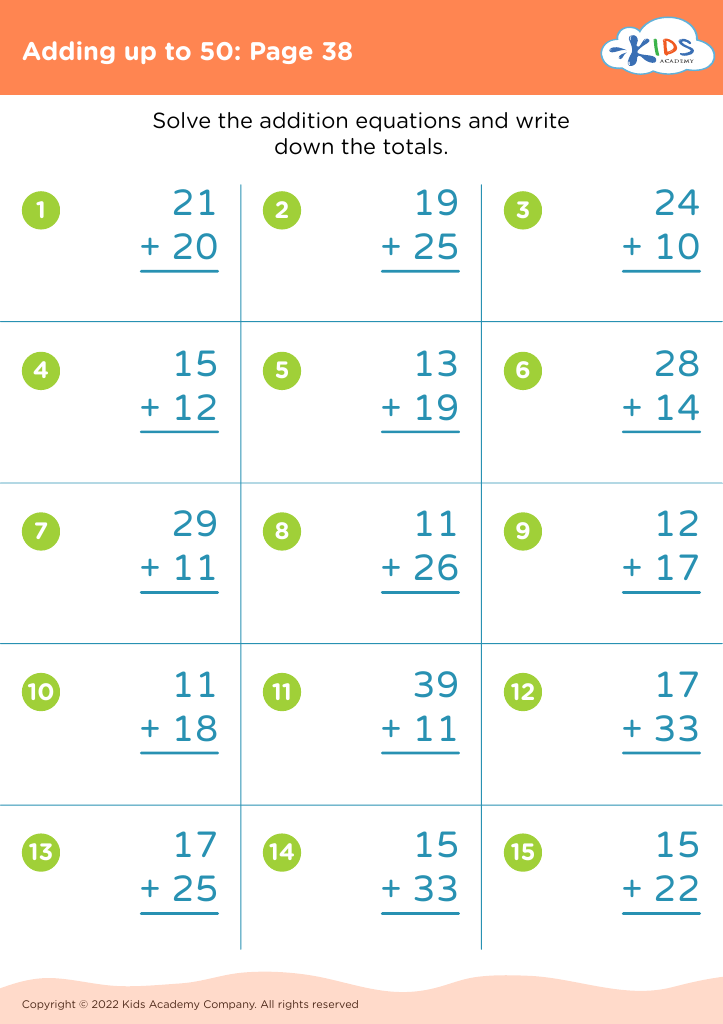
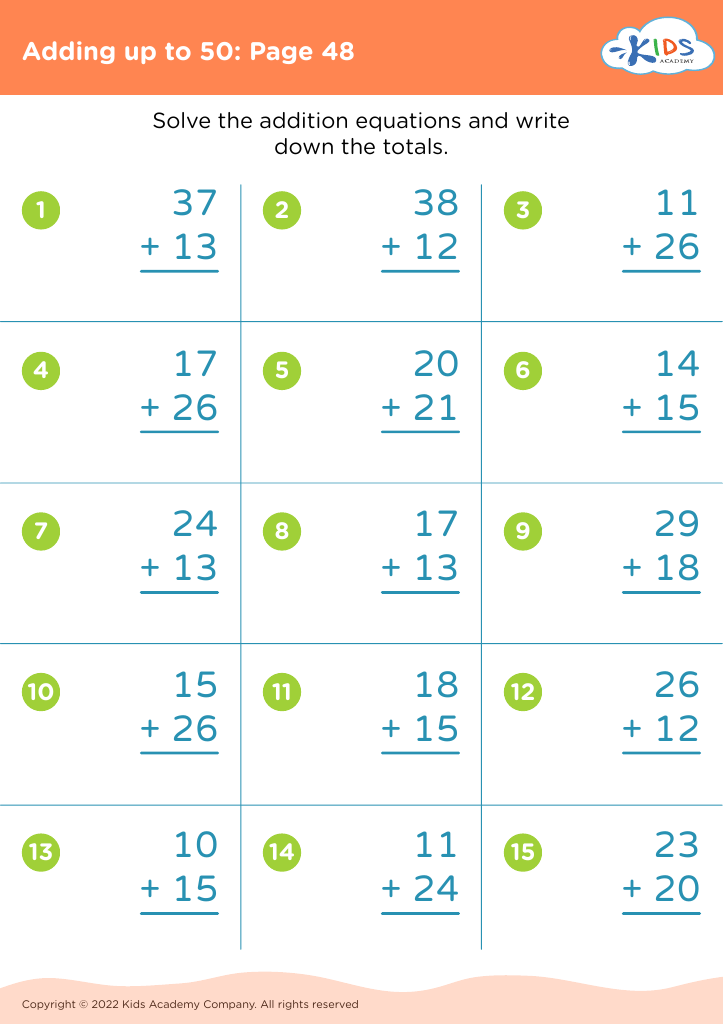
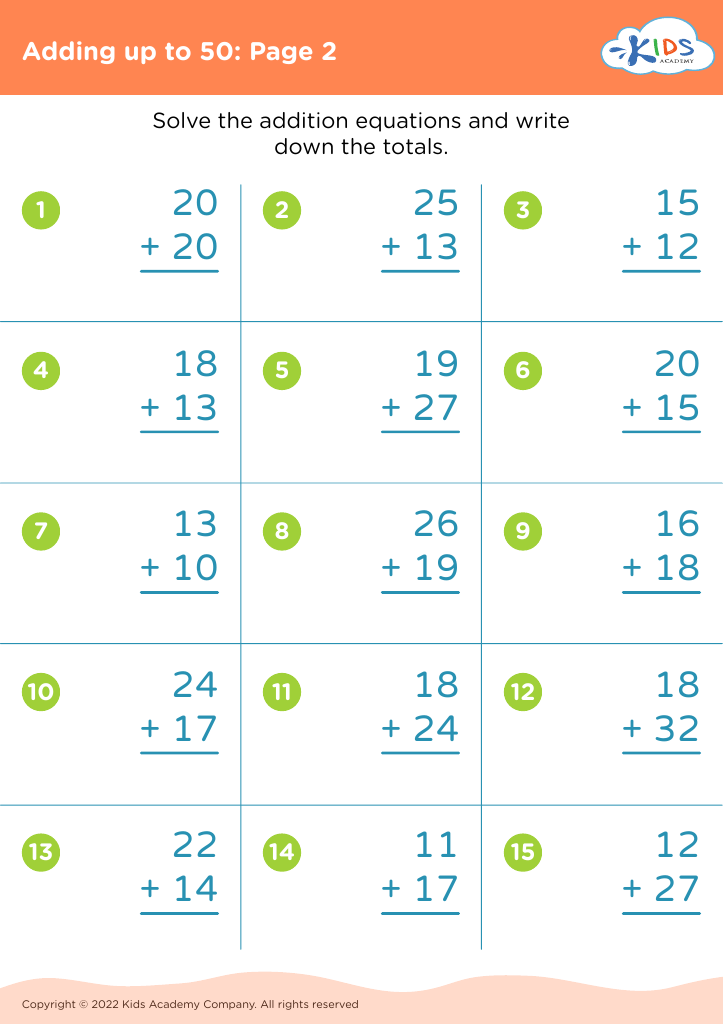
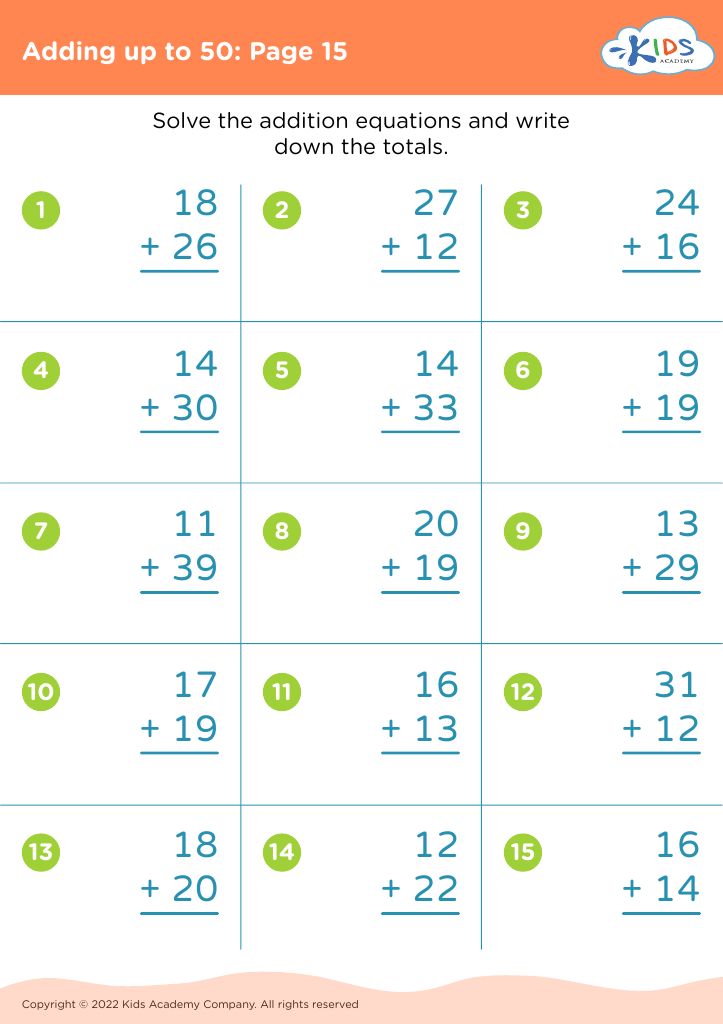
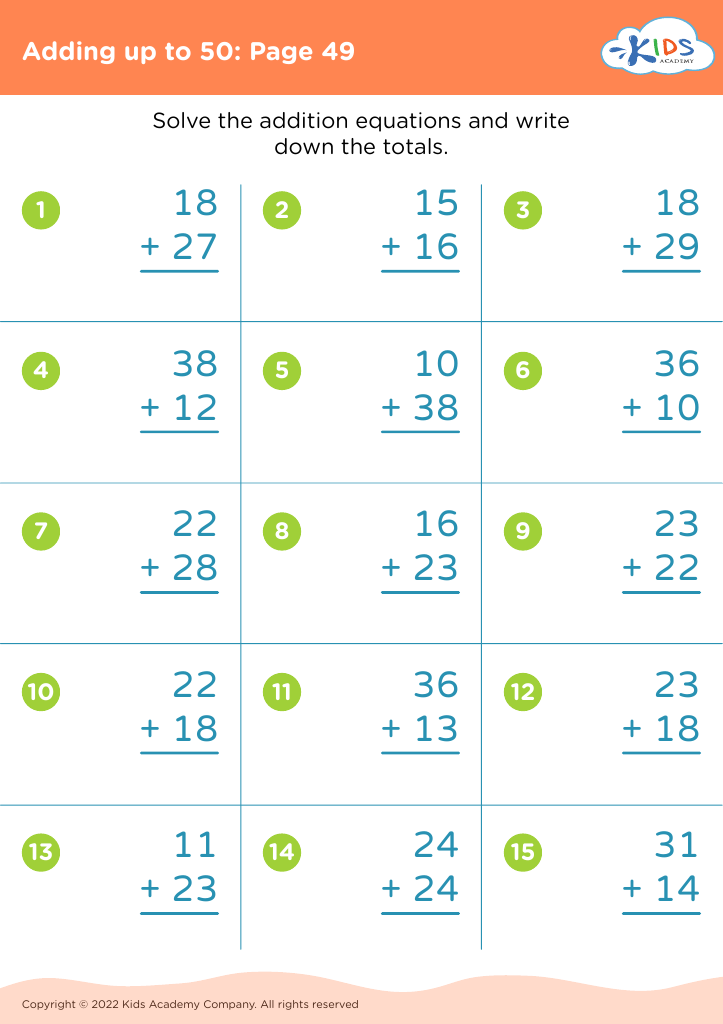
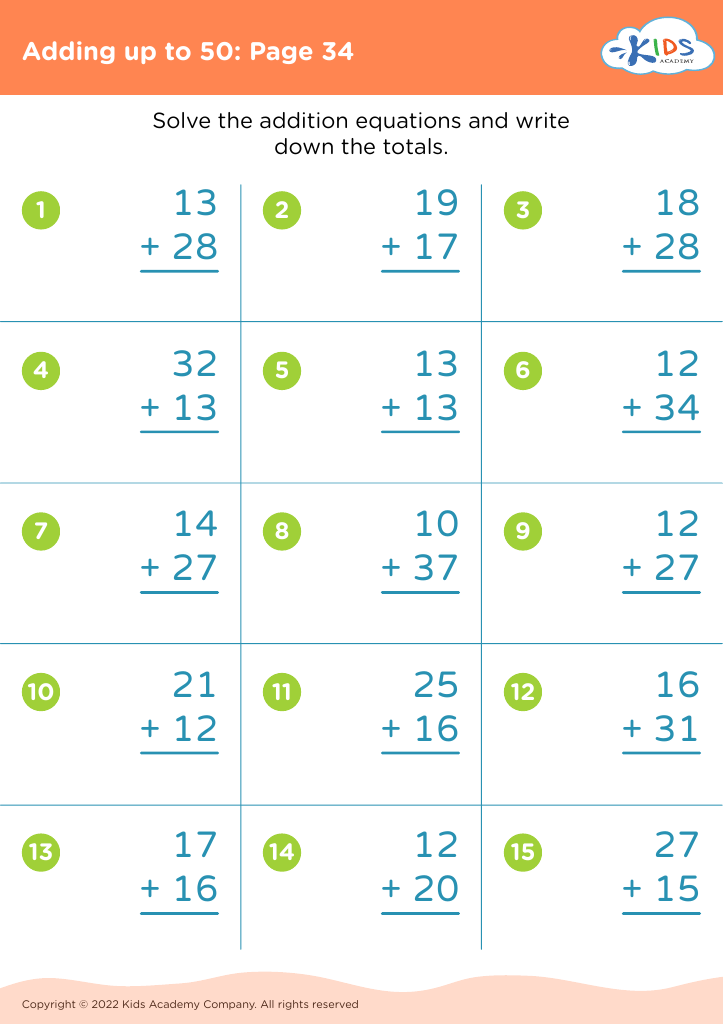


Understanding fractions and the concept of numbers adding up to 50 is vital for children aged 5-7 as it lays the foundation for essential mathematical skills. During these formative years, children are developing critical thinking and problem-solving abilities, and grasping fractions introduces them to the idea of parts of a whole, which is foundational for more complex math.
Parents and teachers should care about this because early numeracy skills are closely linked to later academic success. When children learn to understand fractions, they also enhance their ability to compare quantities, recognize patterns, and understand relationships between numbers. For instance, being able to visualize that 25 is half of 50 helps solidify their understanding of what fractions mean in a practical sense.
Moreover, teaching children how to manipulate and add fractions can be integrated with everyday activities, making learning engaging and relevant. It fosters mathematical conversations and promotes cognitive development. Ultimately, a solid comprehension of these concepts will not only aid their academic journeys but also instill confidence as they transition to more advanced math in the future, creating lifelong learners who appreciate the value of mathematics in daily life.