Basic Addition Adding up to 50 with Regrouping Worksheets for Ages 5-7
3 filtered results
-
From - To
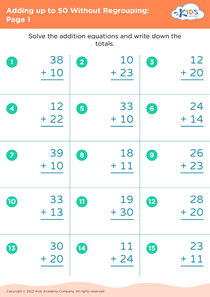
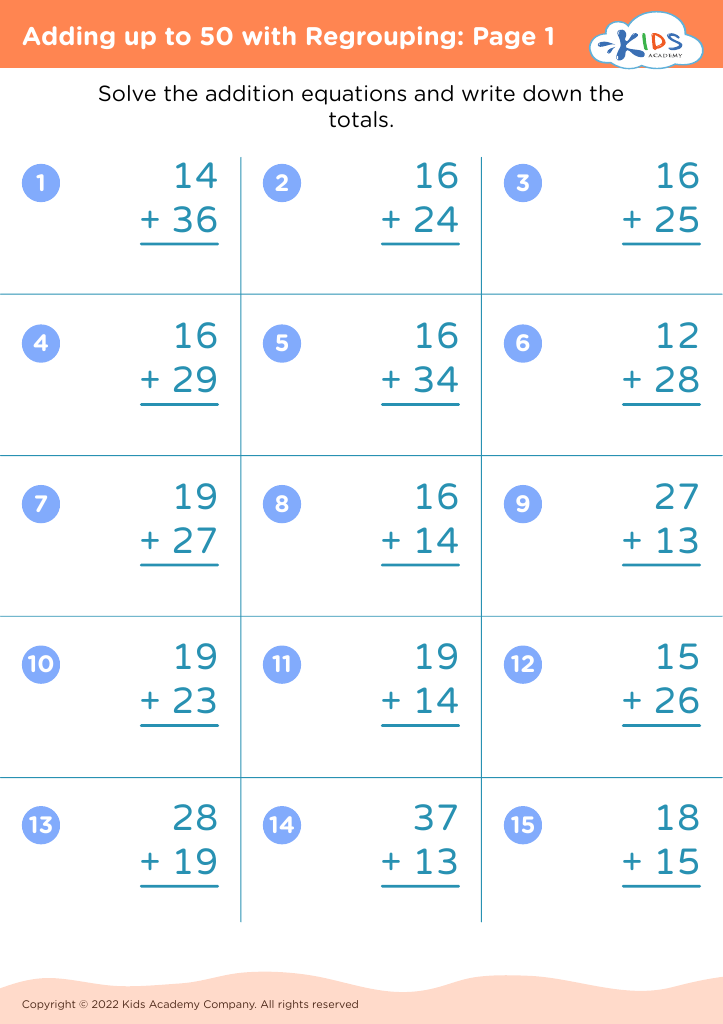
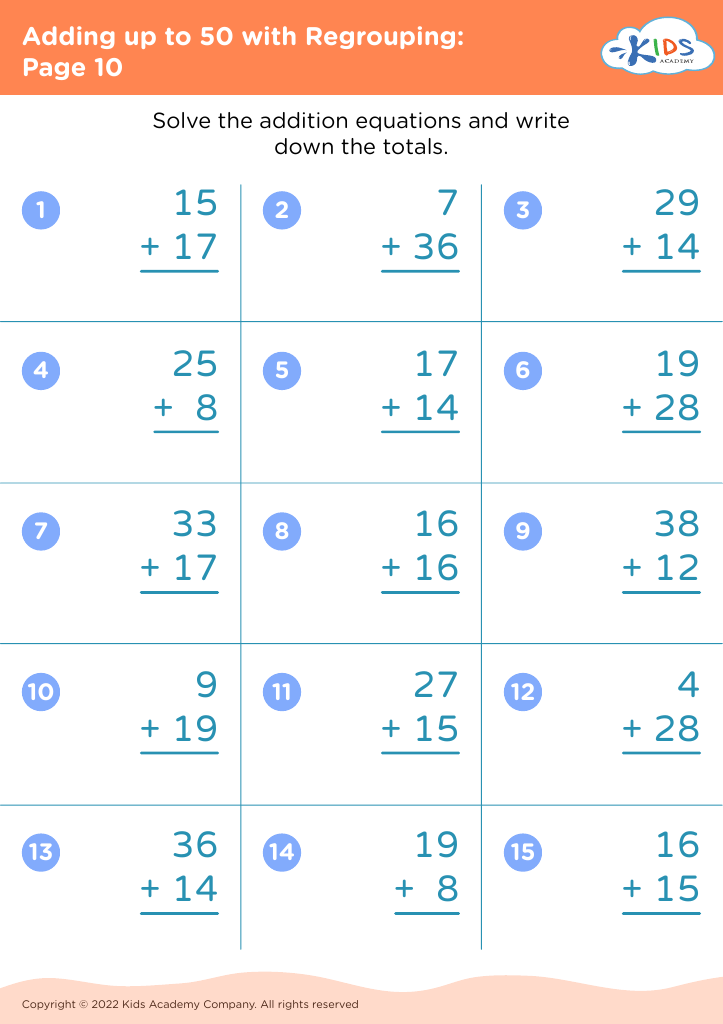
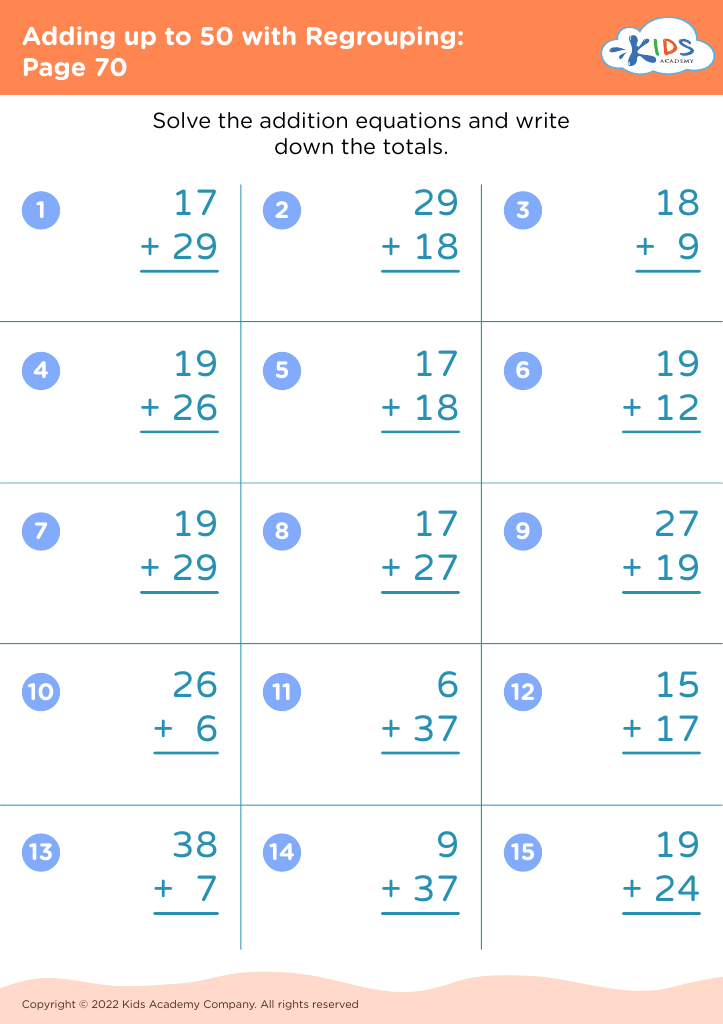
Looking to build essential math skills for your young learner? Our "Basic Addition Adding up to 50 with Regrouping Worksheets" are the perfect tool for children ages 5-7. Designed to transform your child's addition abilities, these printable resources focus on adding numbers with sums up to 50, including problems that require regrouping for more challenging practice. Intuitively crafted to support in-home learning or classroom activities, these worksheets help solidify fundamental math concepts while promoting confidence and a love for numbers. Empower your child with tools that make learning fun and effective. Try them today!


Fostering a solid foundation in basic addition with regrouping for 5-7-year-olds is pivotal for a child's mathematical development. At this tender age, children typically transition from concrete to more abstract thinking. Mastering addition up to 50 with regrouping reinforces this transition, establishing the bedrock for more advanced arithmetic and problem-solving skills.
Parents and teachers should care about this skill for several reasons. First, it enhances cognitive development. Tackling addition challenges helps improve memory, attention, and logical thinking. Second, competency in regrouping—understanding one ten consists of ten ones—builds a child's number sense which is crucial for grasping more complex mathematical concepts in the future.
Additionally, early success in math boosts a child's confidence and fosters a positive attitude towards learning, which can influence their overall academic journey. It sets the stage for success in other subjects as well by teaching perseverance and the joy of overcoming challenges.
Lastly, today's world values numerical literacy due to its relevance in daily life, from budgeting to technological proficiency. Thus, investing time in ensuring young children master basic addition not only equips them with essential math skills but also prepares them for a future where such skills are increasingly indispensable.