Identifying shapes Adding up to 50 Without Regrouping Worksheets for Ages 5-7
6 filtered results
-
From - To
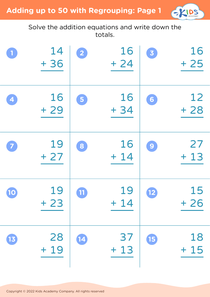
Explore our engaging Identifying Shapes and Adding up to 50 Without Regrouping Worksheets for ages 5-7! These carefully designed worksheets combine fundamental math skills with shape recognition, providing a comprehensive learning experience for young learners. Your child will enhance their ability to identify various shapes while mastering addition within 50, all without the need for regrouping. Perfect for kids in kindergarten and early elementary grades, these activities are both fun and educational. Boost your child's confidence in math and shape identification, setting a solid foundation for future success in these critical areas. Download and start learning today!
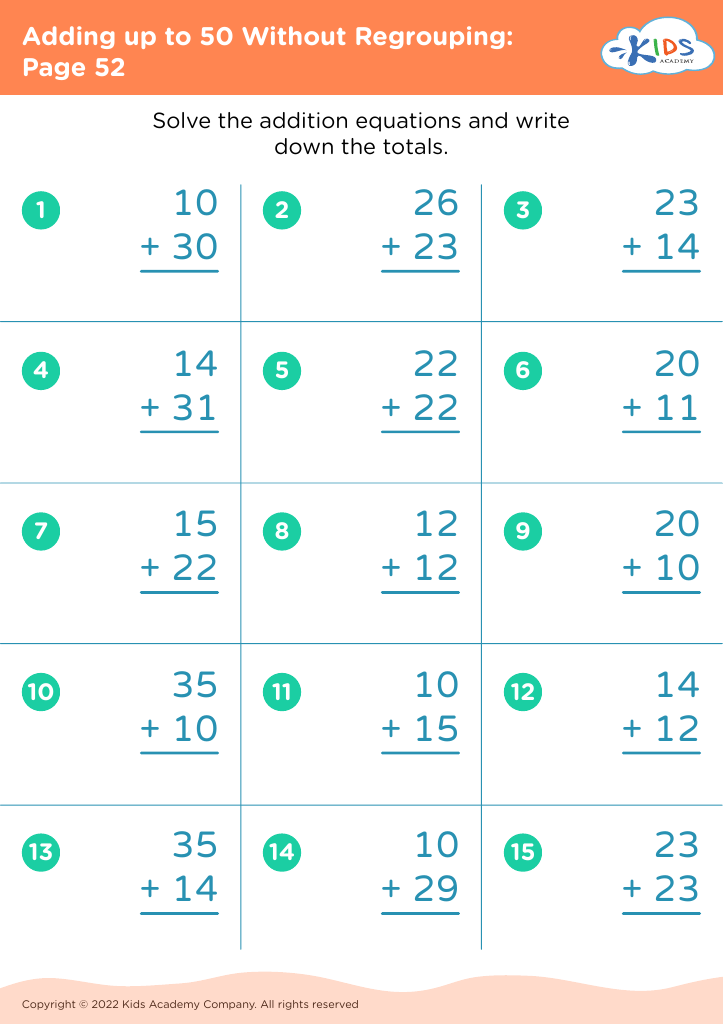
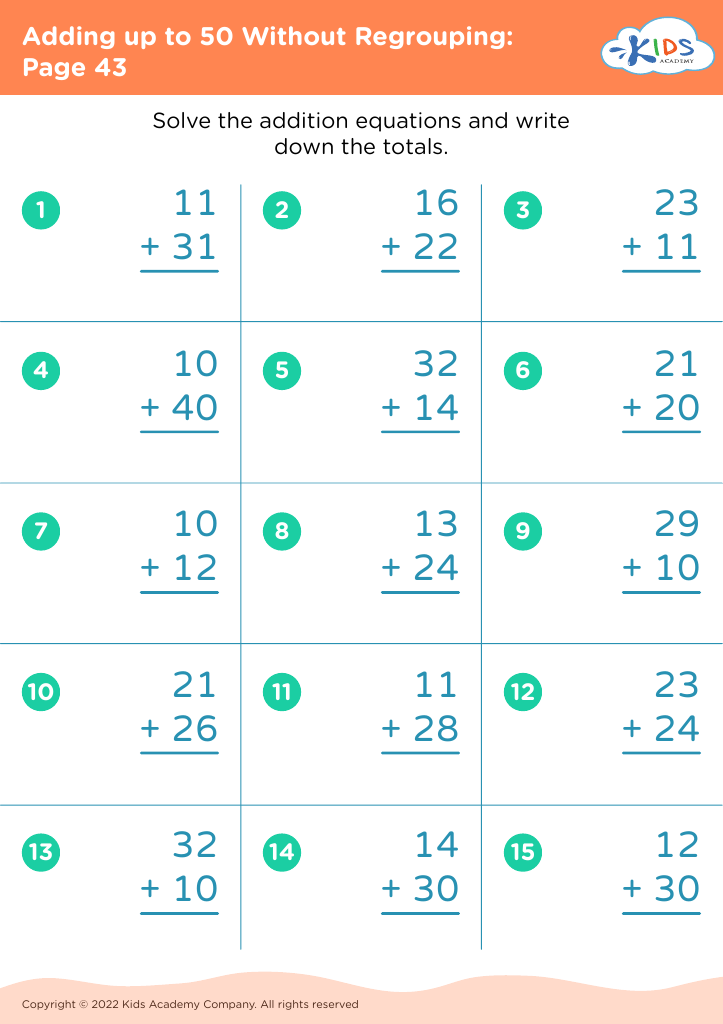
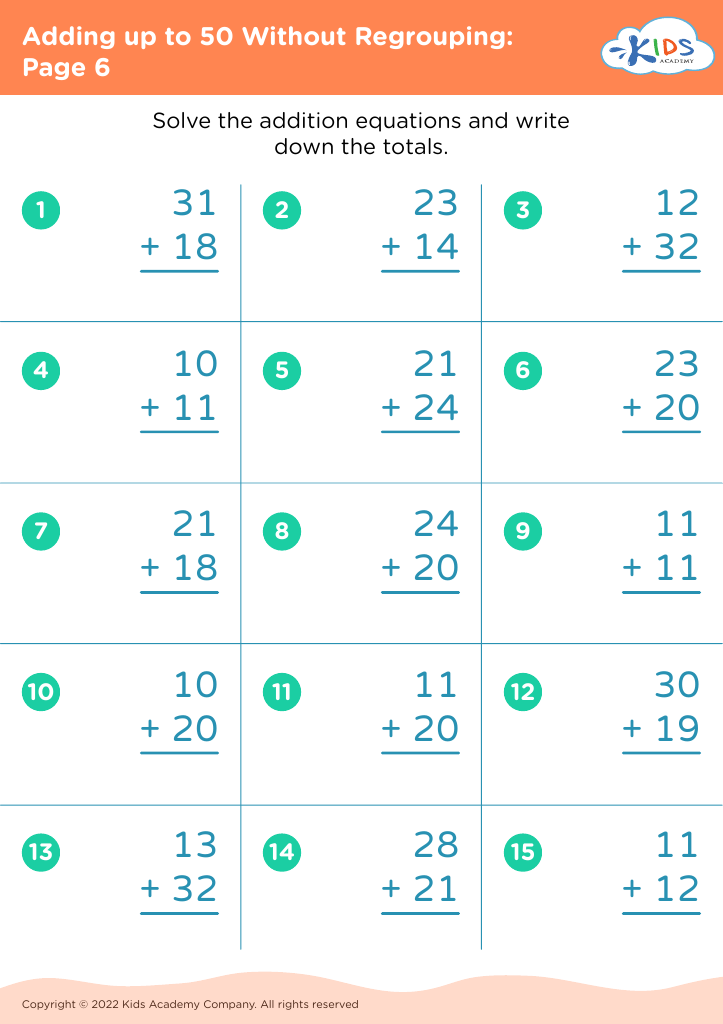
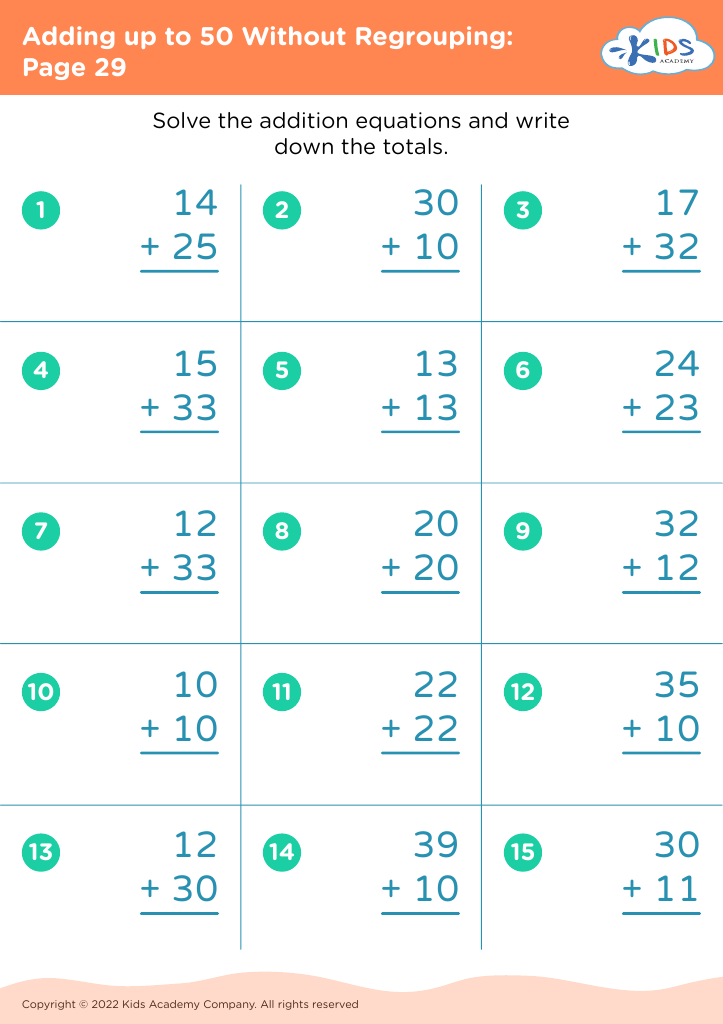
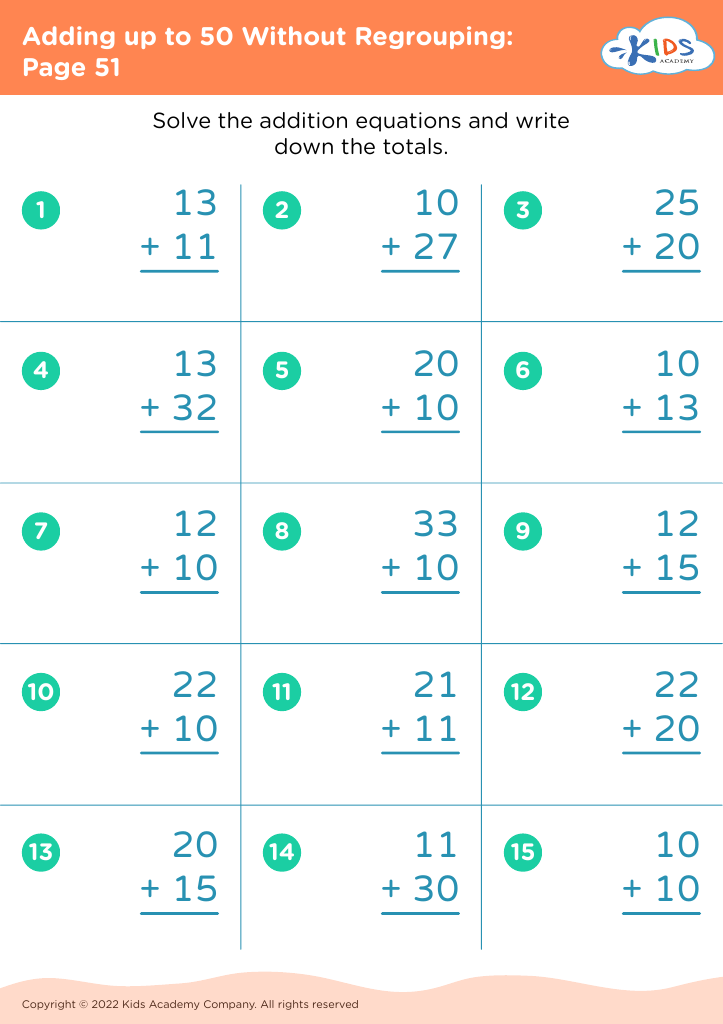
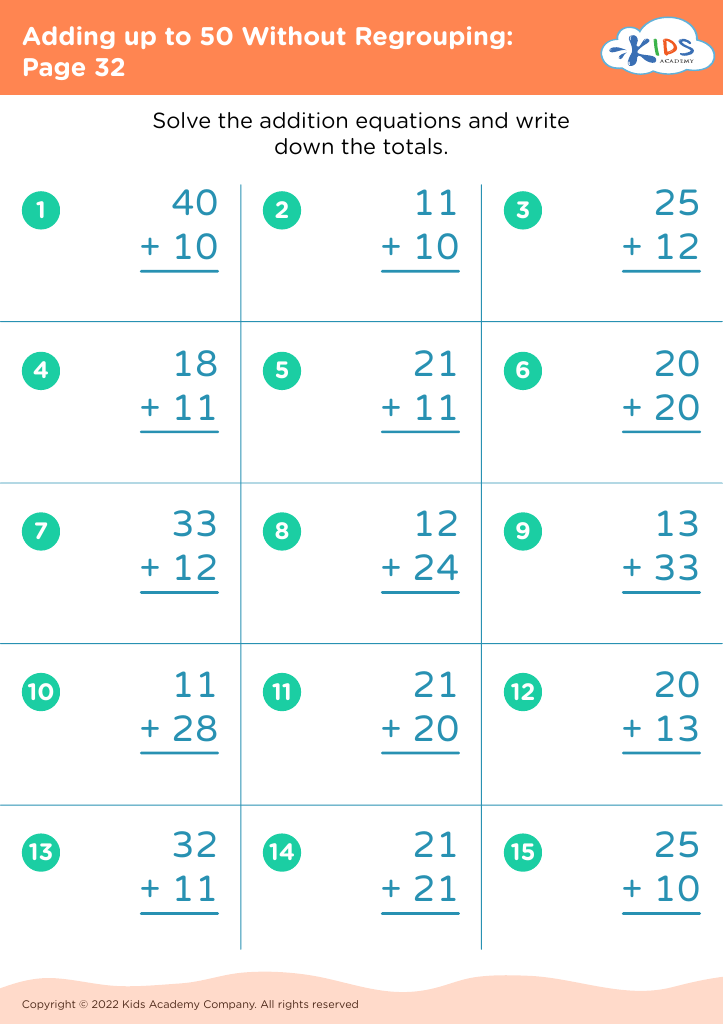


Parents and teachers should emphasize the importance of two key math skills for children aged 5-7: identifying shapes and adding numbers up to 50 without regrouping.
Understanding shapes lays the foundation for geometry, spatial awareness, and problem-solving. By identifying circles, squares, triangles, and other shapes, children become familiar with basic geometric concepts that are crucial for future learning. Recognizing and comparing shapes helps develop visual perception skills and the ability to classify objects based on their attributes, important skills in many areas of life.
Adding numbers up to 50 without regrouping reinforces number sense and arithmetic confidence. By practicing these calculations, children strengthen their understanding of how numbers relate to each other, which is fundamental for all future math operations. This non-intimidating introduction to addition helps kids see patterns in numbers, fosters mental math skills, and builds accuracy and speed.
Developed proficiency in these areas by ages 5-7 set children up for more complex mathematical challenges ahead. Fostering an early appreciation and skill set in math cultivates confidence in their abilities and encourages a positive attitude towards learning, making it clear why these foundational concepts are integral parts of early childhood education.