Recognizing shapes Adding up to 50 Without Regrouping Worksheets for Ages 5-7
5 filtered results
-
From - To
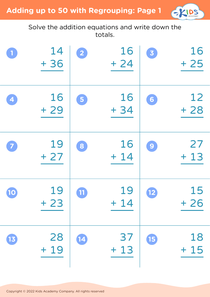
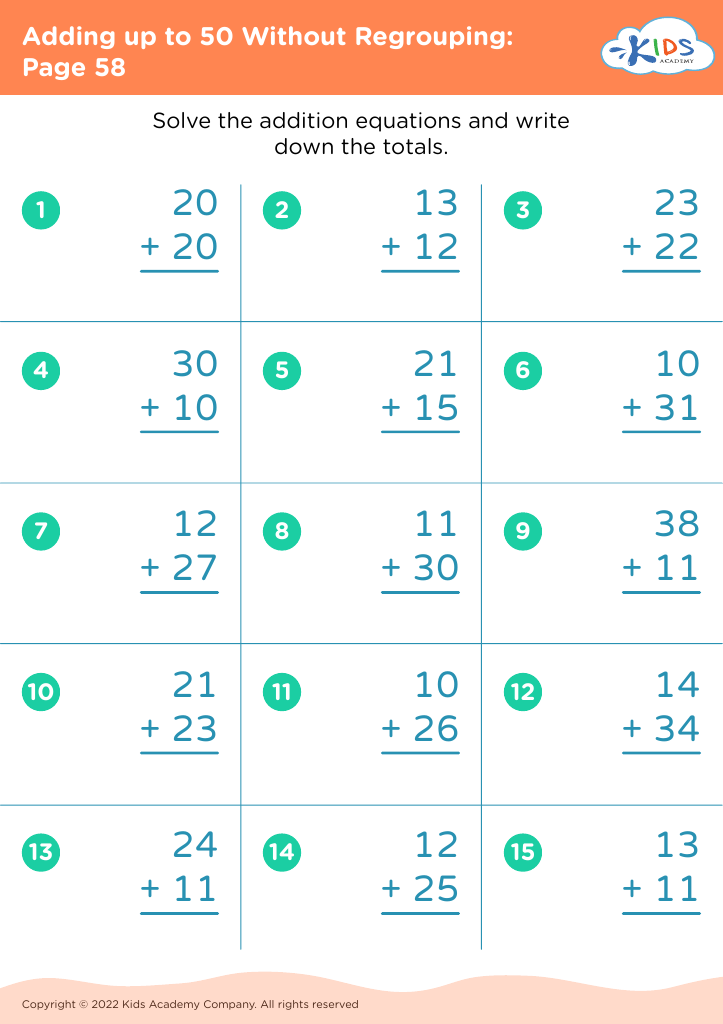
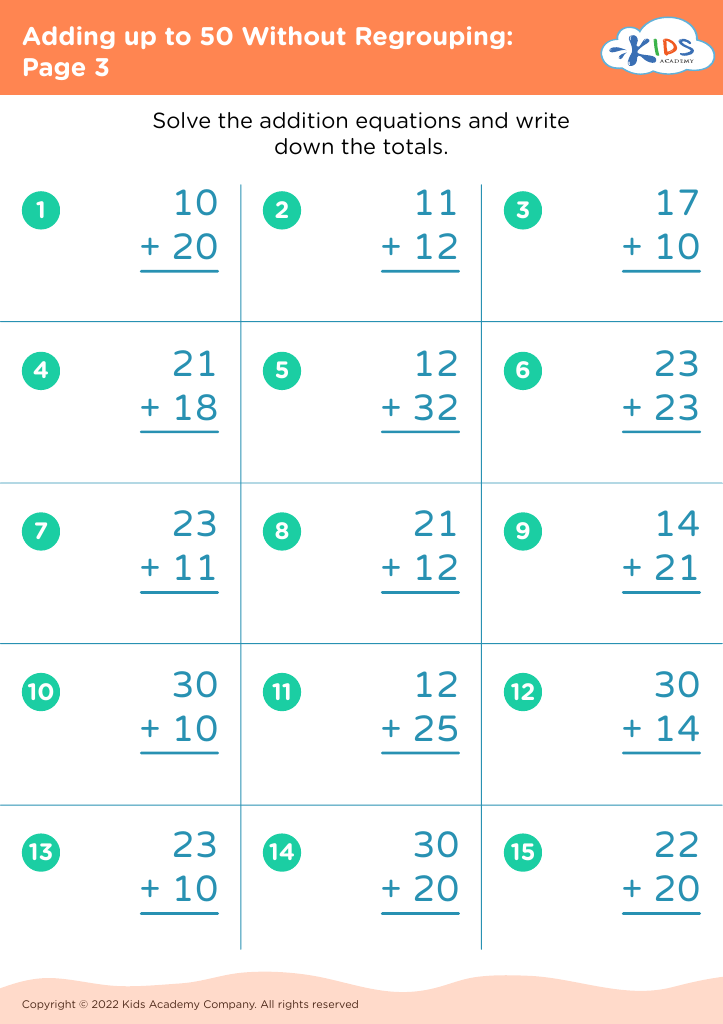
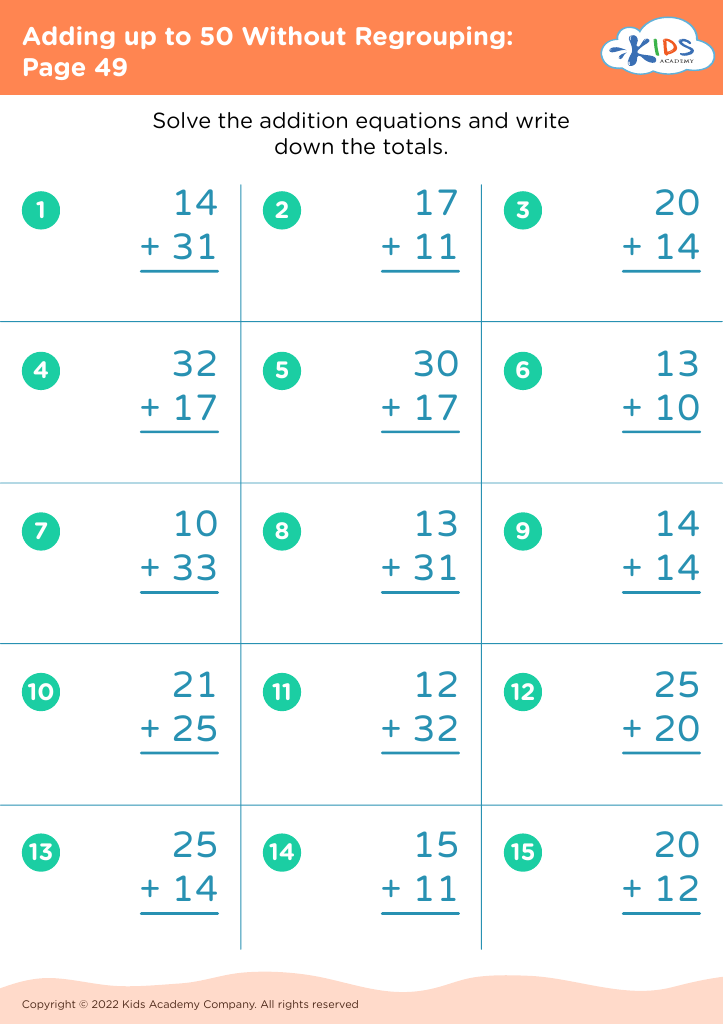
Welcome to our "Recognizing Shapes Adding up to 50 Without Regrouping Worksheets," designed specifically for children ages 5-7! These engaging worksheets combine geometry with fundamental math skills, helping young learners develop their shape recognition while practicing addition skills without regrouping. Each worksheet features colorful illustrations and fun activities that capture the attention of young minds, making learning enjoyable. Kids will strengthen their mathematical foundation by solving addition problems that sum up to 50, all while exploring different shapes. Perfect for home or classroom use, these worksheets encourage critical thinking and creativity, fostering a love for math in a playful way!
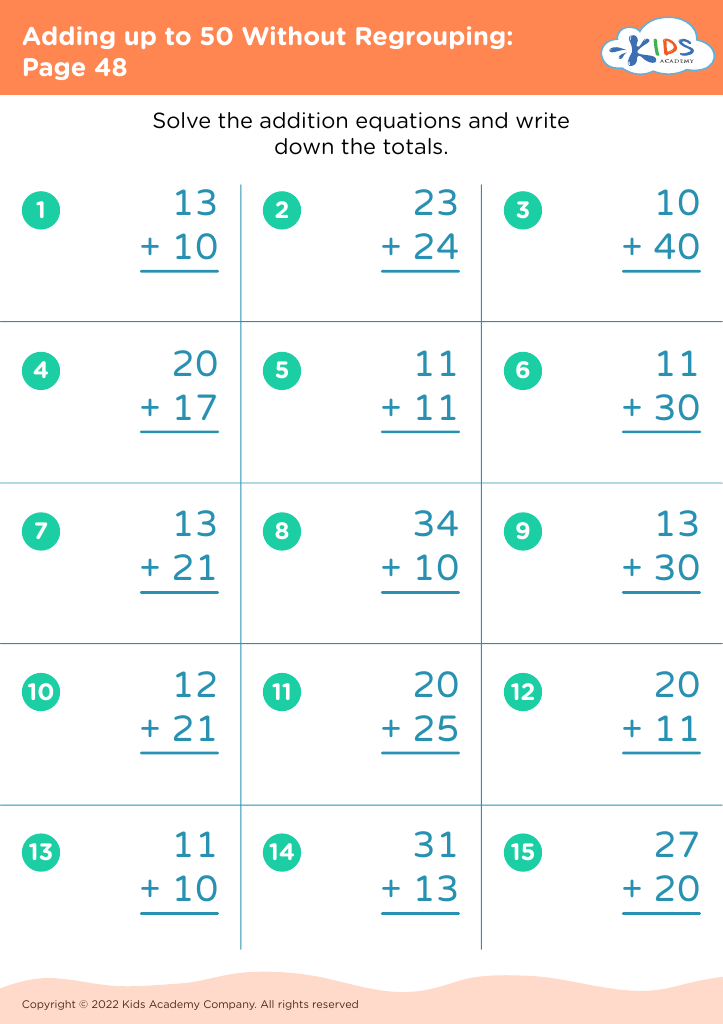
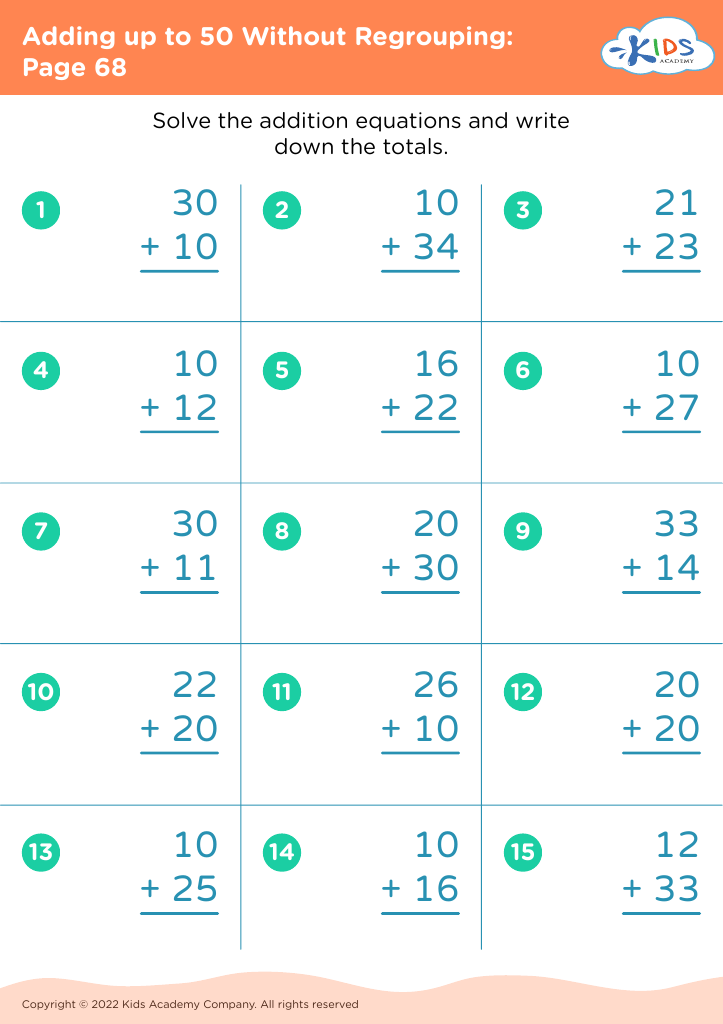


Recognizing shapes and mastering addition up to 50 without regrouping are foundational skills crucial for children ages 5-7. Parents and teachers should prioritize these skills as they form the building blocks for future learning in mathematics and geometry.
Recognizing shapes enhances spatial awareness, helps with problem-solving skills, and encourages creativity. When children can identify and understand different shapes, they can better relate them to the world around them, fostering observational skills and critical thinking. This understanding is also essential for subjects like art and engineering later in life.
On the other hand, adding up to 50 without regrouping bolsters children's basic arithmetic skills. This competence serves as a stepping stone for more complex mathematical concepts in the future. Acquiring proficiency in addition builds a child’s confidence and promotes a positive attitude towards math, reducing math anxiety as they progress in school.
Moreover, recognizing patterns and developing number sense are significant cognitive skills that influence academic performance. By focusing on these areas at a young age, parents and teachers lay a strong educational foundation, ensuring that children are better prepared to tackle more challenging concepts as they advance in their education. Ultimately, these skills contribute to holistic development, encouraging analytical thinking from an early age.