Understanding fractions Adding up to 50 Without Regrouping Worksheets for Ages 5-7

Filters

13 filtered results

Clear all filters
Favorites
With answer key
Interactive

13 filtered results

Difficulty Level

Grade


Unlock the world of fractions with our "Understanding Fractions Adding Up to 50 Without Regrouping" worksheets designed specifically for ages 5-7! These engaging and interactive activities help young learners grasp the concept of fractions in a fun and approachable way. Through colorful illustrations and relatable scenarios, students will enhance their math skills by adding fractions up to 50 without the need for regrouping. Perfect for classroom use or at-home learning, these worksheets promote critical thinking and reinforce mathematical foundations. Give your child a head start in mastering fractions with this valuable resource that makes learning enjoyable and effective!
Check out this FREE Trial Lesson on Adding up to 50 Without Regrouping for age 5-7!

Short and Long Vowel Sort

Favorites
With answer key
Interactive
  • 5-7
  • Understanding fractions
  • Adding up to 50 Without Regrouping
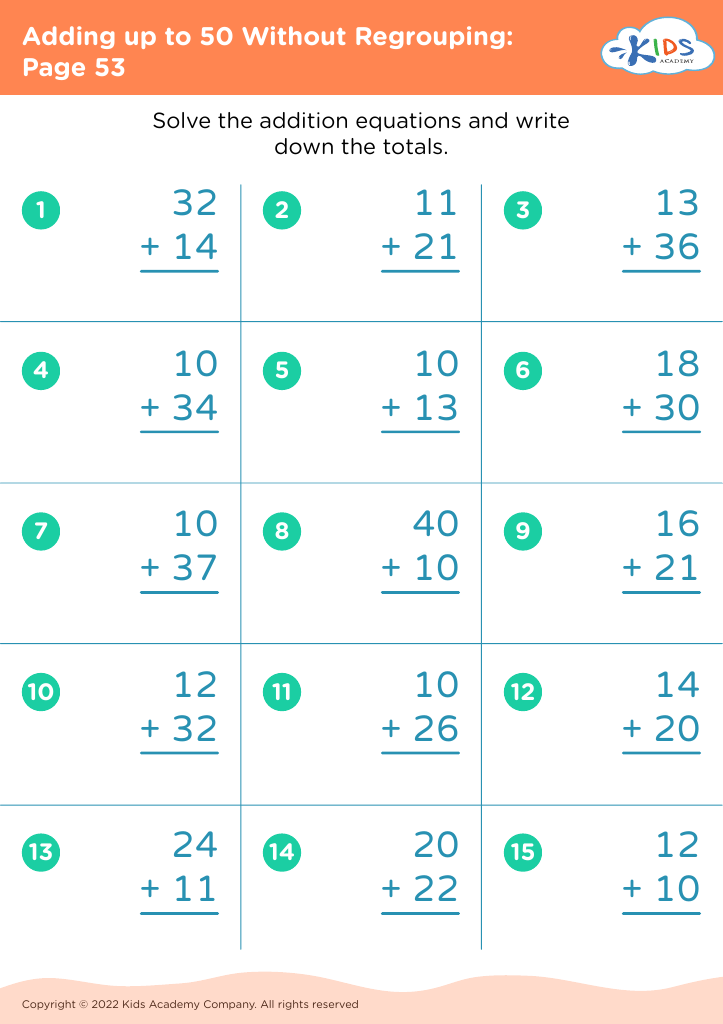
Adding up to 50 Without Regrouping: Page 53
Worksheet
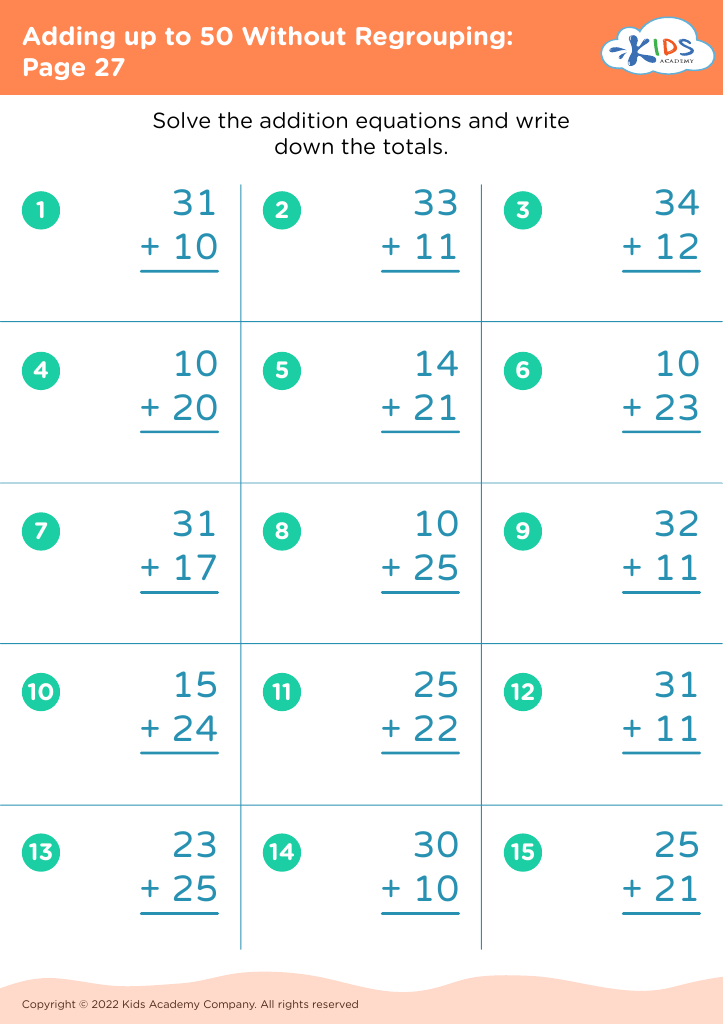
Adding up to 50 Without Regrouping: Page 27
Worksheet
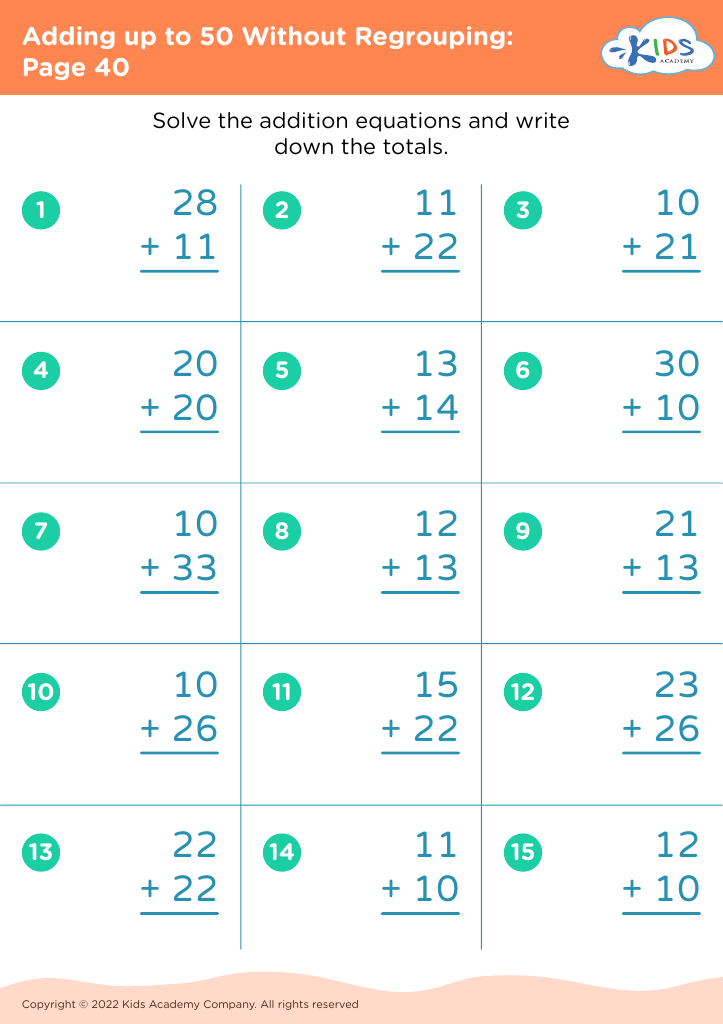
Adding up to 50 Without Regrouping: Page 40
Worksheet
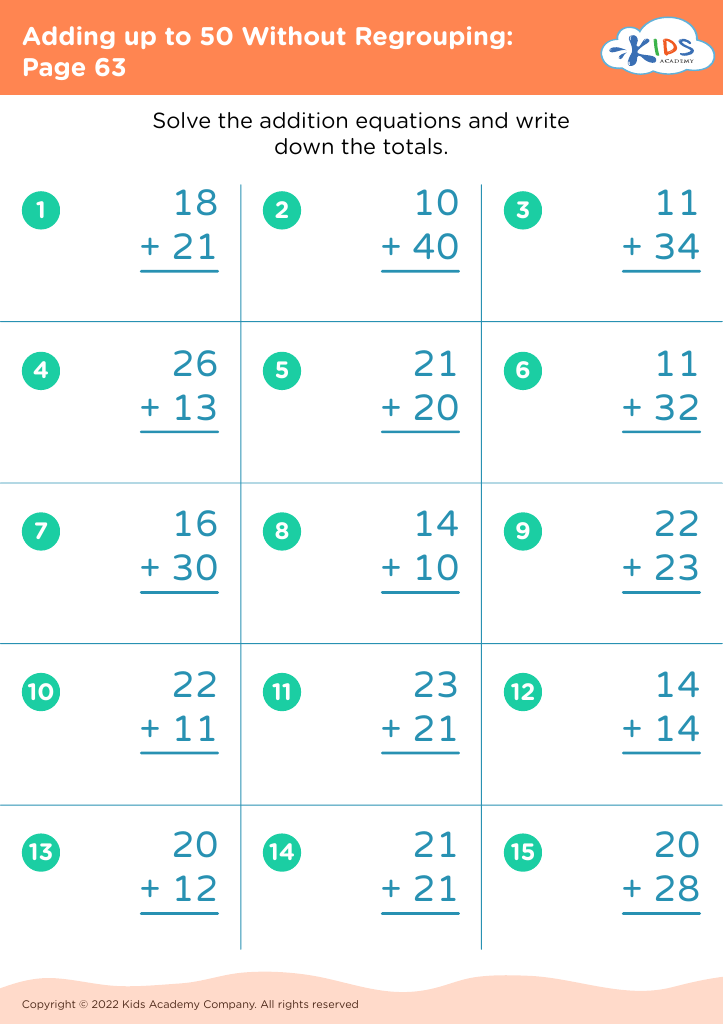
Adding up to 50 Without Regrouping: Page 63
Worksheet
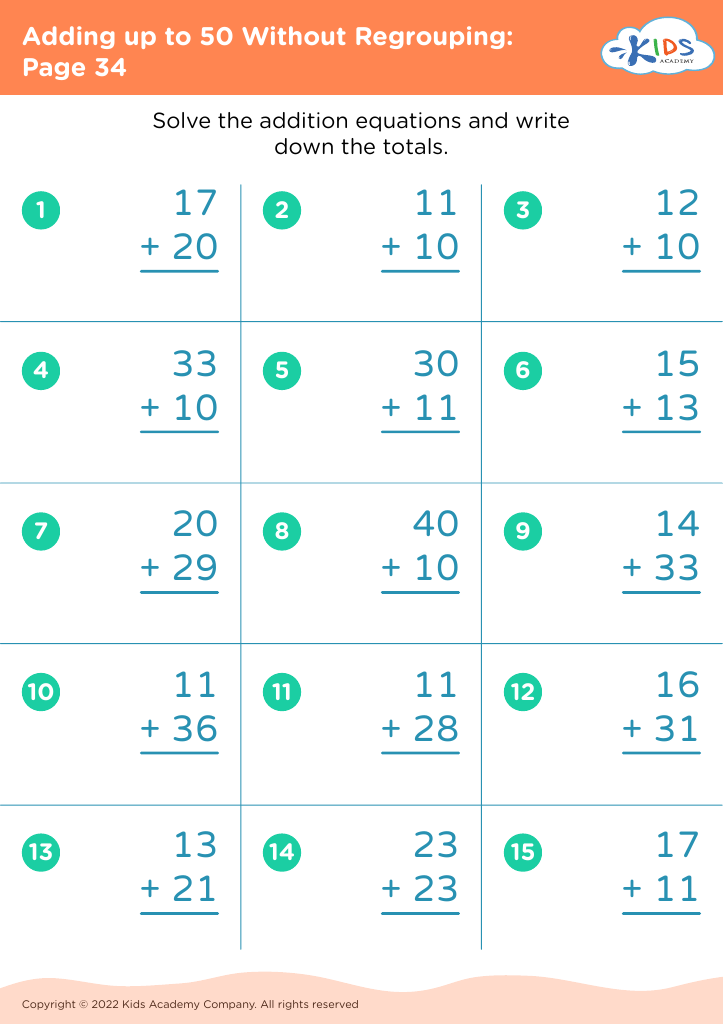
Adding up to 50 Without Regrouping: Page 34
Worksheet
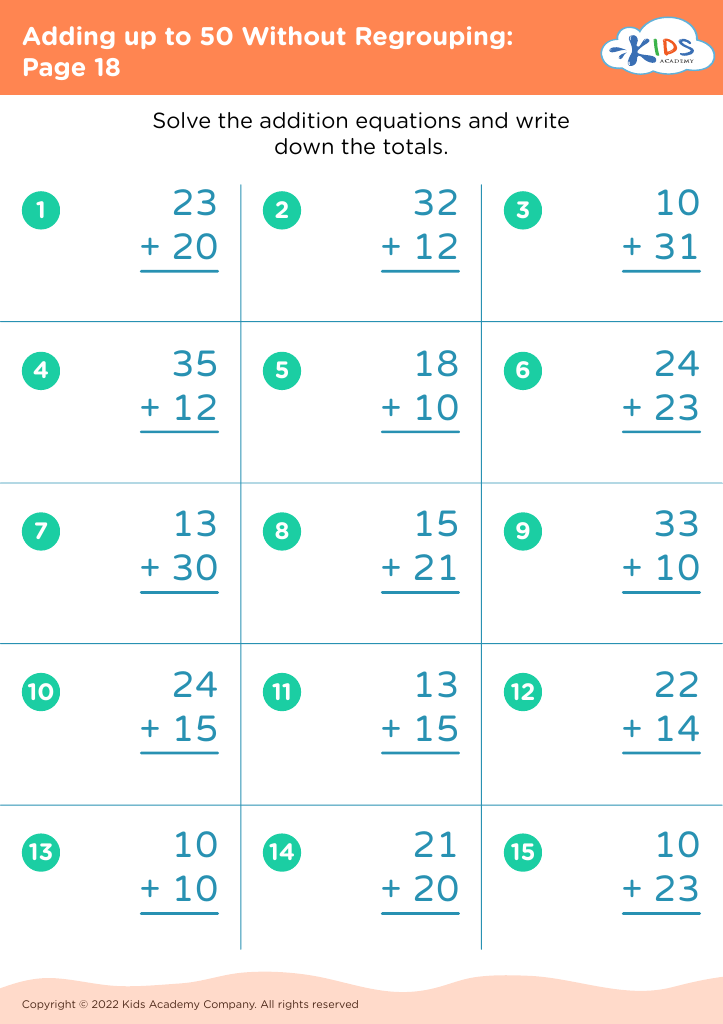
Adding up to 50 Without Regrouping: Page 18
Worksheet
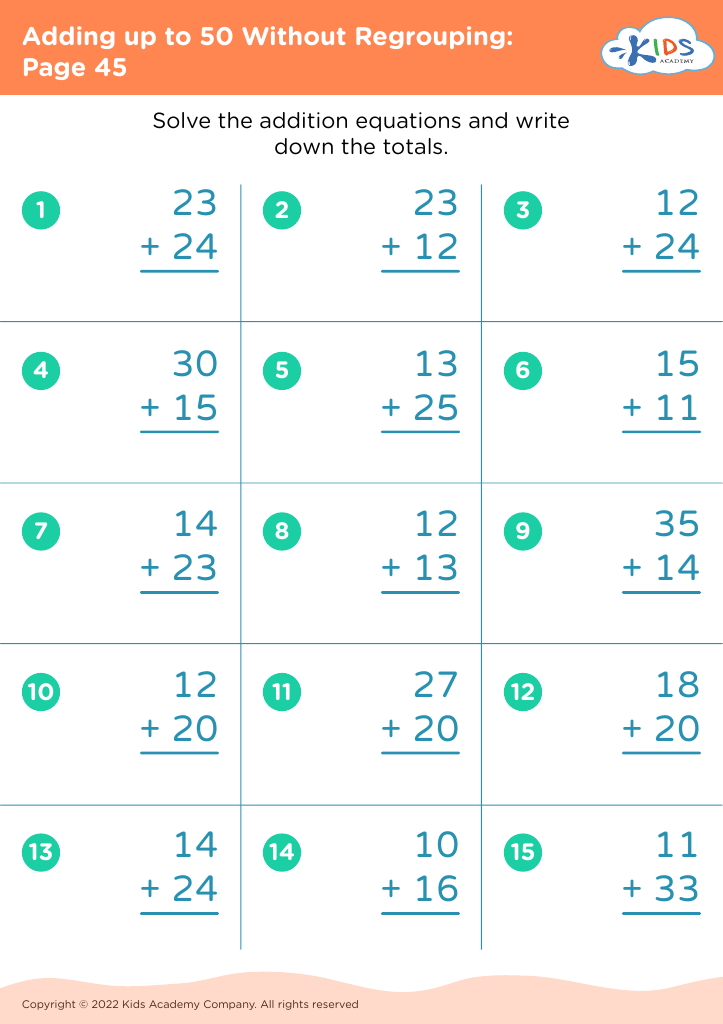
Adding up to 50 Without Regrouping: Page 45
Worksheet
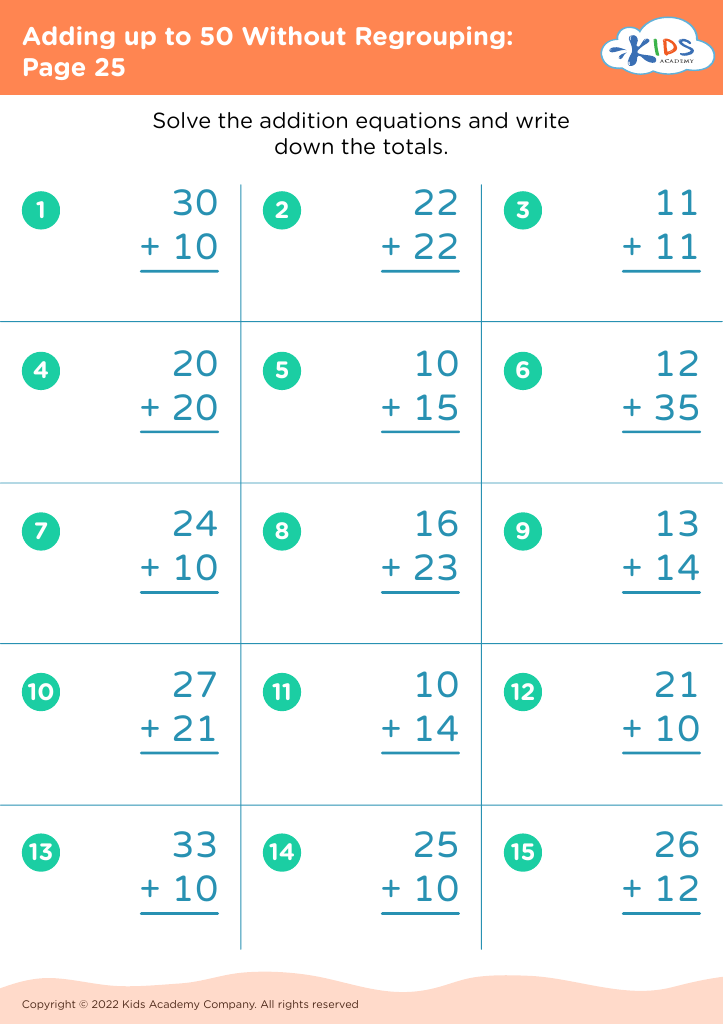
Adding up to 50 Without Regrouping: Page 25
Worksheet
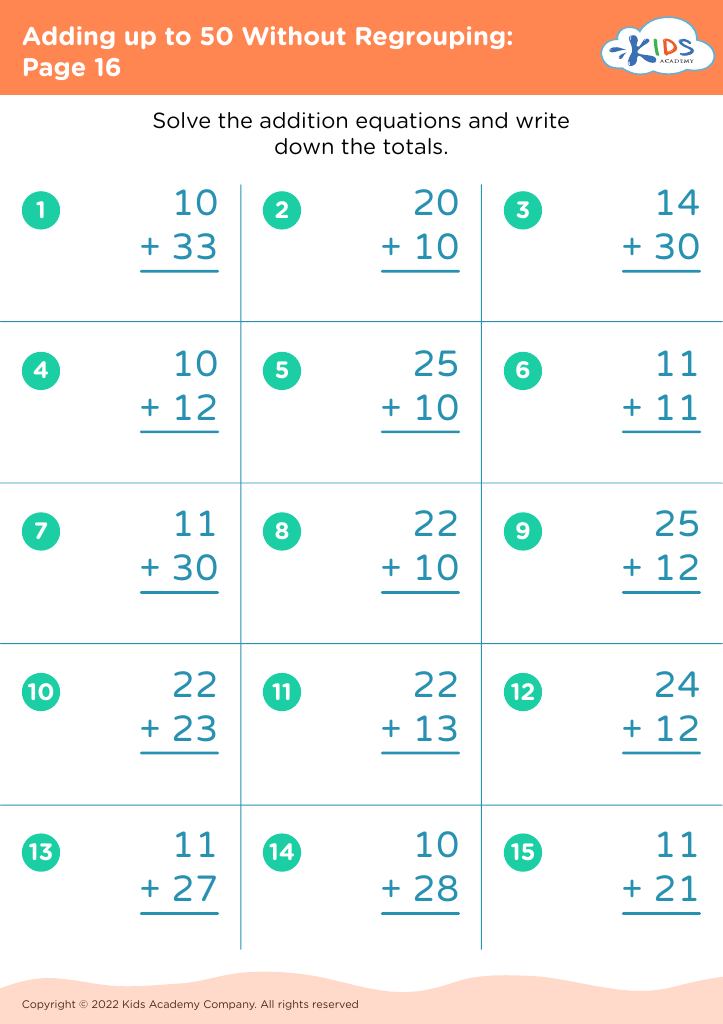
Adding up to 50 Without Regrouping: Page 16
Worksheet
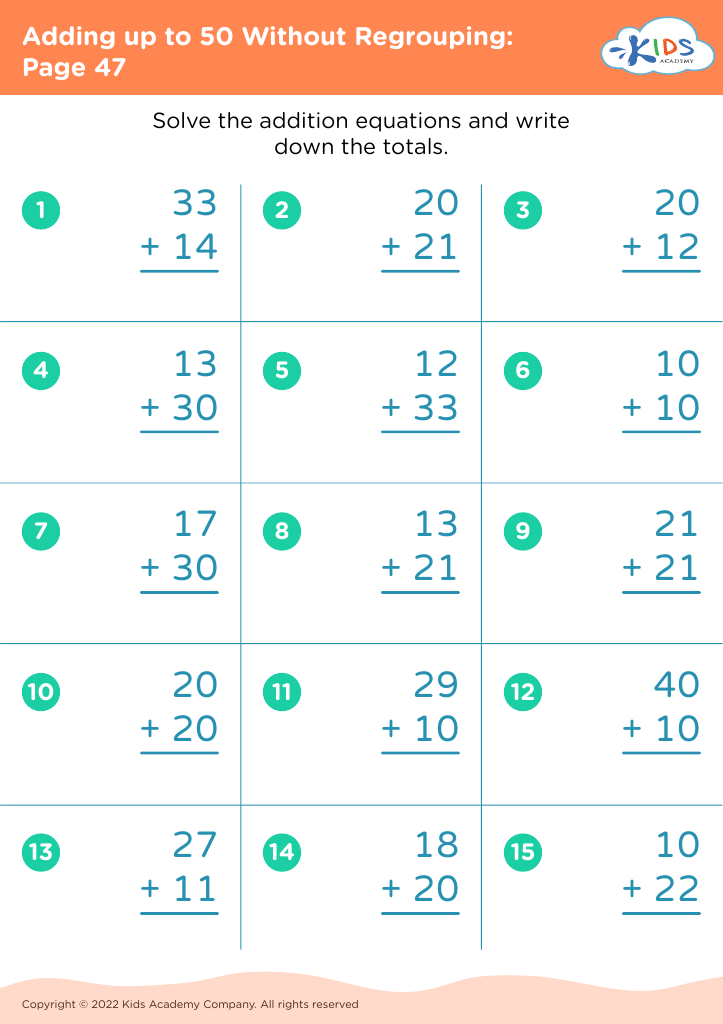
Adding up to 50 Without Regrouping: Page 47
Worksheet
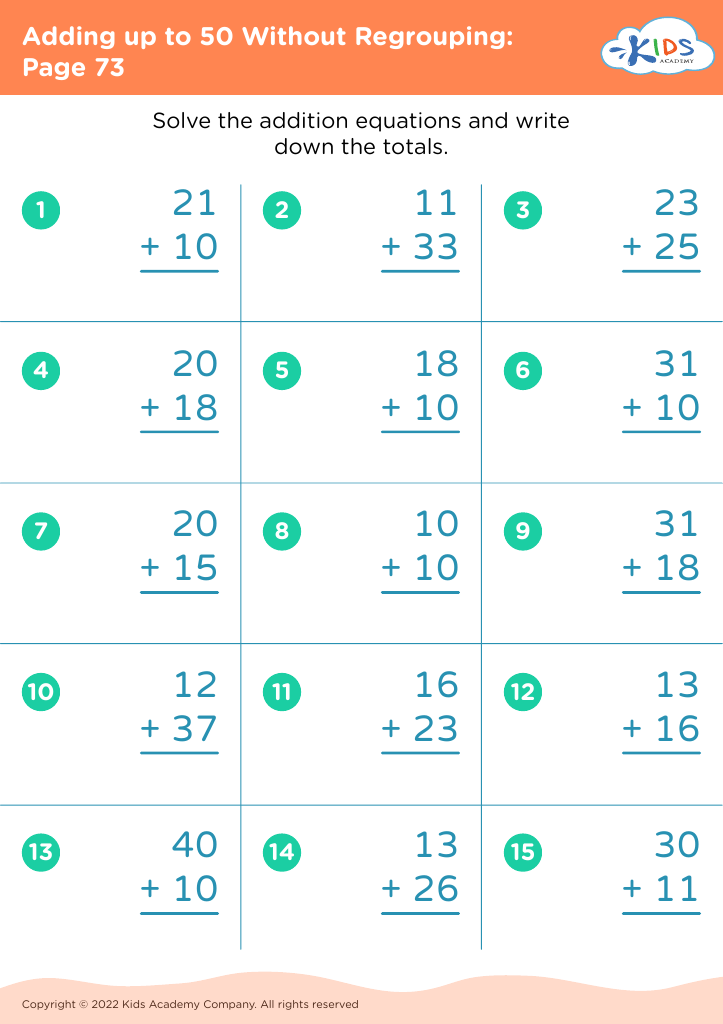
Adding up to 50 Without Regrouping: Page 73
Worksheet
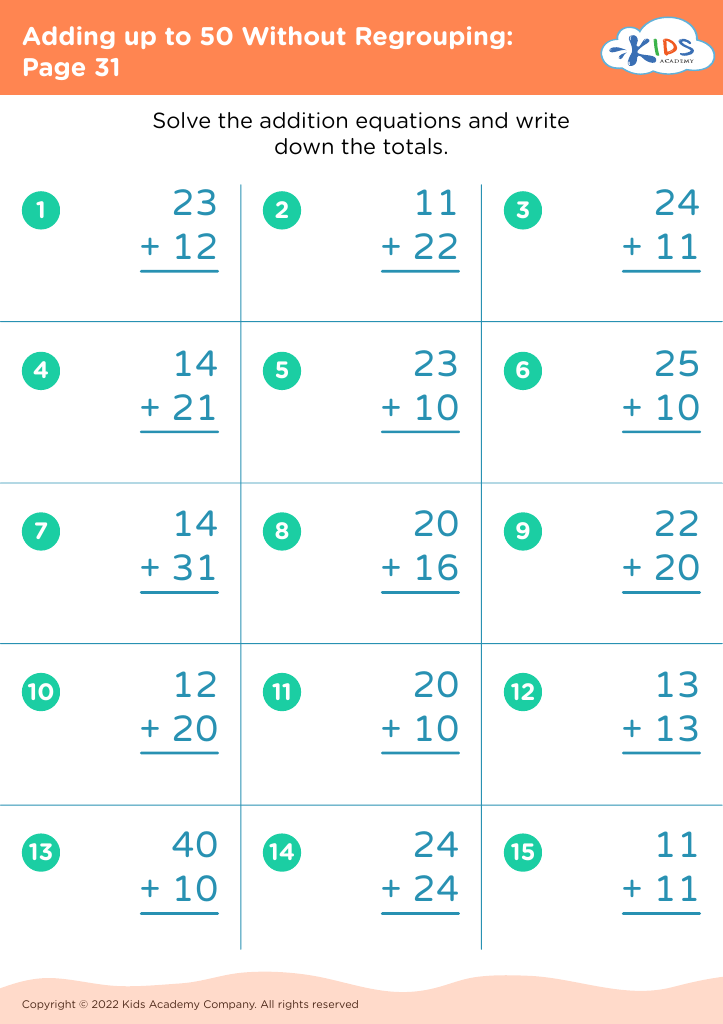
Adding up to 50 Without Regrouping: Page 31
Worksheet
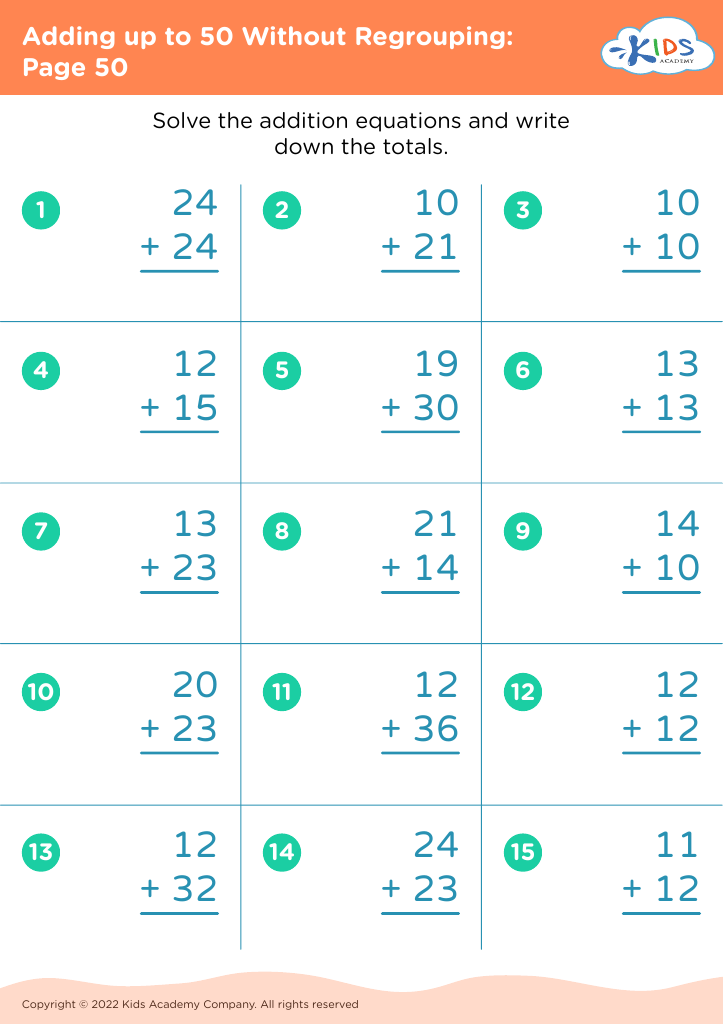
Adding up to 50 Without Regrouping: Page 50
Worksheet


Understanding fractions, particularly adding fractions that sum up to 50 without regrouping, is crucial for children ages 5-7 as it lays the foundation for their mathematical development. At this age, students are making significant strides in grasping numbers and basic operations. Introducing fractions in a simple, relatable way helps them to visualize parts of a whole, promoting a deeper comprehension of numbers and their relationships.

Teaching children to add fractions that limit to 50 without regrouping encourages critical thinking as they learn to combine smaller parts while understanding equivalents, leading to better number sense. This foundational skill not only enhances their arithmetic capabilities but also their ability to tackle more complex mathematics in later grades.

Moreover, engaging with fractions can integrate concepts from real-life situations, such as cooking or sharing, making learning practical and relatable. Parents and teachers should prioritize this skill to ensure mastery of essential mathematical concepts, avoiding gaps in knowledge as students progress. By fostering a strong understanding of fractions early on, adults can empower children to approach mathematics with confidence and competence, making it a vital part of their education and personal development.