Addition up to 5 Addition & Subtraction Worksheets for Ages 5-7
4 filtered results
-
From - To
Discover our engaging "Addition up to 5" worksheets designed specifically for children aged 5-7. These interactive resources help young learners develop foundational math skills through fun and creative activities. Each worksheet incorporates colorful illustrations and relatable themes, making math enjoyable and accessible. Students will practice basic addition and subtraction concepts, enhancing their problem-solving abilities while boosting their confidence in early math. Perfect for classroom use or at-home learning, our worksheets ensure that learning addition and subtraction becomes a playful experience. Encourage your child's love for math and help them build essential skills with these carefully crafted worksheets. Start their math journey today!
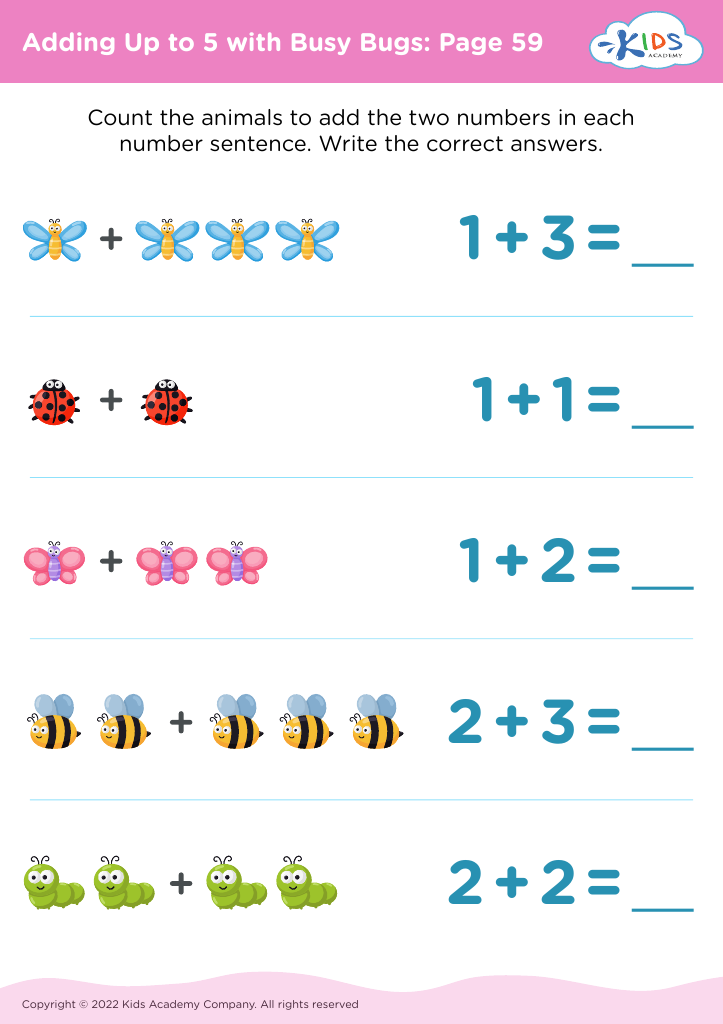
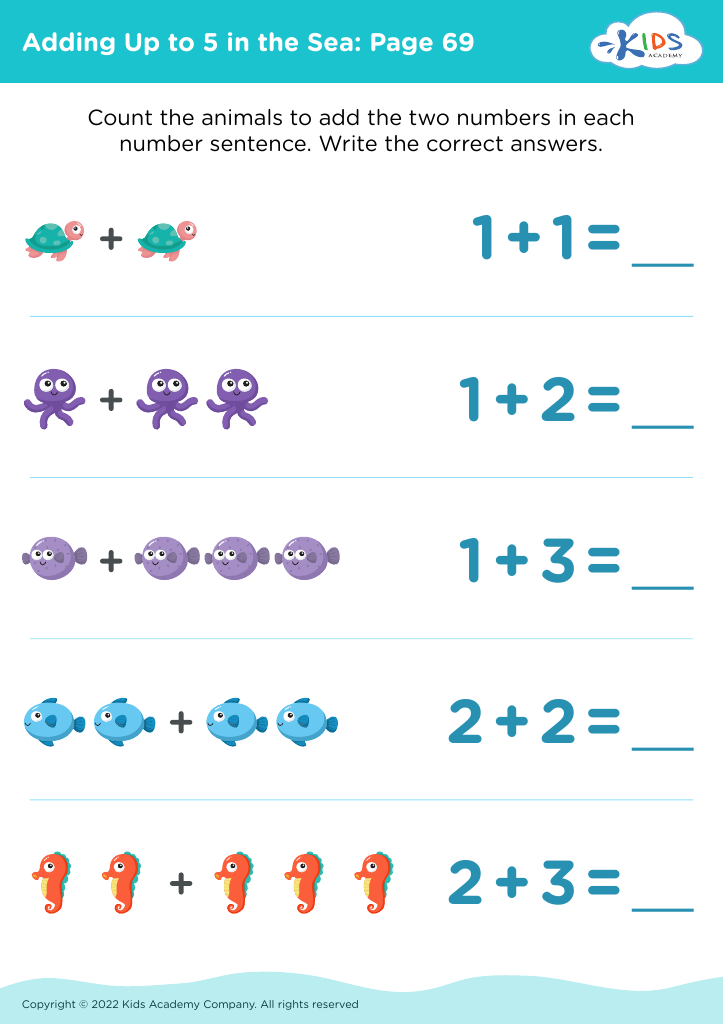
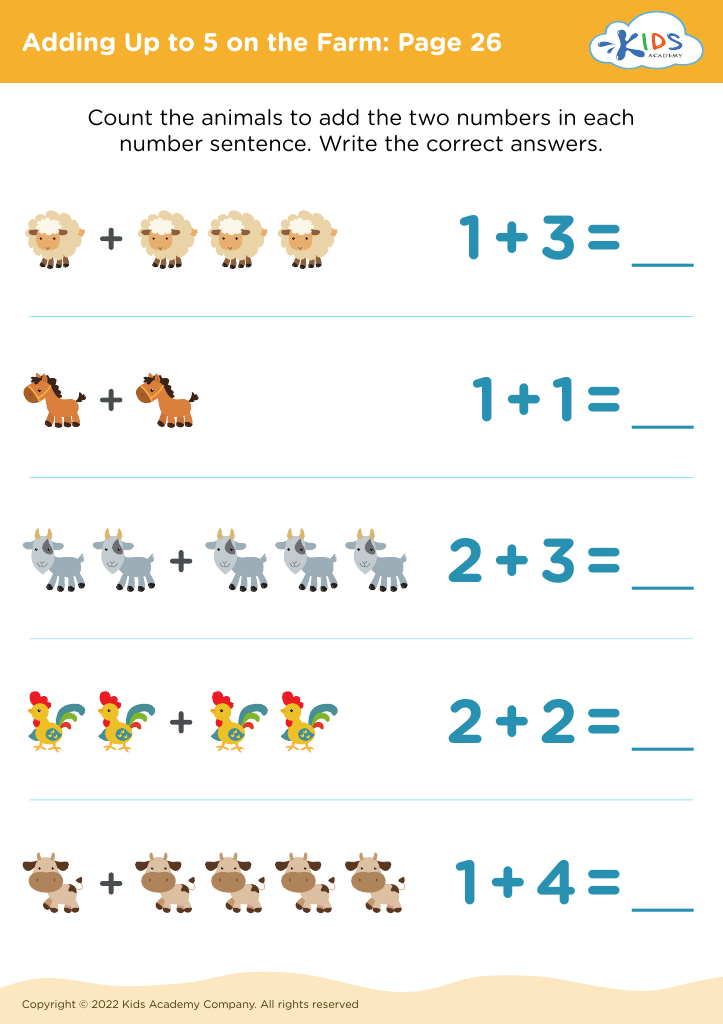
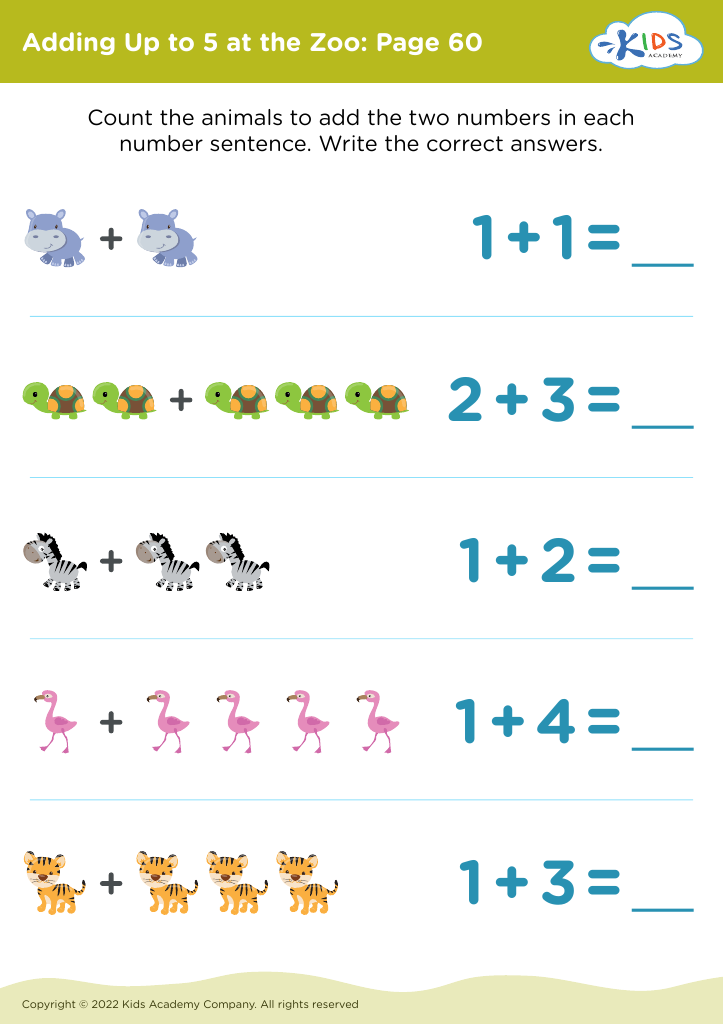








Understanding addition and subtraction up to 5 is crucial for children aged 5-7 for several reasons. Firstly, these foundational skills develop essential cognitive abilities such as number recognition, counting, and understanding the concept of quantity. Mastery of simple arithmetic sets the stage for more complex mathematical operations that students will encounter later in their education.
Additionally, early math skills help foster problem-solving abilities and critical thinking. When children learn to add and subtract small numbers, they engage in logical reasoning which not only aids in math but extends to other subjects and everyday life situations. For example, figuring out how many apples are left after eating one reinforces concepts of quantity and balance, promoting a practical application of math.
Moreover, success in early math greatly influences a child’s confidence and attitude toward learning. A solid grasp of these basic skills leads to a positive learning experience, motivating them to tackle challenges in the future. Parents and teachers can also support social-emotional development through collaborative math games, fostering teamwork and Communication skills. Overall, early exposure to addition and subtraction builds a strong mathematical foundation, leading to academic success and lifelong learning.








