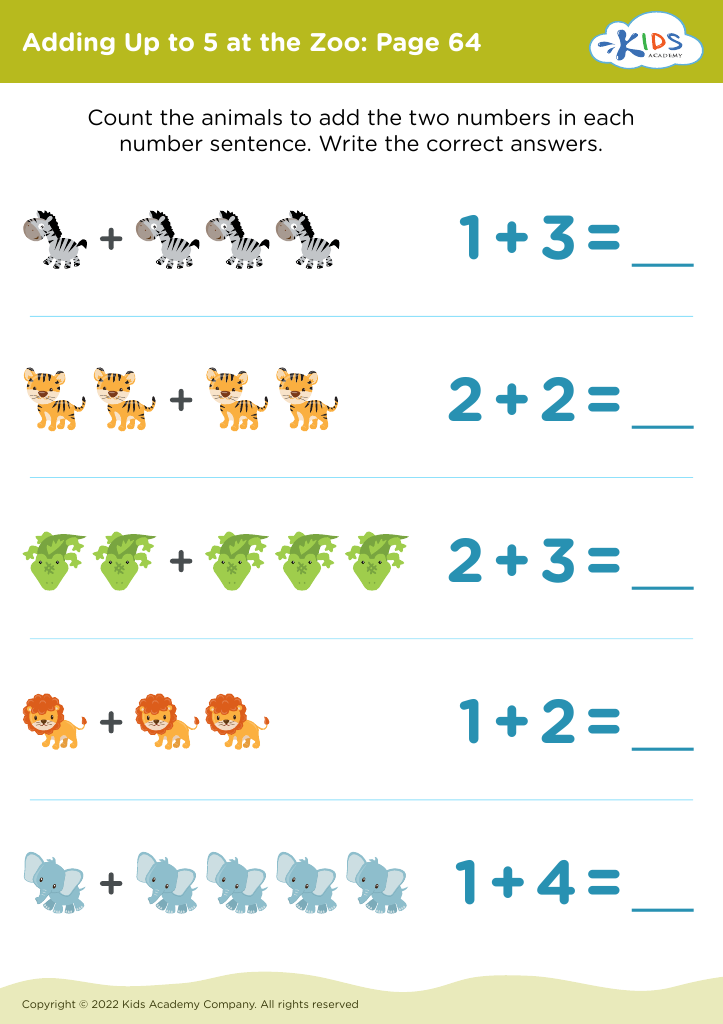
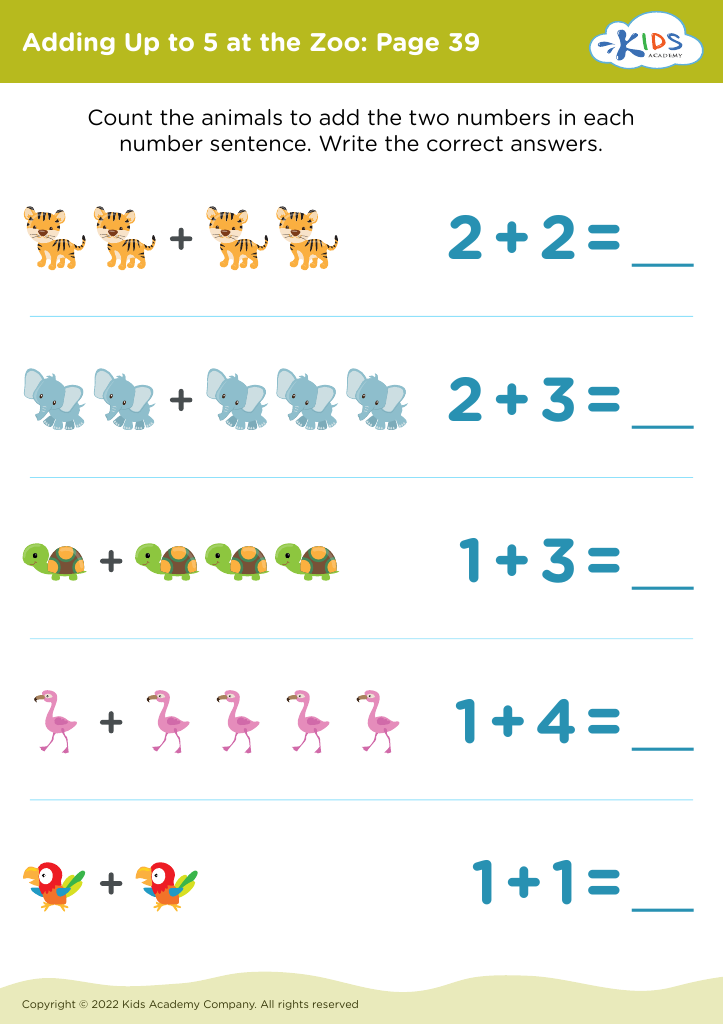
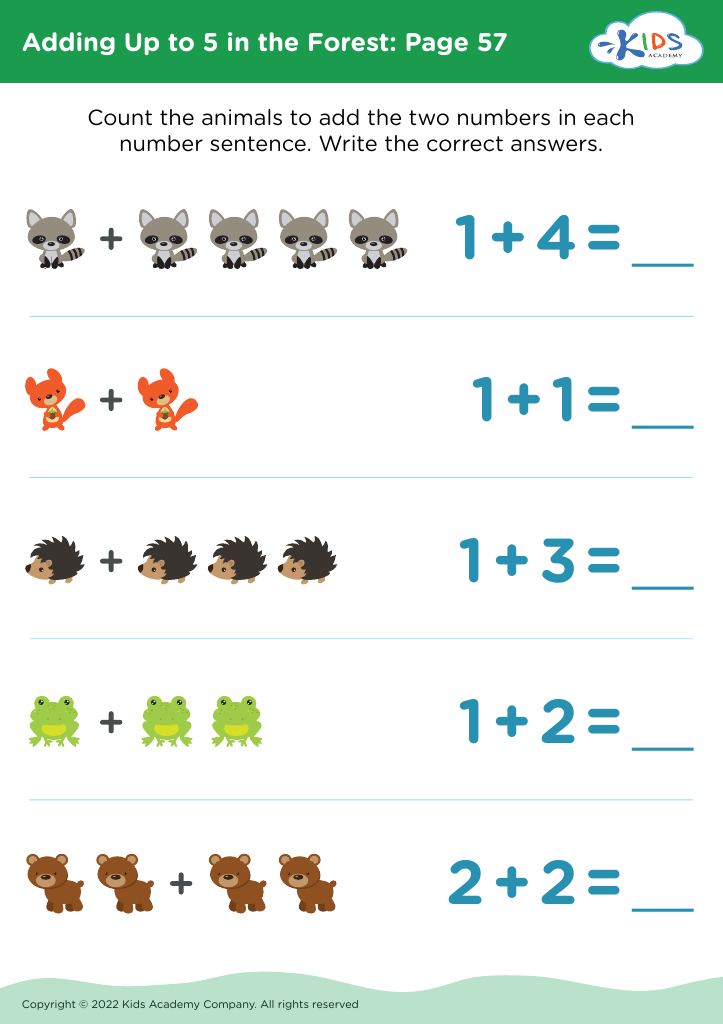








Animal recognition addition and subtraction for children ages 5-7 is a valuable learning tool that combines mathematical skills with engaging themes, making learning more relatable and enjoyable. Firstly, at this developmental stage, children are naturally curious about animals. Using animals as a context for math problems can capture their interest, making the learning process more engaging. When children visualize animals in subtraction and addition problems, they can relate better to the concepts being taught, which helps in enhancing their problem-solving abilities.
Additionally, this approach aids in fostering foundational math skills. Recognizing animals while solving these basic arithmetic problems helps children develop their counting, reasoning, and critical thinking skills. It encourages them to grasp essential math concepts in a fun way, leading to improved confidence in their mathematical abilities. Moreover, integrating animals into lessons fosters empathy, as children learn to care about possibly endangered species and the importance of wildlife, promoting environmental awareness.
Ultimately, when parents and teachers prioritize methods that merge math with exciting and meaningful themes like animal recognition, they facilitate deeper learning experiences. They not only nurture cognitive development but also prepare children to think critically about the world around them. Support in these formative years lays the foundation for future academic success.








