Basic math practice Addition & Subtraction Worksheets for Ages 5-7
4 filtered results
-
From - To
Welcome to our Basic Math Practice Addition & Subtraction Worksheets for Ages 5-7! Designed to make learning math enjoyable, these engaging worksheets help young learners build essential skills in addition and subtraction. Tailored for children in early grades, our activities promote problem-solving and critical thinking through colorful illustrations and interactive exercises. Each worksheet fosters confidence, offering a variety of problems to suit different learning levels. Perfect for at-home practice or classroom use, these resources support children's mathematical foundation while making learning fun. Explore our collection and watch your child's math skills flourish in a stress-free, supportive environment!
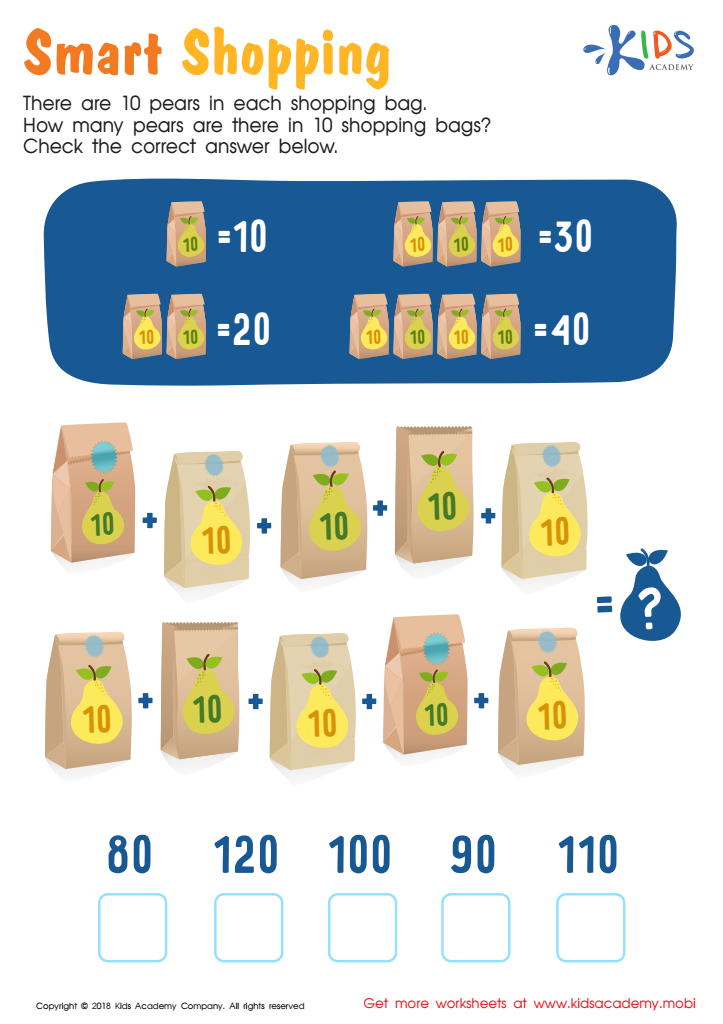
Smart Shopping: Trade Tens for a Hundred Worksheet
 Assign to My Students
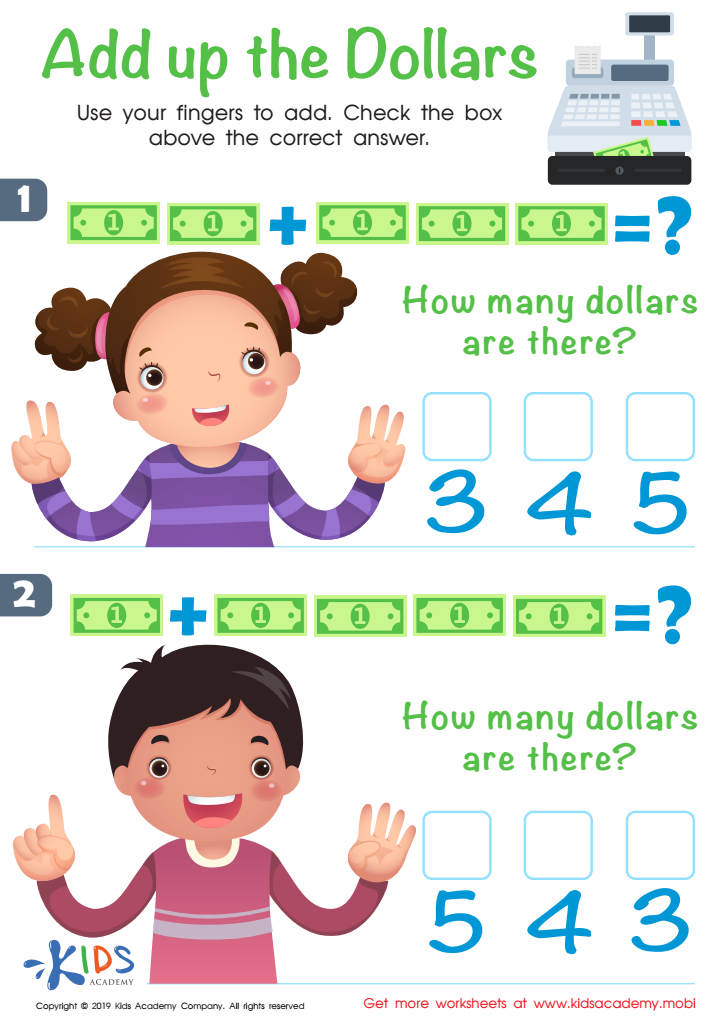
Add up the Dollars Worksheet








Basic math practice in addition and subtraction for ages 5-7 is essential for several key reasons. First, these foundational skills are crucial for developing numeracy, which builds a child's confidence in handling everyday math problems. As children learn to add and subtract, they begin to understand numbers and their relationships, paving the way for more complex mathematical concepts.
Second, mastering these basic operations enhances critical thinking and problem-solving abilities. By engaging with addition and subtraction, children learn to approach challenges methodically, which is a skill that transcends math and can benefit them in various life situations.
Moreover, reinforcing these skills through regular practice at home or school fosters a positive attitude toward learning. Children who feel competent in math are more likely to engage actively in their education and participate in discussions about mathematical concepts.
Finally, proficiency in addition and subtraction forms the backbone for success in standardized testing and future math courses. As they develop, these skills will be called upon in various academic subjects, making early math literacy truly vital. For all these reasons, parents and teachers should prioritize basic math practice in young children’s education.








