
Pattern identification Addition & Subtraction Worksheets for Ages 5-7
4 filtered results
Difficulty Level
Grade
Age
-
From - To
Subject
Activity
Standards
Pattern Identification Addition & Subtraction Worksheets for Ages 5-7 are designed to make math fun and engaging for young learners. These printable worksheets help children develop essential skills to recognize and complete patterns while practicing basic addition and subtraction. By incorporating colorful visuals and interactive elements, the worksheets cater to the inquisitive nature of kids aged 5 to 7, making learning easier and more enjoyable. Perfect for both classroom use and homeschooling, these activities are a great way to boost math confidence and foster a love for learning in your child. Download the free resources today and get started!
Favorites
With answer key
Interactive
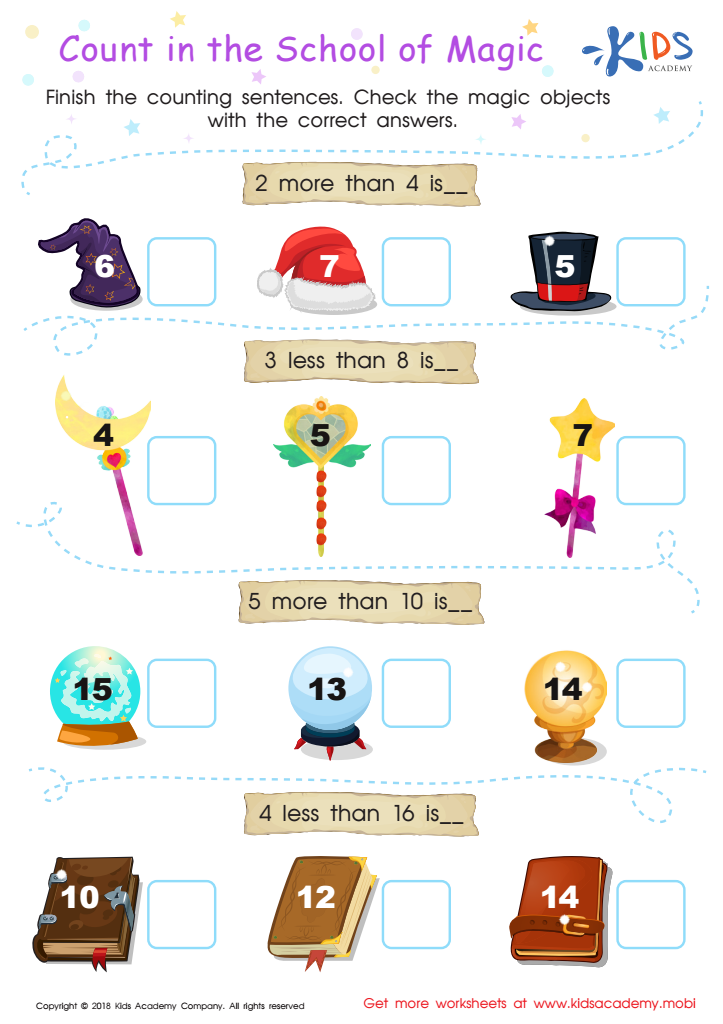
Count in the School of Magic Worksheet
Your math learners can explore the School of Magic with this worksheet. They'll read equations with addition and subtraction numbers under 20, count back and forth to find the answer, then complete the counting sentences. Fun pictures and easy accuracy make it an enjoyable and successful learning experience.
 Assign to My Students
Count in the School of Magic Worksheet
Worksheet
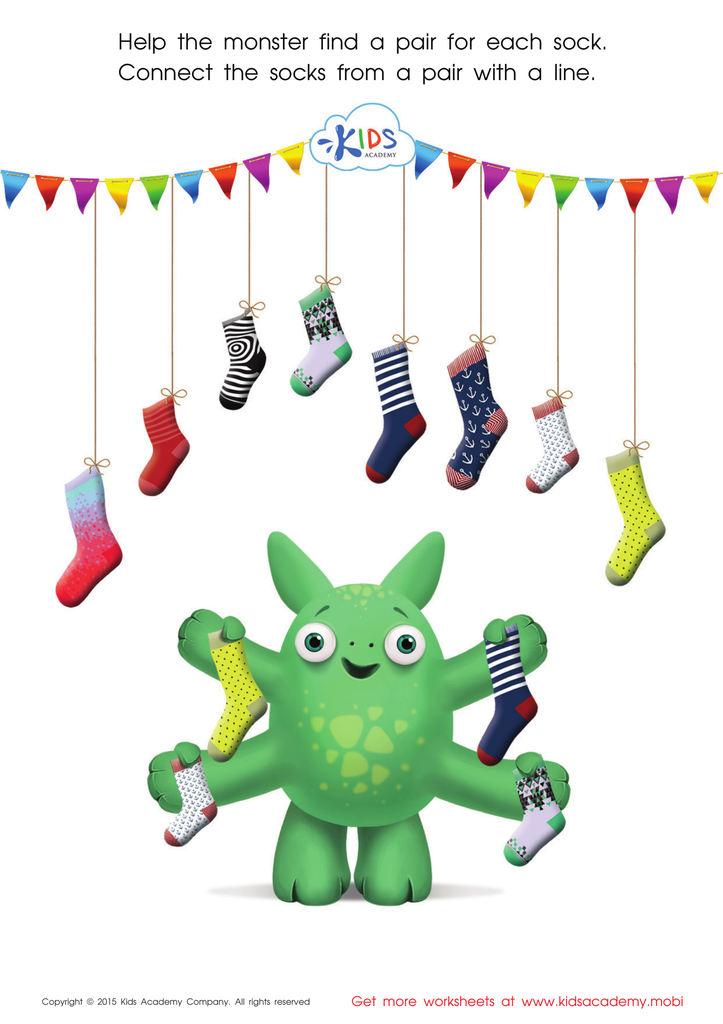
Math Matching Pairs Game: Monsterв's Socks Worksheet
Let your child learn, concentrate and practice sorting skills with this fun kindergarten worksheet. Matching polka dots, anchors, geo shapes and stripes on Monster's socks will help improve fine motor skills. Download and print this free worksheet and several others on different topics.
Math Matching Pairs Game: Monsterв's Socks Worksheet
Worksheet
Join Kids Academy for Free
Who is primarily going to use this learning content?








Parents and teachers should greatly value pattern identification, addition, and subtraction skills for children aged 5-7 as these foundational concepts are crucial for their cognitive and academic growth. Early mastery of patterns enhances a child's ability to recognize sequences, establish connections, and make predictions, skills that are important for problem-solving and logical thinking. Understanding patterns lays the groundwork for more complex mathematical concepts such as multiplication, division, and geometric reasoning in later years.
Addition and subtraction are fundamental arithmetic skills that children will build upon throughout their education. Proficiency in these areas fosters numerical fluency, allowing children to confidently solve problems, both in academic settings and real-life situations. These skills also build the basis for more advanced math operations and concepts, promoting a continuous and comprehensive mathematical understanding.
Moreover, these early math skills contribute significantly to enhancing children’s confidence and self-esteem. When children successfully identify patterns and perform basic arithmetic, they feel competent and capable. This positive reinforcement encourages a love for learning and a healthy attitude toward challenges. Thus, emphasizing these early mathematical skills not only strengthens intellectual development but also nurtures a positive emotional and educational environment, essential for lifelong learning.








