Understanding number values Addition & Subtraction Worksheets for Ages 5-7
3 filtered results
-
From - To
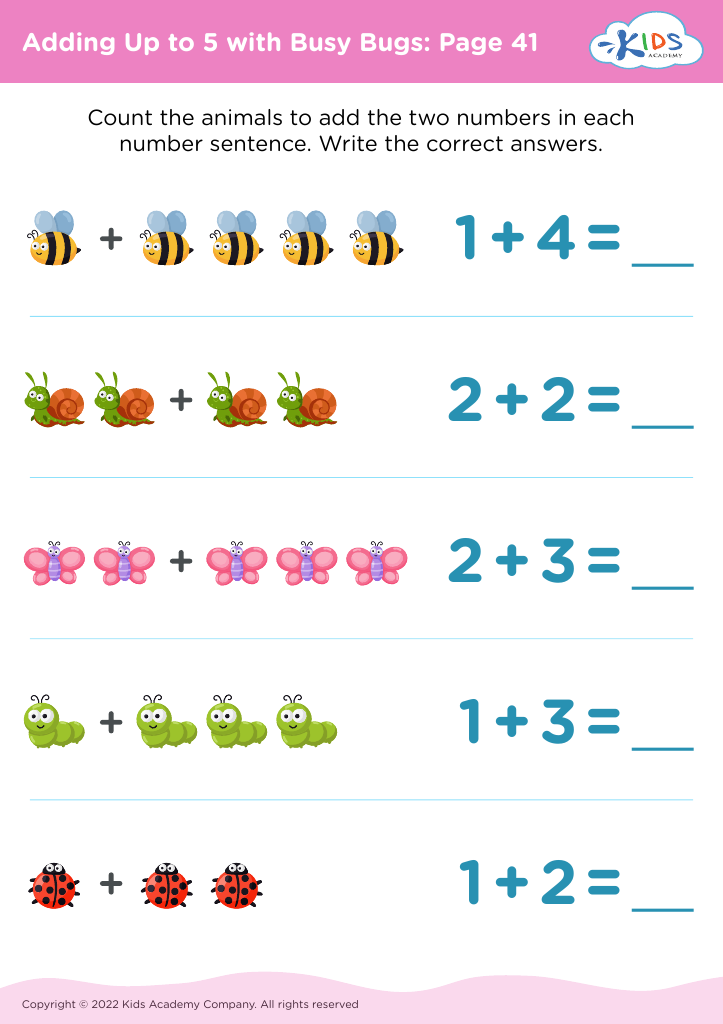
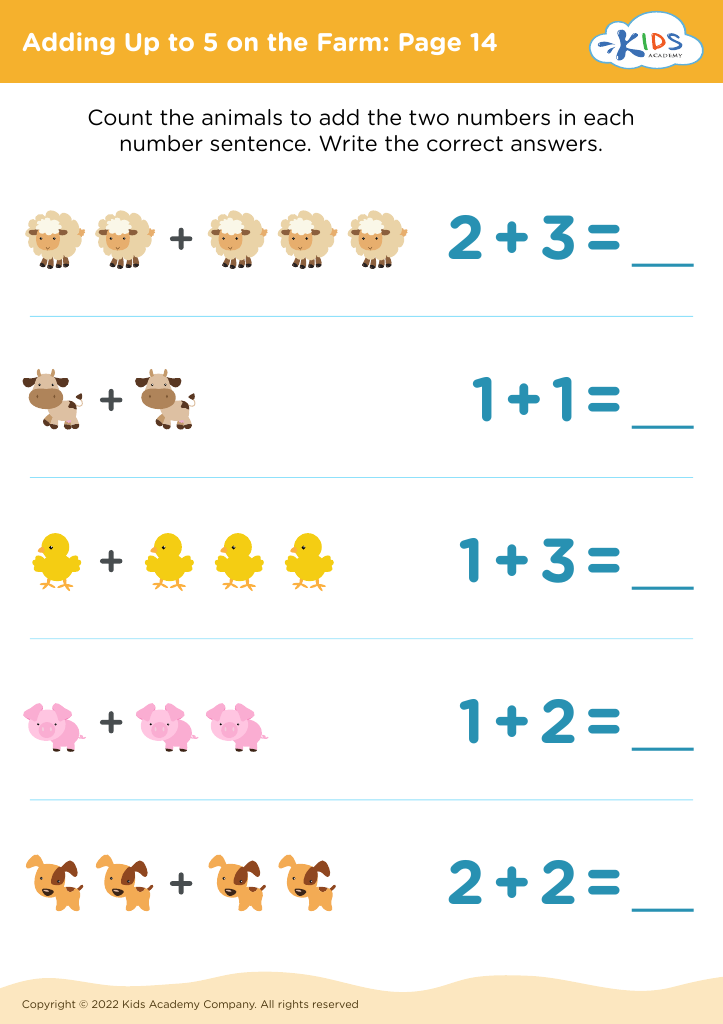
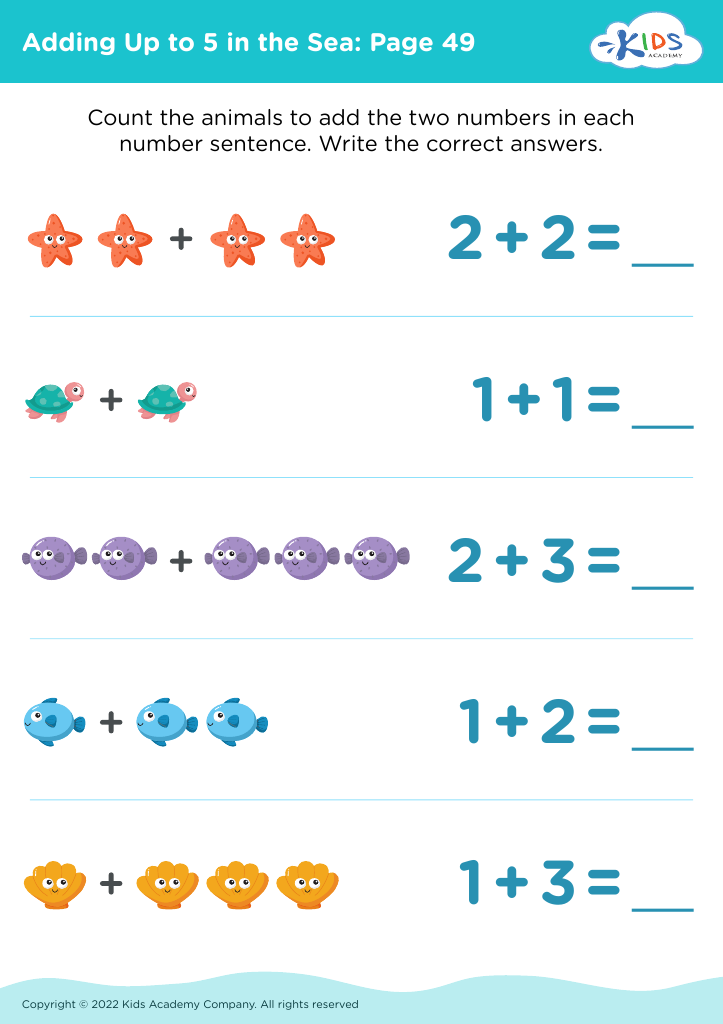
Explore our engaging "Understanding Number Values: Addition & Subtraction Worksheets" designed specifically for children ages 5-7. These worksheets aim to enhance young learners' grasp of essential math concepts, focusing on recognizing, comparing, and manipulating numbers through addition and subtraction. Filled with colorful illustrations and interactive activities, our resources make learning fun and effective. Perfect for homeschool use or supplementary practice in the classroom, these worksheets promote critical thinking and build a solid foundation for future math skills. Help your child become confident in their math abilities today! Download our worksheets and watch their understanding of number values blossom.








Understanding number values and basic addition and subtraction is foundational for young learners aged 5-7, as it serves as the bedrock for all future mathematical concepts. At this age, children are developing cognitive skills that will influence their academic trajectory. Parents and teachers should prioritize this understanding for several reasons.
Firstly, a strong grasp of number values enhances a child’s ability to solve problems, contributing to better critical thinking and analytical skills. Secondly, addition and subtraction are not just isolated skills; they form the basis for more advanced topics like multiplication, division, and fractions, which are encountered in later grades.
Moreover, engaging with these concepts at an early age can foster a positive attitude towards math. Children who build confidence in their mathematical abilities are more likely to pursue STEM-related fields in the future. Parents and teachers also play an essential role in creating supportive learning environments, using everyday examples to link abstract numbers to real-life situations.
Finally, fostering number sense helps children navigate practical tasks, from budgeting their allowance to measuring ingredients in cooking, thereby improving their overall life skills. Thus, cultivating an understanding of number values, addition, and subtraction lays a crucial foundation for academic and personal growth.








